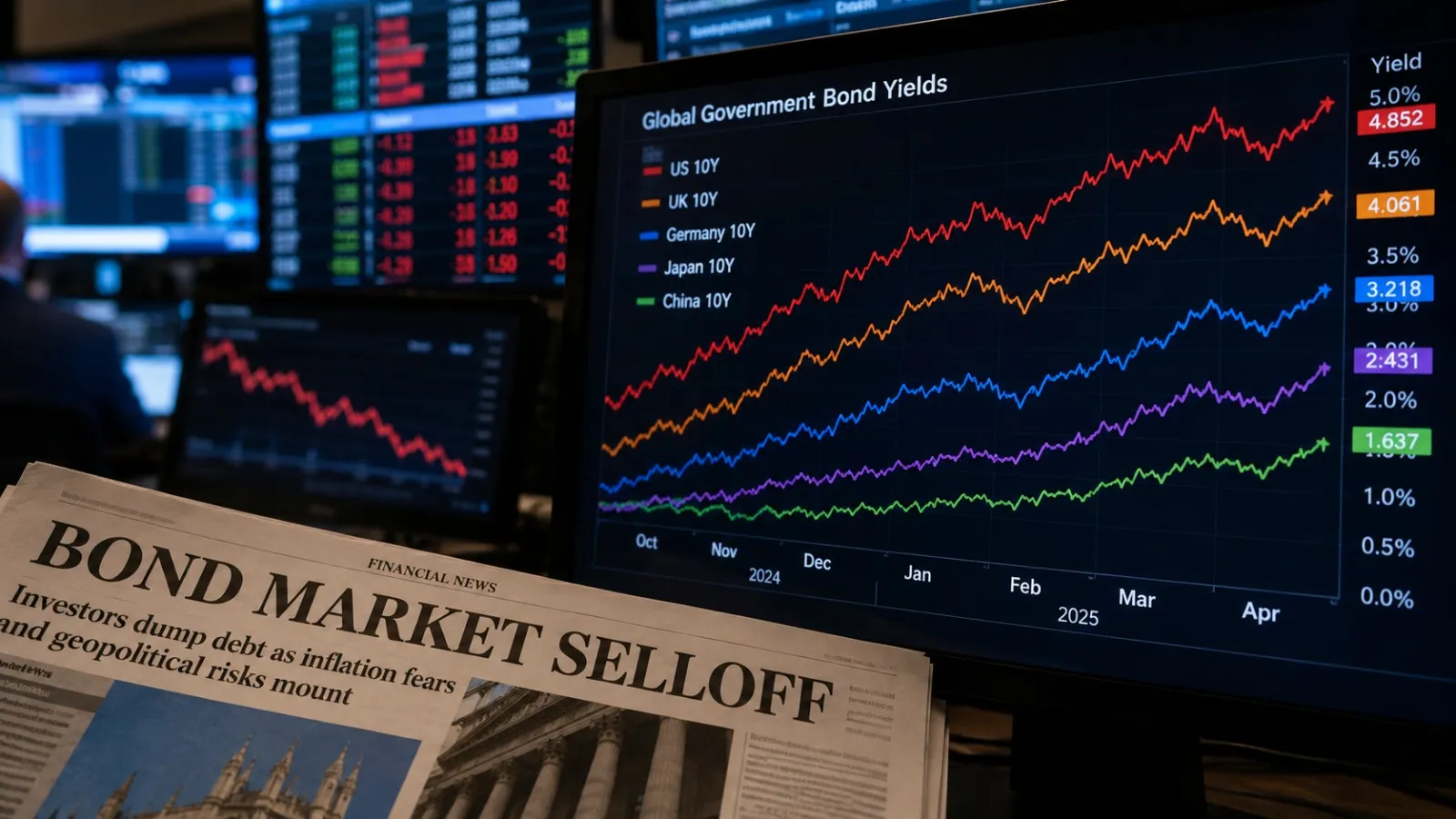
For institutional-flow watchers on Dalal Street, the final week of July 2026 delivered a genuinely interesting data point: after weeks of choppy and largely negative foreign institutional investor activity, FIIs turned decisive net buyers of Indian equities on both July 28 and July 29, even as domestic institutional investors continued a buying pattern that has now persisted for the better part of two months. Taken together with a falling India VIX and a benchmark index rally that pushed the Sensex past the 77,600 mark, the numbers suggest a market cautiously rediscovering its risk appetite after a difficult first half of the year dominated by tariff headlines and global rate uncertainty.
The raw figures tell the story clearly. On July 28, FIIs recorded fresh net buying of ₹755.30 crore in the cash segment, while DIIs added a further ₹1,664.20 crore, continuing their now-familiar role as the market's steadying counterweight. The following day, July 29, foreign investors accelerated their buying meaningfully, posting net purchases of ₹2,981.90 crore — the largest single-day FII inflow in several weeks — while DIIs added another ₹998 crore. Two consecutive sessions of net foreign buying might sound modest in isolation, but set against the backdrop of the preceding fortnight, the shift is notable: July 27 had seen FIIs net sellers to the tune of ₹1,688.20 crore even as DIIs bought over ₹2,329 crore; July 24 saw a far larger FII outflow of ₹3,892.80 crore, offset by DII buying of ₹5,453.60 crore; and July 23 recorded FII selling of ₹2,999.20 crore against DII buying of ₹2,947.10 crore. In other words, for roughly ten consecutive trading sessions through most of July, domestic institutions had been doing almost all of the heavy lifting to keep the market supported, absorbing foreign selling session after session — a pattern of foreign caution meeting domestic conviction that has defined Indian equity flows for much of 2026.
That pattern makes the reversal on July 28 and 29 meaningful, even if it is far too early to call it a decisive trend change. Market technicians point out that India VIX, the market's fear gauge, fell 4.4 percent to settle around 12.0 — comfortably in the zone associated with low expected volatility — precisely as the FII buying materialised, suggesting the shift in foreign sentiment was accompanied by, rather than merely coincident with, genuine investor comfort about near-term index direction. The Sensex and Nifty both posted their strongest weekly closes in some time through this period, with the Sensex settling at 77,654.60 on July 29, up 888.68 points or 1.16 percent on the day, and the Nifty closing at 24,250.20, a gain of 1.10 percent, powered by a broad-based rally led by IT and financial stocks rather than a narrow, index-heavy move confined to one or two large-cap names.
Derivatives positioning data adds an important layer of nuance that pure cash-market numbers can obscure. Even as FIIs bought ₹2,982 crore worth of shares in the cash segment on July 29, they simultaneously held a substantial net short position of roughly 194,818 contracts in index futures — a combination that experienced market watchers read not as unambiguous bullishness but as something closer to hedged accumulation: buying the underlying stocks for genuine portfolio exposure while maintaining downside protection through futures, in case the rally proves short-lived or a fresh macro shock materialises. Options positioning told a similarly layered story, with foreign investors adding heavily to both call buying and put-shorting positions — a combination compliance desks and derivatives strategists typically interpret as constructive but not unconditionally confident, protective hedging layered onto what is, at its core, a genuine long cash book.
The context that makes this shift genuinely significant is the scale of foreign selling that preceded it through 2026. According to a Reuters poll of economists tracking capital flows, foreign portfolio investors pulled close to $17 billion out of Indian equities over the course of the year, driven substantially by the uncertainty created by escalating and then partially de-escalating US tariffs on Indian goods, alongside a broader global reallocation of capital as investors weighed opportunities across other emerging markets. Against that backdrop, even a two-session run of net buying worth a combined ₹3.7 crore-plus takes on outsized significance as a possible early signal that foreign allocators are beginning to test the waters again, rather than continuing to treat India as a market to systematically underweight.
Domestic institutional investors, for their part, have been the far more consistent actor throughout this entire period, and their buying discipline deserves attention in its own right. Data across the final two weeks of July shows DIIs posting net purchases in nearly every session — ₹5,453.60 crore on July 24, ₹2,947.10 crore on July 23, ₹1,312.00 crore on July 20, and further buying on July 17 and July 16 — a pattern reflecting the structural growth of India's domestic mutual fund industry, where systematic investment plan inflows have provided asset managers with a steady and largely rate-insensitive pool of capital to deploy into Indian equities regardless of what foreign investors are doing on any given day. This SIP-driven domestic flow has, over the past several years, fundamentally changed the character of the Indian market's relationship with foreign capital: where FII selling once reliably triggered sharp corrections, the depth of domestic buying power has increasingly allowed the market to absorb foreign outflows with far less volatility than it would have shown a decade ago.
Sector-level detail from the July 29 session reinforces the broad-based nature of the rally that accompanied the flow reversal. Nifty IT surged 2.32 percent, with Infosys the standout performer, up over 4.5 percent following its Q1 FY27 results commentary; Bank Nifty added 0.79 percent to close at 57,205.90; and heavyweight names including Hindustan Unilever, TCS, HCL Tech and Larsen & Toubro all posted meaningful gains. Market strategists tracking the advance-decline ratio on the NSE noted it was broadly positive through the session, a detail that matters because it indicates genuinely wide participation across the market rather than a narrow, index-driven move concentrated in one or two heavyweight stocks — historically a more reliable signal of durable sentiment shift than a rally confined to a handful of large caps.
What happens from here depends on factors that extend well beyond domestic market technicals. Global cues remain genuinely mixed: European markets were trading in split fashion through the period, with the FTSE 100 firm while the DAX, CAC 40 and STOXX 50 slipped modestly, and US markets were themselves navigating a delicate stretch ahead of Federal Reserve policy decisions and a fresh round of Big Tech earnings from names including Meta and Microsoft, both of which carry significant read-through for how global investors price risk appetite toward technology-heavy emerging markets like India. Domestically, the fresh 10 percent Section 301 tariff the US imposed on a majority of Indian exports on July 24 adds a genuine wildcard: if trade tensions escalate further from here, the foreign-buying reversal seen on July 28 and 29 could prove to be a brief pause rather than a durable turn, and FIIs — who have shown themselves willing to sell aggressively at the first sign of policy deterioration throughout 2026 — could just as quickly resume net selling.
For retail investors and market participants trying to read the tea leaves, seasoned traders offer a consistent piece of advice: institutional flow data is a genuinely useful input, but it should never be read in isolation. Price action, options positioning, the put-call ratio, and India VIX all need to be triangulated together before drawing firm conclusions about where sentiment is genuinely headed, rather than reacting to any single day's FII or DII number as though it were decisive on its own. Still, after weeks of foreign investors selling into every domestic rally, two consecutive sessions of net FII buying is the kind of small signal that traders, more than most, know not to over-interpret and not to ignore either.
Whether late July's flow reversal marks the genuine beginning of a sustained foreign re-entry into Indian equities, or simply a brief tactical pause within a longer-term cautious stance, is a question the market will only be able to answer with the benefit of several more weeks of data. What is clear, for now, is that after a punishing first half of 2026 for foreign sentiment toward Indian equities, the final week of July offered Dalal Street its first genuinely encouraging signal in some time — and one that domestic institutions, characteristically, had already been positioning for well before their foreign counterparts showed up.
The structural rise of domestic institutional buying power deserves a closer look, because it explains why the market has been able to absorb a full year of substantial FII selling without the kind of sharp, sustained correction that a comparable outflow would almost certainly have triggered a decade ago. India's mutual fund industry has, over the past several years, become a genuinely formidable counterweight to foreign flows, powered overwhelmingly by systematic investment plans that channel monthly retail savings into equity markets with a discipline that is largely indifferent to short-term sentiment swings. That SIP-driven capital pool has grown to a scale where domestic mutual funds alone can, in many months, more than offset even aggressive foreign selling — a dynamic market veterans describe as one of the most consequential structural shifts in Indian equity markets over the past decade, transforming a market once heavily dependent on the mood of foreign portfolio managers in London, New York and Singapore into one increasingly driven by the savings decisions of Indian households investing through their monthly salary cycles.
Looking toward August and the remainder of the current earnings season, several catalysts sit on the calendar that will test whether late July's constructive flow shift can extend into a genuine trend. The bulk of India Inc's first-quarter FY27 corporate results are still being digested by the market, with several large-cap names across banking, auto and consumer sectors yet to report, each carrying the potential to either reinforce or undercut the broad-based optimism that characterised the July 29 session specifically. Globally, the US Federal Reserve's forthcoming policy decisions and a fresh round of earnings from major US technology companies will shape the broader risk appetite that ultimately determines how much capital global asset allocators are willing to direct toward emerging markets like India relative to developed-market alternatives. And domestically, the trajectory of the newly imposed 10 percent Section 301 tariff on Indian exports — whether it proves a contained, one-off adjustment or the opening move of a fresh round of trade friction — remains, as it has for the better part of a year now, the single largest swing factor determining whether foreign institutional investors treat India as a market worth re-entering in size, or one to continue trimming at the margin.
For retail investors and NRI portfolio holders tracking these numbers from outside India, the practical takeaway from late July's data is one of measured encouragement rather than outright celebration. Institutional flows are, by their nature, backward-looking indicators that describe what large investors have already done rather than reliable predictors of what they will do next — a distinction seasoned market participants are quick to emphasise whenever a short run of positive data threatens to generate excessive optimism. What the numbers do confirm, unambiguously, is that Indian equities have not been abandoned by global capital even through a year dominated by tariff uncertainty and geopolitical noise, and that the depth of India's own domestic savings pool has given the market a structural resilience that continues to differentiate it from many emerging-market peers still heavily dependent on the mood of foreign capital alone. Whether that resilience is enough to draw foreign investors back in sustained size through the remainder of 2026 is the question the next several weeks of trading data will begin to answer. Market desks will be watching the first week of August with particular interest, given it typically brings a fresh wave of monthly SIP inflow data, updated FII registration and custodian numbers, and the earliest read on how global allocators are positioning ahead of the next major central bank policy signals — all of which will help clarify whether late July's reversal was the start of something durable or simply a well-timed pause within a longer, more cautious foreign stance toward Indian equities.