Every trading session, alongside the familiar Sensex and Nifty closing numbers that dominate headline market coverage, a quieter but equally consequential data point gets tallied: the net flow of foreign portfolio investment into or out of Indian equities. In recent weeks, that number has told a fairly consistent story, and not a particularly encouraging one for Indian markets — foreign institutional investors have been steadily trimming their exposure to Indian equities, contributing to the broader selling pressure that has driven the Sensex and Nifty's recent multi-session losing streak.
Understanding why foreign investors are pulling back, and more importantly, what it would take for this trend to reverse, requires looking beyond any single headline explanation toward the fuller combination of factors currently shaping how global institutional capital views the relative attractiveness of Indian equities compared to alternative markets and asset classes.
WHO ARE THESE FOREIGN INVESTORS, AND WHY DOES THEIR BEHAVIOUR MATTER SO MUCH
Foreign portfolio investors — a category encompassing global mutual funds, pension funds, sovereign wealth funds, hedge funds, and other institutional capital pools based outside India — represent a hugely significant source of demand for Indian equities, given the sheer scale of capital these institutions collectively manage and their historical pattern of allocating meaningful portions of their emerging market equity exposure specifically to India, reflecting the country's status as one of the largest, most liquid, and fastest-growing major equity markets within the broader emerging markets investment universe.
Because foreign institutional investors typically transact in much larger individual trade sizes than domestic Indian retail investors, and because they often move capital in a more coordinated fashion in response to shared macro views or benchmark index rebalancing requirements, their collective buying or selling activity can meaningfully move Indian market prices even when domestic retail and institutional investors are behaving quite differently. This outsized influence is precisely why financial media and market analysts track daily and monthly FII flow data so closely, treating it as one of the most important barometers of overall market sentiment and directional pressure.

THE CURRENT DRIVERS OF FOREIGN OUTFLOWS
The current wave of foreign investor selling reflects a confluence of factors that, individually, might each represent a manageable, contained concern, but which collectively have created a considerably more challenging environment for sustaining foreign investor confidence in Indian equities. The oil price shock, driven by escalating Middle East tensions, sits at the centre of this story, given how directly it threatens India's currency stability, inflation trajectory, and, by extension, corporate earnings across import-sensitive sectors of the economy — precisely the kind of macro deterioration that tends to trigger foreign institutional investors to reduce emerging market exposure broadly, and country-specific exposure to particularly affected markets like India even more acutely.
Currency weakness compounds this dynamic in a particularly direct way for foreign investors specifically. Because foreign portfolio investors typically measure their investment returns in their own home currency — US dollars for the majority of global institutional capital — any depreciation in the rupee against the dollar directly erodes the dollar-denominated returns these investors earn on their Indian equity holdings, even before accounting for any change in the underlying rupee-denominated share prices themselves. This currency translation effect means that Indian equities can appear considerably less attractive to foreign investors during periods of rupee weakness, independent of how the underlying companies and market are actually performing in local currency terms, creating an additional incentive for foreign investors to reduce exposure until currency stability is restored.
The disappointing earnings results from several large-cap companies, particularly the sharp declines in HDFC Bank and Axis Bank following their quarterly results, have added a third, company and sector-specific layer of concern, reinforcing foreign investors' broader macro anxieties with concrete, verifiable evidence that at least some pockets of corporate India are indeed experiencing the kind of earnings pressure that the broader oil price and currency headwinds might be expected to produce.
HOW FOREIGN INVESTORS THINK ABOUT RELATIVE VALUE
Beyond these India-specific factors, foreign portfolio investment decisions are also shaped significantly by relative value considerations across the broader universe of global and emerging markets in which these institutions can choose to allocate capital. Even if India's own fundamentals were entirely unchanged, foreign investors might still reduce Indian equity exposure if alternative markets — whether other emerging markets, developed markets, or fixed income instruments offering increasingly attractive yields — begin to offer more compelling risk-adjusted return prospects on a relative basis.
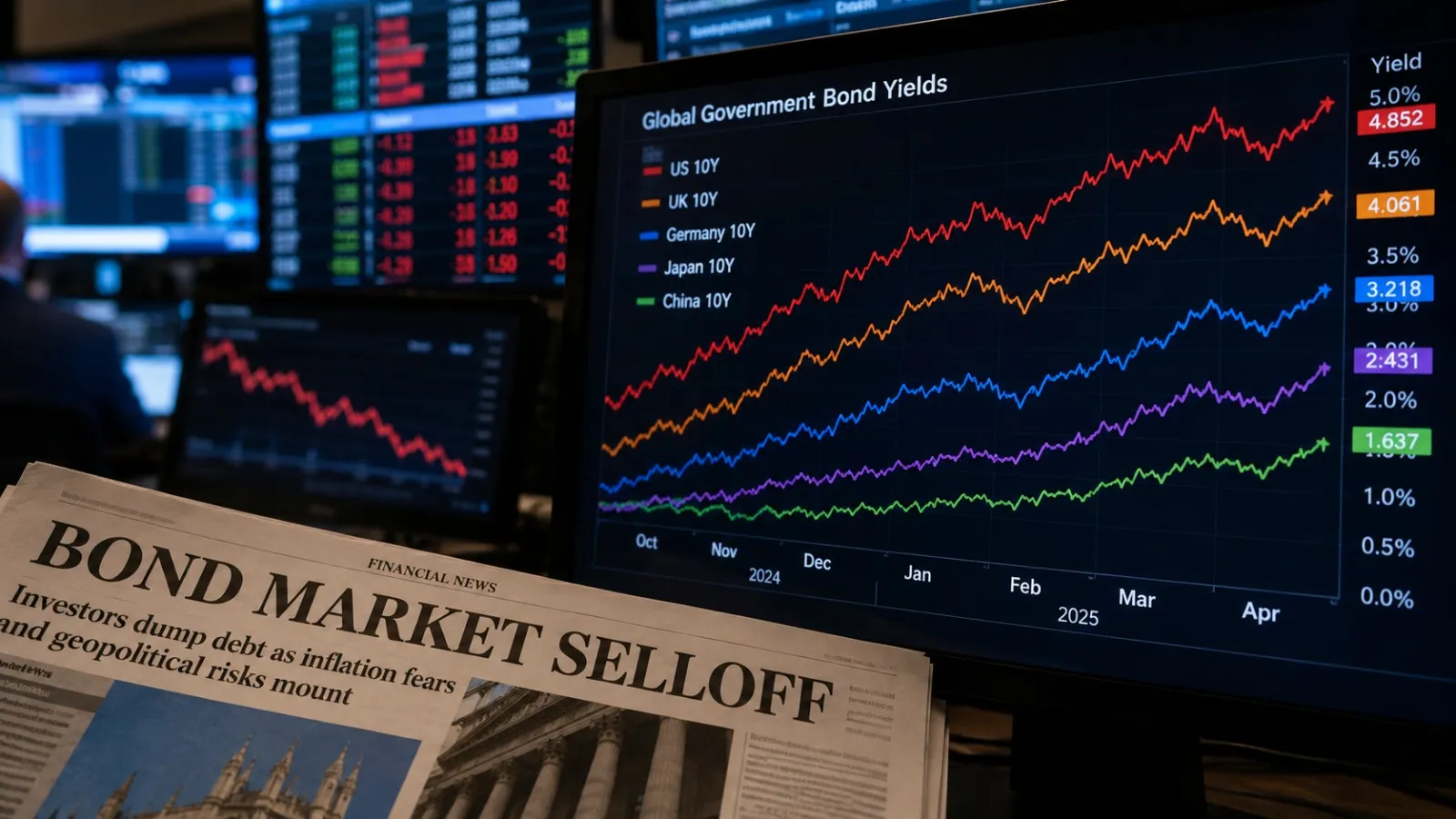
This relative value dynamic has become particularly relevant in the current environment, given how global interest rate levels and currency dynamics affect the comparative attractiveness of different markets and asset classes for global capital allocation. When developed market government bonds, for instance, offer meaningfully higher yields than they did in the recent past, the relative appeal of emerging market equities — including Indian equities — as a source of superior returns can diminish somewhat, even without any specific deterioration in the emerging market's own fundamentals, simply because the opportunity cost of holding emerging market equity risk, relative to a comparatively safer developed market fixed income alternative, has increased.
THE ROLE OF INDIA'S RELATIVELY RICH VALUATIONS
Compounding these dynamics is a longer-running debate among global investors about whether Indian equities, even before this current period of volatility, had become relatively expensive compared to their own historical valuation norms and compared to other emerging markets offering seemingly more attractive valuation entry points. India has, for much of the past several years, traded at a valuation premium relative to many other major emerging markets, reflecting investor confidence in the country's superior growth trajectory, corporate governance standards, and structural economic reforms relative to many alternative emerging market destinations.
This valuation premium, while arguably justified by India's genuine structural advantages, also means that Indian equities have less valuation cushion to absorb negative earnings or macro surprises compared to markets trading at more modest valuations, making Indian equities somewhat more vulnerable to sharp corrections when negative catalysts do materialise, precisely the dynamic that appears to be playing out in the current episode of foreign investor selling.
WHAT WOULD IT TAKE FOR FOREIGN FLOWS TO REVERSE
Given this combination of factors driving the current outflow trend, reversing it would likely require some combination of developments addressing the various concerns simultaneously weighing on foreign investor sentiment. A meaningful de-escalation in Middle East tensions, leading to a retreat in crude oil prices from current elevated levels, would directly address one of the most significant sources of current market anxiety, potentially removing much of the currency and inflation pressure that has made Indian equities less attractive to foreign capital in dollar-denominated return terms.
Stabilisation or recovery in the rupee, whether driven by easing oil prices, reduced foreign outflows themselves, or effective Reserve Bank of India intervention, would similarly help restore foreign investor confidence, given how directly currency stability affects the dollar-denominated returns that ultimately determine foreign portfolio investment decisions. A stronger-than-feared conclusion to the ongoing Q1 FY27 earnings season, demonstrating that the concerning results from HDFC Bank, Axis Bank, and other early reporters represent isolated rather than broad-based earnings pressure, would also help rebuild the earnings confidence component of foreign investor sentiment toward Indian equities.
THE HISTORICAL PATTERN OF FII FLOW REVERSALS
India's markets have experienced numerous previous episodes of foreign investor outflows tied to various combinations of global and domestic factors, and the historical pattern offers some, if imperfect, guidance for how the current episode might eventually resolve. In most previous instances, foreign investor flows have proven considerably more volatile and rapidly reversible than many market participants initially expect during the outflow phase itself, with foreign capital often returning quickly and in substantial volume once the specific triggering concerns show credible signs of resolution, reflecting the fundamentally attractive long-term growth story that continues to draw global institutional capital back to Indian equities once near-term anxieties recede.
This historical pattern suggests that the current outflow episode, however uncomfortable in the near term, may well prove to be a temporary, sentiment-driven adjustment rather than a permanent structural shift away from Indian equities as a core emerging market allocation for global institutional investors — though the timing and pace of any eventual reversal will, as always, depend on how quickly and convincingly the underlying triggering concerns around oil prices, currency stability, and corporate earnings actually resolve.
WHAT DOMESTIC INVESTORS SHOULD MAKE OF THIS
For India's own domestic investor base, which has grown substantially in size and market influence over recent years through the rapid growth of systematic investment plans and broader retail equity participation, this episode of foreign investor selling offers an important reminder of the structural role that domestic capital increasingly plays in providing a stabilising counterweight to foreign investor flow volatility. Continued strong domestic investor participation, even during periods of foreign investor selling, has increasingly helped cushion Indian markets against the kind of severe, foreign-flow-driven volatility that characterised earlier periods in India's market history when foreign institutional investors represented a much larger relative share of overall market participation and price-setting activity.
Whether this domestic investor base continues providing this stabilising function throughout the remainder of the current period of foreign outflows will itself be an important dynamic to watch, offering a further data point on how structurally resilient India's equity market has become to exactly the kind of foreign capital flow volatility currently weighing on Sensex and Nifty performance.
THE SECTORAL PATTERN WITHIN FOREIGN SELLING
A closer look at where foreign portfolio outflows have been concentrated offers additional insight into what specifically is driving institutional caution. Financial services and banking stocks, given their outsized weight within foreign investors' typical Indian equity allocations and their direct exposure to the credit growth and margin concerns highlighted by this earnings season's disappointing results, have reportedly seen some of the most pronounced foreign selling pressure. Import-sensitive sectors, including oil marketing companies and other businesses with direct exposure to elevated crude prices, have similarly seen foreign investors reduce exposure, reflecting the direct margin pressure these companies face from the current oil price environment.
Conversely, some export-oriented sectors, particularly segments of the IT services industry that benefit from rupee weakness through their dollar-denominated revenue base, have seen comparatively more resilient foreign investor positioning, illustrating that the current outflow trend reflects a nuanced, sector-differentiated reassessment of risk rather than a uniform, indiscriminate retreat from Indian equities across every part of the market.

WHAT MARKET DATA PROVIDERS ARE TRACKING
Financial data providers and brokerages tracking daily FII flow figures have noted that the current selling, while sustained over multiple sessions, has generally remained more measured in absolute scale compared to some of the more dramatic single-session outflow episodes India's markets have experienced during past global risk-off events, such as periods of acute global financial crisis or extreme currency crisis conditions. This relatively more measured pace of outflows has led some analysts to characterise the current episode as a cautious, risk-reducing recalibration by foreign investors, rather than a panic-driven, indiscriminate exit of the kind that has historically preceded more severe and prolonged market downturns in India's history.
For now, market participants across both foreign and domestic investor categories continue watching the same interconnected set of indicators — crude oil prices, the rupee's trajectory, and the remaining weeks of corporate earnings results — to determine whether this period of foreign outflows represents a passing phase of caution, or the beginning of a more extended reassessment of India's near-term investment attractiveness within the broader global emerging markets landscape.
For most seasoned market observers, the honest answer is that nobody knows for certain which of these two scenarios will play out — and that uncertainty itself, more than any single data point, is precisely what continues to keep foreign portfolio flows, and the broader market they help drive, in such a delicately balanced state right now — watching the same headlines everyone else is, and waiting for the next one to tip the scale, one trading session at a time.