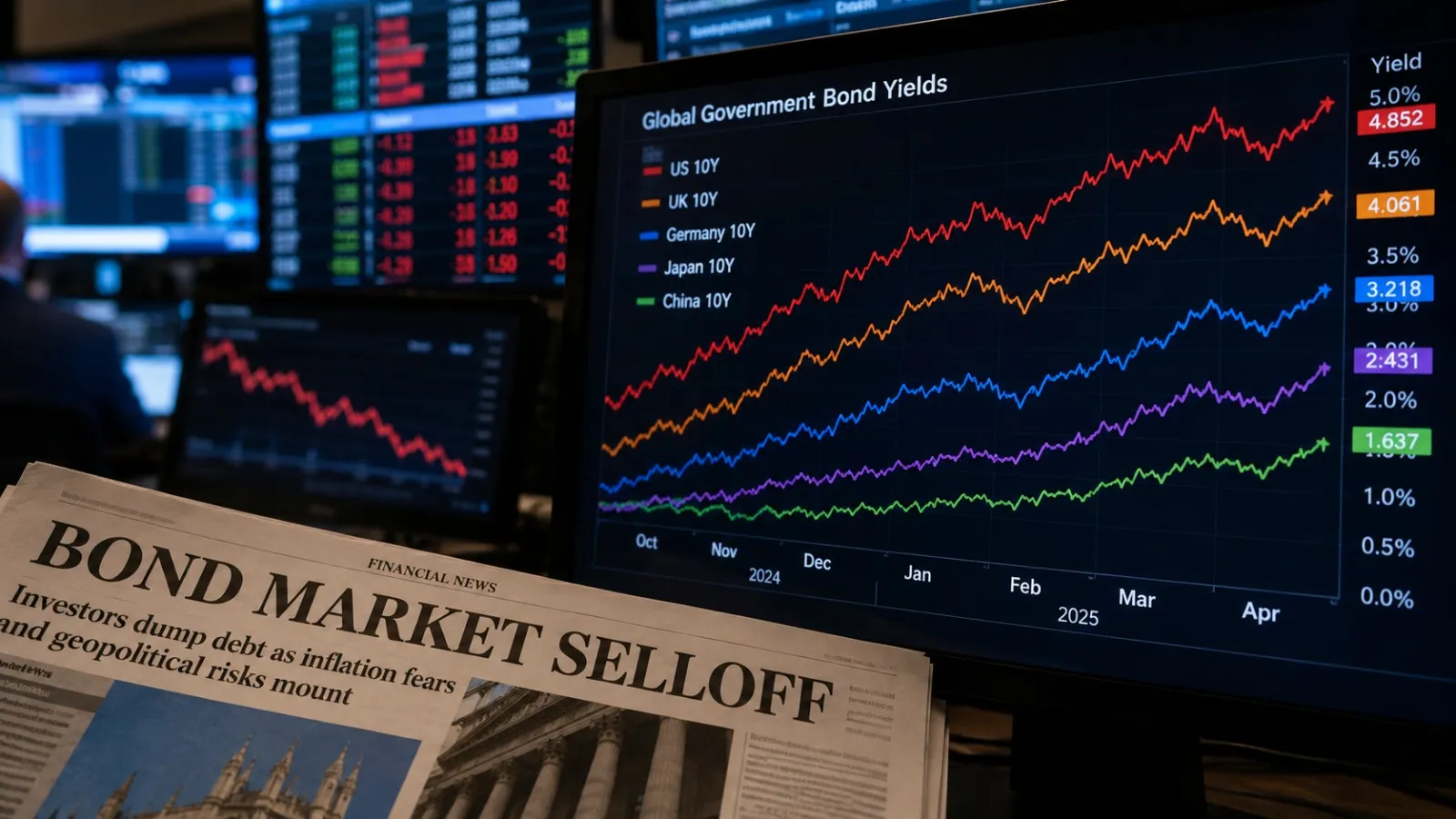
A widely tracked market-based probability gauge for a US Federal Reserve interest rate hike in September has climbed to roughly 52.4 per cent, up from about 47 per cent just days earlier, according to a recent research note from Bank of Baroda, marking a meaningful shift in how financial markets are pricing the future path of US monetary policy. The move, driven primarily by hawkish commentary from a senior Federal Reserve regional bank president who suggested that borrowing costs may need to stay higher for longer to combat inflation risk, carries direct and significant implications for currency and bond markets well beyond America's shores, India's rupee prominent among them.
The shift comes at a particularly sensitive moment for global markets, coinciding with a separate but related spike in global crude oil prices tied to escalating US-Iran tensions — a combination that has left emerging-market currencies facing pressure from two directions simultaneously: a stronger US dollar driven by higher-for-longer rate expectations, and higher energy import costs driven by the Gulf conflict.
Why Fed Rate Expectations Move Global Markets
Changes in expectations around US Federal Reserve policy carry an outsized influence on global financial markets given the US dollar's role as the world's primary reserve and trading currency. When markets price in a higher probability of the Fed raising interest rates, US dollar-denominated assets, particularly short-term government debt, become relatively more attractive to global investors seeking yield, drawing capital flows away from other currencies and markets, emerging economies included, and toward the United States.
This dynamic has historically been particularly pronounced for emerging markets like India that run persistent current account deficits and rely on continued foreign capital inflows to help finance those deficits. A shift in relative return expectations toward US dollar assets can trigger capital outflows from emerging markets, placing direct downward pressure on local currencies — a pattern that has played out repeatedly across previous cycles of shifting US rate expectations over the past decade and a half.
The mechanism through which this plays out is well understood by market participants: as US Treasury yields rise in anticipation of tighter Fed policy, the yield gap between US government debt and comparable emerging-market debt narrows, reducing the relative compensation investors receive for taking on the additional currency and political risk associated with emerging-market exposure. This narrowing yield differential is precisely the channel through which shifting Fed expectations translate, often within days, into tangible currency and bond market movements across emerging economies including India.
The Specific Trigger Behind This Shift
The immediate catalyst behind the latest upward revision in Fed rate-hike probability was commentary from a senior official within the Federal Reserve's regional bank system, who suggested that persistently elevated inflation — now further complicated by the recent spike in global oil prices tied to the US-Iran conflict — may require the central bank to maintain a more restrictive monetary policy stance for longer than markets had previously anticipated. This kind of commentary from Fed officials, closely parsed by market participants for any signal on the likely future policy path, can move market-implied rate expectations meaningfully even in the absence of any actual policy action, given how directly forward guidance shapes investor positioning.
Compounding this shift, separate US economic data released around the same period showed industrial production continuing to grow at a steady, if modest, pace — evidence that the broader US economy remains resilient enough to potentially absorb further monetary tightening without triggering an outright recession, a consideration that factors directly into how aggressively markets expect the Fed to be willing to act in pursuit of its inflation-control mandate.
Market participants note that the Fed's own internal deliberations on this question are likely to remain genuinely finely balanced in the weeks ahead, given the inherently difficult judgment call involved in distinguishing between a transient, geopolitically-driven inflation spike that might reasonably be looked through, and a more persistent inflationary impulse that would warrant a firmer policy response — a distinction that has, in past cycles, proven genuinely difficult for even the Fed's own policymakers to resolve with confidence in real time.
The Direct Line To India's Rupee
For India specifically, the shift in Fed rate expectations arrives at an already delicate moment for the rupee, which has been trading in a narrow but weak band against the dollar even before this latest development, pressured by the separate but related spike in global crude oil prices. A Bank of Baroda report tracking the situation noted that the rupee appreciated only marginally despite higher oil prices in one recent session, but was trading weaker in line with other Asian currencies more broadly — a pattern consistent with a market environment where multiple, simultaneous pressures are working against emerging-market currencies at once.
Currency strategists tracking the rupee's trajectory note that the combination of higher US rate expectations and elevated oil prices represents a particularly challenging one-two punch for the currency, since the two factors reinforce rather than offset one another: higher oil prices widen India's import bill and current account deficit, while higher US rates simultaneously reduce the relative attractiveness of holding rupee-denominated assets for foreign investors, leaving the currency exposed to pressure from both the trade and capital account sides of India's balance of payments simultaneously.
What It Means For India's Own Rate Policy
The shift in US rate expectations also carries important implications for the Reserve Bank of India's own monetary policy calculus. While the RBI's policy decisions are driven primarily by domestic considerations — principally India's own inflation and growth trajectory — global monetary policy conditions, and particularly the interest rate differential between India and the United States, do factor into the central bank's broader assessment of currency stability and capital flow dynamics.
India's retail inflation had already risen above the RBI's medium-term target of 4 per cent in the most recent reading available prior to the current bout of global volatility, and some brokerages had, prior to the latest developments, been trimming their expectations for further domestic rate action in 2026 on the view that inflation was on a broadly cooling trajectory. The combination of oil-driven imported inflation risk and a less accommodative global rate backdrop is likely to complicate that more dovish domestic rate-path narrative, with some economists now flagging a somewhat higher probability that the RBI may need to maintain a more cautious, less accommodative policy stance than had been anticipated just weeks earlier.
Bond Markets Feel The Ripple Effect
India's government bond market has also shown signs of responding to the shifting global rate backdrop, with yields on the benchmark 10-year security expected to trade within a relatively wide band in the coming sessions as fixed-income investors weigh the twin pressures of crude-driven domestic inflation risk and the evolving global interest rate environment. This comes at a moment when India's bond market has separately been closely tracking developments around the country's inclusion in major global bond indices, a process that has, over recent months, been driving substantial foreign inflows into Indian debt even amid the broader currency and equity market volatility — flows that a less favourable global rate backdrop could, at the margin, put at some risk of moderating.
Foreign investors have net purchased several billion dollars' worth of Indian bonds over recent weeks under the country's fully accessible route for foreign investment in government debt, a trend that market participants will be watching closely for any signs of reversal or slowdown as the shifting Fed rate outlook works its way through global capital allocation decisions in the weeks ahead.
Fixed income strategists note that India's relatively strong macroeconomic fundamentals — including a comfortable foreign exchange reserve position and a fiscal trajectory that, notwithstanding near-term pressures, remains broadly on a consolidation path — provide a meaningful buffer against the kind of severe, disorderly bond market sell-off that shifting global rate expectations have, in the past, occasionally triggered in more vulnerable emerging markets. This relative resilience, strategists say, is likely to keep India an attractive destination for global bond investors on a medium-term view, even as near-term volatility tied to the current combination of geopolitical and monetary policy uncertainty persists.
How Indian Equity Markets Are Reading The Shift
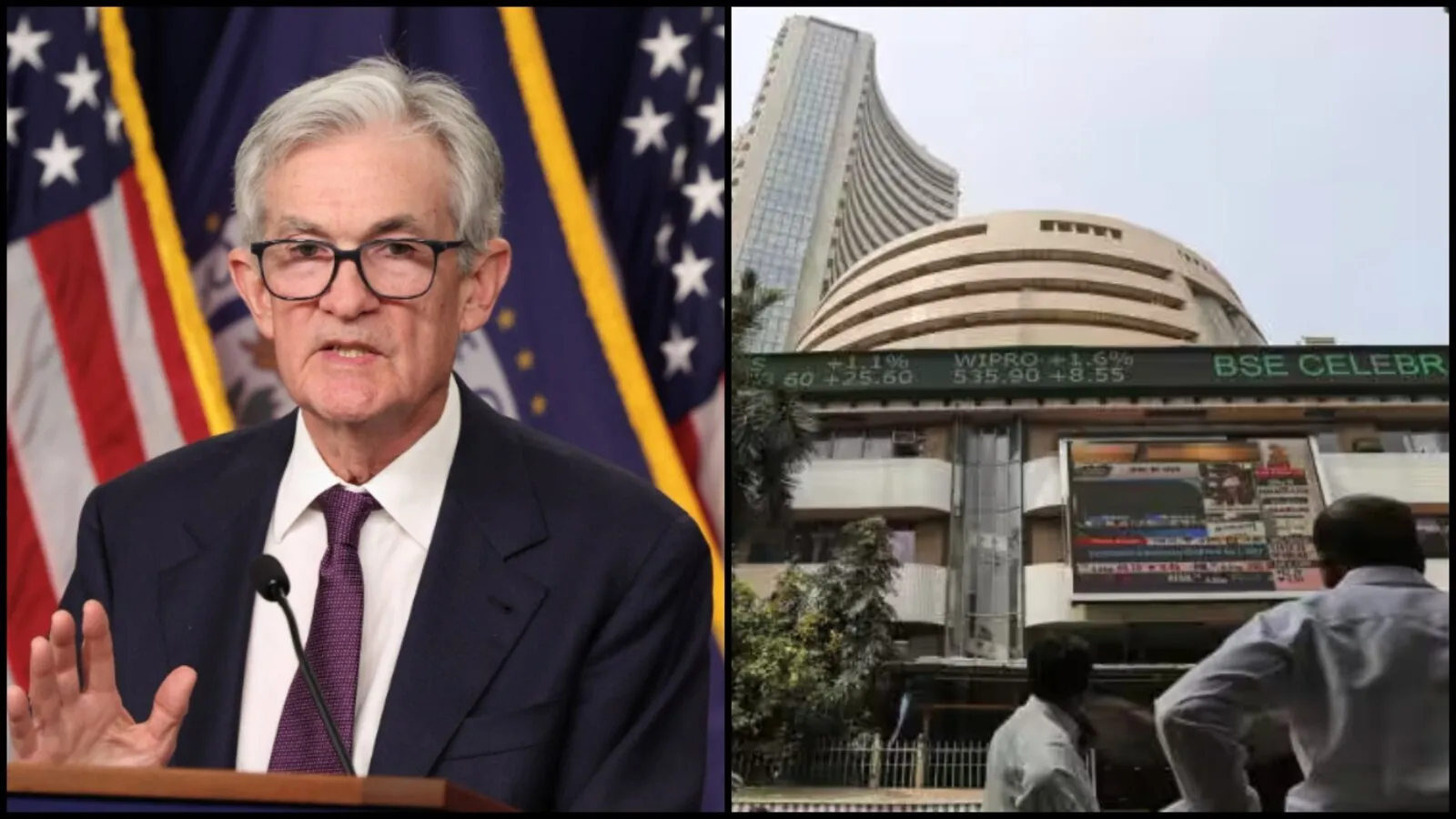
Indian equity markets have, in recent sessions, shown clear sensitivity to the evolving Fed rate narrative, with sector rotation patterns consistent with an environment where a higher-for-longer US rate backdrop is being actively priced in. Interest-rate-sensitive sectors, including real estate and select segments of the non-banking financial company space that rely heavily on wholesale funding, have shown particular caution, while export-oriented sectors that benefit from rupee weakness, such as information technology services, have seen comparatively more resilient performance through the same period.
Foreign institutional investment flows into Indian equities, closely tracked as a barometer of how global capital is responding to shifting relative return expectations between Indian and US assets, have shown a somewhat mixed pattern through the recent period of volatility, with certain sessions seeing continued foreign buying even as others recorded net outflows — a pattern strategists say reflects the genuinely two-sided nature of the current environment, in which India's underlying growth story continues to attract long-term foreign capital even as near-term global rate and geopolitical uncertainty periodically triggers more tactical, shorter-term outflows.
Historical Precedent For Rate-Expectation Shocks
India's markets have navigated several previous episodes of sudden shifts in US rate expectations over the past decade and a half, from the 2013 'taper tantrum' that triggered a sharp sell-off across emerging-market currencies and bonds, to more recent bouts of volatility tied to the Fed's post-pandemic tightening cycle. Each of these episodes offers useful, if imperfect, precedent for how the current shift might play out, generally featuring an initial sharp adjustment in currency and bond markets followed by a period of stabilisation as markets fully price in the revised policy expectations and investors reassess relative valuations across asset classes.
What distinguishes the current episode from several of these historical precedents, analysts note, is the specific combination of a monetary-policy-driven shock arriving simultaneously with an active, escalating geopolitical conflict directly affecting global energy prices — a compounding scenario that has fewer clean historical parallels and, as a result, has left even experienced market strategists offering a wider-than-usual range of views on how quickly, and how fully, current market pressures might ultimately resolve.
India's own policy toolkit for managing this kind of external shock has also matured considerably since the 2013 taper tantrum episode, with substantially larger foreign exchange reserves, a more developed domestic bond market less reliant on foreign capital for marginal financing, and a central bank with a considerably longer track record of credible, rules-based inflation targeting — all factors that economists say leave India meaningfully better positioned to absorb the current combination of shocks than it was during earlier, comparably sharp episodes of global rate-expectation volatility.
The Path Ahead
With the Federal Reserve's next policy meeting still weeks away, market-implied probabilities for a September rate hike are likely to remain volatile, shifting in response to incoming US economic data, further Fed official commentary, and the ongoing evolution of the US-Iran conflict and its impact on global oil prices and broader inflation expectations. For India, the coming weeks are likely to require careful navigation across multiple, interconnected fronts: managing currency volatility potentially warranting Reserve Bank of India intervention, monitoring the domestic inflation impact of elevated global oil prices, and calibrating monetary policy in a global environment that has, in the space of just a few weeks, shifted meaningfully toward a more cautious, less accommodative posture than markets had broadly anticipated at the start of the month.
For Indian investors and policymakers alike, the message from this latest shift in Fed rate expectations is a familiar one, even if the specific triggers are new: India's markets remain deeply and directly connected to global monetary policy and geopolitical developments, and the coming weeks are likely to test, once again, the country's accumulated toolkit for managing the kind of multi-front external pressure that has, with some regularity, tested emerging markets including India over the past several rate cycles.
Market strategists say the single most useful signal to watch in the immediate term will be the tone of upcoming Federal Reserve communications, including the minutes of its most recent policy meeting and any subsequent public remarks from senior officials, both of which are likely to offer further clarity on whether the current uptick in rate-hike probability represents a durable shift in the Fed's reaction function or a more transient response to the specific, oil-driven inflation shock currently working its way through the global economy.