Indian markets have witnessed some genuinely sharp single-stock swings this week, with a cluster of major banking and energy names — including HDFC Bank, Adani Total Gas, and Bandhan Bank — experiencing outsized volatility that market commentators have attributed to a convergence of three distinct forces occurring simultaneously: futures and options expiry-related trading dynamics, a genuinely mixed and closely scrutinised Q1 FY27 corporate earnings season, and heightened geopolitical tension in global energy markets tied to the escalating West Asia crisis. Understanding how these three forces interact offers a useful window into some of the more technical, structural dynamics that shape short-term Indian stock price movements, distinct from the underlying business fundamentals that typically drive longer-term valuation.
Futures and options expiry days, which occur on a monthly cycle for most Indian stocks and indices, represent a genuinely distinct trading dynamic from regular trading sessions, given the mechanical unwinding and rolling-over of derivative positions that market participants must execute as existing contracts approach their expiration date. Traders holding options and futures positions must either close out those positions, exercise them, or roll them forward into the next expiry cycle, creating concentrated trading activity that can, particularly in stocks or indices with substantial open derivative interest, produce meaningfully amplified price volatility relative to what the same underlying news flow might have produced during a more typical, non-expiry trading session.
This amplification effect tends to be particularly pronounced in large-cap, heavily traded stocks with substantial options market depth — precisely the category that HDFC Bank, given its status as India's largest private bank and a heavily weighted Bank Nifty and Nifty 50 constituent, falls squarely within. When a stock like HDFC Bank experiences a genuine, fundamentals-driven reaction to quarterly results during the same window as a significant F&O expiry, the resulting price movement can be considerably sharper than the underlying results alone might otherwise justify, as options market-makers and other derivatives participants adjust their hedging positions in response to both the fundamental news and the mechanical expiry-related trading flows occurring simultaneously.
Layered on top of this expiry-related amplification has been the genuinely mixed nature of this week's Q1 FY27 banking-sector earnings, with HDFC Bank delivering results broadly in line with Street estimates yet seeing its shares slip regardless, while Bandhan Bank delivered a genuine earnings beat with sharply improving asset quality metrics that triggered a more clearly positive market reaction. That divergence in fundamental outcomes across banks reporting within the same general window has created genuinely differentiated stock-specific narratives, even as the F&O expiry dynamics have simultaneously been amplifying whatever directional price movement each individual stock's underlying fundamentals were already pointing toward.
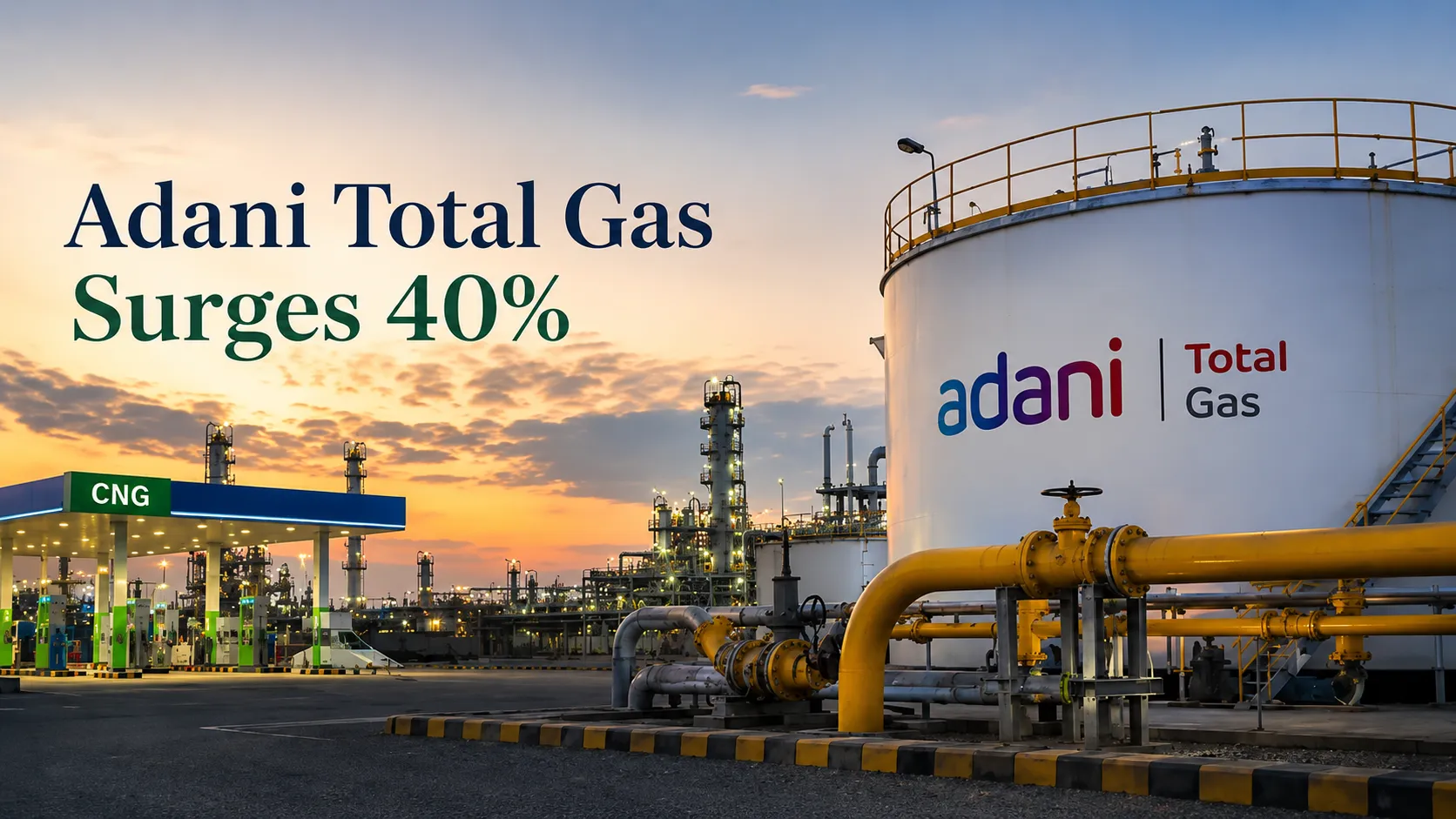
Adani Total Gas's inclusion in this week's volatility roundup brings the third major force into play: heightened geopolitical tension in global energy markets tied to the escalating West Asia crisis and its direct impact on crude oil and broader energy commodity pricing. City gas distribution companies like Adani Total Gas occupy a particularly sensitive position within India's energy value chain, given that their input costs are directly tied to natural gas pricing, which itself has shown meaningful correlation with the broader crude-oil price volatility currently dominating global energy markets, even though natural gas and crude oil are technically distinct commodities with their own independent supply-demand dynamics. Sharp movements in global energy prices, of the kind witnessed this week amid the West Asia crisis escalation, can trigger meaningful revaluation of city gas distribution companies' near-term margin outlook, adding a genuine fundamentals-driven volatility source that compounds whatever expiry-related amplification effects are simultaneously in play.
For retail investors and less experienced market participants, understanding this convergence of forces offers a useful lesson in distinguishing between genuinely fundamentals-driven stock price movements and those substantially amplified, or in some cases even primarily driven, by technical and structural trading dynamics like derivatives expiry. A sharp single-day price swing occurring during an F&O expiry week deserves somewhat more careful scrutiny before drawing firm conclusions about a stock's underlying investment thesis, since a meaningful portion of that day's price movement may reflect temporary, expiry-related trading flows that tend to normalise once the specific expiry-related positioning has fully unwound, rather than representing a durable, fundamentals-driven repricing of the stock's underlying value.
That said, expiry-related volatility amplification should not be mistaken for volatility without any fundamental basis at all — in each of this week's notable cases, including HDFC Bank, Bandhan Bank, and Adani Total Gas, there were genuine, material fundamental developments, whether quarterly earnings results or energy-market-driven cost pressures, providing the underlying directional catalyst that the expiry dynamics then amplified. The more accurate framing, according to derivatives market analysts, is that F&O expiry tends to act as a volatility multiplier on top of genuine fundamental catalysts, rather than as an independent source of price movement entirely disconnected from underlying business developments.