FundingLatest Deals12 MIN READ

ET Now Acquires Fintech Startup OpiGo, Pushes Beyond Business News Into Investor Platforms

Times Network has acquired fintech startup OpiGo and launched ET Now Pro, a premium subscription platform combining financial journalism with SEBI-registered research.

By Aravind Kumar · Author5 August 2026
ET Now Acquires Fintech Startup OpiGo, Pushes Beyond Business News Into Investor Platforms

SEO Title: ET Now Acquires OpiGo: Times Network Launches ET Now Pro For India's Retail Investors

Meta Description: Times Network has acquired fintech startup OpiGo and launched ET Now Pro, a premium subscription platform combining financial journalism with SEBI-registered research.

---

For nearly two decades, ET Now has occupied a familiar place in the daily routine of India's investing class: the television channel and, more recently, digital platform where retail investors go to watch market commentary, track breaking corporate news, and hear analysts debate the day's biggest stock moves. That role — trusted narrator of the market, rather than active participant in it — has just shifted meaningfully. Times Network has announced the acquisition of OpiGo, a stock advisory marketplace and investor engagement platform, in a move the company describes as propelling ET Now beyond traditional business news and live television into a comprehensive, technology-driven fintech ecosystem.

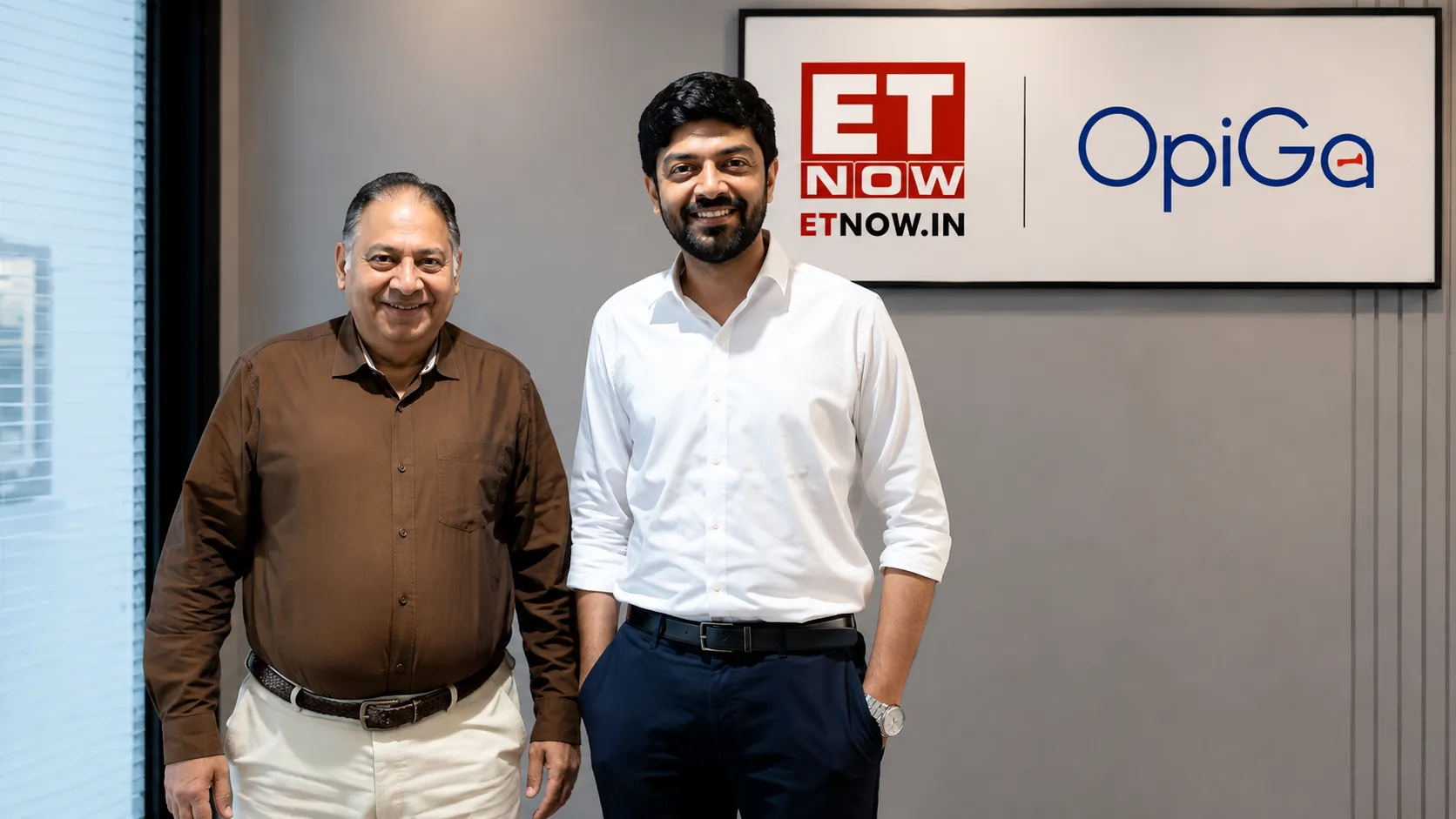
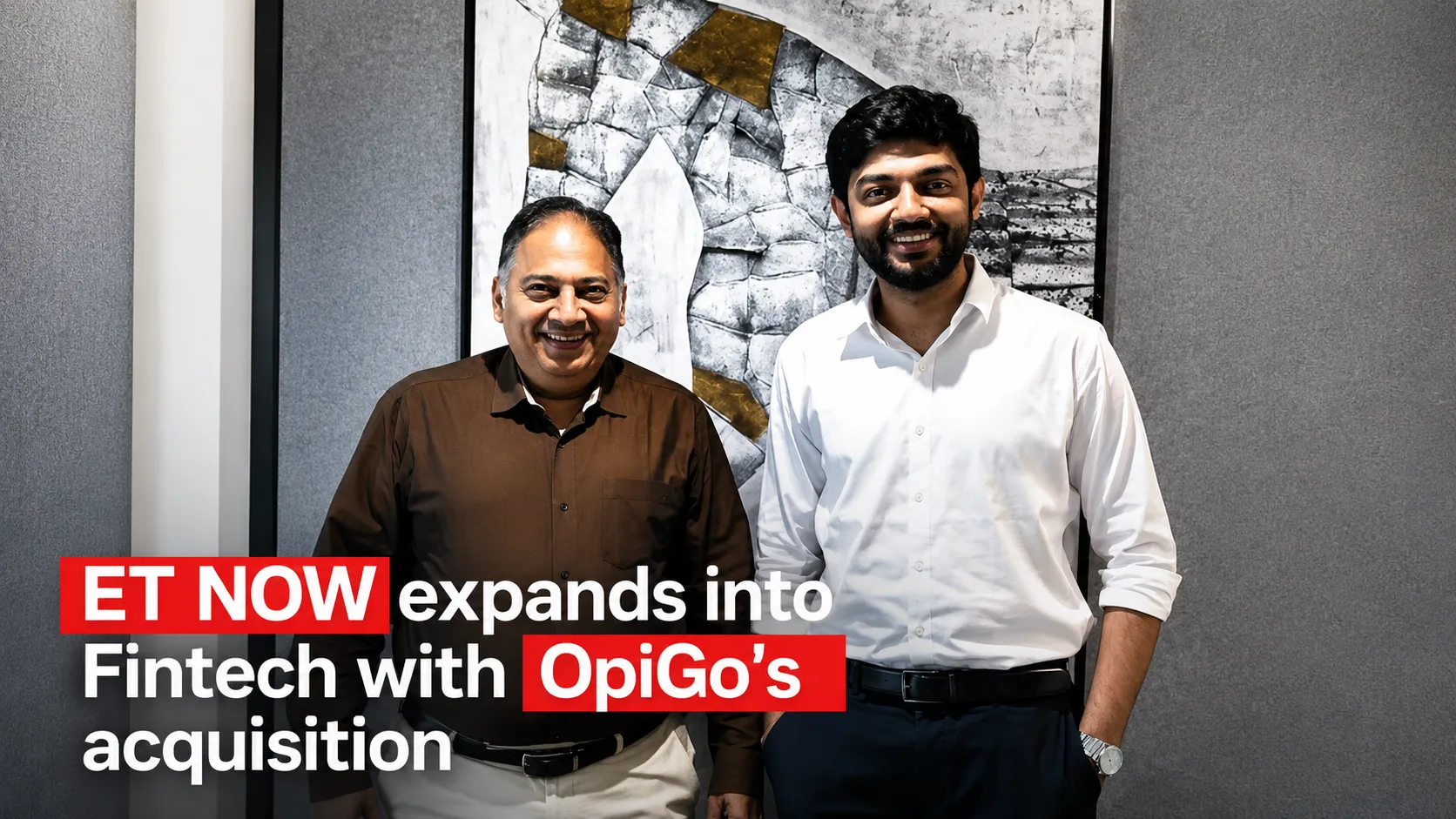
The acquisition, terms of which were not disclosed, marks Times Network's most direct entry to date into the business of connecting retail investors with the tools, research and community infrastructure to act on the market information ET Now has spent years reporting on. As part of the deal, OpiGo will be folded into ET Now Pro, a newly launched premium subscription service aimed squarely at India's rapidly expanding base of retail stock market participants.
ChatGPT Image Aug 5, 2026, 12_17_03 PM.png


What ET Now Pro Actually Offers

According to the company, ET Now Pro is designed to combine several previously separate strands of the investing experience into a single subscription product: live trade ideas and recommendations from SEBI-registered Research Analysts, curated investor communities for peer discussion, exclusive market insights and premium financial content, and continued access to ET Now's existing pay-TV channel. The pitch is essentially an attempt to build a vertically integrated investor ecosystem — journalism, research, community and technology tools bundled together — rather than requiring retail investors to stitch together separate subscriptions to a business news channel, a stock-tip service, and a social investing app.

N Subramanian, Executive Director and Group CEO of The Times Group, framed the acquisition as a response to a structural shift underway in Indian capital markets. "India's financial ecosystem is undergoing a generational transformation. Millions of new investors are entering capital markets and are seeking trusted information, expert guidance and meaningful participation. The next phase of growth will be led by platforms that combine credible financial content with technology, intelligence and community," Subramanian said. He added that ET Now has "built deep trust over the years as India's leading business news destination," and that with OpiGo and ET Now Pro, the company is "taking a significant step toward building a comprehensive investor ecosystem for the modern Indian investor."

That framing — credible content plus technology plus community — is a reasonably precise description of what OpiGo itself was originally built to do, which makes the acquisition less a diversification play than an attempt by Times Network to acquire, rather than build from scratch, the technology and community infrastructure that a media company would otherwise need years to construct organically.

Who OpiGo Was, And Why It Mattered

Founded by Devansh Mehta, OpiGo entered India's retail investing landscape as one of the early innovators in what the industry has come to call "score-linked social investing" — a model built specifically as a counterweight to the anonymous, unverified stock-tip groups that have proliferated across messaging platforms and social media, often to the financial detriment of retail investors who acted on unverified or outright fraudulent recommendations. OpiGo's founding insight was that transparency and accountability, rather than simply more information, was the missing ingredient in India's retail investing infrastructure — and the platform evolved over time from a pure social investing app into a marketplace connecting investors with SEBI-registered experts and research providers, ahead of the broader wave of retail-advisory regulation that has since reshaped the sector.

"When we started OpiGo, our vision was simple: make retail investing more transparent, intelligent and accountable," Mehta said, commenting on the acquisition. Under his leadership, the platform scaled to nearly one lakh downloads and built what the company describes as a highly engaged investor community centred on informed, research-backed decision-making rather than the speculative, rumour-driven behaviour that has periodically drawn regulatory scrutiny to India's retail trading ecosystem.

The Regulatory Backdrop That Makes This Deal Make Sense

To understand why a business news broadcaster would want to own a stock-advisory marketplace, it helps to understand the regulatory environment OpiGo was built to navigate. India's securities regulator, the Securities and Exchange Board of India (SEBI), has spent recent years tightening the rules around who is permitted to offer investment advice and stock recommendations, in direct response to a proliferation of unregistered "finfluencers" and anonymous tip channels that regulators have identified as a significant source of retail investor harm. That tightening has created both a compliance burden and a genuine market opportunity: platforms that can credibly demonstrate they connect users exclusively with SEBI-registered Research Analysts, rather than unverified voices, are positioned to capture demand that might otherwise flow toward increasingly risky, unregulated corners of the investing internet.

For ET Now, which already carries the institutional credibility of a mainstream, regulator-compliant media organisation, the OpiGo acquisition offers a way to extend that credibility into the advisory and community layer of retail investing, without having to build the underlying regulatory relationships and research-analyst network from scratch. For OpiGo, meanwhile, the deal offers something a standalone fintech startup often struggles to achieve organically: distribution. ET Now's existing audience — built over nearly two decades of business news broadcasting — represents exactly the demographic OpiGo has spent years trying to reach through more conventional startup growth channels.

ET Now's Own Digital Trajectory

The acquisition also builds on ET Now's own recent digital momentum. The company's digital business news platform, ETNow.in, launched in 2023, has grown rapidly in under three years to become one of India's leading digital business news destinations by traffic, according to the company. That growth trajectory — a legacy broadcast brand successfully extending into digital-native distribution — provides some evidence that Times Network's broader digital strategy has traction beyond television, lending credibility to the company's stated ambition of using the OpiGo acquisition to extend further into fintech infrastructure rather than remaining purely a content and advertising business.


India's financial ecosystem is undergoing a generational transformation. Millions of new investors are entering capital markets and are seeking trusted information, expert guidance and meaningful participation.
N Subramanian, Executive Director and Group CEO, The Times Group

What This Signals For India's Financial Media And Fintech Convergence

The ET Now–OpiGo deal is worth situating within a broader pattern that has become increasingly visible across India's financial services and media landscape: the blurring of lines between financial journalism, investment research, and fintech product infrastructure. As India's retail investor base has expanded dramatically over the past several years — driven by a combination of rising incomes, smartphone-enabled brokerage access, and a cultural shift toward equity investing among a generation previously more comfortable with fixed deposits and gold — the businesses best positioned to capture that growth are increasingly those that can offer a full-stack experience: information, analysis, community, and execution tools, rather than any single layer in isolation.

Media companies with established trust and distribution, like Times Network, are one obvious category of player positioned to make that full-stack push through acquisition rather than organic build-out. Discount brokerages and fintech platforms represent another, often moving in the opposite direction by adding content and community features to what were originally pure execution platforms. The competitive dynamics between these two starting points — media companies acquiring fintech capability versus fintech companies building media capability — are likely to intensify as India's retail investing boom continues, with the eventual winners likely determined less by which starting point proved advantageous and more by which companies can most credibly combine regulatory compliance, genuine research quality, and user trust at scale.

The Risk Of Blurring Journalism And Advisory

Any discussion of a media company acquiring a financial advisory platform ought to grapple honestly with a structural tension the combination creates: the traditional wall between journalism, which is meant to report on markets and companies with editorial independence, and financial advisory services, which are commercially incentivised to drive engagement and trading activity, however responsibly structured. ET Now's own institutional credibility has been built substantially on the perception that its market commentary and corporate reporting exist independently of any commercial stake in whether viewers actually trade on that information. Folding a stock-advisory marketplace into the same corporate structure — even one built specifically around SEBI-registered analysts and transparent, accountable recommendations — introduces a commercial interest in investor activity that did not previously exist in quite the same way.

This is not a novel dilemma; financial media companies globally, from Bloomberg's terminal business to CNBC's various partnership ventures, have long navigated similar tensions between reporting and monetisable financial services, generally through some combination of disclosed conflicts, structural separation between editorial and commercial teams, and regulatory compliance frameworks specific to investment advice. How rigorously Times Network builds and maintains that separation as it integrates OpiGo into ET Now Pro will likely determine whether the acquisition strengthens or gradually erodes the specific institutional trust that made ET Now an attractive acquirer for a platform built explicitly around investor trust and transparency in the first place.

What The Deal Signals About Fintech Exit Pathways

For India's broader fintech startup ecosystem, the OpiGo acquisition also offers a useful, if modest, data point about exit pathways available to smaller, founder-led fintech platforms that have built genuine user trust and regulatory compliance but may lack the scale to pursue an independent path toward profitability or public listing. Strategic acquisition by a larger media or financial services incumbent — rather than the more heavily covered pathways of venture-scale growth toward an eventual IPO, or acquisition by a larger fintech competitor — represents a third exit route that has arguably received less attention in coverage of India's startup ecosystem, despite offering a genuinely viable outcome for founders building compliant, trust-focused financial products at a scale that, while meaningful, may not justify continued independent existence against better-capitalised competitors.

A Founder's Exit, Reframed As A New Beginning

For Devansh Mehta, OpiGo's founder, the acquisition represents a transition from independent startup founder to a leadership role within a considerably larger media and financial services organisation — a common, if not universally chosen, path for founders of platforms that achieve genuine product-market fit and regulatory credibility but conclude that continued independent scaling would be slower or riskier than partnering with an established distribution partner. Mehta's own framing of OpiGo's original mission — making retail investing "more transparent, intelligent and accountable" — suggests the acquisition is being positioned internally not as a dilution of that mission but as an opportunity to pursue it at a scale OpiGo's standalone growth trajectory might have taken considerably longer to reach independently.


ChatGPT Image Aug 5, 2026, 12_18_26 PM.png


The Talent And Technology Question

Acquisitions of this kind also raise a practical question that often gets less attention than the strategic rationale: what happens to OpiGo's existing product, technology team and near-one-lakh-strong user base during integration. Media company acquisitions of smaller technology platforms have a mixed historical track record globally when it comes to preserving the acquired product's technical talent and product velocity once folded into a larger, less startup-paced organisational structure. Whether OpiGo's engineering and product teams remain intact and empowered to continue iterating on the platform within Times Network's structure, or whether the acquisition primarily serves to fold OpiGo's existing user base and brand into ET Now Pro while the underlying technology is gradually rebuilt or absorbed into Times Network's broader digital infrastructure, will likely determine how smoothly the transition unfolds for OpiGo's existing community of investors in the coming months.

What Comes Next

For now, the immediate task facing Times Network is integration: folding OpiGo's technology, research-analyst network and existing user base into the ET Now Pro product without diluting either party's core value proposition. For India's broader fintech and financial media landscape, the deal offers a clear signal that the boundaries between "reporting on markets" and "helping people participate in markets" are continuing to dissolve — and that the companies best positioned to benefit from India's retail investing boom may increasingly be those that refuse to stay confined to either side of that boundary.

TagsETNowOpiGoFintechIndiaTimesNetworkRetailInvestingStockMarketIndiaETNowProFinancialMediaIndianFintechInvestorPlatforms

Reader reviews

Sign in to rate and review this article.
Loading reviews…