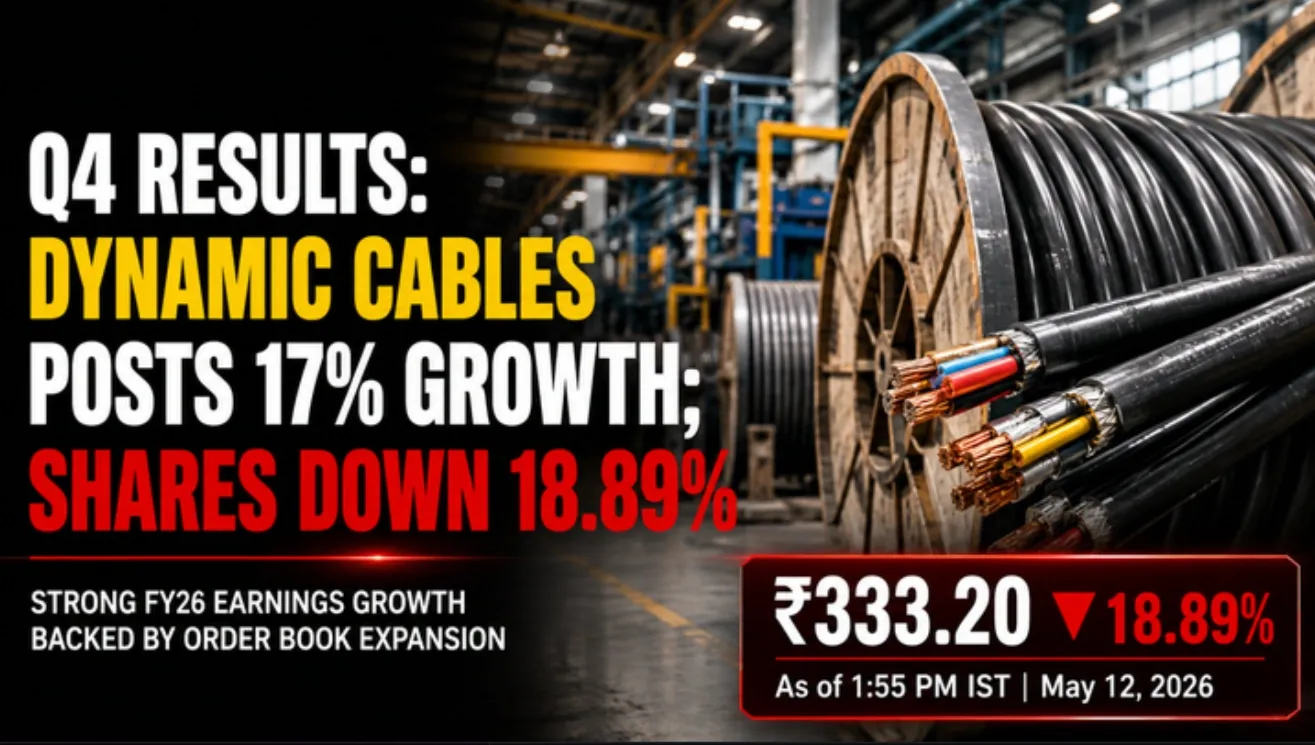
Jaipur: Dynamic Cables, a growing player within India's wire and cable manufacturing sector, reported a 40 basis point year-on-year improvement in its June quarter EBITDA margin, which climbed to 10.9 percent, a performance the company attributed substantially to benefits realised from inventory destocking during the period. The improvement, while modest in absolute terms, reflects a broader pattern of operational discipline that has characterised several mid-sized industrial manufacturers navigating India's current environment of volatile raw material costs and currency fluctuations, offering useful insight into how companies across the wire and cable manufacturing value chain are managing margin pressures amid a challenging broader input cost environment.
Wire and cable manufacturing represents a critical, if often overlooked, segment of India's broader industrial and infrastructure ecosystem, supplying essential components used across virtually every category of infrastructure development, from power transmission and distribution networks through to building construction, renewable energy installations, and industrial manufacturing facilities. As such, companies like Dynamic Cables occupy a strategically important position within India's broader infrastructure supply chain, even as they typically operate with considerably less public market visibility compared to the larger, more prominent infrastructure and capital goods companies that tend to dominate headline financial media coverage.
UNDERSTANDING THE INVENTORY DESTOCKING BENEFIT
The specific margin improvement mechanism cited by Dynamic Cables, benefiting from inventory destocking during the quarter, reflects a particular aspect of working capital and cost management that can meaningfully influence reported profitability for manufacturers dealing with volatile raw material input costs. Inventory destocking benefits typically arise when a company sells inventory that was purchased at earlier, often lower, raw material cost levels during a period when current market prices for the same inputs have since risen, allowing the company to report improved margins on the sale of this previously acquired, lower-cost inventory relative to what margins would have been had the same inventory needed to be purchased at prevailing, higher current market prices.
This dynamic is particularly relevant for wire and cable manufacturers given the sector's substantial exposure to copper and aluminium as primary raw material inputs, both of which are globally traded commodities subject to meaningful price volatility driven by a range of factors including global industrial demand trends, currency movements, and broader commodity market dynamics that can shift independently of company-specific operational performance. Effective inventory and working capital management, including strategic timing of raw material procurement relative to anticipated price movements, has therefore become an increasingly important lever that wire and cable manufacturers can utilise to help manage and optimise their reported profitability across different periods of raw material price volatility.
SECTOR CONTEXT: WIRE AND CABLE MANUFACTURING IN INDIA'S INFRASTRUCTURE STORY
Dynamic Cables' results arrive amid a period of sustained structural demand growth for wire and cable products across India, driven by multiple converging trends including continued government investment in power transmission and distribution infrastructure, accelerating renewable energy capacity additions that require substantial cabling infrastructure for grid connectivity, ongoing urbanisation and real estate construction activity that drives demand for building wire products, and the broader electrification of various sectors including transportation through growing electric vehicle adoption, which itself creates incremental demand for specialised cabling and charging infrastructure products.
This multi-pronged demand growth story has attracted increasing investor attention toward India's wire and cable manufacturing sector over recent years, with several companies across the segment, ranging from large, well-established players to smaller, more specialised manufacturers like Dynamic Cables, having demonstrated the ability to capture meaningful growth opportunities within this expanding addressable market, even as the sector continues to feature a relatively fragmented competitive landscape with numerous players competing across different product categories and regional markets.
RAW MATERIAL COST VOLATILITY AS A PERSISTENT CHALLENGE
Despite the generally favourable underlying demand backdrop, wire and cable manufacturers across India continue to grapple with the persistent challenge of managing raw material cost volatility, given the sector's heavy reliance on copper and aluminium inputs whose prices are influenced substantially by global commodity market dynamics that lie largely outside individual manufacturers' direct control. This ongoing volatility has been further compounded during the current period by the broader currency market pressures affecting the Indian rupee, given that a meaningful proportion of raw material procurement costs for many manufacturers carry direct or indirect linkage to global dollar-denominated commodity pricing benchmarks.
Companies that have demonstrated an ability to effectively navigate this raw material cost volatility, whether through strategic inventory management practices of the kind reflected in Dynamic Cables' current quarter results, hedging strategies, or simply operational scale advantages that provide greater negotiating leverage with raw material suppliers, have generally been rewarded by investors with more favourable valuation multiples relative to peers demonstrating greater margin volatility tied to raw material cost fluctuations.
DYNAMIC CABLES' GROWTH TRAJECTORY
Beyond the specific margin improvement highlighted in the current quarter's results, Dynamic Cables has, over recent years, pursued a broader growth strategy aimed at expanding its manufacturing capacity and product portfolio to capture a growing share of India's expanding wire and cable market opportunity. This growth strategy has included investments in expanded manufacturing capabilities and efforts to diversify the company's customer base across different end-market segments, reducing potential concentration risk while positioning the company to benefit from growth opportunities across multiple demand drivers rather than remaining overly dependent on any single segment of the broader wire and cable market.
Market analysts covering smaller, growth-oriented industrial manufacturers like Dynamic Cables have generally emphasised the importance of evaluating such companies' ability to sustain margin discipline while pursuing growth, recognising that rapid capacity expansion, while potentially supporting strong revenue growth, can sometimes come at the cost of near-term margin pressure if not carefully managed alongside the kind of operational and working capital discipline reflected in the current quarter's inventory destocking benefit.
IMPLICATIONS FOR THE BROADER MID-CAP INDUSTRIAL SEGMENT
Dynamic Cables' quarterly performance offers a useful, if modest-scale, case study for the broader universe of mid-cap and smaller industrial manufacturers navigating India's current operating environment, characterised by generally favourable underlying demand trends tied to the country's ongoing infrastructure and industrial development, set against the persistent challenge of managing volatile raw material costs and currency fluctuations that continue to introduce an element of unpredictability into quarterly financial performance across the broader industrial manufacturing landscape.
For investors seeking exposure to India's infrastructure and electrification growth story through smaller, more specialised industrial manufacturers rather than the larger, more prominent capital goods companies that typically dominate sector-level investment discussions, companies like Dynamic Cables offer an alternative avenue for participation in this broader structural growth theme, even as such smaller companies typically carry their own distinct risk considerations, including generally lower trading liquidity and greater sensitivity to company-specific execution and operational factors compared to their larger, more diversified peers.
LOOKING AHEAD
As Dynamic Cables and its broader universe of wire and cable manufacturing peers continue navigating the current environment of raw material cost volatility and currency fluctuation, the sector's ability to sustain the kind of margin improvement demonstrated in the current quarter's results, while continuing to capture the substantial underlying demand growth opportunity presented by India's ongoing infrastructure and electrification investment cycle, will likely remain a key theme for investors tracking this often-overlooked but strategically important segment of India's broader industrial manufacturing landscape.
CAPACITY UTILISATION AND OPERATING LEVERAGE DYNAMICS
Beyond the specific inventory destocking benefit highlighted in the current quarter, wire and cable manufacturers' profitability trajectories are typically also meaningfully influenced by capacity utilisation trends, given the sector's generally capital-intensive manufacturing processes that create significant operating leverage effects, wherein incremental revenue growth beyond a certain capacity utilisation threshold tends to flow through to profitability at a considerably higher rate than the underlying revenue growth itself, as fixed manufacturing costs get spread across a larger production volume base. This operating leverage dynamic means that companies successfully growing their revenue base while maintaining or improving capacity utilisation rates can often achieve disproportionately strong margin expansion, a pattern that analysts covering Dynamic Cables and similar mid-cap industrial manufacturers typically monitor closely as an important indicator of the sustainability of any given quarter's margin performance.
COMPETITIVE POSITIONING WITHIN A FRAGMENTED INDUSTRY
India's wire and cable manufacturing industry remains characterised by a relatively fragmented competitive structure, featuring a mix of larger, well-established national players alongside numerous smaller, regionally-focused manufacturers like Dynamic Cables, each competing for market share across various product categories and end-market segments. This fragmented structure creates both opportunities and challenges for smaller players seeking to grow their market presence, with success typically depending on factors including product quality and certification credentials, particularly for specialised applications like power transmission cabling, customer relationship depth, and the kind of operational efficiency and cost management discipline reflected in the current quarter's results.
EXPORT MARKET OPPORTUNITIES
Beyond the substantial domestic demand opportunity, several Indian wire and cable manufacturers, including companies of Dynamic Cables' scale, have increasingly begun exploring export market opportunities, leveraging India's competitive manufacturing cost base and growing reputation for quality manufacturing to capture demand from international markets seeking to diversify their own supply chains away from historical over-reliance on any single sourcing geography. This export dimension, while typically representing a smaller proportion of overall revenue compared to the substantial domestic opportunity, offers an additional growth avenue and a degree of diversification benefit that can help reduce a company's overall dependence on domestic demand cycles and policy conditions.
FINANCIAL DISCIPLINE AS A DIFFERENTIATING FACTOR
In an industry characterised by numerous competing manufacturers with broadly similar product offerings, the kind of financial and working capital discipline demonstrated by Dynamic Cables through its inventory destocking-driven margin improvement represents an important differentiating factor that can meaningfully influence relative investor perception and valuation across the sector's various listed players. Companies able to consistently demonstrate this kind of operational discipline, translating into more stable and predictable margin performance across different raw material price environments, have generally been rewarded by investors with comparatively more favourable valuation treatment relative to peers exhibiting greater margin volatility.
As India's infrastructure and electrification investment cycle continues over the coming years, companies like Dynamic Cables that can consistently combine growth with the kind of margin discipline demonstrated this quarter are likely to remain well positioned to capture an increasing share of this substantial and expanding market opportunity.
WORKING CAPITAL MANAGEMENT AS A BROADER THEME
The specific inventory destocking benefit highlighted in Dynamic Cables' current quarter results fits within a broader theme of working capital management that has increasingly drawn analyst attention across India's mid-cap industrial manufacturing universe, as companies of this scale typically have more limited access to the kind of sophisticated hedging instruments and treasury management capabilities available to larger, more well-resourced industrial conglomerates. For such companies, disciplined management of inventory levels, receivables, and payables represents one of the more directly controllable levers available to management teams seeking to optimise financial performance and cash generation, making working capital efficiency metrics an increasingly important area of focus for analysts evaluating mid-cap industrial investment opportunities across the broader sector.
OUTLOOK FOR THE REMAINDER OF FY27
Looking toward the remainder of the current fiscal year, Dynamic Cables' ability to sustain both its underlying revenue growth trajectory and the margin discipline demonstrated in the June quarter will likely depend substantially on the evolving trajectory of copper and aluminium prices globally, alongside the pace of continued infrastructure and electrification-linked demand growth across its core end markets, both of which remain subject to the same broader macroeconomic and geopolitical uncertainties that continue to shape the wider Indian industrial manufacturing landscape.
For now, the current quarter's results offer a modest but encouraging data point for investors tracking Dynamic Cables and the broader wire and cable manufacturing sector, illustrating that disciplined operational execution can continue to deliver margin gains even amid a broader environment of persistent input cost and currency volatility.
As the company continues reporting subsequent quarters, sustained margin performance in the range demonstrated this quarter would offer further validation of the underlying operational improvements management has pursued, reinforcing the investment case for a company that, while modest in scale relative to India's largest industrial names, continues to carve out a meaningful and profitable niche within one of the country's most structurally important manufacturing sectors.