The Bank Said No. Delhi Just Said Yes.
She had the idea. She had the customers. She had been running her business out of her home for three years, building slowly, proving the demand was real. What she did not have — what she has never had, and what most women entrepreneurs in India do not have — was property in her name to pledge as collateral against a loan large enough to actually scale.
The bank said no. The loan officer moved on to the next file. The business stayed small.
This is not one woman's story. It is the story of millions of women across India who sit at the intersection of genuine entrepreneurial capability and a financial system that was built on the assumption that the person applying for a business loan owns an asset — a house, land, equipment — in their own name. In a country where women own less than 15 per cent of property, that assumption excludes most of them by design.
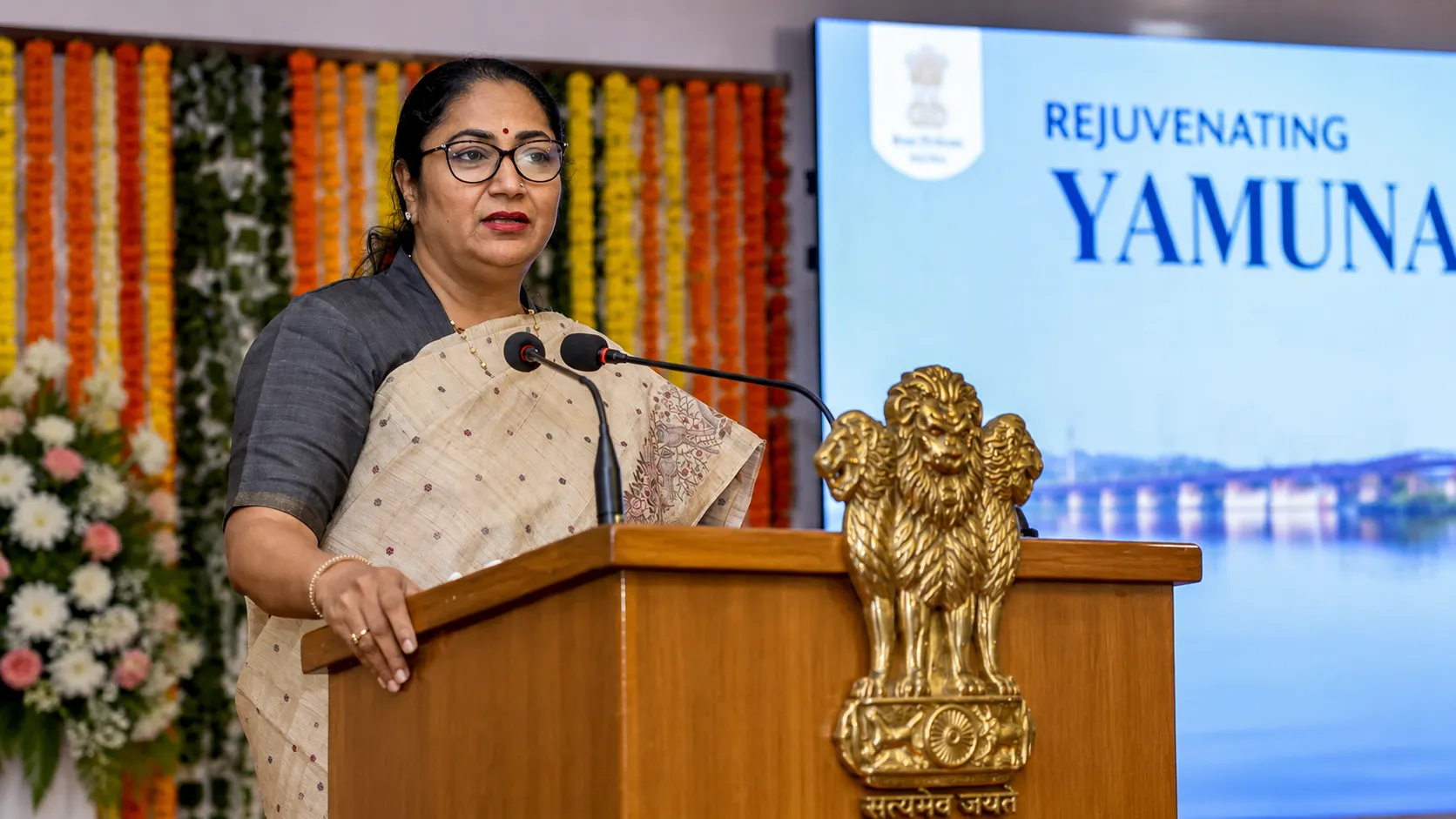
On May 17, 2026, Delhi Chief Minister Rekha Gupta announced something that addresses this problem directly. Speaking at the inauguration of the two-day Mega Self Help Group Mela 2026 at Unity One Mall in Rohini West — where around 24 self-help groups from across the North-West District had gathered to showcase handicrafts, khadi, food products, crochet work, and other handmade goods — Gupta announced that the Delhi government would provide collateral-free loans of up to ₹10 crore to women-led startups and self-help groups, with the government itself acting as guarantor for banks.
That last sentence is the most important one. Not because it is particularly surprising — the collateral problem is one of the most well-documented structural barriers in India's women entrepreneur literature. But because a sitting Chief Minister said it explicitly, made it the centrepiece of a policy announcement, and put the state's credit behind the solution.
What the Scheme Actually Does — and Why the Structure Matters

The mechanics of the announcement deserve clear explanation, because the structure of what Delhi is doing is meaningfully different from what most people mean when they hear "a ₹10 crore fund for women startups."
This is not a grant. It is not a dedicated corpus of ₹10 crore that gets distributed among applicants. It is a loan guarantee scheme — the Delhi government steps in as guarantor, which means it takes on the default risk that banks have historically used as the justification for requiring collateral in the first place. Women-led startups and SHGs can borrow up to ₹10 crore each from participating banks without pledging any property or assets, because Delhi will stand behind the loan.
This structural approach matters for several reasons.
First, it attacks the problem at its source. The collateral requirement is not a minor technicality — it is the single most consistent reason women-led enterprises remain undersized relative to their potential. Industry observers have noted that access to large-ticket funding is one of the biggest hurdles for women founders, especially in sectors outside technology and urban services. A woman running a handicraft enterprise, a food processing business, or a local retail operation cannot pledge a ₹10 crore asset because she does not have one. The loan guarantee scheme does not ask her to.
Second, it scales the ceiling significantly. Most women-entrepreneur support schemes in India operate at the seed or micro level — ₹1 lakh to ₹10 lakh, enough to start but not enough to grow. A ceiling of ₹10 crore puts real growth capital within reach of enterprises that have already demonstrated viability and are ready to scale, which is precisely the gap where India's most capable women-led businesses get stuck.
Third, it changes the relationship between women entrepreneurs and the formal banking system. Banks participating in the scheme were present at the SHG Mela itself, directed by the government to simplify the lending process for women-led ventures. The ask was not for banks to take on more risk — it was for them to engage more directly, with the government absorbing the default exposure. That is a different kind of intervention from asking banks to be more gender-inclusive voluntarily.
The announcement sits within Delhi's broader Startup Policy 2026, which includes a proposed allocation of ₹350 crore over five years to support entrepreneurs, student innovators, and early-stage startups. Separately, the Delhi Education Minister announced a ₹325 crore corpus to support student-led startups under a campus-to-market incubation framework. The women-led loan scheme is one piece of a policy ecosystem that Delhi is actively building — not a standalone gesture.
Why Collateral Is the Right Problem to Target
The collateral barrier is not the only reason women founders in India are underfunded. But it is the most structural one, and it is the one that operates furthest upstream — blocking women from accessing formal credit long before they ever reach a VC pitch room.
The numbers build a consistent picture. Women-led micro, small, and medium enterprises face a credit gap exceeding $158 billion. Women entrepreneurs in India face a 19 per cent loan rejection rate, compared to 8 per cent for men — nearly 2.5 times higher, even when applications are otherwise equivalent. Women account for only 15 per cent of seed-stage startup funding. At the seed stage, where the collateral requirement is most acutely felt, the gap is widest.
The Kalaari Capital CXXO report, released in March 2026, framed the broader funding gap as a failure of price discovery — capital concentrating around pattern-matched familiarity rather than actual return potential. But below the VC layer, the collateral problem is even more blunt. It does not require conscious bias or network exclusion. It simply requires that the system demand something most women do not have, and then treat their inability to provide it as evidence of creditworthiness risk.
What Delhi's scheme does is break that loop. By substituting government guarantee for personal asset pledge, it separates creditworthiness — the actual question — from property ownership — a proxy that has nothing to do with the quality of the business. A woman who has been running a viable enterprise for three years, with real customers and real revenue, is creditworthy. The collateral requirement was preventing the banking system from seeing that.
The Market Access Piece: Malls, Visibility, and What Comes After the Loan
The collateral-free loan announcement was not the only thing CM Gupta announced at the SHG Mela. The Delhi government also said it would create dedicated retail spaces for women entrepreneurs in malls and commercial centres across the capital, giving SHG-produced goods — handicrafts, khadi, food products, handmade items — a permanent, visible presence in high-footfall commercial locations.
This matters because access to capital and access to market are two different problems, and solving only the first one leaves businesses stuck at a different bottleneck. A woman who can now borrow ₹50 lakh to scale her crochet enterprise still needs customers at a price point that the business can sustain. Placement in a Delhi mall, alongside brands with national distribution, is not a small thing for a micro-enterprise that has never had that kind of platform.
The combination — loan access plus market access — reflects an understanding of the full barrier stack that women-led grassroots businesses face. Finance and distribution are the two rails the train needs to run on. Delhi's announcement addresses both.
What Has to Happen Next
An announcement is not a scheme. A scheme is not a disbursement. A disbursement is not an outcome.
The gap between what gets announced in a policy speech and what actually reaches women entrepreneurs on the ground is where most state-level women entrepreneur initiatives have historically lost momentum. The implementation variables that will determine whether this scheme delivers what it promises are significant.
Banks need to follow through on the simplified lending process they were asked to adopt. The guarantee structure needs to be operationalised clearly enough that branch-level loan officers — not just policy architects — understand what they are being asked to do differently. The scheme needs outreach that reaches women entrepreneurs outside Delhi's urban core, in the districts and neighbourhoods where the collateral problem is most acute and awareness of government schemes is lowest.
The CM's framing of the initiative in terms of Vocal for Local, Atmanirbhar Bharat, and One District One Product places it within a broader national narrative. That framing is politically meaningful, but for a woman in Rohini or Shahdara trying to access a loan to scale her food business, what matters is whether the local branch manager has the authority and the instruction to process her application differently than they did before.
That is the implementation challenge. It is a significant one. But the policy architecture — government guarantee, collateral removal, direct bank engagement at the SHG Mela, retail space creation — is designed more thoughtfully than most announcements of this kind. The intent and the structure are both right.
Why This Announcement Deserves Attention Beyond Delhi
State-level startup policy in India is watched for a reason. When a state government makes a structural commitment — not a one-time grant, not an awareness campaign, but a loan guarantee scheme with a ₹10 crore ceiling — it becomes a reference point for other state governments and for the national policy conversation.
Delhi's move comes in a year where the national data is unambiguous. As of January 31, 2026, 1,02,054 of India's 2,12,283 DPIIT-recognised startups have at least one woman director or partner. The presence of women in India's formal startup ecosystem has never been greater. The funding access has not kept pace with the presence — women founders still receive, in Kalaari Capital's precise language, ₹4 for every ₹100 flowing through India's most powerful startup networks.
What Delhi's scheme adds to that picture is a state-level structural intervention targeting the layer below venture capital entirely — the layer where most women-led businesses in India actually live. Not the VC-backed tech startup, but the SHG producing khadi in Rohini. Not the Series A founder, but the woman who has been running a food enterprise from her kitchen for three years and cannot get a formal loan to move it into a commercial kitchen.
Both layers matter. The ₹10 crore ceiling is high enough to reach growth-stage businesses, and the collateral removal is fundamental enough to open the door for businesses that have never been able to knock. If the implementation matches the design, this is the kind of scheme that gets replicated.
The women of Delhi's startup ecosystem and self-help group networks have been building for a long time without the formal financial system fully on their side. The announcement of May 17, 2026 is the state telling them, with a government guarantee behind it, that this time it will be. The harder work — making that promise real at the branch level, in the loan application, in the account that finally gets credited — starts now.