Mumbai: Three distinct but deeply interconnected forces have converged to put Indian equity markets under sustained pressure in recent sessions, and understanding each of them — individually and in combination — offers the clearest picture yet of why Dalal Street has struggled to find its footing even as corporate earnings season delivers a genuinely mixed, and in several cases encouraging, set of results. The overhangs in question are rising crude oil prices, persistent selling by Foreign Institutional Investors, and an escalating conflict in West Asia that shows no clear signs of near-term resolution.
Start with crude. Brent crude has been pushing toward its highest levels in roughly five weeks, a development that carries outsized significance for an economy as structurally dependent on imported energy as India's. India imports the overwhelming majority of its crude oil requirements, meaning that sustained increases in global crude benchmarks translate almost mechanically into a wider trade deficit, added pressure on the rupee, and a fresh source of inflationary risk that can complicate the Reserve Bank of India's own monetary policy calculus at precisely the moment policymakers might otherwise be inclined toward a more accommodative stance to support growth.
The proximate cause of crude's climb is the intensifying conflict in West Asia, which has escalated meaningfully in recent weeks. Comments from senior political figures in Washington, including warnings that regional actors 'have to pay' for the deaths of American servicemen, have raised the spectre of further escalation rather than de-escalation, keeping a geopolitical risk premium embedded in oil prices that traders had, in calmer periods, been able to largely ignore. For Indian markets, this geopolitical dimension matters as much as the pure economics of the oil price move itself, because it introduces a layer of unpredictability that is inherently difficult for either policymakers or investors to model or hedge against with any real precision.
The knock-on effects of elevated crude prices ripple through the Indian economy and its equity markets in fairly predictable, well-understood channels, even if their precise magnitude is harder to forecast. Aviation stocks are among the most immediately and visibly affected, given that jet fuel constitutes a substantial share of airline operating costs — InterGlobe Aviation has featured prominently among recent sessions' worst-performing large-cap stocks precisely for this reason. Oil marketing companies face their own, more complex set of pressures, caught between higher input costs and government-influenced retail pricing that does not always move in lockstep with global crude benchmarks. And more broadly, any sector with meaningful exposure to transportation, logistics or energy-intensive manufacturing processes tends to see margin pressure build as crude prices climb and stay elevated.
The second overhang — persistent selling by Foreign Institutional Investors — operates through a different but equally consequential channel. FIIs have remained steady net sellers of Indian equities through recent sessions, a pattern that matters for reasons that go beyond simple supply-and-demand arithmetic in the secondary market. FII flows are widely read by domestic market participants as a real-time signal of how global institutional capital is weighing India's risk-reward proposition relative to other markets, both other emerging markets and developed ones. When large, sophisticated pools of foreign capital choose to reduce exposure simultaneously, it tends to weigh on sentiment even among domestic investors who might otherwise view current valuations as reasonably attractive on fundamentals alone.
The mechanics of sustained FII outflows also interact directly with the currency channel, compounding the pressure created by elevated crude prices. As foreign investors sell Indian equities and repatriate proceeds, that selling itself contributes to rupee weakness — and a weaker rupee, in turn, erodes the dollar-denominated returns of any FII capital that remains invested, creating a feedback loop that can, in periods of sustained pressure, become self-reinforcing. This dynamic is precisely why market participants watch the rupee's trajectory against the dollar so closely as a real-time barometer of how the FII selling and crude oil pressures are compounding one another in practice.
Domestic institutional investors — principally mutual funds and insurance companies — have historically provided an important counterbalance during episodes of sustained FII selling, absorbing a meaningful share of the resulting supply and, in several previous cycles, helping cushion the market from steeper declines than would otherwise have occurred. Whether that pattern repeats with sufficient scale during the current episode of FII outflows is one of the more closely watched variables among market strategists assessing how much further the current corrective phase might extend before finding a durable floor.

The third overhang, West Asia's escalating geopolitical tensions, deserves treatment as a distinct factor even though it is closely intertwined with the crude oil dynamic discussed above, because its effects on market sentiment extend beyond the pure commodity price channel. Geopolitical conflict of this nature introduces a form of genuine tail-risk uncertainty that is difficult for markets to price with any confidence — the range of plausible outcomes, from swift de-escalation to a much broader and more damaging regional conflict, remains wide, and markets generally respond to that kind of binary, hard-to-model uncertainty by demanding a higher risk premium across asset classes, equities very much included.
Technical analysts tracking the Nifty have flagged 24,200 as an important near-term resistance level for the index, with commentary suggesting that a sustained move back above that level would be an essential precondition for reviving bullish momentum and improving the market's broader near-term technical structure. On the downside, the psychologically significant 24,000 mark, already breached to the downside in recent sessions, is being closely watched as a level whose sustained loss could trigger a fresh and potentially sharper round of selling pressure, according to commentary from several brokerage research desks.
What makes the current environment particularly challenging for market participants to navigate is precisely the simultaneity of these three pressures. Any one of them in isolation — a moderate crude price uptick, a routine bout of FII profit-booking, or a geopolitical flare-up that proves short-lived — would likely have been absorbed by the market with comparatively limited and short-lived impact. It is the confluence of all three occurring at once, each reinforcing and amplifying the others through the currency and sentiment channels described above, that has produced the more sustained, multi-session pressure Indian markets have experienced recently.
Sector rotation patterns offer a useful window into how professional money managers are currently navigating this triple overhang. A relative shift toward defensive sectors such as FMCG, pharmaceuticals and select technology names, and away from more cyclical, rate-sensitive sectors such as real estate and public sector banking, suggests that at least part of the institutional investor base is treating the current environment as a tactical repositioning rather than a signal to fundamentally reduce overall India exposure — a pattern consistent with investors expecting the current overhang to persist for a defined, if uncertain, period rather than indefinitely.
For retail investors, financial advisors have generally counselled a similar message across each of the individual pressures discussed here: near-term volatility driven by external shocks of this nature — commodity price movements, foreign capital flow shifts and geopolitical flashpoints — has historically proven to be a recurring, if irregular, feature of Indian equity markets rather than a permanent regime change, and India's underlying structural growth drivers, including its demographic profile and ongoing corporate earnings growth, have tended to reassert themselves as the dominant influence on returns over longer holding periods once acute overhangs of this kind eventually fade.
Looking ahead, the resolution — or further escalation — of each of these three overhangs will likely determine the market's trajectory over the coming weeks more than any single domestic catalyst, earnings season included. Any meaningful de-escalation in West Asia would likely ease crude prices relatively quickly, given how much of the current price premium appears to be geopolitical risk rather than pure supply-demand fundamentals, which in turn would likely ease pressure on the rupee and could help stabilise or reverse the recent pattern of FII outflows. Conversely, further escalation on the geopolitical front would likely see all three pressures intensify simultaneously, given how tightly interconnected the underlying channels are.
Until greater clarity emerges on the geopolitical front specifically, Indian markets appear likely to remain in the kind of watchful, headline-sensitive trading pattern that has characterised recent sessions — a market fundamentally sound in its underlying corporate earnings trajectory, but held hostage in the near term to a set of external variables that lie almost entirely outside the control of domestic policymakers, corporates or investors alike.
Options market positioning offers an additional window into how sophisticated traders are actively hedging against the compounded risk created by these three overlapping overhangs. Elevated implied volatility readings across Nifty options, along with a notable build-up of open interest around strike prices clustered near key psychological levels, indicate that a meaningful segment of the market has moved to actively protect existing equity positions rather than either fully liquidating exposure or adding aggressively on the current dip — a pattern more consistent with tactical, temporary caution than with a wholesale reassessment of India's longer-term investment case.
Currency markets, too, are being watched with unusual intensity given how directly the rupee's trajectory sits at the intersection of all three overhangs discussed here. The Reserve Bank of India has, in previous episodes of sharp currency pressure, intervened selectively to smooth excessive rupee volatility without attempting to defend any particular fixed level, and market participants will be watching closely for any signs of similar intervention should the current combination of elevated crude prices and sustained FII outflows put renewed pressure on the currency in the sessions ahead.
Global brokerages covering Indian equities have, notably, sought to draw a clear analytical distinction between their near-term tactical positioning and their longer-run structural view of the Indian market opportunity. Several continue to describe India as among the more structurally attractive large emerging markets on a multi-year view, citing durable corporate earnings growth, a favourable demographic profile, and sustained policy support for domestic manufacturing and infrastructure investment — even as those same houses acknowledge that near-term portfolio flows into India could remain genuinely volatile for as long as the current combination of elevated crude prices and unresolved West Asia tensions persists.

Historical precedent offers some, if imperfect, guidance for how episodes of this nature have typically resolved in the past. Previous periods in which Indian markets faced a broadly similar combination of external commodity price shocks and geopolitically-driven risk aversion have, in most instances over the past several years, ultimately proven to be temporary rather than structural setbacks, with markets generally finding a durable base and resuming their broader uptrend within a period of several weeks once the specific triggering events either resolved or were more fully absorbed into prevailing asset prices. Whether the current episode follows a similar pattern will depend heavily on factors that remain genuinely difficult to forecast with confidence, chief among them the trajectory of the West Asia conflict itself.
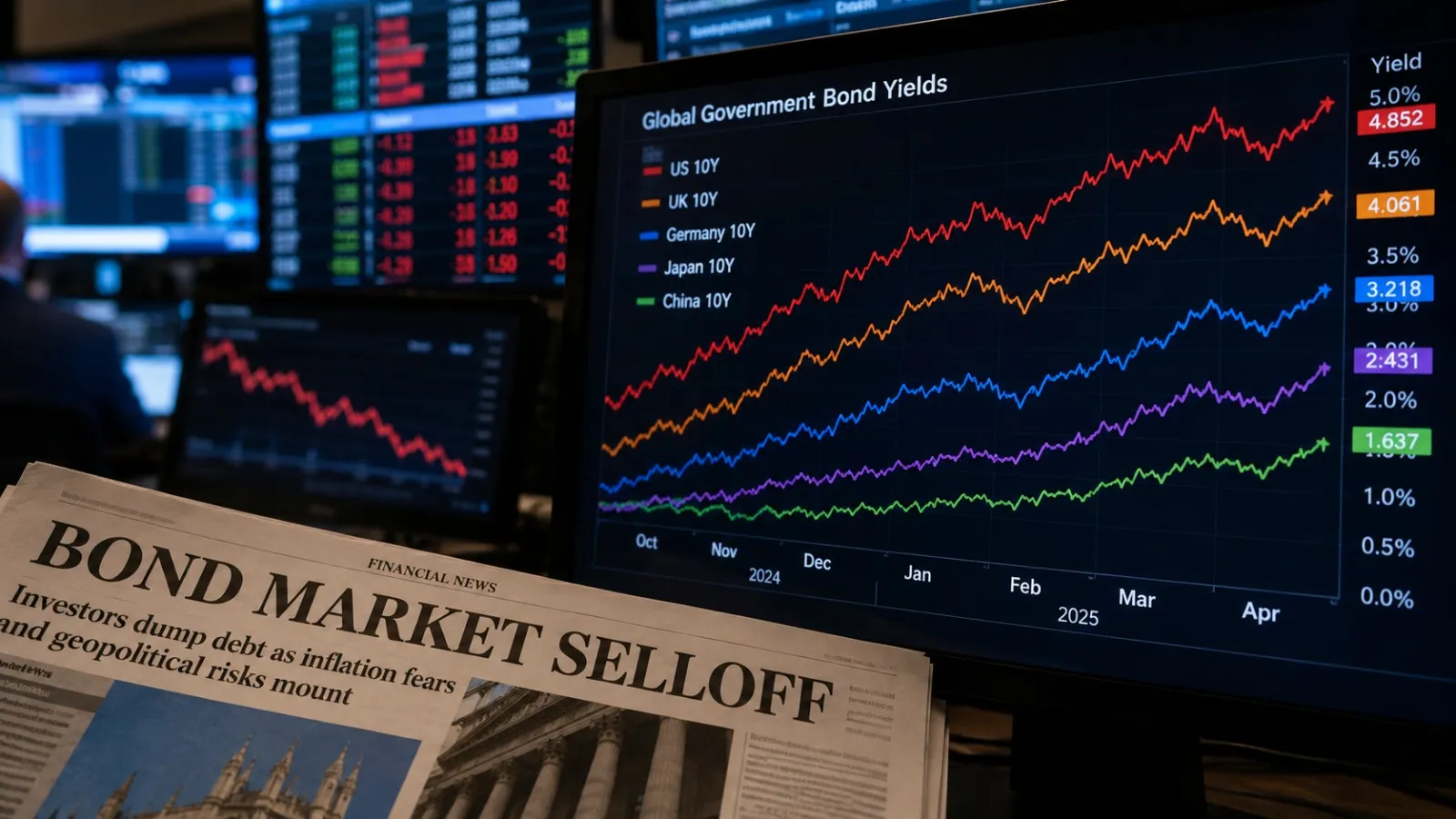
Commodity market strategists add a further, related dimension worth tracking alongside crude specifically: the broader basket of industrial and precious metals has, in past episodes of geopolitical stress, tended to move in tandem with oil price spikes, and any sustained rise in input costs across metals used in construction, automotive manufacturing and electronics could compound margin pressure for Indian industrial companies well beyond the direct energy-cost channel that crude oil alone represents, adding yet another layer to the overhang investors are currently attempting to price into equity valuations across cyclical and manufacturing-linked sectors. Fixed income markets have offered their own corroborating signal of the caution currently gripping Indian investors more broadly. Yields on India's benchmark government bonds have shown periodic upward pressure alongside the equity market weakness, reflecting a combination of inflationary concerns tied to elevated crude prices and a broader reassessment of near-term risk premia across asset classes, a pattern consistent with the kind of synchronised, cross-asset caution that tends to characterise periods when multiple distinct macro risks are operating simultaneously rather than in isolation.
Currency options and forward markets, similarly, have shown a modest but discernible uptick in hedging activity among corporates with significant import or export exposure, as businesses seek to lock in rupee-dollar rates against the possibility of further currency depreciation should the combination of FII outflows and elevated crude prices persist or intensify over the coming weeks.