SEO Title: Creador In Advanced Talks For Leeford Healthcare Stake At ₹8,500 Crore Valuation
Meta Description: Malaysian private equity firm Creador is reportedly in advanced talks to acquire a 10% stake in Leeford Healthcare, valuing the pharmaceutical company at around ₹8,500 crore.
Malaysian private equity firm Creador is reported to be in advanced talks to acquire a 10% stake in Leeford Healthcare, a deal that would value the Ludhiana-based pharmaceutical company at approximately ₹8,500 crore. If completed, the transaction would mark one of the more significant private equity bets on India's generic pharmaceutical sector this year, bringing international institutional capital into a company that has grown, largely under the radar of national business coverage, into one of India's largest generic drugmakers over less than two decades. Deals of this scale involving companies outside India's traditional financial media spotlight often only become visible to a broader audience once a marquee international investor's involvement generates the kind of coverage this reported transaction now has.
From A Punjab Startup To India's Second-Largest Generic Pharma Company
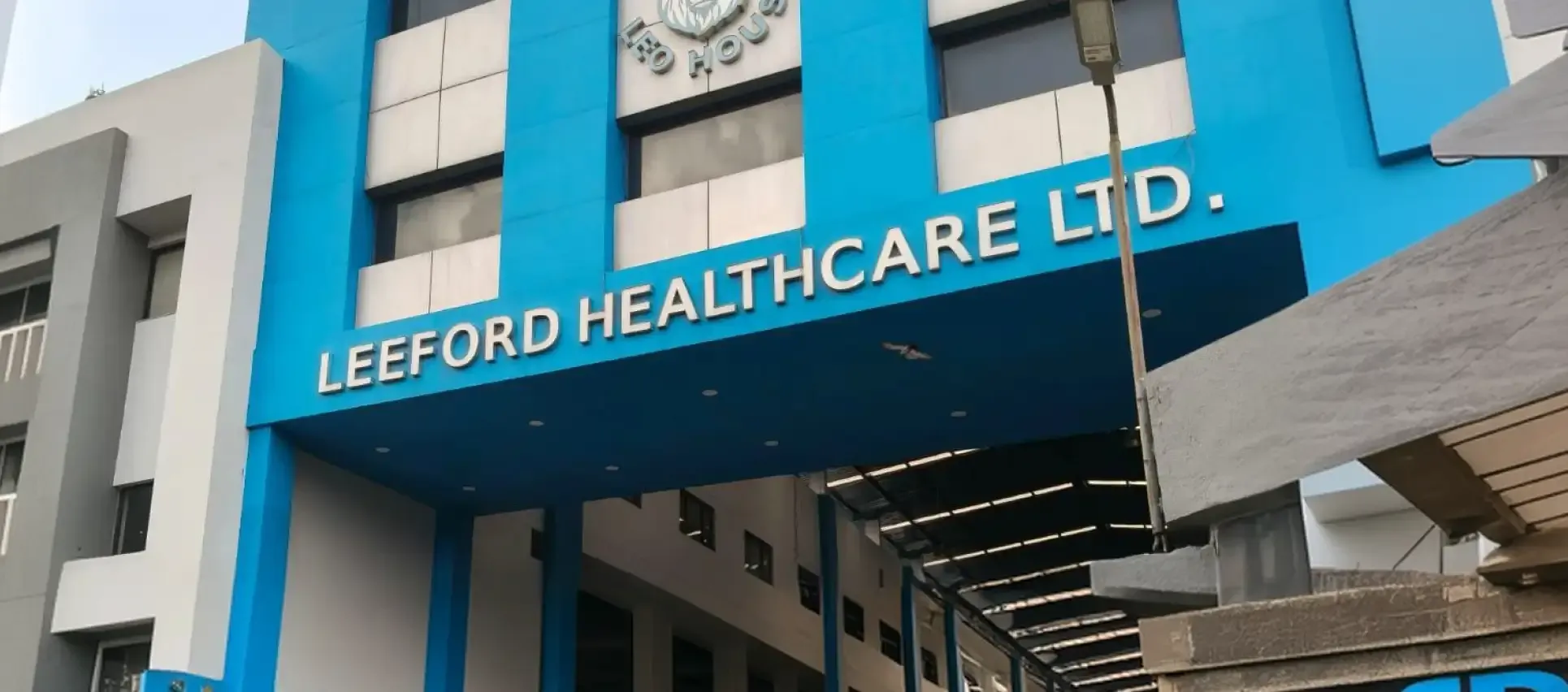
Leeford Healthcare's own growth story is, on its own terms, a genuinely striking piece of Indian pharmaceutical entrepreneurship. Founded in 2006 by Amit Gupta and headquartered in Ludhiana, Punjab, the company has built a portfolio spanning close to 2,000 products across more than 75 therapeutic categories, manufactured across seven state-of-the-art facilities that the company states are compliant with WHO-GMP and ISO quality standards. According to the company's own account, Leeford has become the second-largest generic pharmaceutical company in India, with products distributed through more than 12 lakh pharmacies and 5 lakh general stores nationwide — a distribution footprint that speaks to the depth of market penetration the company has achieved in a sector where established, decades-older incumbents have traditionally dominated shelf space.
"At Leeford Healthcare, our mission is to make high-quality, affordable healthcare accessible to all," founder and Managing Director Amit Gupta has said, articulating a positioning that mirrors the broader value proposition India's generic pharmaceutical industry has long offered both domestically and globally: producing clinically equivalent medicines at a fraction of the cost of branded originator drugs, a model that has made India, in aggregate, one of the world's most important suppliers of affordable generic medication both for its own population and for export markets globally. That positioning has taken on renewed significance as global healthcare systems, from the United States to countries across Africa and Southeast Asia, continue to lean on Indian generic manufacturers to help contain rising healthcare costs.
Beyond its core pharmaceutical manufacturing, Leeford has diversified into adjacent categories including cosmeceuticals and wellness products through its Cosmacia division, and has separately committed ₹200 crore toward expanding its orthopaedic supports and mobility aids division — a category the company has identified as a significant growth opportunity, given that India's orthopaedic supports and mobility aids market, currently valued at approximately ₹2,500 crore annually, is projected to grow to ₹8,000 crore by 2030, driven by rising lifestyle disorders, sports injuries, an ageing population and growing awareness around preventive care. This diversification strategy — expanding beyond core generic pharmaceuticals into adjacent, higher-growth wellness and mobility categories — reflects a broader pattern among India's larger generic drugmakers seeking to reduce their dependence on the increasingly price-competitive core generics business alone.
Why Creador, And Why Now
Creador is a private equity firm focused specifically on growth-stage investments across India and Southeast Asia, with a stated preference for sector-agnostic, long-term investment in growth-oriented businesses rather than the shorter-hold, higher-leverage buyout strategies more common among some global private equity peers. The firm's prior India investment history spans financial services, healthcare, pharmaceuticals, building materials and retail, with typical investment sizes historically ranging between $20 million and $70 million — though a ₹8,500 crore valuation for a 10% Leeford stake would imply an investment considerably larger than Creador's historically typical cheque size, suggesting either a larger fund vehicle than the firm has previously deployed in India, or a co-investment structure bringing in additional capital partners alongside Creador's own commitment.
India's generic pharmaceutical sector has continued to attract sustained private equity and strategic investor interest, driven by several durable structural tailwinds: rising domestic healthcare spending as incomes grow and health insurance penetration expands, continued global demand for affordable generic medicines from both developed and emerging markets, and a policy environment that has generally supported domestic pharmaceutical manufacturing capacity expansion as part of India's broader self-reliance and export ambitions in the sector. For a private equity investor evaluating where to deploy capital within Indian healthcare, a profitable, well-established generic manufacturer with Leeford's scale and distribution depth — but without the public market scrutiny and governance overhead a listed company would carry — represents exactly the kind of growth-stage opportunity firms like Creador are specifically structured to pursue.
What A ₹8,500 Crore Valuation Implies
Placing Leeford's reported ₹8,500 crore valuation in context requires some care, given that the company's precise, most current revenue figures are not fully disclosed in available public reporting. Earlier company disclosures had put Leeford's turnover at approximately ₹2,000 crore as of 2025, with the company having crossed that mark to become recognised as India's second-largest generic pharma firm by the company's own characterisation. A ₹8,500 crore valuation against a revenue base in that range would imply a revenue multiple broadly consistent with how private equity investors have typically valued profitable, growth-stage Indian pharmaceutical manufacturers in recent years — neither at a steep discount reflecting distress or limited growth prospects, nor at the kind of premium multiple that would suggest investors are pricing in dramatically accelerated near-term growth beyond the company's demonstrated historical trajectory.
The Broader Pattern: PE Capital Flowing Into Tier-2 Pharma Hubs
Leeford's emergence as a private equity target also reflects a broader, somewhat underappreciated pattern in how India's pharmaceutical manufacturing base has evolved geographically. While India's pharmaceutical industry has historically been associated most closely with hubs like Hyderabad, Ahmedabad and Mumbai, companies like Leeford — built from Ludhiana, a city better known nationally for its textile and bicycle manufacturing than pharmaceutical production — illustrate how generic drug manufacturing capability has continued to diffuse into a wider range of Indian cities and states over the past two decades, driven by a combination of entrepreneurial initiative, state-level industrial policy support, and the increasingly standardised, replicable nature of generic drug manufacturing processes once a company has achieved the necessary quality certifications.