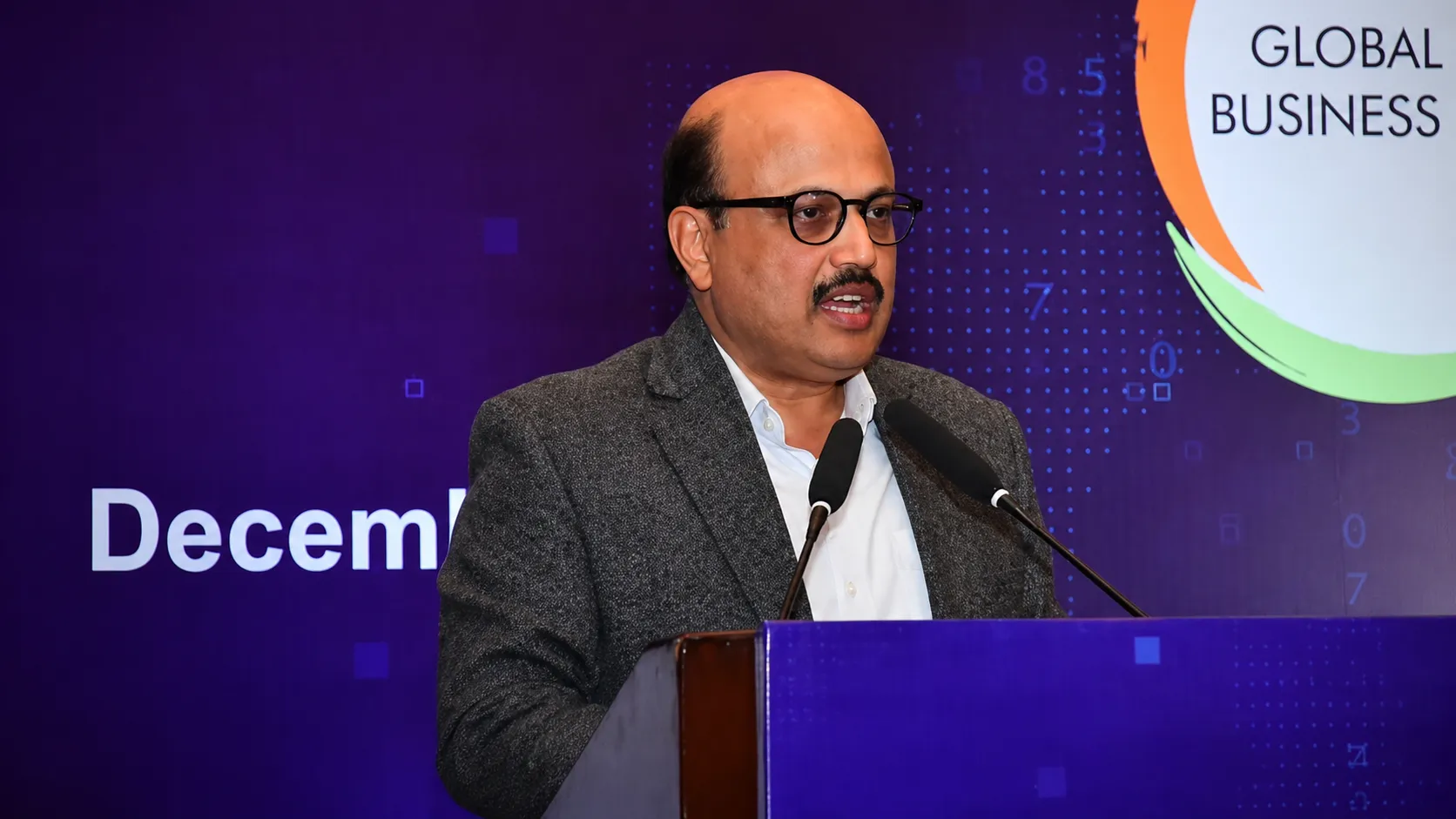
When Commerce Secretary Rajesh Agarwal reiterated India's commitment to what he specifically described as an open, transparent, and predictable trade and investment regime, the statement, on its surface, read as the kind of measured, diplomatically cautious language that senior trade officials routinely deploy in public communications. Yet the specific timing and context surrounding this reaffirmation — arriving amid a genuinely complex, multi-front set of trade negotiations and policy pressures facing India simultaneously — suggests the statement carries considerably more strategic weight than its careful, understated phrasing might initially convey.
To understand why this particular reassurance matters at this particular moment, it helps to survey the genuinely complex landscape of trade-related pressures and negotiations India has been navigating concurrently. The country's relationship with the United States has been dominated in recent months by the evolving Section 301 tariff situation, which, after considerable uncertainty and negotiation, resulted in an outcome where 45 per cent of India's exports to the US remain outside the new duty's scope, a materially better outcome than the initially proposed 12.5 per cent levy that had been under discussion earlier in the process, but one that still leaves significant portions of India's American-bound trade subject to added costs and continued policy uncertainty.
Simultaneously, India continues to pursue, with varying degrees of visible progress, a broader agenda of free trade agreement negotiations and expansions, building on the demonstrated success of recently concluded agreements with the UAE, UK, and Australia — deals that have contributed meaningfully to India's merchandise exports crossing $441.8 billion and services exports reaching $421.3 billion. Ongoing negotiations with the European Union, representing one of the world's largest single markets and a long-sought prize for Indian trade negotiators, continue to progress in what most trade observers characterise as a slow, methodical, and periodically stalled fashion, complicated by persistent disagreements over environmental and labour standards, agricultural market access, and various other technical and politically sensitive negotiating points that have historically proven difficult to resolve in EU trade negotiations with developing and middle-income economies.
Against this genuinely complex, multi-front backdrop, the Commerce Secretary's specific choice of language — emphasising openness, transparency, and predictability — appears calibrated to address distinct but related concerns held by different audiences simultaneously. For international trading partners and foreign investors evaluating India as a market or manufacturing base, predictability speaks directly to concerns about policy consistency and the ability to make long-term capital investment decisions with confidence that the regulatory and tariff environment will not shift unpredictably. Transparency speaks to concerns about regulatory clarity and the ease of understanding and complying with India's trade and investment rules, historically an area where India has faced periodic criticism for regulatory complexity and inconsistent implementation across different government agencies and state jurisdictions. Openness, meanwhile, speaks most directly to market access concerns, signalling India's stated willingness to reduce trade barriers and welcome foreign participation in its economy, a message aimed particularly at trading partners who have historically viewed India as a comparatively protectionist market relative to some other major economies.
This messaging arrives at a moment when India's trade policy credibility faces genuine, substantive tests across multiple simultaneous fronts, making the specific timing of this reaffirmation particularly relevant. Beyond the US tariff situation and EU negotiations already discussed, India's decision to allow four Chinese power equipment manufacturers to bid for domestic projects, explained by the Chief Economic Adviser as a pragmatic move to ease critical supply constraints, illustrates the kind of nuanced, case-by-case trade and investment policy approach that requires exactly the kind of transparent, predictable framing the Commerce Secretary's statement attempts to convey — signalling that such decisions reflect considered policy judgment rather than arbitrary or inconsistent decision-making that might otherwise concern international observers trying to understand India's broader approach to strategic trade and investment questions.
The domestic dimension of this messaging deserves equal attention alongside its international audience, particularly given the context of India's ongoing 35-year liberalisation anniversary retrospective, which has generated considerable public commentary regarding unfinished reform business, including persistent criticism from figures like Infosys co-founder N R Narayana Murthy regarding continued protectionist tendencies and excessive regulatory burden facing India's MSME sector specifically. The Commerce Secretary's emphasis on an open, transparent, and predictable regime can be read, at least in part, as an implicit response to these domestic critiques, signalling the government's awareness of and responsiveness to concerns that India's trade and investment policy framework remains more complex and less consistently predictable than the country's broader economic ambitions would ideally require.
Historical context adds useful perspective to why predictability specifically has emerged as such a frequently emphasised theme in India's trade policy communications. India has, at various points over recent decades, faced criticism for retrospective or unexpected policy changes affecting foreign investors, including instances of retrospective taxation that generated significant international controversy and, in some cases, extended legal disputes with affected multinational companies. While India has taken various steps in recent years to address these specific historical concerns, including resolving several long-standing retrospective taxation disputes, the broader reputational legacy of such episodes continues to inform how international investors and trading partners evaluate the credibility of India's predictability commitments, making explicit, repeated reaffirmation of this commitment a recurring and, in the government's apparent assessment, necessary feature of India's ongoing trade diplomacy communications.
The practical policy mechanisms through which India has sought to operationalise these stated commitments to openness, transparency, and predictability offer useful evidence for evaluating how substantively these words translate into concrete policy practice. Reforms to India's foreign direct investment framework over recent years have progressively liberalised investment rules across numerous sectors, reducing the scope of activities requiring specific government approval and streamlining various regulatory processes affecting foreign investors. The government's continued expansion of its free trade agreement network, alongside its Production Linked Incentive schemes designed to attract manufacturing investment through predictable, rules-based financial incentives rather than discretionary, case-by-case negotiations, represent further concrete policy expressions of the broader openness and predictability themes the Commerce Secretary's statement invokes.
Yet genuine tensions and inconsistencies remain visible within India's broader trade policy framework, complicating any simple narrative of straightforward, linear progress toward the fully open, transparent, and predictable regime the government's rhetoric describes. India's continued maintenance of tariff barriers across various sectors, its historically cautious approach to certain categories of foreign investment in sectors deemed strategically sensitive, and the kind of case-by-case, situationally specific policy decisions exemplified by the recent Chinese power equipment manufacturer bidding decision all illustrate the genuine complexity and, at times, apparent inconsistency that continues to characterise India's practical trade and investment policy implementation, even as the government's stated rhetorical commitment to openness, transparency, and predictability remains consistent.
International investor and trading partner reception of this kind of reassurance messaging typically depends less on the specific words used in any single statement and more on the cumulative, demonstrated track record of policy consistency and follow-through that investors and trading partners have observed over an extended period. In this sense, the Commerce Secretary's specific reiteration of these commitments matters less as a standalone statement and more as one additional data point within a much longer, ongoing assessment that international observers continue to conduct regarding whether India's demonstrated trade and investment policy behaviour genuinely aligns with its stated rhetorical commitments to openness, transparency, and predictability.
Looking ahead, the practical test of whether this latest reaffirmation carries genuine substantive weight will likely play out across the specific, concrete trade policy decisions and negotiations currently in progress — including the ultimate resolution, whenever it eventually occurs, of the broader US-India trade relationship beyond the current Section 301 tariff arrangement, the pace and eventual outcome of the ongoing EU trade negotiations, and the consistency with which India applies its stated principles across the various sector-specific and situation-specific trade and investment decisions that inevitably arise across such a large, complex, and rapidly evolving economy.
For now, the Commerce Secretary's careful, deliberately chosen language stands as a useful marker of how India's senior trade policy officials are attempting to navigate a genuinely challenging communications environment — one where the country needs to simultaneously reassure international trading partners and investors of its policy consistency and openness, respond to legitimate domestic critiques regarding unfinished reform business, and manage a genuinely complex, multi-front set of concurrent trade negotiations and policy decisions, all while maintaining the kind of credible, consistent messaging that predictability itself, almost by definition, requires.
The role of career trade bureaucrats like Agarwal in shaping and communicating India's trade policy posture deserves brief additional context, given the institutional continuity such officials typically provide across changes in political leadership and shifting ministerial priorities. Commerce Secretaries and similar senior civil service trade officials often serve as the primary, consistent institutional voice articulating India's trade policy framework to international counterparts, providing a degree of communicative stability that complements, and at times helps smooth over, the more overtly political messaging that elected officials and ministers may deliver on the same underlying trade policy questions.
Comparative positioning against other major emerging economies competing for similar foreign investment and trade partnership opportunities adds further context for why India's predictability messaging carries such strategic weight. Countries including Vietnam, Indonesia, and Mexico have each, in their own ways, positioned themselves as alternative destinations for manufacturers and investors seeking to diversify supply chains away from concentrated reliance on China, meaning India's own trade and investment policy credibility is being evaluated not in isolation but relative to these competing destinations, each of which is making its own parallel case regarding openness, transparency, and predictability to the same global pool of mobile capital and manufacturing investment.
Business chambers and industry associations, both Indian and international, have generally welcomed this kind of explicit reaffirmation while simultaneously continuing to press for more concrete, measurable progress on specific outstanding issues, from further tariff reduction to streamlined customs and regulatory processes. This dynamic — general appreciation for reassuring rhetoric combined with continued pressure for tangible follow-through — reflects the broader pattern that has characterised much of the business community's engagement with India's trade policy messaging over recent years, suggesting that words like Wednesday's, however carefully chosen, will continue to be judged primarily against the concrete policy outcomes that follow them.
The specific audience calculus behind such statements also deserves consideration, since Commerce Ministry communications of this kind are rarely aimed at a single, undifferentiated audience but instead attempt to speak simultaneously to foreign governments engaged in active trade negotiations, multinational corporate investors evaluating India-specific capital allocation decisions, domestic industry bodies seeking assurance of continued market access protections, and India's own broader public and political constituencies who continue to debate the merits and pace of ongoing economic liberalisation. Successfully calibrating language that reassures each of these distinct audiences simultaneously, without appearing to over-promise to any single group at the expense of the others, represents a genuinely difficult communications challenge that senior trade officials like Agarwal navigate on a near-continuous basis.
As global trade relationships continue to evolve amid shifting geopolitical alignments and the broader restructuring of international supply chains following years of pandemic-related disruption and rising trade tensions between major economic powers, India's ability to credibly position itself as a genuinely open, transparent, and predictable trade and investment destination will likely remain one of the most consequential, and most closely scrutinised, threads running through the country's broader economic policy narrative for years to come.
For businesses and investors trying to translate this broader policy rhetoric into concrete decision-making, the most reliable signal will likely continue to be the accumulating body of tangible outcomes — concluded trade agreements, resolved tariff disputes, and measurable growth in foreign investment and export volumes — rather than any single official statement, however carefully worded. Commerce Secretary Agarwal's repeated invocation of openness, transparency, and predictability sets a clear standard against which India's actual trade policy performance can be measured, and it is that ongoing, cumulative track record, more than any individual speech or press briefing, that will ultimately determine whether global businesses come to view India as the stable, reliable trade partner its officials consistently describe.