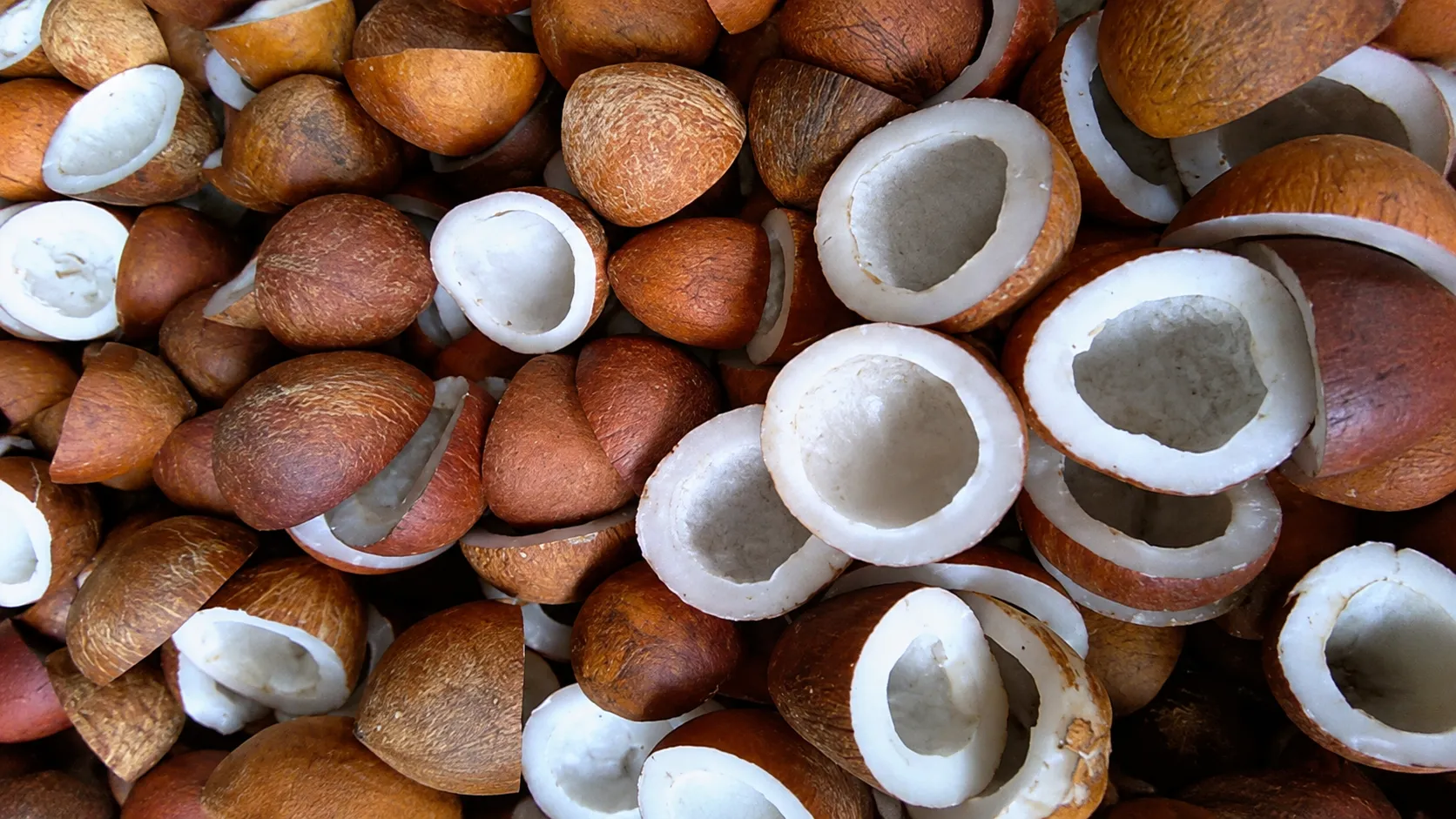
For a company whose fortunes have, for decades, been quietly but directly tethered to the price of copra — the dried coconut kernel that forms the raw material for its flagship Parachute coconut oil brand — Marico Limited's Q1 FY27 results, scheduled for board approval on August 4, 2026, ahead of a 6:00 pm IST investor and analyst conference call the same evening, arrive with an unusually favourable tailwind already baked into market expectations: copra prices have fallen sharply from their recent peak, and Marico's own India business appears to be posting its strongest volume performance in years.
The scheduling itself was confirmed via a formal exchange disclosure, with Marico announcing that its Board of Directors would meet on August 4, 2026, to approve the company's Q1 FY27 financial results, followed immediately by an investor conference call at 6:00 pm IST the same day, featuring commentary from senior management on the company's financial standing and operational performance for the quarter ended June 30, 2026. Unlike some companies entering their results day with genuine uncertainty about the broad direction of the numbers, Marico had already given the market a fairly detailed advance preview: in a quarterly business update filed with stock exchanges more than a month earlier, on July 2, 2026, the company had guided for consolidated revenue growth in the early twenties percentage range for the quarter — a notably bullish signal delivered well ahead of the formal results themselves.
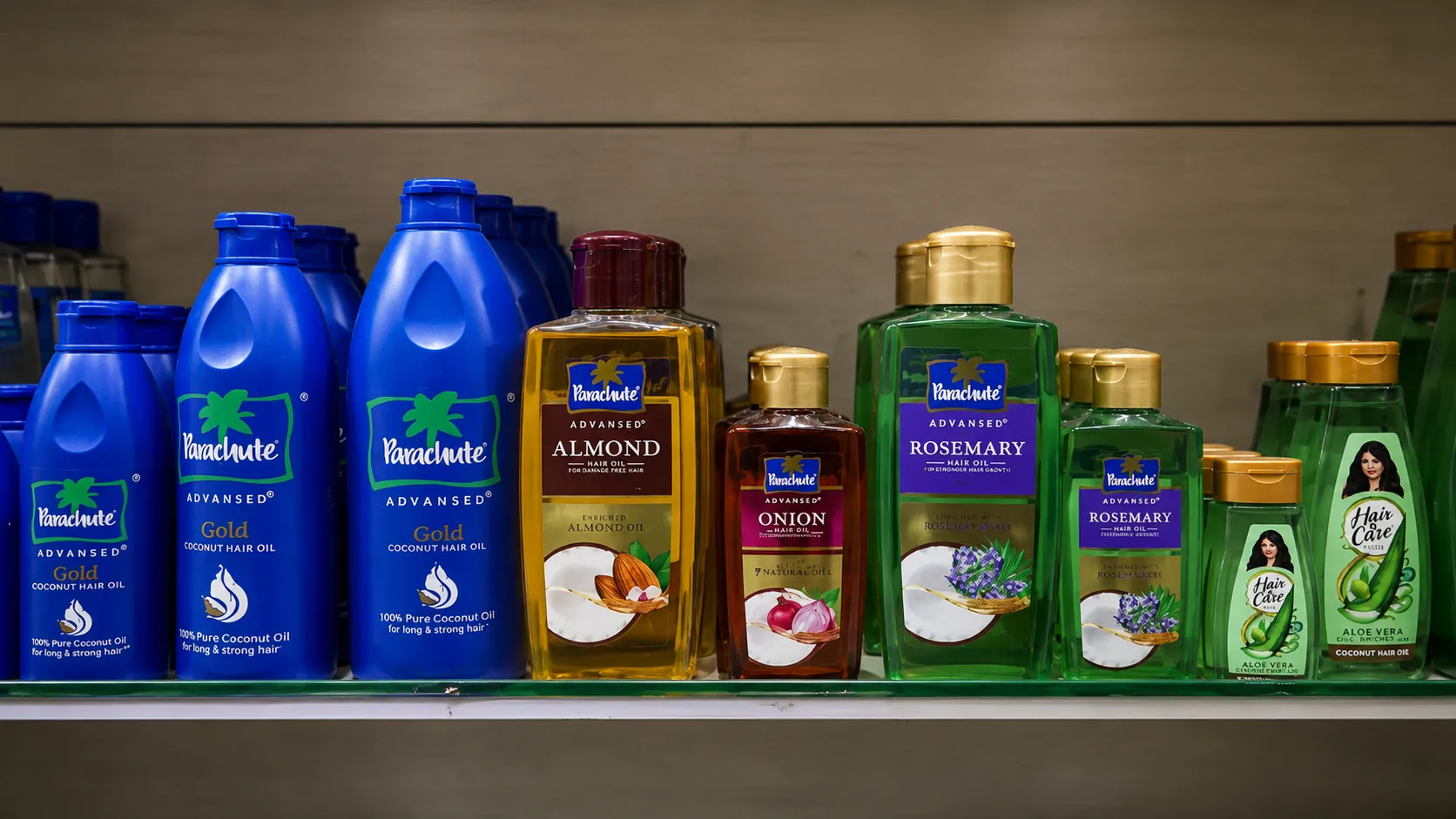
That early guidance was not a vague, generic statement of optimism; it came with considerable operational specificity. Marico's India business, the company disclosed, delivered double-digit underlying volume growth during the April-June quarter, described as reaching a multi-quarter high — a meaningful acceleration from the high single-digit volume growth trend the company had been posting in preceding quarters. Leading that volume recovery was Parachute Coconut Oil, Marico's single most iconic and closely watched brand, which the company said achieved its highest double-digit volume growth in several quarters, a result management specifically framed as evidence of resilient consumer trust in the franchise even amid a broader, still-uneven Indian FMCG demand environment.
The Value Added Hair Oils segment, encompassing Marico's portfolio of premium hair care products sold under various sub-brands, delivered its own strong showing, with the company guiding toward revenue growth in the twenties for that category specifically, aided by continued premiumisation trends and expanded direct-reach distribution through what the company has branded internally as Project SETU. Saffola, Marico's flagship edible oils and foods brand, told a somewhat more nuanced story: the company guided toward mid-single-digit, price-led revenue growth for Saffola Oils specifically, even as volumes for that particular category actually declined slightly — a divergence management attributed to a deliberate decision to rationalise the supply of select product variants specifically in order to protect and maintain profitability, rather than any broader weakening in underlying consumer demand for the Saffola brand itself.
Underpinning much of this volume and revenue momentum has been a marked step-up in Marico's brand-building investment. The company disclosed that it significantly accelerated Advertising and Sales Promotion spending during the quarter, specifically to defend its legacy franchises like Parachute and Saffola while simultaneously scaling up its newer, digital-first brand acquisitions. That elevated brand investment builds directly on a pattern already established over the preceding fiscal year: Marico's full-year FY26 ASP spending had already jumped 15% to ₹1,300 crore, reflecting what appears to be a sustained, multi-year strategic commitment to defending market share and driving premiumisation through heavier marketing investment, rather than a one-off, quarter-specific spending decision.
That digital-first brand portfolio has, in its own right, become an increasingly significant growth engine sitting alongside Marico's traditional FMCG categories. According to the company's own disclosures, its digital-first brands collectively reached an exit Annual Run Rate of ₹1,100 crore, nearly tripling over a two-year period — a genuinely rapid scaling trajectory built substantially through inorganic expansion. That expansion has included the 100% buyout of nutrition-focused brand True Elements, the acquisition of a 60% stake in personal care brand Plix, and the absorption of the Zed Lifestyle business through a voluntary liquidation process completed on June 30, 2026 — a steady cadence of bolt-on acquisitions that has allowed Marico to build meaningful scale in newer, digitally-native consumer categories considerably faster than organic brand-building alone would typically allow.
Marico also used the same period to begin scaling an entirely new product line: the Parachute Advansed Protein Shampoo range, representing a deliberate strategic move to capture a share of what the company has sized as India's ₹10,000 crore hair cleansing market — a notable extension of the core Parachute brand equity into an adjacent personal care category the brand had not previously competed in directly, and one that management appears to view as a meaningful incremental growth opportunity layered on top of the core coconut oil franchise's own volume recovery.
Cost dynamics, and specifically the trajectory of copra prices, form perhaps the single most consequential variable shaping how Marico's actual profit and margin figures, once formally disclosed, are likely to compare against the company's own already-bullish revenue guidance. Copra, the primary raw material input for Parachute coconut oil, has declined nearly 45% from its recent peak, according to the company's own disclosure — a genuinely substantial cost relief, even though management specifically noted that prices remain above their historical average levels, meaning the relief, while meaningful, has not yet fully unwound the inflationary pressure copra costs had exerted on Marico's margins over the preceding several quarters. The company has explicitly guided that it expects this copra price correction to improve gross margins on a sequential basis in the coming quarters, even as it acknowledged that crude-linked derivatives and vegetable oil prices — relevant inputs for the Saffola and broader edible oils portfolio — remained elevated during the quarter, creating a genuinely mixed input cost picture across different parts of the company's broader product portfolio.
Market reaction to Marico's initial July business update, well ahead of today's formal results, was itself notably positive, offering an early signal of how favourably investors have been positioning around this quarter's numbers. Marico shares rose 2% to hit a 52-week high of ₹873 apiece on July 3, 2026, the day after the company's business update was filed, before losing some of that momentum and slipping into negative territory later in the same session — a pattern of an initial enthusiastic pop followed by partial profit-taking that is a fairly common feature of how markets often react to strong forward guidance, even when that guidance is subsequently validated by the eventual formal results. On a year-on-year basis, Marico shares had already climbed roughly 20% by that point, reflecting a broader, sustained period of investor confidence in the company's trajectory extending well beyond just this single quarter's specific news flow.
Brokerage commentary following the July business update was similarly constructive, with several major research houses characterising Marico's guided growth as running ahead of their own prior expectations. Analysts at Nomura specifically noted that Marico's expected consolidated revenue growth for the quarter was running ahead of their own prior estimate of approximately 18.5% year-on-year — meaning the company's own guidance of growth in the early twenties percentage range implied a positive surprise relative to at least this particular brokerage's baseline model heading into the quarter. HSBC's analysts, in their own commentary, specifically highlighted the pickup to double-digit volume growth as a meaningful acceleration relative to the high single-digit volume trend the company had been posting in earlier quarters — with both the Parachute franchise specifically and the broader Value Added Hair Oils segment cited as key drivers of that acceleration.
The company's own senior leadership, led by Managing Director and CEO Saugata Gupta, has consistently framed Marico's broader strategic positioning around a combination of premiumisation, continued digital brand scaling, and selective inorganic expansion opportunities in both existing and new geographic markets — a framing that today's formal results and the accompanying 6 pm investor call are widely expected to reinforce, given how closely this quarter's already-disclosed operational trends track that stated strategic direction. Marico's international business, which the company has previously noted contributes roughly 24% of total consolidated revenue, will also be a specific area of investor and analyst focus during tonight's call, particularly given ongoing global economic uncertainty that has, in prior quarters, created a genuinely mixed picture across Marico's various individual international markets even as the segment overall has continued contributing steadily to group-level growth.
Looking beyond just this specific quarter, Marico has articulated a considerably longer-horizon set of financial targets that today's results will be measured against as an early data point: a stated ambition to reach ₹15,000 crore in consolidated revenue by FY27, alongside a reaffirmed longer-term goal of ₹20,000 crore in revenue by 2030, built on the combined pillars of continued premiumisation and sustained digital brand expansion. Given that Q1 FY27's already-disclosed early guidance of revenue growth in the early twenties percentage range would, if sustained through the balance of the fiscal year, put the company on a broadly credible trajectory toward that ₹15,000 crore FY27 target, tonight's formal results and the accompanying management commentary will offer investors their clearest indication yet of whether that multi-year growth roadmap remains genuinely on track, or whether this quarter's strong opening represents a temporary high-water mark that will prove difficult to sustain through the remaining three quarters of the fiscal year.
The broader Indian FMCG sector will also be watching Marico's numbers closely as a bellwether for rural and semi-urban consumption trends more generally, given how heavily the company's core categories — coconut oil, edible oils and hair care — skew toward mass-market price points that tend to reflect broader consumer sentiment across income segments more directly than some of the more premium-skewed categories offered by other listed FMCG majors. A strong Marico print, particularly one showing genuine volume-led recovery rather than purely price-driven revenue growth, would offer a reassuring signal for the broader consumption narrative heading into the back half of the fiscal year.
Peer companies across India's FMCG landscape, several of which have their own Q1 FY27 results scheduled for release within the same broader earnings week, will offer a useful comparative lens once Marico's own numbers are formally out tonight. If Marico's double-digit volume recovery proves to be an outlier relative to more modest volume trends reported by rival FMCG majors, it would suggest the company-specific factors — the ASP spending step-up, the Parachute-specific resurgence, the digital-first brand scaling — are doing more of the heavy lifting than any broad-based improvement in overall consumer demand. Conversely, if similar volume acceleration shows up across multiple FMCG peers reporting this same week, it would point toward a genuinely broader consumption recovery taking hold across Indian households, a considerably more significant macroeconomic signal than any single company's results could deliver on its own.
As the 6 pm call approaches, the range of questions management is likely to field extends well beyond the headline revenue and profit figures already substantially telegraphed by the July business update: analysts will be pressing for granular detail on gross margin trajectory now that copra relief is flowing through, the specific profitability contribution of the rapidly scaling digital-first portfolio, and management's updated confidence level on hitting the ₹15,000 crore FY27 revenue target given this quarter's strong opening. Whatever the specific answers, tonight's call will offer the clearest, most detailed picture yet of whether Marico's coconut-to-copra-to-comeback narrative has genuine staying power through the remainder of the fiscal year.
For a company that has spent the better part of two decades methodically diversifying away from its historical dependence on a single commodity-linked flagship brand, this quarter's results, whatever the precise final numbers turn out to be once formally disclosed, will offer a useful marker of just how far that diversification strategy has progressed — and of how much of Marico's growth story today still ultimately traces back to the enduring strength of the coconut oil franchise the company was originally built around.
This report is based on Marico Limited's quarterly business update filed with stock exchanges on July 2, 2026, subsequent brokerage commentary from Nomura and HSBC, and reporting from Free Press Journal, Adgully, Upstox, Storyboard18 and ScanX.