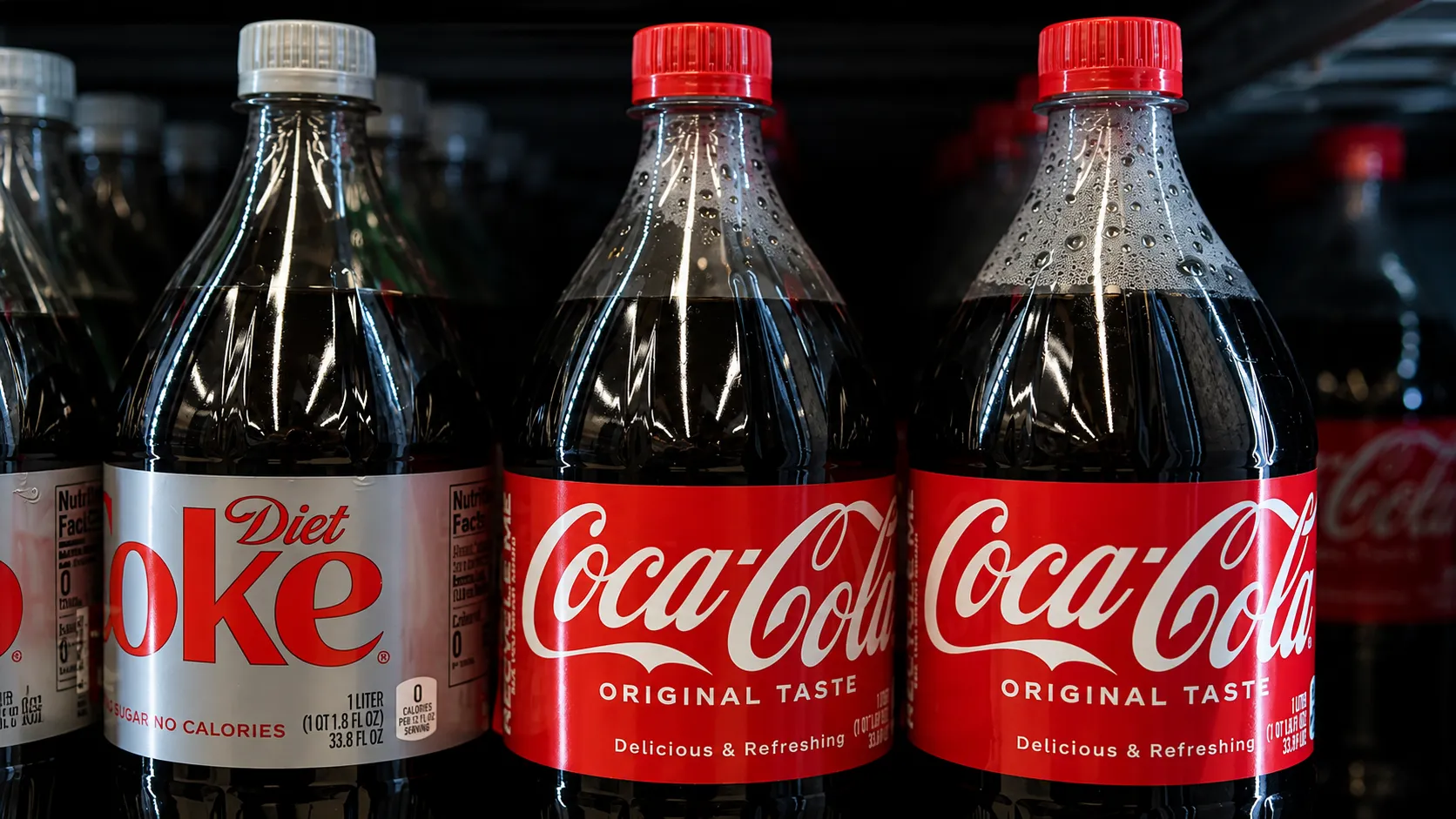
Coca-Cola India has reportedly appointed global investment banking heavyweights JPMorgan and Citi to manage an upcoming initial public offering, according to market reports circulating this week, in a move that — if it proceeds to fruition — would mark one of the more significant potential listings in India's consumer and beverage space in recent years. The reported mandate is centred specifically on the company's local bottling operations, with the stated objective of unlocking value in that business while simultaneously scaling up retail distribution capabilities across the country, according to details that have emerged through market and investment-banking circles tracking the development.
For context, Coca-Cola's operating model in most major markets globally, India included, separates the branded beverage concentrate business — which remains firmly under the control of The Coca-Cola Company at a global level, protecting its formulas, marketing, and brand equity — from the capital-intensive bottling and distribution operations, which are typically run through a combination of company-owned bottling operations and independently franchised bottling partners. In India specifically, Coca-Cola has, over the past several years, been steadily consolidating a greater share of its bottling operations under more direct company control, moving away from a historically more fragmented franchise-bottler model toward a structure where the company's own bottling investments group plays a considerably larger operational role. That consolidation has effectively built up a sizeable, scaled bottling business within the Indian market — one substantial enough, evidently, to now be viewed as a credible standalone candidate for a public listing.

The logic behind exploring an IPO for a bottling operation, as opposed to the parent beverage brand itself, follows a well-established playbook that other global beverage companies have pursued in various markets around the world. Bottling operations, being asset-heavy, capital-intensive businesses centred around manufacturing plants, cold-chain logistics, and last-mile distribution networks, often carry a different risk and return profile from the brand-owning parent entity, and can command their own distinct investor base — including infrastructure and industrial-focused investors who might be less inclined to invest directly in a global consumer-brand parent but are drawn to the more predictable, volume-driven economics of a regional bottling and distribution business. Listing such an operation separately allows a company to crystallise and monetise the value built up in its bottling infrastructure while retaining full strategic control over the brand and concentrate business at the global parent level.
For Coca-Cola specifically, India represents one of its most important long-term growth markets globally, given the country's scale, its still-relatively-low per-capita beverage consumption compared to developed markets — leaving substantial room for volume growth as incomes rise — and its rapidly expanding retail and e-commerce distribution infrastructure. Against that backdrop, a locally listed Indian bottling entity could serve multiple strategic purposes simultaneously: raising fresh capital that can be redeployed into expanding manufacturing capacity and distribution reach across underpenetrated Indian markets, particularly in smaller towns and rural areas where organised retail and cold-chain infrastructure has historically been thinner; creating a locally listed vehicle that enhances the visibility and profile of the India bottling business among domestic investors; and potentially offering existing stakeholders in the bottling operations a path toward partial monetisation of their investment.
The appointment of JPMorgan and Citi — both among the most established global investment banks with deep India capital-markets franchises and extensive experience managing large, high-profile consumer and industrial listings — signals that whatever process is now underway is being approached with considerable seriousness rather than as a speculative or preliminary exploration. Global banks of this stature typically do not commit meaningful advisory resources to a mandate unless there is a credible pathway toward an actual transaction, though it is worth noting that the appointment of bankers, even at global banks of this calibre, does not guarantee that an IPO will ultimately proceed on any particular timeline, or indeed at all — plenty of well-advised, seriously explored IPO processes globally have been shelved, delayed, or restructured as alternative transactions in response to market conditions, valuation considerations, or shifts in strategic priorities at the parent-company level.
This development lands amid what has been an unusually active period for India's IPO and broader capital-markets calendar through 2026. The same week has seen a cluster of significant primary-market activity, including a large InvIT public issue in the road-infrastructure space, an asset-management IPO that listed with a healthy premium, and a specialty manufacturing IPO opening for subscription — evidence that, despite volatility in the secondary equity market driven by crude-oil price spikes and a weakening rupee, India's primary capital markets have continued to see robust issuance activity. A potential Coca-Cola India bottling listing, should it materialise, would add a marquee, globally recognisable consumer brand name to that active issuance calendar, likely drawing considerable retail investor interest given the ubiquity and familiarity of the Coca-Cola brand across Indian households.
It is also worth situating this reported development within the broader trend of global multinational consumer companies increasingly exploring locally listed structures for their India operations, a pattern partly driven by the scale and depth that India's domestic capital markets have achieved over the past several years, and partly reflecting a broader strategic recognition among global companies that a domestically listed India entity can offer meaningful advantages — from enhanced local market credibility and brand visibility, to access to a large and increasingly sophisticated pool of domestic institutional and retail capital, to potential tax and regulatory efficiencies associated with local listing structures, depending on how any such transaction is ultimately structured.
For India's beverage and FMCG sector more broadly, a Coca-Cola India bottling listing — should it proceed — would sit alongside a broader wave of consumer-sector capital-markets activity that has characterised much of 2026, a year that has already seen strong quarterly results from established FMCG players like Nestlé India, alongside continued primary-market interest in consumer and retail-adjacent businesses. A successful listing would also likely be watched closely by other global beverage and consumer companies operating bottling or manufacturing joint ventures and subsidiaries in India, as a potential template for how similarly structured operations might be monetised or capitalised through India's public markets in the years ahead.
From a competitive-dynamics standpoint, it is worth noting that Coca-Cola's chief global rival, PepsiCo, similarly operates a substantial bottling and beverage business in India, and any move by Coca-Cola to pursue a distinct India bottling listing will inevitably draw comparisons and competitive-positioning commentary from analysts assessing how the two companies' India strategies are evolving relative to one another, particularly given the intensity of competition between the two brands across carbonated soft drinks, packaged water, and the increasingly important better-for-you and functional beverage categories that have been reshaping consumer preferences across urban India in recent years.
For now, details remain relatively limited, consistent with the early stage that this kind of process typically occupies before any formal regulatory filings are made public. What is clear is that the appointment of two globally prominent investment banks represents a concrete, credible signal of intent, even if the eventual timeline, structure, and scale of any Coca-Cola India bottling IPO remain to be determined.
It is instructive to consider how similar bottling-and-distribution monetisation stories have played out elsewhere in the world as a rough guide to what a Coca-Cola India process might eventually look like. In several international markets, Coca-Cola's global parent has, over the years, pursued a range of structural approaches to its bottling operations — from fully integrated ownership, to independently listed regional bottling partners, to hybrid structures involving strategic minority stakes alongside operational control agreements. Each approach carries distinct trade-offs between the parent company's desired level of operational control over quality, distribution standards, and brand consistency on one hand, and the capital-efficiency and value-crystallisation benefits of a more independently capitalised bottling entity on the other. Which model any eventual India process ultimately adopts will be closely watched by industry observers as a signal of how the company is thinking about its long-term India strategy relative to its approach in other major emerging markets.
The Indian retail and distribution landscape that any newly listed bottling entity would need to navigate has itself been transforming rapidly, with the rise of quick-commerce platforms delivering groceries and beverages within minutes in major metro markets, alongside the more traditional general trade and modern trade retail channels that continue to account for the bulk of beverage sales volumes across the country, particularly outside the largest cities. Capital raised through a potential IPO could plausibly be directed toward strengthening exactly this kind of omni-channel distribution capability — expanding cold-chain infrastructure, deepening penetration into quick-commerce dark-store supply chains, and extending the reach of the company's direct distribution network into smaller towns and rural markets where organised beverage retail still has considerable room to grow relative to urban markets.
For India's investment banking community more broadly, a transaction of this scale and global brand profile — should it proceed to an actual public filing — would represent a marquee mandate in a year that has already seen intense competitive activity among global and domestic banks for lead roles on India's largest IPOs and capital-markets transactions. Winning mandates on high-profile, globally recognisable consumer brand listings carries reputational value for investment banks well beyond the direct fee economics of the transaction itself, reinforcing why competition for roles on deals of this nature tends to be especially fierce among the bulge-bracket global banks operating in the Indian market.
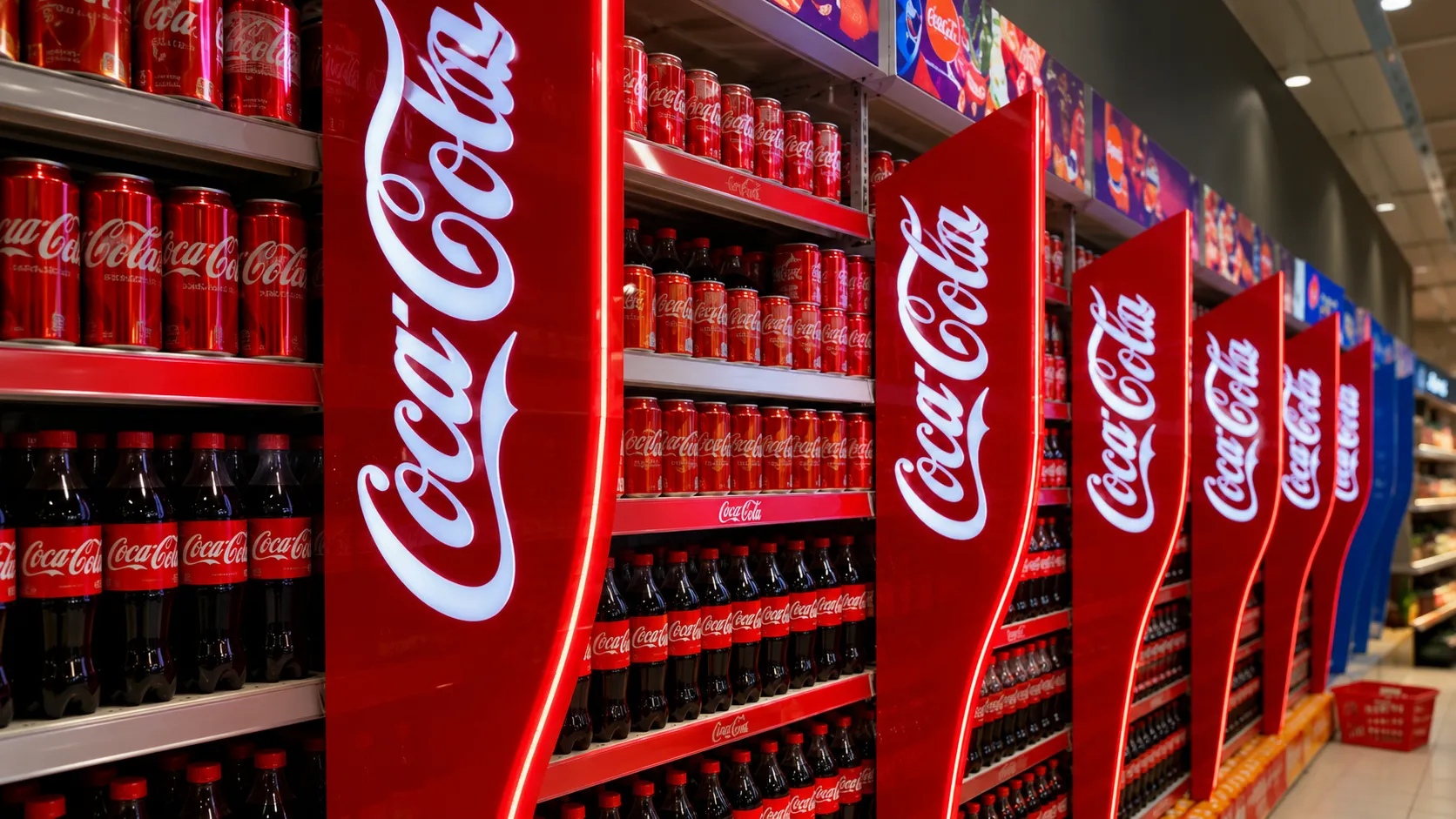
The consumer-sentiment dimension of a potential listing is also worth considering. Coca-Cola remains one of the most recognisable and widely consumed brands across Indian markets, spanning both metro and rural geographies, and a locally listed India bottling entity would offer domestic retail investors a rare opportunity to gain direct, India-specific exposure to one of the world's most enduring consumer brands through their own stock-market accounts, rather than needing to invest in the global parent company through international brokerage accounts, a route accessible to only a small fraction of Indian retail investors. That accessibility factor alone could make any eventual IPO one of the more heavily subscribed retail offerings of the year, should the process advance to an actual public filing, given the sheer brand recall and household familiarity the Coca-Cola name carries across virtually every demographic segment of the Indian consumer base.
Market participants and industry watchers will now be looking for the next tangible markers of progress — formal corporate restructuring steps, regulatory filings, or further confirmation from company or banking sources — as the process, whatever its ultimate outcome, moves forward from this initial reported mandate. Neither Coca-Cola India nor the named banks have issued an official public statement confirming the details of the mandate at the time of writing, and this report will be updated as and when further confirmation emerges, but the direction of travel, at least for now, appears unmistakably set toward unlocking the value built up in one of India's largest and most enduring beverage bottling franchises. Should the process advance toward a formal draft red herring prospectus filing with the Securities and Exchange Board of India in the coming months, it would mark the first concrete, publicly verifiable milestone in what industry watchers are already describing as one of the most keenly anticipated potential consumer listings India has seen in years. Until then, this remains a story in its earliest chapters — but one with the scale, brand power, and market appetite to become one of the defining India IPO narratives of the year ahead, should it ultimately reach the finish line that JPMorgan and Citi have reportedly now been mandated to help build toward, in what would be a landmark moment for both the company and India's broader consumer capital-markets story — and one that theimpactfulglobalindian.com will be watching, and reporting on, every step of the way.