Britain’s AI Story Is Beginning To Expand Beyond Research And Software
For years, Britain occupied a unique position within the global artificial intelligence ecosystem. The country built a strong reputation through world-class universities, influential research institutions and a technology environment that consistently produced talent shaping AI development worldwide. Organizations linked to Oxford, Cambridge and London frequently contributed important breakthroughs in machine learning and computer science, helping establish Britain as a meaningful player in the broader AI conversation. Yet despite those strengths, much of the attention surrounding AI infrastructure and semiconductor innovation continued flowing toward the United States, Taiwan and parts of Asia where hardware ecosystems operated at enormous scale.
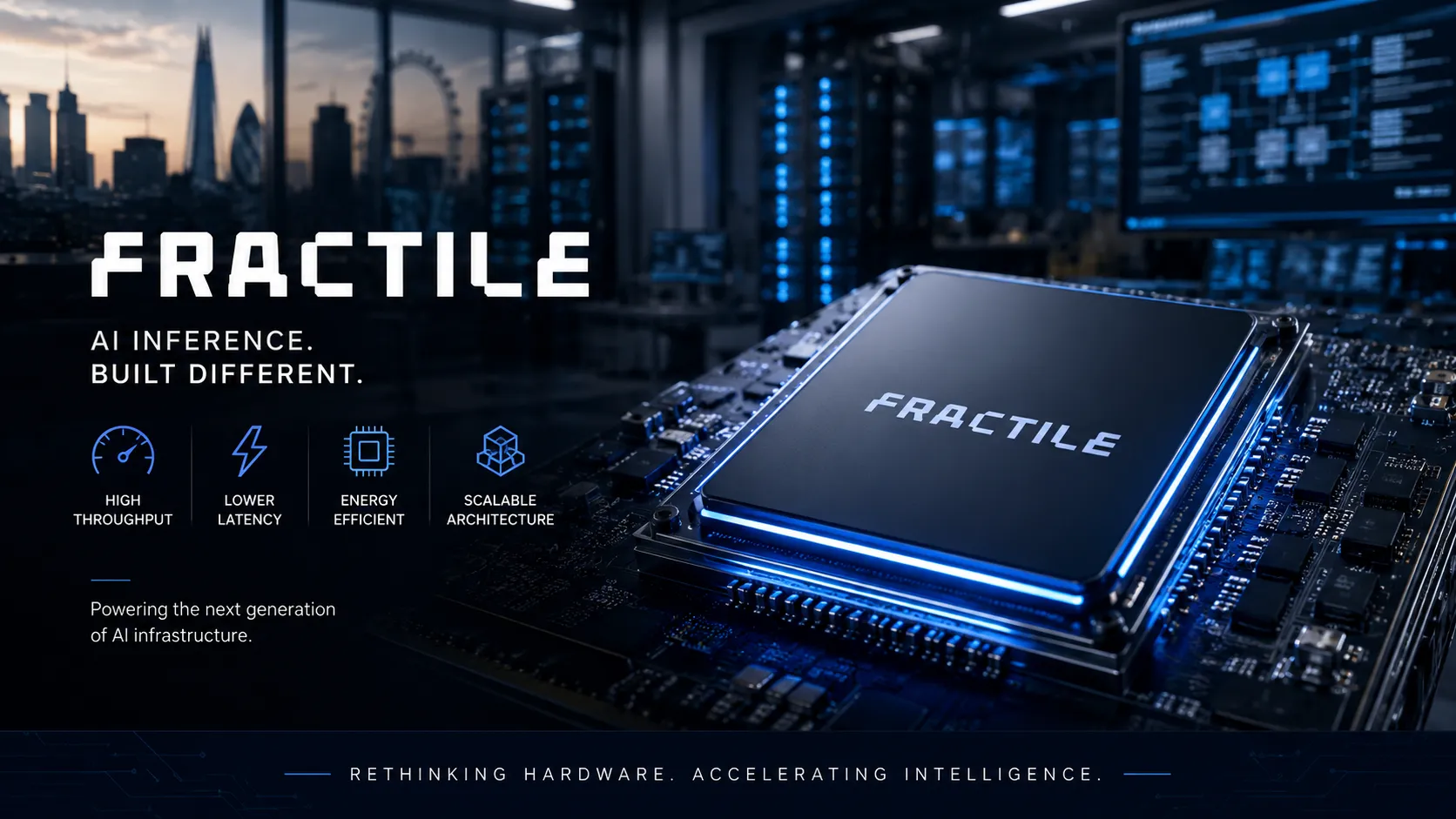
That dynamic increasingly appears to be shifting. British AI chip startup Fractile recently secured $220 million in fresh funding, one of the most significant funding rounds involving a UK-based AI hardware company in recent years. The investment round was led by Accel, Factorial Funds and Founders Fund, with participation from investors including Felicis, Conviction, 8VC and Gigascale Capital. The funding arrives at a time when global investors increasingly appear focused not only on AI applications themselves but on the infrastructure enabling them. While early excitement around artificial intelligence largely centered around chatbots and software experiences, a larger realization now seems to be emerging across technology ecosystems: intelligence alone may not define the next phase of competition. The systems powering that intelligence increasingly matter just as much. Recent reports suggest the capital will support product development, hiring efforts and deployment of Fractile’s first-generation AI inference systems.
The broader significance of this funding extends beyond startup momentum. Increasingly, it reflects a larger belief among investors that the future of artificial intelligence may depend not simply on who builds models, but on who creates the infrastructure capable of supporting them efficiently at global scale.
Artificial Intelligence Is Creating A Different Kind Of Infrastructure Challenge
During the first wave of AI enthusiasm, the primary objective involved building more capable systems. Companies competed around model size, performance benchmarks and increasingly sophisticated capabilities. As systems improved, attention largely focused on intelligence itself. Over time, however, another challenge quietly emerged beneath those developments.
Artificial intelligence systems require immense computational resources. Training and deploying large models demands extraordinary amounts of processing power and increasingly complex hardware environments. As reasoning models become larger and user interactions continue increasing, infrastructure requirements expand dramatically. AI systems no longer support isolated workloads. They increasingly process millions of interactions continuously across enterprise platforms, consumer applications and cloud environments.
This shift matters because AI growth itself increasingly creates operational pressures. Delays that appear insignificant at user level often become substantial at enterprise scale. Efficiency improvements measured in milliseconds can influence cost structures and system performance across entire infrastructures. For technology companies deploying AI environments at scale, the challenge increasingly involves ensuring systems remain fast, responsive and economically sustainable.
Fractile was founded around this emerging challenge. Established in 2022 by Oxford-trained engineer Walter Goodwin, the company focuses specifically on AI inference hardware. Unlike systems used to train models initially, inference infrastructure supports deployed AI environments after models reach users. Every recommendation system, AI assistant and enterprise platform ultimately depends on inference systems operating continuously in the background. Reports suggest Fractile believes current hardware environments increasingly face limitations around memory movement and operational efficiency, creating opportunities for new approaches capable of supporting future AI workloads more effectively.
Fractile Is Attempting To Rethink How AI Hardware Works
One reason Fractile attracted substantial investor attention appears linked to its technological approach. Traditional AI environments frequently rely on GPU architectures and memory systems designed around existing infrastructure assumptions. Companies such as Nvidia built dominant positions around these models and continue leading large portions of the AI semiconductor market.
Fractile appears interested in approaching the problem differently.
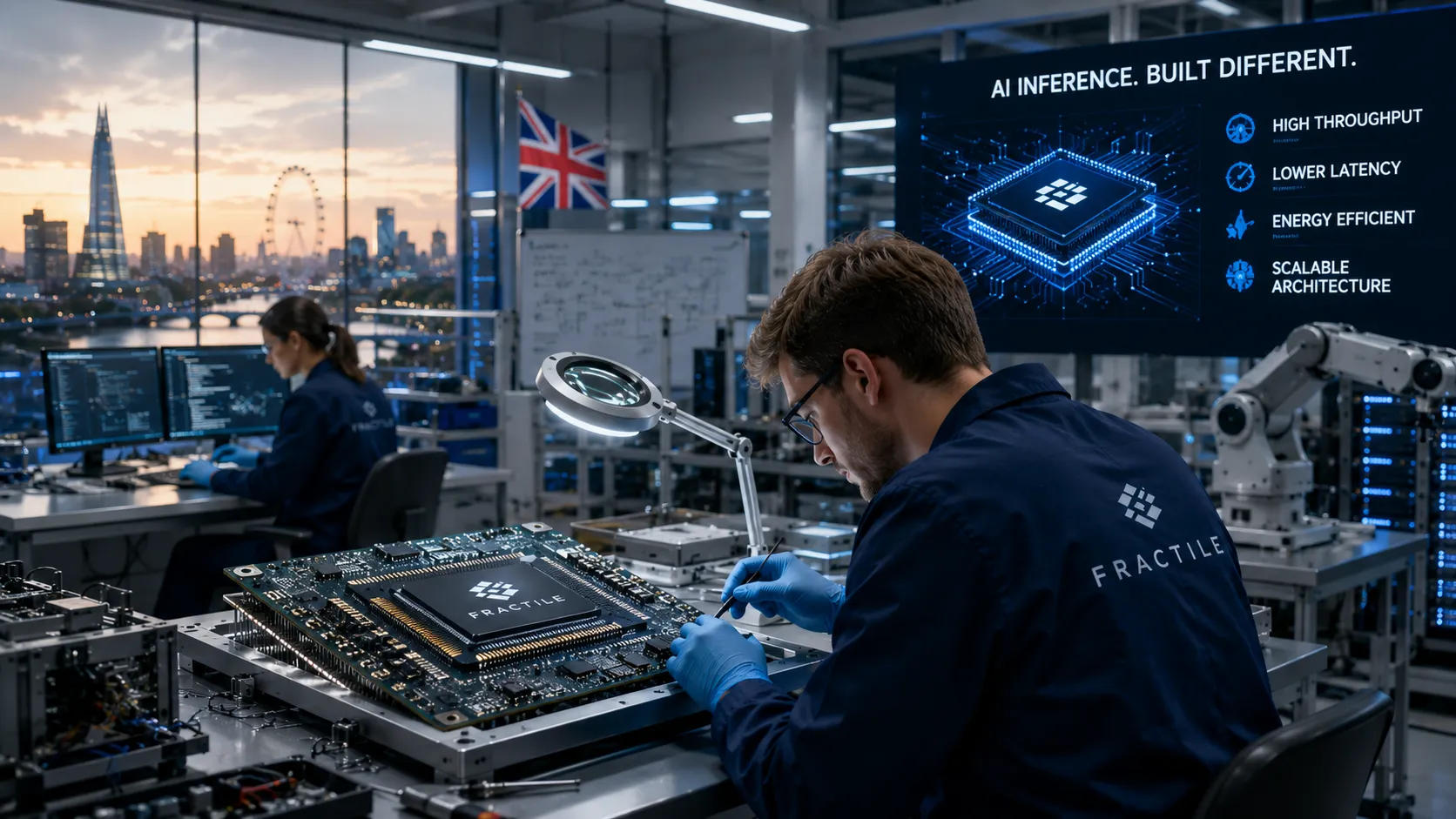
Reports suggest the startup is developing systems designed around tighter integration between memory and computing functions. Traditional environments often require substantial movement of information between components, creating bottlenecks as workloads expand. Fractile claims its architecture could reduce some of those limitations and improve performance efficiency considerably.
According to company projections referenced in reports, the approach could potentially improve processing speeds dramatically while lowering operating costs around inference environments. Internal estimates suggest throughput could increase from approximately 40 tokens per second to nearly 1,200 tokens per second, potentially transforming workloads currently requiring extensive processing time into considerably faster operations. While these projections remain company targets rather than broad industry benchmarks, investor enthusiasm increasingly suggests strong belief around optimization opportunities within AI infrastructure itself.
The significance of this shift extends beyond technical specifications because the broader AI race increasingly appears to be evolving. Earlier conversations frequently focused on who could create the largest models. Increasingly, however, attention appears moving toward who can operate systems most efficiently at scale.
Britain Increasingly Appears Interested In Building Foundational Technology
Fractile’s funding story may also signal something larger about Britain’s broader technology ambitions. Historically, the UK frequently produced influential researchers and startup talent but often encountered criticism regarding commercialization and infrastructure scale. Many technology businesses eventually expanded elsewhere or struggled to build industrial ecosystems matching those available in larger markets.
Recent developments increasingly suggest those patterns may be changing.
Britain’s deep-tech ecosystem appears to be attracting stronger investor attention across sectors involving semiconductors, AI infrastructure and advanced computing systems. Startups increasingly receive support not simply because of software potential but because investors appear willing to fund harder technological challenges involving infrastructure itself.
Reports indicate Fractile plans expansion efforts involving operations across London, Bristol, Taiwan and San Francisco while significantly increasing engineering recruitment. These developments matter because infrastructure businesses often require larger ecosystems involving manufacturing relationships, research environments and specialized expertise. Building globally competitive hardware companies frequently depends on more than funding alone. It requires sustained ecosystem development.
This broader environment increasingly suggests Britain no longer appears satisfied contributing only talent and research to global AI ecosystems. Increasingly, it appears interested in building foundational technology platforms capable of shaping future infrastructure environments directly.
The AI Infrastructure Race Is Quietly Becoming More Global
Fractile’s latest raise also reflects broader developments taking place across technology markets worldwide. Artificial intelligence infrastructure increasingly appears to be emerging as one of the most competitive sectors globally. Companies including Nvidia, AMD, Cerebras and Groq continue expanding capabilities while startups across multiple regions increasingly seek opportunities around performance optimization and infrastructure alternatives.
Investor behavior often reveals larger assumptions surrounding future industries. Increasingly, funding patterns suggest many believe infrastructure environments may represent one of AI’s largest long-term opportunities. Applications often evolve rapidly and consumer preferences frequently shift over time. Infrastructure systems, however, often become deeply embedded within technological ecosystems and create stronger long-term positions.
This may explain why investors increasingly appear willing to commit substantial capital toward hardware businesses operating in highly technical environments. The broader assumption increasingly appears straightforward: if artificial intelligence continues expanding globally, the systems supporting that growth may eventually become just as important as the technologies users interact with directly.
Why This Story Extends Beyond One Startup Funding Round
The broader significance of Fractile’s funding story ultimately may involve what it reveals regarding the future structure of artificial intelligence itself.
Much of the public AI conversation frequently centers around visible products because applications shape everyday experiences. Yet beneath those experiences another competition increasingly accelerates involving semiconductors, infrastructure and computational environments capable of sustaining future growth.
Because the next stage of artificial intelligence may not simply depend on smarter software.Increasingly, it may depend on who builds the foundations underneath it.