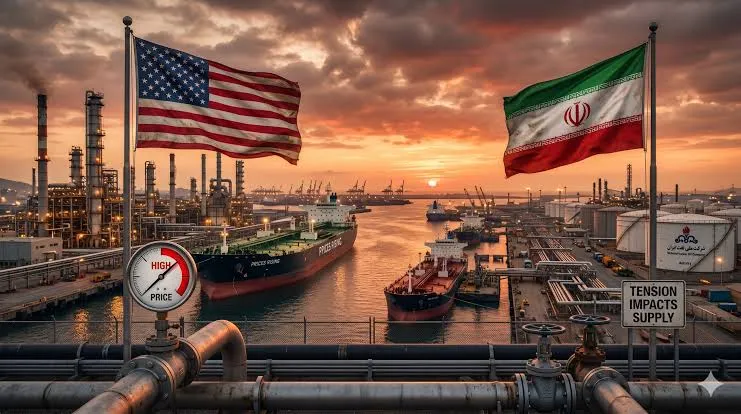
New Delhi: Global crude oil prices have surged approximately 30 percent from their lows recorded earlier in July, as the interim peace agreement between the United States and Iran has comprehensively unravelled, giving way to a fresh and intense round of hostilities that has included the United States resuming its naval blockade of Iranian ports and Kuwait Petroleum Corporation confirming that an Iranian strike hit one of its oil facilities over the weekend. The rapid and substantial price escalation marks one of the more dramatic reversals witnessed in oil markets since the conflict between the two nations first erupted earlier in 2026, underscoring just how quickly sentiment and pricing in this critical commodity market can shift in response to fast-moving geopolitical developments.
The scale of the price movement, a full 30 percent surge from recent lows within a relatively compressed timeframe, reflects the market's rapid recalibration of supply disruption risk as the fragile diplomatic truce that had brought welcome, if temporary, relief to global energy markets in preceding weeks has now given way to what increasingly appears to be a renewed and potentially more sustained phase of active conflict between Washington and Tehran.

THE COLLAPSE OF THE INTERIM PEACE AGREEMENT
The interim agreement between the United States and Iran, reached after months of earlier conflict that had itself sent oil prices to multi-year highs, had initially been credited with bringing a meaningful, if always somewhat fragile, period of relative calm to global energy markets, with shipping through the Strait of Hormuz showing signs of gradual normalisation and crude prices retreating substantially from their earlier peaks. This period of relative stability, however, has proven considerably shorter-lived than many market participants had hoped, with tensions beginning to resurface in the weeks preceding the current escalation, culminating in the current phase of renewed and intensified hostilities.
The specific triggers for this latest breakdown include a series of escalating military exchanges between US and Iranian forces, encompassing attacks on commercial vessels attempting to transit the Strait of Hormuz and, most recently, the direct strike on Kuwaiti oil infrastructure that has brought the conflict's economic consequences to bear on a third-party nation not directly party to the underlying US-Iran confrontation. This expansion of the conflict's impact beyond the two principal combatant nations has heightened concerns among market participants and regional stakeholders alike about the potential for further escalation and broader regional destabilisation.
THE US BLOCKADE AND SANCTIONS DIMENSION
Compounding the military escalation, the United States has moved to reinstate its naval blockade of Iranian ports, a measure explicitly designed to constrain Iran's ability to export crude oil and generate the revenue that Washington argues has historically funded activities it considers destabilising to regional security. This blockade decision followed the US Treasury Department's earlier move to revoke a sixty-day waiver that had permitted limited transactions involving Iranian oil, a waiver that had originally been granted as part of broader diplomatic negotiations between the two nations but which the Treasury Department rescinded ahead of its original expiration date, citing the deteriorating overall situation.
This combination of direct military action and renewed economic pressure through the sanctions and blockade mechanism represents a marked hardening of the US position relative to the more conciliatory diplomatic posture that had characterised the earlier interim agreement period, suggesting that Washington's patience with the prospects for a negotiated resolution may have been significantly tested by Iran's continued military actions in the intervening period.
MARKET DYNAMICS: FROM COMPLACENCY TO PANIC
Energy market analysts have noted a notable shift in market psychology accompanying this latest escalation, with participants who had, during the preceding period of relative calm, begun to focus increasingly on the prospects for continued recovery in oil supply flows, now rapidly repricing the renewed and, in some respects, heightened risk of sustained supply disruption. This shift from a relatively complacent market posture toward a more acute risk-pricing environment has been reflected not just in the substantial spot price increases for Brent crude, but also in elevated volatility across broader energy derivatives markets, as traders scramble to hedge against the possibility of further escalation and its potential implications for global oil supply availability.
Some analysts have specifically noted that markets may have been exhibiting a degree of complacency in the period immediately preceding this latest escalation, with participants choosing to focus on the positive narrative of a supply recovery even as underlying tensions continued simmering beneath the surface. This pattern, wherein markets periodically underestimate the risk of renewed escalation only to be caught comparatively flat-footed when hostilities resume, has itself become something of a recurring feature of how oil markets have processed the broader US-Iran conflict throughout 2026, contributing to the kind of sharp, rapid price movements witnessed in the current episode.
REGIONAL SPILLOVER: THE KUWAIT DIMENSION
The direct strike on Kuwaiti oil infrastructure represents a particularly significant development within the broader conflict narrative, as it marks a clear instance of the hostilities directly affecting the territory and economic infrastructure of a nation not itself a direct combatant in the underlying US-Iran confrontation. This regional spillover raises important questions about the potential for further expansion of the conflict's direct impact to other Gulf states, several of which host significant US military infrastructure and maintain complex diplomatic relationships with both Washington and Tehran, creating an intricate web of regional dynamics that could further complicate prospects for a swift resolution to the underlying conflict.
Kuwait's own oil production and export infrastructure represents a globally significant component of overall Gulf region energy supply, meaning that any sustained disruption to Kuwaiti oil facilities carries direct implications for global oil supply availability that extend well beyond the more commonly discussed risks associated with potential disruption to Iranian or broader Strait of Hormuz-transiting exports specifically.
IMPLICATIONS FOR GLOBAL AND INDIAN ENERGY MARKETS
The renewed and intensified conflict carries significant implications for oil-importing economies worldwide, with India, as one of the world's largest crude oil importers, facing particularly direct exposure to the resulting price volatility and potential supply disruption risk. The 30 percent surge in Brent crude from recent lows translates almost mechanically into a meaningfully higher import bill for Indian refiners and, by extension, upward pressure on the country's trade deficit, currency, and domestic inflation trajectory, compounding the various macroeconomic challenges that Indian policymakers have already been grappling with through much of the current fiscal year.
For global oil markets more broadly, the renewed escalation raises fresh questions about the durability of any future ceasefire or diplomatic resolution, given the demonstrated fragility of the previous interim agreement, which ultimately proved unable to withstand the underlying tensions between the two nations for an extended period. This experience is likely to inform how markets respond to any future diplomatic breakthroughs, with participants potentially demanding a higher bar of demonstrated durability before fully pricing out the elevated geopolitical risk premium that has become deeply embedded in oil markets throughout the course of this protracted conflict.
WHAT COMES NEXT
As the situation continues to develop, market participants, policymakers, and energy security analysts worldwide will be watching closely for signs of either further escalation or renewed diplomatic engagement between Washington and Tehran. The scale and speed of the current price surge serves as a stark reminder of just how quickly sentiment can shift in this critical commodity market, and of the very real, tangible economic consequences that continue to flow from the unresolved underlying tensions between the two nations, consequences that extend far beyond the immediate combatants to touch economies and consumers across the globe, from Gulf neighbours like Kuwait to major oil-importing nations like India, thousands of kilometres removed from the immediate conflict zone.
TRACKING THE PRICE TRAJECTORY THROUGH 2026
To fully appreciate the significance of the current 30 percent surge from July lows, it is instructive to trace the broader arc of oil price movements throughout the year. Brent crude had, at various points earlier in 2026, spiked to considerably higher absolute levels during the most intense phases of the conflict, including surges that pushed prices toward multi-year highs amid fears of a complete and sustained closure of the Strait of Hormuz. The subsequent partial de-escalation and interim agreement had brought prices back down substantially, offering markets a period of relative respite before the current renewed escalation reversed much of that improvement.
This pattern of dramatic peaks followed by partial retracements, now followed again by renewed escalation, has created an unusually volatile trading environment for oil markets throughout 2026, with implied volatility in crude oil derivatives markets remaining persistently elevated compared to more typical historical levels, reflecting the market's ongoing struggle to confidently price the probability and potential magnitude of further escalation or de-escalation scenarios given the demonstrated unpredictability of the underlying conflict's trajectory.
IMPLICATIONS FOR GLOBAL CENTRAL BANKS AND INFLATION
Beyond its direct implications for oil-importing economies like India, the renewed surge in crude prices carries broader significance for global monetary policy considerations, given oil's role as a key input into headline inflation readings across most major economies. Central banks worldwide, including the US Federal Reserve, have had to factor this renewed energy price volatility into their own inflation forecasts and monetary policy deliberations, with sustained oil price elevation potentially complicating efforts by various central banks to bring headline inflation back toward their respective target levels, adding a further layer of complexity to an already challenging global monetary policy environment shaped by numerous other crosscurrents beyond the immediate Middle East conflict.
STRATEGIC PETROLEUM RESERVES AND EMERGENCY RESPONSE MEASURES
In response to the sustained volatility affecting global oil markets throughout the conflict, several major oil-consuming nations have periodically drawn upon their strategic petroleum reserves as an emergency measure aimed at cushioning the immediate impact of supply disruptions on domestic energy prices. These strategic reserves, built up over previous decades specifically to provide a buffer against exactly this kind of geopolitically-driven supply shock, offer a valuable but ultimately finite tool for managing short-term market disruption, with most energy security analysts cautioning that reserve releases can help smooth acute, short-duration disruptions but cannot substitute for a durable resolution to the underlying conflict if disruptions persist over an extended period.

REFINERS' MARGIN DYNAMICS AMID PRICE VOLATILITY
Beyond the direct impact on crude oil prices, the current volatility carries important implications for refining margins globally, as refiners must navigate the complex task of managing feedstock procurement amid rapidly shifting crude prices while attempting to pass through cost increases to downstream fuel and petrochemical product prices, a process that typically occurs with some lag and can create meaningful margin volatility for refining operations in the interim. This dynamic has particular relevance for large integrated energy companies with substantial refining operations, including major Indian players, whose overall profitability can be significantly influenced by the pace and predictability, or lack thereof, of crude oil price movements during periods of heightened geopolitical volatility of the kind currently being witnessed.
MONITORING THE SITUATION GOING FORWARD
Energy market participants, policymakers, and consumers worldwide are likely to continue monitoring developments in the US-Iran conflict with heightened attention over the coming days and weeks, given the demonstrated capacity for rapid and substantial price movements in response to fast-evolving battlefield and diplomatic developments. Until a more durable resolution emerges, the pattern of sharp escalation followed by partial de-escalation that has characterised this conflict throughout 2026 appears likely to continue shaping global oil market dynamics, with all the attendant implications for economies and consumers worldwide who remain, whether directly or indirectly, exposed to the resulting price volatility.
For India specifically, this latest surge reinforces the urgency of continued efforts toward energy diversification and supply security, even as the country, like the rest of the world, remains fundamentally dependent on the eventual resolution of a conflict whose outcome lies substantially beyond its own direct influence or control.
Whether the coming days bring further escalation or a renewed push toward diplomatic engagement, global energy markets appear set for continued volatility, a reality that policymakers, businesses, and households across major oil-importing economies will need to continue navigating with the same vigilance that has characterised much of the past several months.