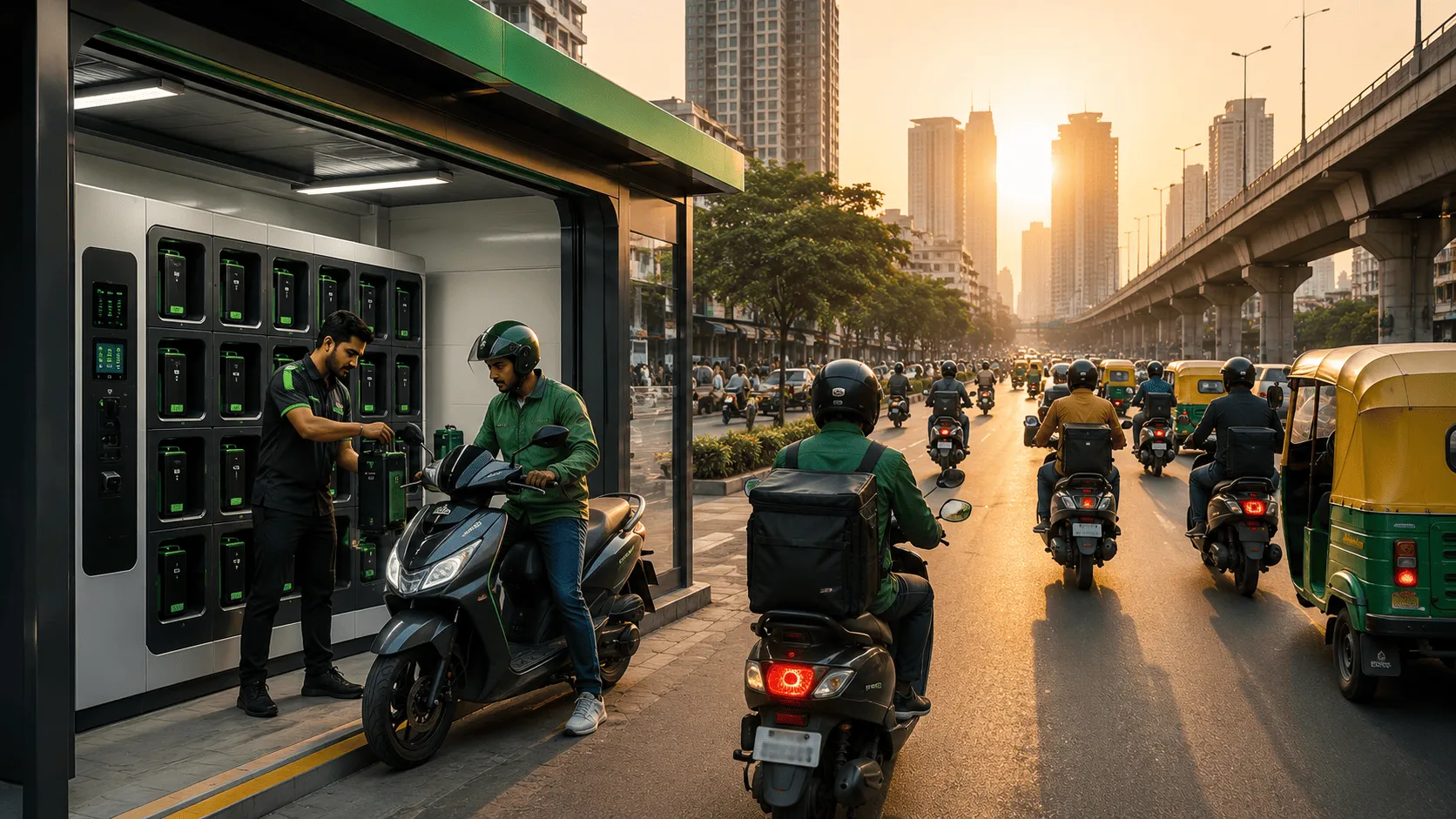
While Most EV Companies Focus On Vehicles, Battery Smart Is Building The Infrastructure That Could Determine Whether India's Electric-Mobility Revolution Actually Scales.
India's electric-vehicle story is often told through the vehicles themselves.
Attention typically focuses on scooter manufacturers, automotive startups and the growing number of consumers switching from petrol-powered transportation to electric alternatives. These developments are important because they represent the most visible part of the transition. Yet behind every successful EV ecosystem lies a less glamorous challenge that often determines whether adoption accelerates or stalls: infrastructure. Vehicles can only scale as quickly as the systems supporting them.
For India, that challenge is particularly significant.
Millions of commercial drivers depend on two-wheelers and three-wheelers for daily income. Unlike private vehicle owners, these operators cannot afford long charging sessions that reduce earning time. Every minute spent waiting for a battery to charge is a minute not spent carrying passengers, delivering packages or generating revenue. As a result, one of the biggest questions facing India's EV ecosystem has always been whether charging infrastructure can adapt to the realities of commercial mobility.
Battery Smart believes it has the answer.
The battery-swapping company has secured $15 million in debt financing from Mirova, the sustainable-investment affiliate of Natixis Investment Managers. The funding will help expand the company's rapidly growing battery-swapping network across India. While the financing itself is important, the larger story involves a growing recognition that infrastructure companies may become some of the most valuable businesses in the country's electric-mobility ecosystem.
Battery Swapping Solves A Different Problem Than Charging
Most discussions around electric vehicles focus on charging stations.
That approach works reasonably well for private car owners who can leave vehicles plugged in for extended periods. Commercial mobility operates according to different economics. Delivery riders, auto-rickshaw operators and fleet owners measure productivity in hours on the road. Long charging times create operational inefficiencies that can make electric vehicles less attractive despite lower running costs.
Battery swapping changes the equation.
Instead of waiting for batteries to recharge, drivers exchange depleted batteries for fully charged replacements in a matter of minutes. The process resembles refueling rather than charging. This dramatically reduces downtime while allowing operators to continue working almost immediately. For commercial users whose earnings depend on vehicle availability, the difference can be substantial.
The model has gained traction because it aligns closely with how India's urban transportation system functions.
Many drivers lack access to dedicated charging infrastructure at home. Fast battery replacement offers a practical solution that addresses both convenience and productivity concerns simultaneously.
Investors Are Increasingly Funding Infrastructure Instead Of Vehicles
One of the most notable aspects of Battery Smart's latest financing is its structure.
The company raised debt rather than equity, a sign that investors increasingly view battery-swapping infrastructure as an asset-heavy business capable of supporting structured financing. Unlike many early-stage startups that depend entirely on venture capital, infrastructure companies often require substantial investment in physical networks, equipment and operational systems.
This shift reflects a broader trend across the EV sector.
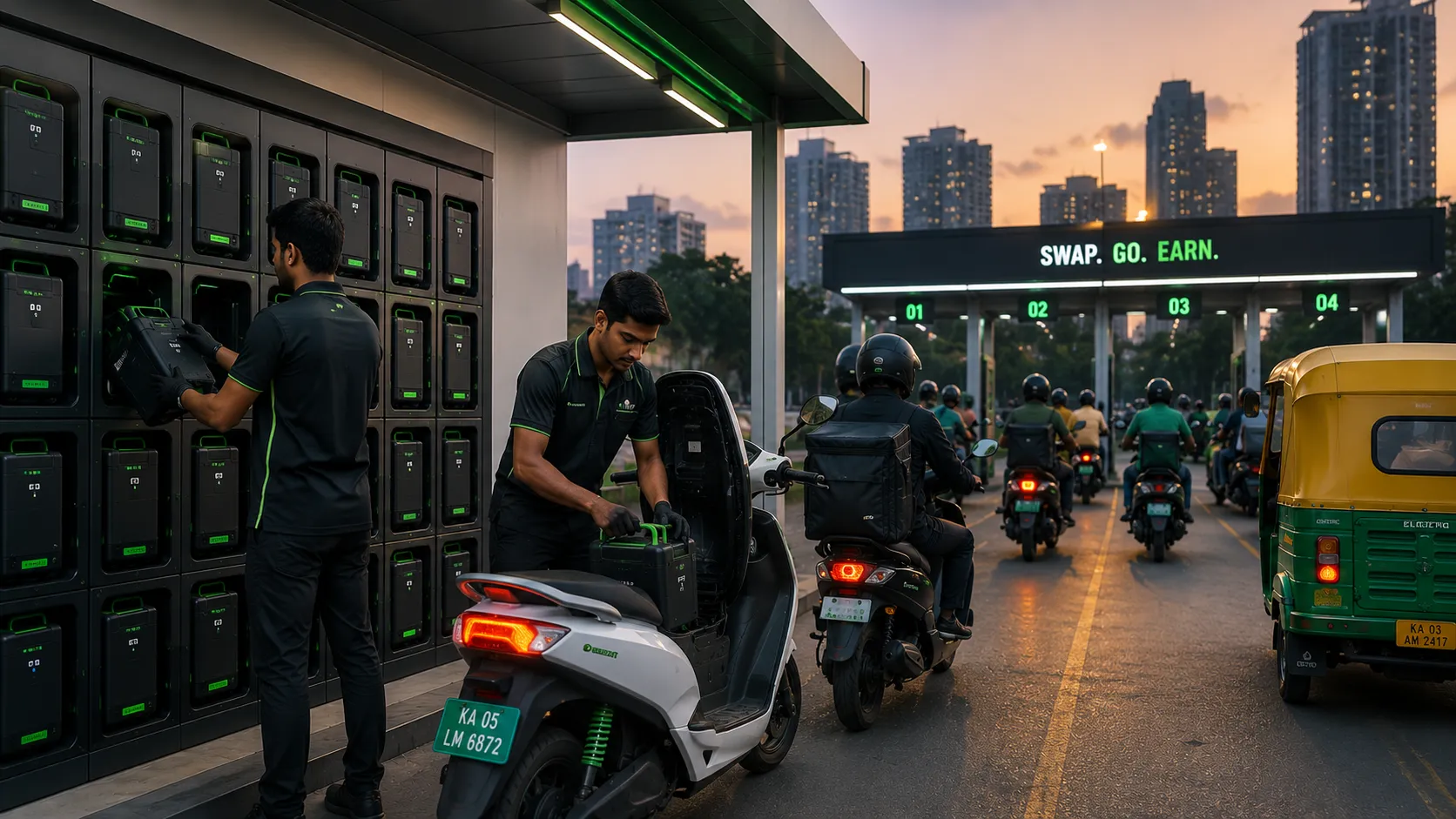
For years, investment headlines focused primarily on vehicle manufacturers because they represented the most visible part of the market. Increasingly, investors are recognizing that infrastructure may offer equally attractive opportunities. Charging networks, battery platforms, energy-management systems and swapping stations all become more valuable as EV adoption increases.
Battery Smart sits directly at the center of this trend.
Every additional electric two-wheeler or three-wheeler potentially expands demand for the services the company provides. As a result, its growth is tied not to a single vehicle brand but to the broader expansion of electric mobility itself.
Why Mirova's Investment Matters
Mirova is not a traditional venture-capital investor.
The firm focuses heavily on sustainable infrastructure, energy transition and environmental-impact investments. Its participation therefore carries significance beyond the size of the financing round. Investors specializing in sustainability often evaluate businesses through long-term infrastructure lenses rather than short-term growth metrics alone.
That perspective aligns naturally with Battery Smart's business model.
Building a nationwide battery-swapping network requires patience, capital and operational discipline. Success depends on establishing physical infrastructure capable of supporting millions of transactions over extended periods. These characteristics often appeal to investors seeking exposure to long-term structural trends rather than purely speculative opportunities.
The investment also highlights growing international interest in India's clean-mobility ecosystem.
Global investors increasingly view India as one of the most important EV markets outside China. The country's scale, urbanization trends and transportation needs create opportunities that few other markets can match.
The Real Opportunity Is Commercial Mobility
While consumer EV adoption receives considerable attention, Battery Smart's primary opportunity lies elsewhere.
Commercial mobility represents one of the largest and most economically important segments of India's transportation market. Millions of delivery workers, ride-hailing drivers and small-business operators depend on affordable transportation to generate income. These users are often more sensitive to operating costs than private consumers, making the economics of electrification particularly compelling.
Battery swapping can accelerate that transition.
Lower fuel costs, reduced maintenance expenses and minimal downtime create attractive value propositions for commercial operators. As fleet owners increasingly adopt electric vehicles, demand for reliable battery infrastructure is likely to grow as well. The businesses enabling that transition may ultimately become just as important as the vehicle manufacturers themselves.
This is why infrastructure companies are attracting increasing investor attention.
The market opportunity extends far beyond individual vehicle sales. It encompasses the systems required to keep those vehicles operating efficiently every day.
India's EV Future Depends On Networks
One lesson from previous transportation revolutions is that infrastructure often determines adoption rates.
The automobile industry expanded alongside fuel stations. Mobile phones scaled alongside telecommunications networks. Internet businesses flourished because broadband infrastructure became widely available. Technologies rarely succeed based solely on the products consumers purchase. They succeed because supporting ecosystems develop around them.
Electric mobility follows the same pattern.
Vehicles may attract headlines, but infrastructure determines convenience. Consumers and commercial operators make decisions based not only on vehicle specifications but also on how easily those vehicles integrate into daily life. Reliable charging and swapping networks therefore become critical components of adoption.
Battery Smart is attempting to build precisely that ecosystem.
Its strategy focuses on creating a dense network of battery-swapping stations capable of supporting high-frequency commercial usage. If successful, the company could become a foundational layer within India's broader electric-mobility landscape.
The Bigger Story Is About Energy Infrastructure
Viewed narrowly, Battery Smart's debt raise is a financing announcement.
Viewed more broadly, it reflects a growing realization that the EV transition is fundamentally an infrastructure story. Vehicle manufacturers will play important roles, but long-term success depends equally on the networks powering those vehicles. Battery-swapping platforms, charging operators and energy-management systems may ultimately determine how quickly electric transportation scales.
Investors appear increasingly convinced of that reality.
The financing from Mirova suggests that infrastructure providers are beginning to attract the kind of long-term capital traditionally associated with utilities, transportation networks and other essential systems. That shift could become increasingly important as India accelerates its push toward cleaner mobility.
Because in the end, the future of electric transportation may not be decided by who builds the most vehicles.
It may be decided by who builds the infrastructure that keeps them moving.