The $4-5 Billion Vote of Confidence
On June 10, 2026, Bank of Baroda's Managing Director and CEO Debadatta Chand made a projection that captured the scale of what the Reserve Bank of India is attempting. The bank expects to attract $4-5 billion in foreign currency inflows through the central bank's newly announced swap facilities .
The projection is not random optimism. It is rooted in two realities. First, Bank of Baroda has one of the most extensive overseas networks among Indian public sector banks, giving it direct access to non-resident Indian depositors and international capital markets. Second, the RBI has structured its swap windows to make foreign currency borrowing unusually attractive—by absorbing hedging costs that would otherwise make these transactions expensive.
Chand told CNBC TV18 that the banking system as a whole could attract roughly $40-50 billion through all routes under the RBI's measures . He noted that Bank of Baroda was among the major beneficiaries of a similar RBI initiative in 2013 and expects to repeat that performance. "Because of our franchise across the world, we are better positioned to attract these flows, and the RBI's measures give us the comfort to utilise this money productively," he said .
The Mechanics: How RBI Is Paying the Hedging Bill
To understand why Bank of Baroda is making this projection, one must first understand what the RBI has actually done.
On June 5, 2026, the central bank announced two separate swap facilities designed to encourage foreign currency inflows. On June 8, it released the detailed operational frameworks .
First, the FCNR(B) swap facility. Banks can raise fresh Foreign Currency Non-Resident (Bank) deposits from NRIs with maturities between three and five years. These deposits are denominated in foreign currency—typically US dollars—and are not exposed to rupee depreciation risk. Under the new facility, banks can swap these dollar deposits with the RBI for rupees. The critical feature: the swap is executed at par . Banks sell dollars to RBI at the prevailing FBIL reference rate and buy them back at the same exchange rate at maturity.
This is not a minor detail. The current market cost of hedging a dollar-rupee exposure is approximately 3 percent per annum . By offering a par swap, RBI is absorbing that entire cost. Banks can mobilize FCNR(B) deposits without bearing any currency risk, making the economics far more attractive than they would otherwise be.

The facility is available for deposits mobilised between June 8 and September 30, 2026, with the swap window remaining open until October 16 . The RBI has also exempted these deposits from Cash Reserve Ratio and Statutory Liquidity Ratio requirements, further reducing the cost of holding them .
Second, the ECB and OFCB swap window. For external commercial borrowings raised by public sector undertakings, and for overseas foreign currency borrowings by banks, RBI has offered a different structure. Instead of a par swap, the central bank is offering a swap at a fixed cost of 1.5 percent per annum, compounded semi-annually .
The market hedging cost is around 3 percent . By offering a swap at 1.5 percent, RBI is effectively absorbing half the hedging cost. For a bank like Bank of Baroda that regularly borrows overseas, this makes foreign currency funding significantly cheaper.
Chand explained the math directly. "If you look at dollar liquidity outside India, borrowing rates are favourable for a bank like ours. The swap cost is currently around 3 percent, and the RBI is bearing 1.5 percent. This creates a significant opportunity to lower borrowing costs through the OFCB route" .
The 2013 Precedent: Why $40-50 Billion Is Achievable
The RBI has run this play before. In 2013, during the "taper tantrum" period when the rupee was under severe pressure, the central bank introduced a similar FCNR(B) swap window. Within three months, banks mobilized approximately $24.5 billion in fresh deposits .
This time, the window is longer—four months instead of three—and the incentives are arguably stronger. SBI Research's Ecowrap report estimates that fresh FCNR(B) inflows alone could reach $40-45 billion in FY27, with ECB and OFCB flows adding another $15-20 billion, bringing the total to $55-65 billion .
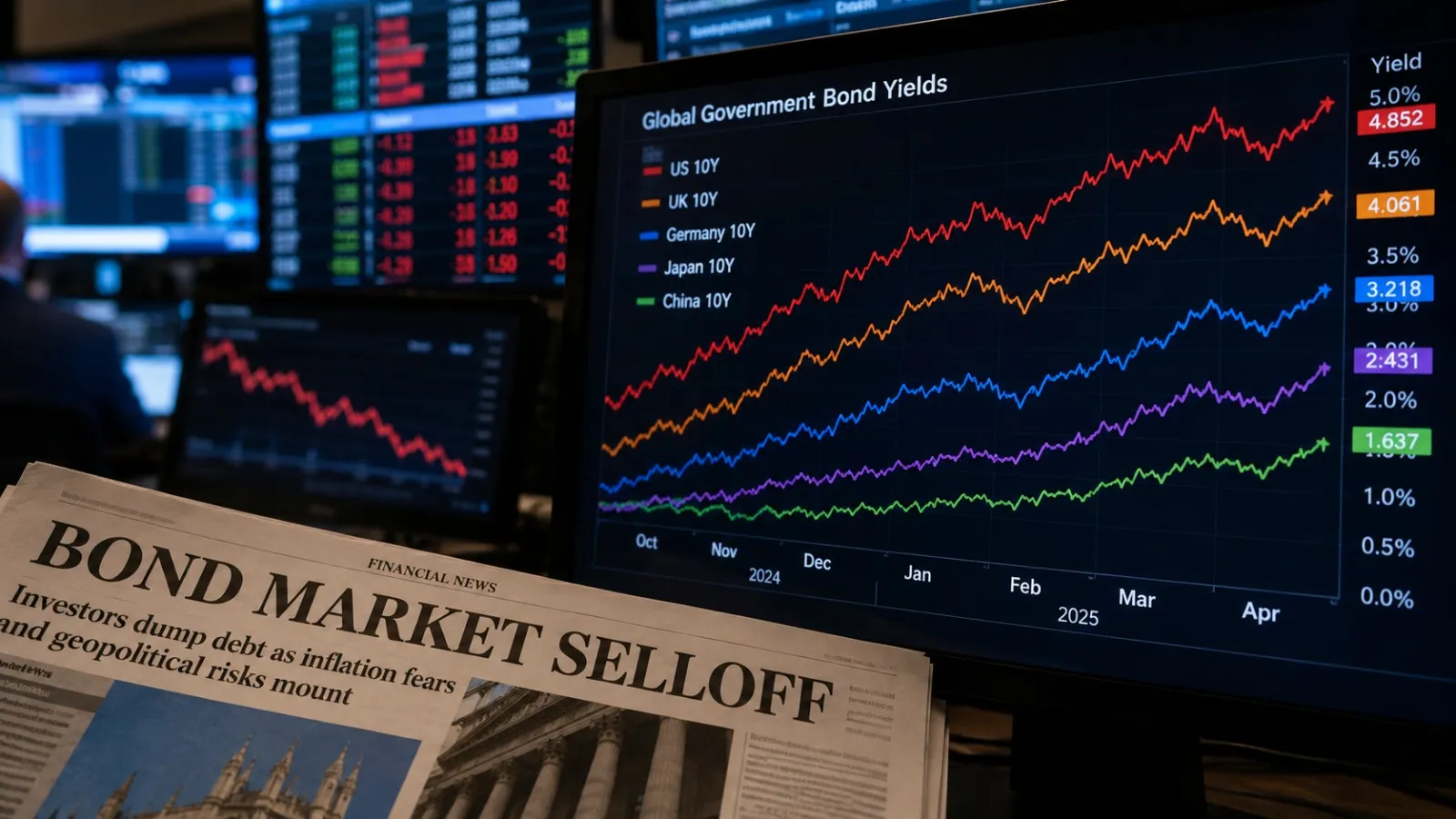
The report noted that the current yield on three-year US Treasury bonds is approximately 4.2 percent . Banks can offer FCNR(B) deposit rates of around 5.5-6 percent, making them attractive relative to competing dollar-denominated investment options. The deposits are also tax-free in India, and both principal and interest can be repatriated overseas without restriction .
Bankers across the industry are optimistic. According to The New Indian Express, public sector banks could see fresh inflows of $20-30 billion in FCNR(B) deposits alone . Canara Bank MD and CEO Brajesh Kumar Singh expects a 10-20 percent increase in his bank's FCNR(B) portfolio, translating into additional inflows of Rs 1,000-2,000 crore .
The Bank of Baroda Advantage: Why It Expects $4-5 Billion
Not every bank is equally positioned to benefit from these measures. The FCNR(B) deposit market is concentrated among banks with strong overseas franchises and established relationships with NRI customers.
Bank of Baroda has one of the most extensive international networks among Indian public sector banks. It has a significant presence in countries with large NRI populations—the UAE, the UK, the US, Canada, and several African nations. This branch network gives it direct access to the very depositors the RBI is trying to reach.
The bank's overseas borrowing capabilities also give it an edge on the OFCB front. Bank of Baroda regularly accesses international capital markets for funding. With the RBI absorbing 1.5 percent of the swap cost, the economics of overseas borrowing have improved materially.
Chand made clear that the bank intends to use both routes. When asked whether Bank of Baroda would look at the OFCB route, he responded directly: "We regularly borrow overseas and will continue to do so" .
The $4-5 billion projection, therefore, reflects a combination of factors: the bank's existing overseas franchise, the improved economics of both FCNR(B) deposits and overseas borrowings, and the confidence that comes from having been a major beneficiary of the 2013 scheme.
The Liquidity Impact: More Than Just Dollar Inflows
The RBI's measures are not merely about supporting the rupee, though that is certainly part of the objective. They are also about improving banking system liquidity in rupees.
When a bank mobilizes FCNR(B) dollars and swaps them with RBI for rupees, the central bank releases an equivalent amount of rupee liquidity into the system. This reduces the banking system's dependence on more expensive wholesale funding instruments.
Chand confirmed this benefit. "These measures improve both dollar liquidity and rupee liquidity. Therefore, our dependence on some of these instruments will naturally reduce" .
SBI Research estimates that the additional inflows could push banking system deposit growth to 14.5-15 percent in FY27, compared with expected credit growth of around 16 percent . The gap between credit and deposit growth could narrow by nearly Rs 1 lakh crore after accounting for regulatory adjustments.
The report also revised its balance of payments outlook sharply. From an earlier expectation of a $65-70 billion deficit, SBI Research now expects a surplus of $5-10 billion in FY27 . The current account deficit is projected to remain in the range of 1.5-1.7 percent of GDP. That is a dramatic revision driven almost entirely by the expected inflows from these swap facilities.
The Rupee Impact: From 96 to Stability
The measures have already had a visible effect on the currency market. According to Reuters, the rupee strengthened after RBI's broader measures, moving from 95.67 to 95.2450 against the US dollar .
The improvement reflects market recognition that RBI is serious about defending the currency. By offering to absorb hedging costs, the central bank is effectively putting a floor under the rupee. It is telling the market that it has both the tools and the willingness to bring in dollars when needed.
SBI Research argued that the RBI should continue to intervene actively in currency markets to prevent excessive rupee depreciation, warning that the costs of sustained weakness could outweigh the benefits of greater exchange-rate flexibility . The report also stated that discussions around an imminent interest rate hike cycle remain premature, citing historical evidence that policy decisions should remain data-driven despite recent currency volatility.
The Bank of Baroda Credit Outlook: 13-15 Percent Growth
Despite the focus on forex inflows, Bank of Baroda's core business remains intact. The bank has retained its credit growth guidance of 13-15 percent for FY27, citing resilient demand across retail and MSME segments .
Chand noted that the bank's global credit growth stood at 16.25 percent in FY26, with domestic advances growing 14.5 percent. The bank is comfortable with its current guidance and does not see the need to revise it downward despite global uncertainty.
The forex inflows, therefore, are not a substitute for core lending growth. They are a complement—cheaper funding that can support the bank's loan book without putting pressure on net interest margins.
The bank also remains confident about asset quality. The RBI's measures are expected to improve overall liquidity in the system, which typically reduces stress on borrower repayment capacity. For a bank with significant exposure to MSMEs and retail borrowers, this is a meaningful secondary benefit.

The RBI's forex swap facilities represent one of the most significant foreign currency mobilisation efforts since the 2013 taper tantrum. By absorbing hedging costs—fully for FCNR(B) deposits and partially for ECBs and OFCBs—the central bank has fundamentally altered the economics of bringing dollars into India.
Bank of Baroda's projection of $4-5 billion in inflows is a bet that its overseas franchise, combined with these favourable economics, will allow it to capture a meaningful share of the $40-50 billion that the banking system as a whole is expected to attract.
The success of the measures will depend on several factors: the interest rates banks offer to depositors, the attractiveness of competing investment options, and the duration of the geopolitical and economic uncertainty that prompted the RBI to act. But the early signs are encouraging. The rupee has stabilized. Banks are mobilizing deposits. And Bank of Baroda is positioning itself to lead the charge.
As Chand put it, "The RBI's measures give us the comfort to utilise this money productively" . In a world of global uncertainty, that comfort is worth more than the dollars themselves.