The Jaipur Startup’s New Funding Round Is About More Than Ghee, Honey And Cold-Pressed Oils. It Is A Test Of Whether Modern Indian Consumers Are Finally Ready To Reward Transparency Over Tradition.
For decades, India's FMCG industry followed a relatively predictable playbook.
Large companies built massive distribution networks, invested heavily in advertising and relied on scale to dominate consumer categories. Whether it was cooking oil, packaged foods, personal care products or household staples, the biggest brands often enjoyed an almost insurmountable advantage because they controlled shelf space, supply chains and consumer trust. Startups occasionally emerged with niche products, but very few were viewed as serious challengers to the country's established consumer giants.
That assumption is beginning to change.
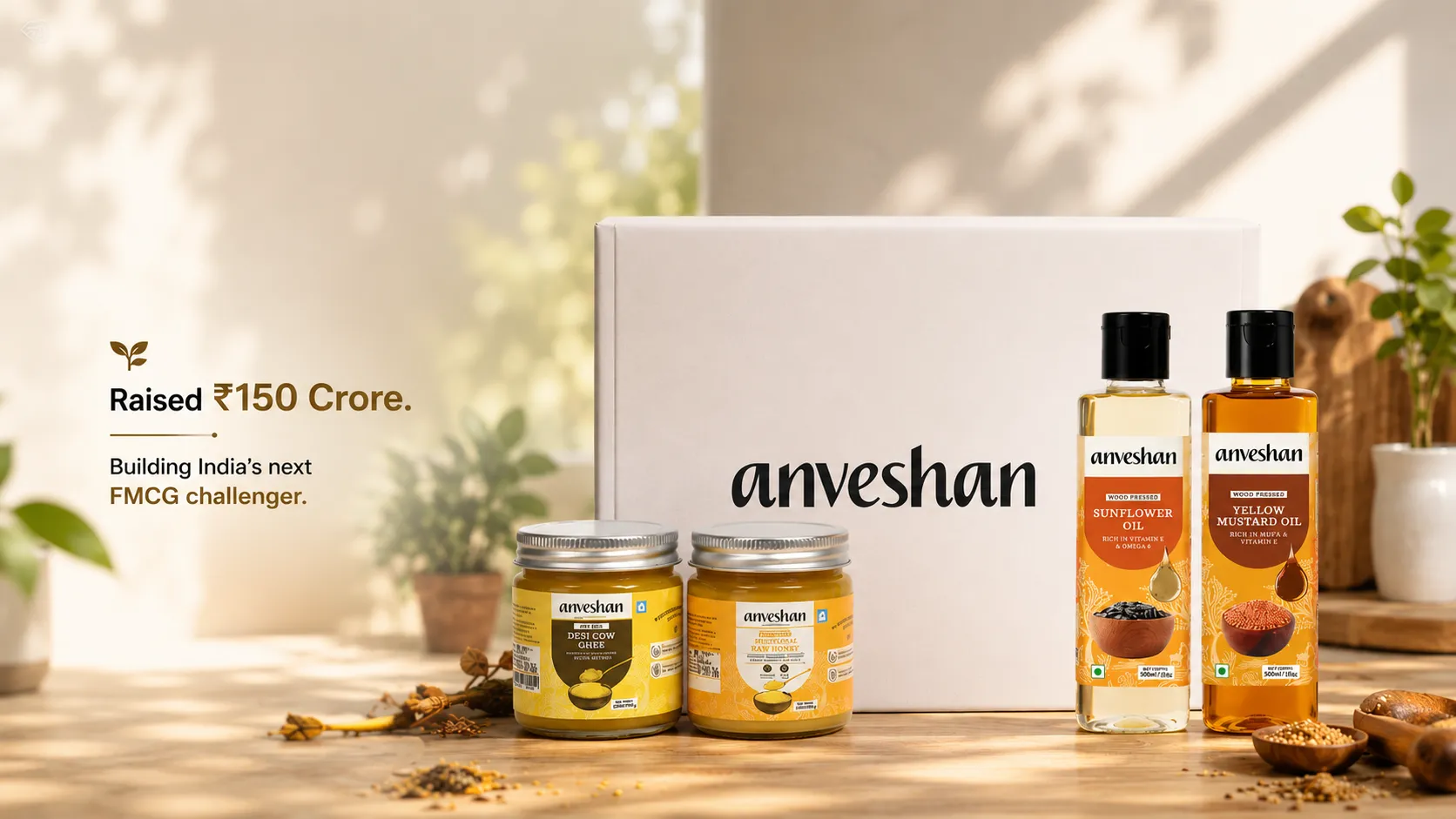
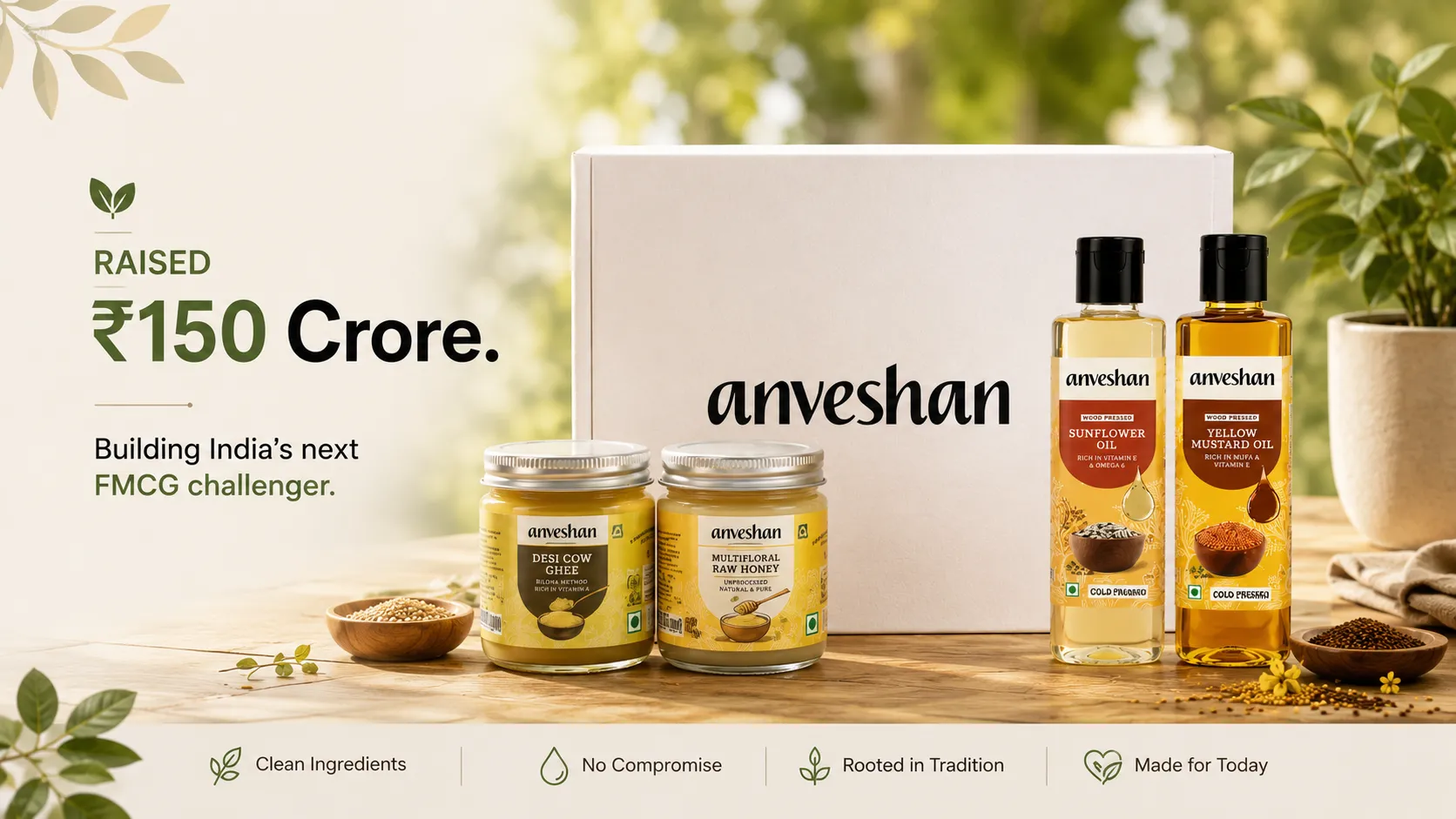
The rise of digital commerce, growing consumer awareness around health and increasing skepticism toward processed foods have created opportunities that barely existed a decade ago. Younger consumers are reading ingredient labels, questioning sourcing practices and actively seeking products they perceive as cleaner, healthier and more transparent. What started as a niche urban trend has gradually evolved into a meaningful business category. The latest company attempting to capitalize on that shift is Anveshan, the Jaipur-based food brand that recently raised ₹150 crore in a Series B funding round led by Vertex Ventures.
At first glance, the funding announcement looks like another startup success story.
India's venture ecosystem produces new funding headlines almost every day. Yet Anveshan's raise stands out because it reflects investor confidence in a very specific consumer behavior change. The company is not trying to reinvent food through futuristic technology or disruptive business models. Instead, it is betting that consumers increasingly want products that feel closer to their origins. Its portfolio includes items such as A2 ghee, raw honey, cold-pressed oils and minimally processed staples, categories built around authenticity, traceability and production transparency.
That focus represents a direct challenge to traditional FMCG thinking.
For years, convenience and affordability dominated purchasing decisions because consumers had limited visibility into how products were sourced or manufactured. Brands primarily competed through distribution and marketing strength. Today, however, information travels differently. Consumers can research ingredients instantly, compare products online and access detailed sourcing information before making purchasing decisions. This shift has fundamentally altered how trust is built.
Trust has become one of the most valuable assets in food.
Food scandals, concerns around adulteration and growing awareness about nutrition have created demand for brands that can explain where products come from and how they are made. Consumers increasingly want to know the origin of their honey, the source of their milk and the extraction process behind their cooking oils. While such questions were once limited to health-conscious enthusiasts, they are gradually becoming mainstream purchasing considerations.
This trend is creating an entirely new category of consumer brands.
Rather than competing solely on price, companies like Anveshan are competing on transparency. They are selling not just products but also information. Packaging, storytelling and sourcing disclosures become part of the value proposition because customers increasingly view transparency itself as a premium feature. The result is a market where smaller brands can challenge larger competitors without matching their advertising budgets.
The funding round suggests investors see significant potential in that model.
Venture capital firms rarely invest substantial amounts solely because a category is fashionable. They invest because they believe structural changes are occurring within consumer behavior. In Anveshan's case, the thesis appears straightforward. If Indian consumers continue moving toward premium food products with clear sourcing and clean-label positioning, brands capable of establishing credibility early may enjoy significant long-term advantages.
The broader market supports that view.
India's premium food segment has expanded steadily over the past several years as rising incomes, urbanization and health awareness influence consumption patterns. Consumers are increasingly willing to pay more for products they perceive as healthier, safer or more authentic. This does not mean affordability has become irrelevant. Rather, it suggests that a growing section of the market is willing to pay a premium when trust and quality are clearly communicated.
What makes Anveshan particularly interesting is its timing.
The company is growing during a period when traditional FMCG leaders are also attempting to reposition themselves around wellness, natural ingredients and health-focused branding. Established companies recognize the same trends that startups are targeting. The difference is that startups often begin with authenticity as their core identity, while larger corporations must adapt existing portfolios and consumer perceptions. This creates a unique competitive dynamic where agility sometimes matters as much as scale.
Yet the path ahead remains challenging.
Building a successful food startup is fundamentally different from building a digital platform because physical products require complex supply chains, quality control systems and operational consistency. Maintaining sourcing standards while expanding production can be difficult. Ensuring product quality across larger customer bases becomes increasingly complicated as businesses scale. The very transparency that attracts consumers also creates higher expectations because customers expect brands to remain faithful to their original promises.
That challenge may ultimately determine whether Anveshan becomes a category leader or simply another well-funded startup.
History shows that consumers often support mission-driven brands in their early stages, but long-term success requires operational excellence, distribution expansion and sustained trust. Premium positioning can attract initial interest, but repeat purchases depend on delivering consistent value over time.
Still, the larger significance of the funding extends beyond one company.
Anveshan's rise signals how dramatically India's consumer market is evolving. Investors are no longer backing food startups solely because they offer convenience or novelty. Increasingly, they are backing businesses that address changing expectations around quality, sourcing and transparency. The success or failure of these brands will reveal whether India's clean-label movement represents a temporary trend or a permanent shift in consumer behavior.
That is why Anveshan's ₹150 crore funding round matters.The story is not simply about fresh capital entering a startup.It is about whether a new generation of food brands can challenge decades of FMCG dominance by offering something consumers increasingly value: trust that can be verified rather than simply advertised.And if that happens, India's next major FMCG challenger may not emerge from a corporate giant.It may emerge from a startup that convinced consumers to care about where their food comes from.