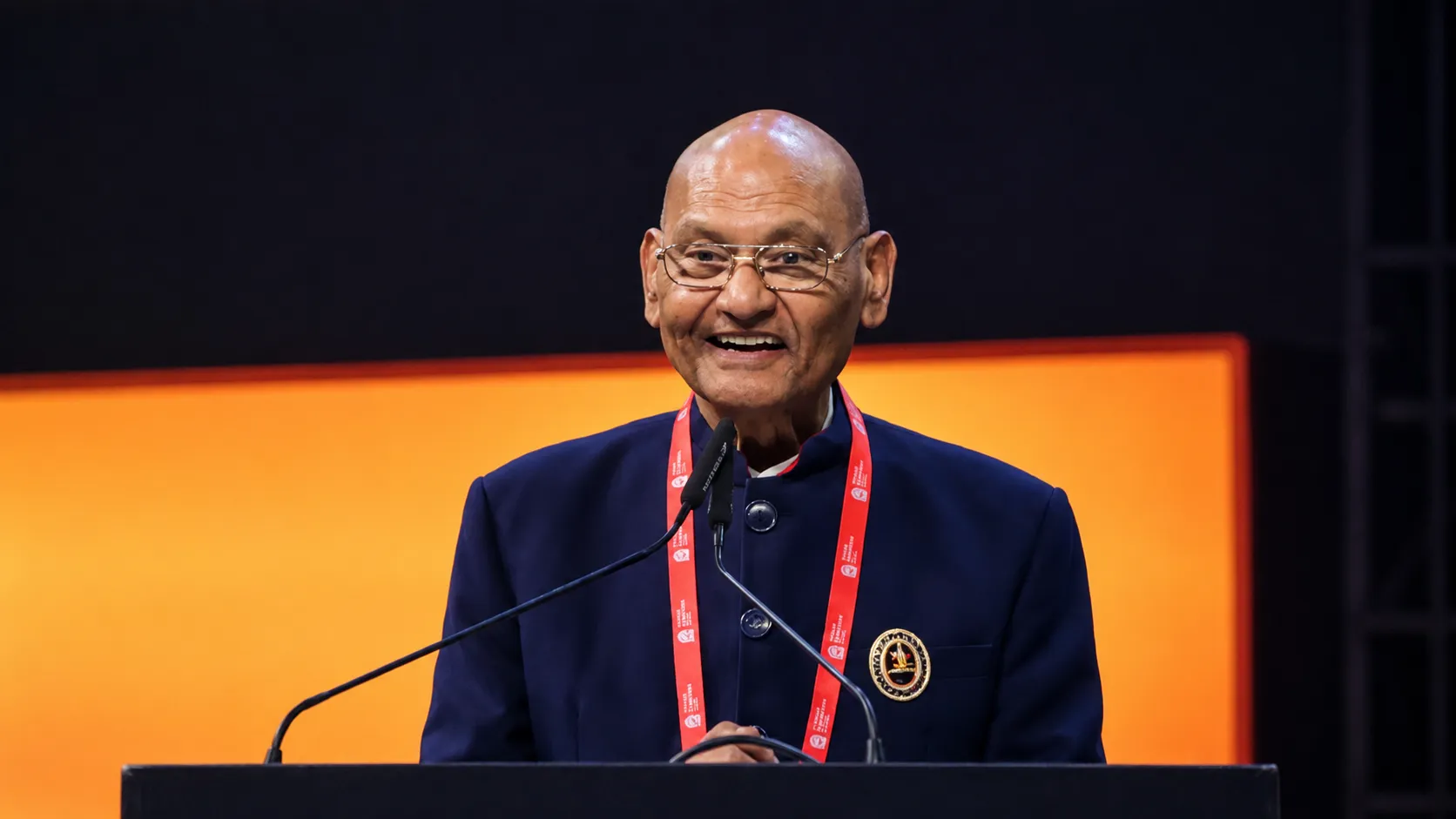
There are corporate announcements that move a stock price for a day, and there are corporate announcements that force an entire industry to recalibrate its sense of scale. Anil Agarwal's disclosure that he intends to invest roughly $20 billion in India over the next three to five years falls firmly into the second category. Coming at a time when global capital is famously skittish, when commodity cycles are volatile, and when many conglomerates are consolidating rather than expanding, Agarwal's move reads less like an incremental business decision and more like a statement of conviction about where India's growth story is headed next.
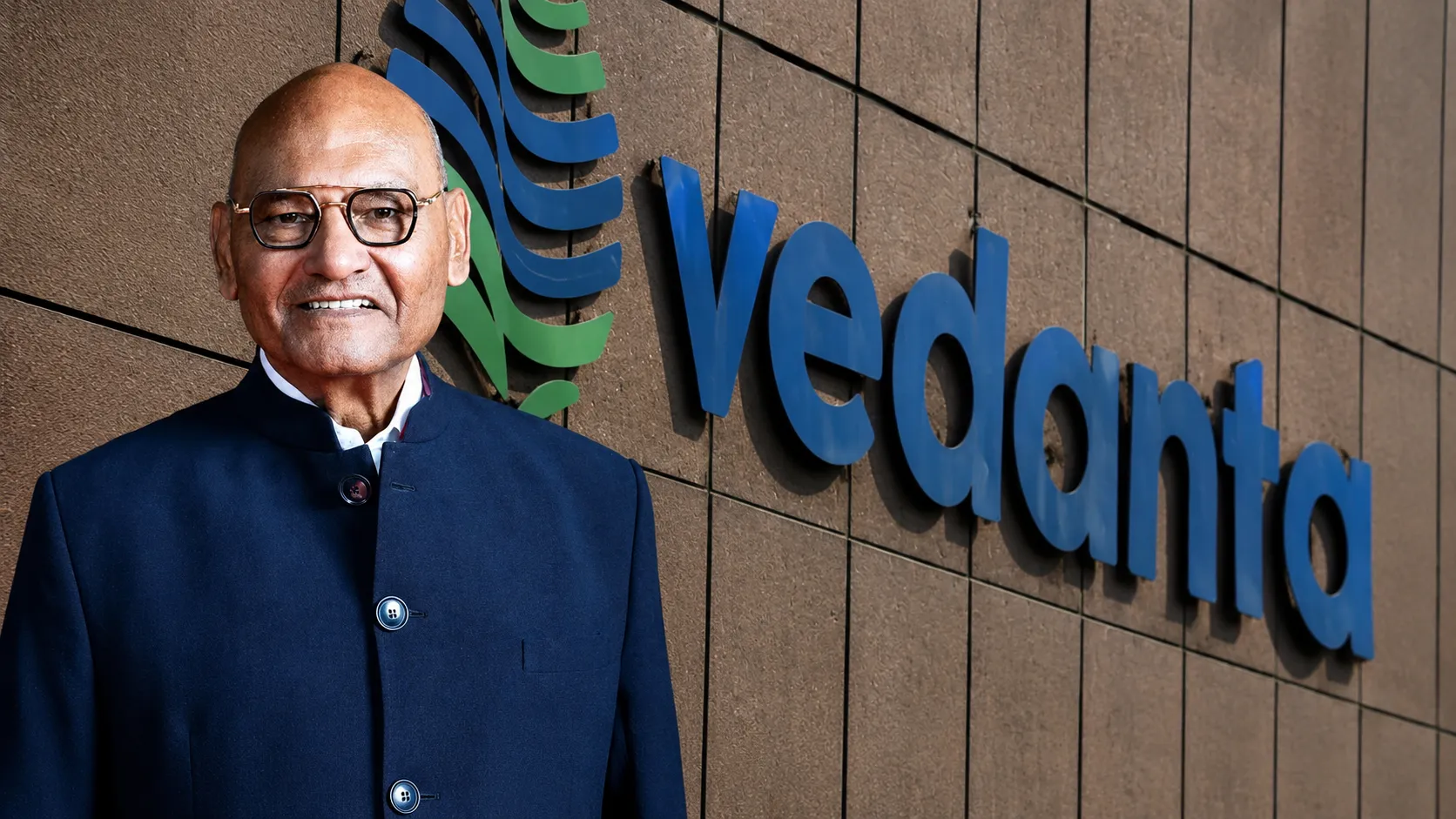
The announcement arrives at a particularly interesting juncture in the Vedanta Group's own corporate history. Having spent the better part of the last two years reshaping the sprawling conglomerate into five independently listed companies — a restructuring exercise that was as much about unlocking shareholder value as it was about operational focus — Agarwal is now signalling that the post-demerger Vedanta ecosystem is ready to enter an aggressive growth phase, backed by fresh capital rather than merely restructured balance sheets.
FROM CONGLOMERATE TO CONSTELLATION
To understand the significance of the $20 billion commitment, it helps to revisit why Vedanta undertook its demerger in the first place. For years, critics and analysts alike had pointed to a persistent "conglomerate discount" in Vedanta's valuation — the tendency of diversified holding companies, spanning everything from aluminium and zinc to oil and gas, iron ore, power and semiconductors, to trade at a lower combined valuation than the sum of their individual businesses would command if they were independently listed and could attract dedicated, sector-focused investors.
Agarwal's answer to that criticism was structural: break the conglomerate into standalone, independently listed entities, each with its own board, its own capital allocation discipline, and its own investor base that could value the business purely on its own merits rather than through the lens of the broader group's complexity. That restructuring is now largely complete, and the group is beginning to test whether the market rewards focus the way its architects predicted.
What the $20 billion commitment suggests is that Agarwal views the demerger not as an end point but as a launchpad. With each business now able to raise capital, plan expansion, and communicate strategy independently, the group appears to be positioning itself for a coordinated but decentralised wave of investment across its portfolio companies — spanning core metals and mining, energy, and, notably, some of the newer, higher-growth bets the group has been making in recent years.
WHERE THE MONEY IS LIKELY TO GO
While the full sector-by-sector breakdown of the investment plan is still being finalised and refined, the broad contours of Vedanta's business portfolio offer a reasonable guide to where a significant share of this capital is likely to be deployed. Aluminium and zinc — the twin pillars of Vedanta's traditional metals business — remain capital-intensive, expansion-hungry segments where India's own demand growth, driven by construction, automotive lightweighting, and renewable energy infrastructure, continues to outpace domestic supply in certain product categories.
Oil and gas exploration and production is another natural candidate for fresh capital, particularly as India continues to prioritise reducing its dependence on imported crude — an imperative that has only grown more urgent given the recent volatility in global oil markets driven by geopolitical tensions in the Middle East. Any incremental barrel of domestically produced crude carries outsized strategic value in the current environment, both for the company's own economics and for the national interest in energic security.
Beyond the legacy resources businesses, Agarwal has also been vocal in recent years about ambitions in semiconductors and display manufacturing, an area where Vedanta had previously explored a large-scale joint venture as part of India's broader push to build domestic chip-making capacity under government incentive schemes. While that particular venture faced well-documented challenges and delays, the strategic rationale behind India building sovereign semiconductor capability has not diminished, and it remains plausible that a portion of the fresh capital commitment could flow toward renewed efforts in this space, either independently or through fresh partnerships.
THE TIMING QUESTION: WHY NOW?
Every major capital commitment invites the obvious question: why now? Several threads help explain the timing. First, global commodity markets, despite recent volatility, continue to reflect structurally tight supply in several of the metals central to the energy transition — aluminium, zinc, and various battery and grid-related materials among them. Companies with existing production infrastructure and access to domestic raw material resources are generally best positioned to benefit from any structural supply-demand imbalance, provided they can scale production efficiently.
Second, India's own macroeconomic positioning — even amid short-term market volatility — continues to be framed by policymakers and much of corporate India as one of the more resilient large economies globally, with growth projections in the high-single-digit range on a relative basis compared to slower-growing developed markets. For a group as domestically rooted as Vedanta, doubling down on India rather than diversifying capital toward international markets is, in some sense, a vote of confidence in the durability of that growth narrative, even as near-term headwinds like currency weakness and elevated oil prices weigh on sentiment.
Third, the completion of the demerger itself may simply have freed up management bandwidth and balance sheet clarity that had previously been consumed by the restructuring process. With the corporate architecture now largely settled, leadership across the group's various listed entities can shift its attention toward growth capital expenditure rather than internal reorganisation — a natural sequencing that many large Indian conglomerates have followed after similar restructuring exercises.
THE FINANCING QUESTION
A commitment of this scale inevitably raises questions about financing. Vedanta's history includes periods of considerable balance sheet stress, driven in part by leverage taken on both at the operating company level and at the parent holding company level to fund dividends, acquisitions and past expansion plans. Rating agencies and credit analysts have, at various points, flagged concerns about the group's debt profile, even as the underlying operating businesses have generally continued to generate healthy cash flows from their core commodity operations.
The demerger itself was partly framed as a mechanism to address this leverage question, by allowing individual businesses to access capital markets more directly and by potentially enabling stake sales or strategic partnerships within specific verticals without requiring the entire conglomerate to be involved. Whether the $20 billion figure will be funded through internal cash generation, fresh equity issuance at the individual demerged entities, strategic partnerships, project-specific debt, or some combination of all of these will be a critical detail that analysts and credit rating agencies will be parsing closely in the weeks ahead.
WHAT IT MEANS FOR INDIA'S BROADER INVESTMENT NARRATIVE
Beyond the specifics of Vedanta's own balance sheet, the announcement carries broader symbolic weight for India's investment climate. At a moment when foreign portfolio investors have been trimming exposure to Indian equities amid currency and oil-driven volatility, a large-scale, multi-year domestic capital commitment from one of the country's most prominent industrialists offers a counter-narrative: that long-horizon strategic capital, as opposed to short-term portfolio flows, continues to see India as a compelling destination for growth investment.
This distinction matters. Portfolio capital — the kind that moves in and out of listed equities on a daily or weekly basis — is inherently more sensitive to short-term macro noise: currency swings, oil price shocks, interest rate differentials. Strategic industrial capital, of the kind Agarwal is now committing, tends to be underwritten by longer-term assumptions about resource demand, industrial policy direction, and structural growth trends that are less easily disrupted by a five-session market correction or a temporary spike in crude prices.
For India's policymakers, who have spent years courting exactly this kind of long-term industrial investment through production-linked incentive schemes and ease-of-doing-business reforms, a commitment of this magnitude from a homegrown conglomerate serves as a useful proof point — evidence that domestic capital, not just foreign direct investment, believes sufficiently in India's medium-term trajectory to deploy tens of billions of dollars into physical, long-gestation assets rather than more liquid, easily-reversible financial instruments.
THE RISKS THAT COULD DERAIL THE PLAN
No investment commitment of this scale is without risk, and it would be incomplete to present the announcement purely as an unambiguous positive without acknowledging the execution challenges that lie ahead. Large-scale capital expenditure programmes in mining, metals and energy are notoriously vulnerable to cost overruns, regulatory delays, land acquisition disputes, and environmental clearance bottlenecks — challenges that have affected numerous large industrial projects in India over the years, regardless of the promoter group involved.
Commodity price volatility itself represents another risk vector. Should global metal prices soften meaningfully from current levels, the economics underpinning some of the planned expansion could come under pressure, potentially leading to phased or delayed execution rather than the full-scale, front-loaded investment that headline announcements often imply. Investors and analysts have, in the past, noted a gap between ambitious capital expenditure guidance issued by large Indian conglomerates and the actual pace of disbursement, which tends to be more gradual and more sensitive to prevailing market conditions than initial announcements suggest.
There is also the question of group-level financial discipline. Given the past scrutiny of Vedanta's leverage profile, any signs that this expansion is being funded through renewed aggressive borrowing, rather than a more balanced mix of equity and operating cash flow, could reignite concerns among credit rating agencies and debt investors, potentially affecting the cost of capital for the group's various listed entities.
THE ROAD AHEAD
As the details of this $20 billion commitment are fleshed out in the coming months — likely through a combination of investor presentations, capital expenditure guidance at the individual demerged company level, and formal regulatory filings — the market will be watching for specificity: which businesses receive priority funding, what the phased timeline looks like, and how the investment is structured across debt and equity. The broad ambition has been stated; the execution details will determine whether this becomes one of the defining industrial investment stories of the decade, or another example of headline-grabbing guidance that takes years to fully materialise on the ground.
For now, though, the scale of the ambition itself is noteworthy. In an environment where global capital has grown more cautious and where India's own equity markets are navigating a bout of short-term turbulence, Anil Agarwal's decision to commit tens of billions of dollars to expanding his domestic industrial footprint sends an unmistakable signal about where at least one of India's most prominent industrialists believes the country's growth story is headed over the next three to five years.
HOW THE MARKET AND ANALYSTS ARE LIKELY TO RESPOND
In the immediate aftermath of an announcement of this scale, equity research desks typically move quickly to model out the implications across each of the affected listed entities, attempting to translate a broad, group-level number into segment-specific capital expenditure assumptions, projected production capacity additions, and eventual earnings impact. Given that Vedanta's businesses now trade as separate listed instruments following the demerger, analysts will likely need to build distinct investment theses for each entity rather than treating the announcement as a single, undifferentiated positive for one consolidated stock.
Credit rating agencies, too, will be parsing the announcement closely, particularly given the group's history of leverage-related scrutiny. Any formal capital expenditure guidance that follows this initial announcement will likely be accompanied by commentary on funding mix, and rating agencies will be watching for reassurance that the expansion will not come at the cost of balance sheet discipline at either the operating company or holding company level.
Institutional investors, both domestic and foreign, will also be assessing how this fits into their broader thesis on India's metals, mining and energy sector as a category. A large, credible capital commitment from an established player can sometimes serve as a signal that encourages further capital allocation to the sector as a whole, as it suggests that experienced industry participants see attractive risk-adjusted returns in expanding domestic capacity, even amid global commodity price uncertainty.
A SIGNAL FOR INDIA'S RESOURCE SECURITY AMBITIONS
Perhaps the most understated dimension of this announcement is its alignment with India's broader resource security ambitions. As the country continues to grow its manufacturing base, expand renewable energy infrastructure, and build out electric vehicle and battery supply chains, dependable domestic access to critical metals — aluminium, zinc, and various energy transition-linked materials — has taken on strategic significance well beyond ordinary commercial considerations.
A homegrown conglomerate committing significant fresh capital toward expanding domestic production capacity in precisely these categories dovetails neatly with the government's own stated priorities around reducing import dependence for critical minerals and metals, even if the investment itself is driven primarily by commercial rather than policy considerations. In that sense, Agarwal's announcement may end up being cited, in policy circles as much as in investor commentary, as an example of private capital aligning with national resource security goals — a convergence that, if realised at scale, could shape the contours of India's industrial policy conversation well beyond the immediate confines of the Vedanta Group's own corporate strategy.
Ultimately, what happens next will be determined not by the headline figure but by the granular execution details that follow in the coming months — details that will tell investors, policymakers and industry observers alike whether this is the opening chapter of a genuinely transformative industrial expansion, or simply the latest in a long line of ambitious announcements that the market will need to watch closely before fully pricing in.