The $17.5 Billion Signal
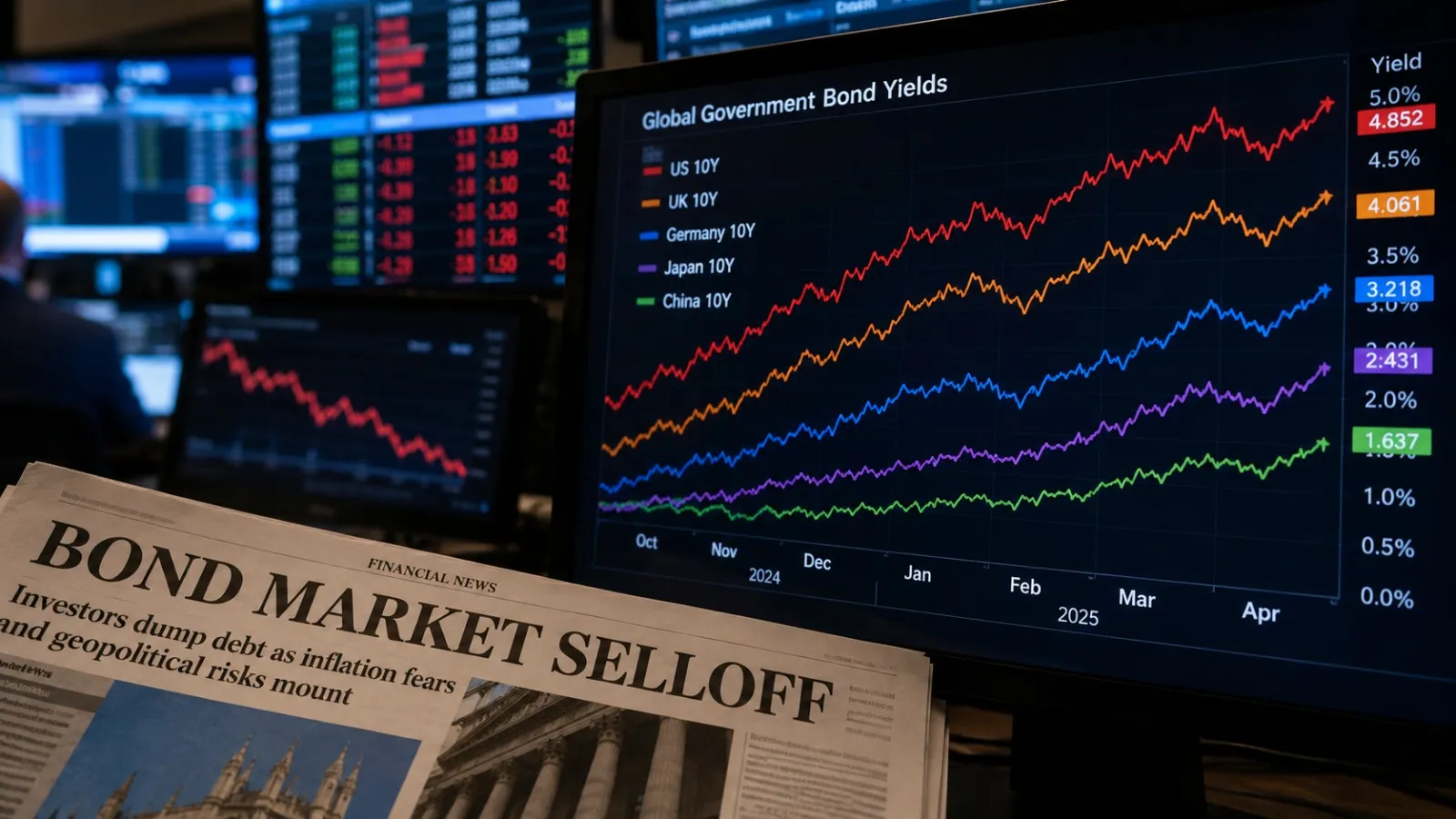
On June 8, 2026, Amazon entered into a $17.5 billion senior unsecured delayed draw term loan agreement with a syndicate of major financial institutions. Citibank N.A. serves as administrative agent, with JPMorgan Chase, Bank of America, HSBC, and Wells Fargo among the lead lenders .
The structure of the facility reveals as much about Amazon's strategy as its size. It is a delayed draw term loan, meaning Amazon can access the funds incrementally as needed rather than taking the full amount immediately. Commitments expire on September 30, 2026, unless fully borrowed before that date, and any loans drawn carry a maturity date three years from the date of borrowing . The agreement contains no financial covenants, a reflection of Amazon's investment-grade credit rating and the confidence lenders have in its ability to repay.
Interest on the loans will be calculated at Amazon's option using either a floating base rate or a term SOFR rate, with an applicable margin ranging from 0.625% to 0.875% for SOFR-based loans, depending on the company's credit ratings . These are favorable terms by any measure, underscoring that this is not a distress borrowing. It is a strategic financing decision.
The loan came just days after Amazon filed for a five-part debt offering in Canada for up to C$14 billion . Taken together, the two moves represent a significant pivot in how Amazon is funding its most ambitious expansion in years.
The $200 Billion Spending Plan
To understand why Amazon is borrowing, one must first understand what it plans to spend on. Alongside its fourth-quarter 2025 earnings release, the company disclosed that it expected to invest roughly $200 billion in capital expenditures in 2026 . The announcement sent Amazon stock down as much as 10% in after-hours trading, as investors grappled with the scale of the commitment.
The bulk of that spending is tied to AI infrastructure—data centers, custom chips, and the physical hardware required to run artificial intelligence workloads at scale . In the first quarter of 2026 alone, capital expenditures reached $44.2 billion, up from $25 billion in the same period a year earlier . Free cash flow on a trailing 12-month basis fell to $1.2 billion from $25.9 billion in the prior period, reflecting a year-over-year increase of $59.3 billion in property and equipment purchases .
The spending is not speculative. AWS revenue rose 28% year over year in the first quarter to $37.6 billion, its fastest growth in 15 quarters, accelerating from 24% in the fourth quarter of 2025 and 20% in the third . Behind that growth sits a backlog of committed customer spending that reached $364 billion at the end of the quarter—a figure that does not include a recently signed agreement with AI lab Anthropic worth more than $100 billion .
As one analyst noted, the size of that backlog and its growth rate suggest that Amazon must expand its data center capabilities. If it does not, the result could be AWS customers jumping ship to other platforms such as Microsoft Azure or Google Cloud .
The OpenAI Commitment: A $50 Billion Coup
The most significant piece of Amazon's AI puzzle fell into place in February 2026, when the company announced a strategic partnership with OpenAI. The deal involves Amazon investing up to $50 billion in the ChatGPT maker, with an initial $15 billion injection followed by another $35 billion in the coming months when certain conditions are met .
The partnership is more than a financial transaction. AWS will serve as the exclusive third-party cloud distribution provider for OpenAI Frontier, the companies said. Together, they will develop customized models available to Amazon developers to power Amazon's customer-facing applications .
Industry analysts have described the deal as a fundamental re-engineering of how enterprise AI is delivered. At the heart of the agreement is the development of a Stateful Runtime Environment for Amazon Bedrock, which introduces persistent memory and identity to AI agents, moving beyond the chat interface into a new era of autonomous, multi-session enterprise workflows .
For Wedbush analyst Dan Ives, the deal represents a tectonic shift in the AI landscape. "Amazon has effectively dismantled the near-exclusive grip that Microsoft held over the world's most prominent AI lab," he wrote, "positioning itself as a central pillar in OpenAI's roadmap toward Artificial General Intelligence" .
The Anthropic Investment: Doubling Down
OpenAI is not Amazon's only AI bet. The company has also deepened its relationship with Anthropic, the developer of the Claude chatbot. In April 2026, Amazon announced it would invest up to $25 billion in Anthropic, with the AI startup committing to spend more than $100 billion over the next 10 years on Amazon's cloud technologies .
This came on top of Amazon's earlier $4 billion investment in the company . In total, Amazon's exposure to Anthropic now exceeds $10 billion, with room to grow.
The strategic logic mirrors the OpenAI deal. Anthropic's compute requirements are massive and growing. The company's annualized revenue run rate has risen from $9 billion at the end of 2025 to $30 billion in 2026, with over 1,000 enterprise customers spending more than $1 million annually . This growth translates directly into rising compute demand, which AWS is positioned to absorb.
More importantly, Anthropic has committed to consuming 2 gigawatts of capacity on Amazon's custom Trainium chips, validating Amazon's long-term bet on vertical hardware integration .
The Custom Chip Business: Amazon as an Arms Dealer
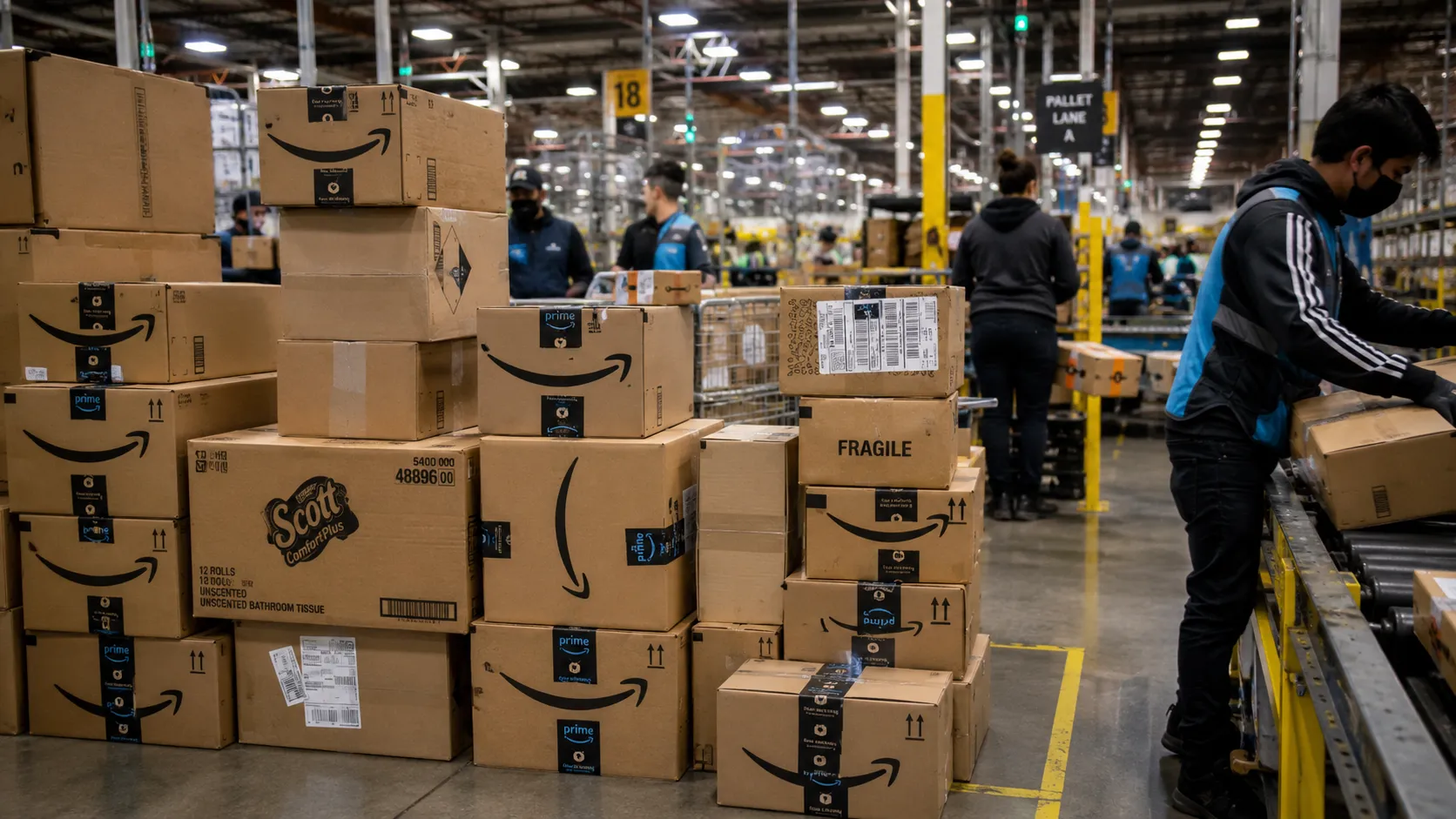
What gets less attention in discussions of Amazon's AI spending is that the company has quietly become a substantial chipmaker. Its custom silicon business—Trainium and Graviton processors, plus Nitro EC2 network interface cards—topped a $20 billion annual revenue run rate in the first quarter of 2026, after nearly 40% quarter-over-quarter growth . On the company's first-quarter earnings call, CEO Andy Jassy said Amazon's custom-silicon operation is now, by the company's own estimate, "one of the top three data center chip businesses in the world" .
The numbers bear out the claim. Amazon has more than $225 billion in revenue commitments for its Trainium chips, including multiyear, multi-gigawatt deals with AI labs Anthropic and OpenAI . Trainium2 offers about 30% better price-performance than comparable GPUs and is largely sold out, while the newer Trainium3, which began shipping early in 2026, is nearly fully subscribed .
Designing its own chips serves two purposes simultaneously. First, it lets Amazon fill its data centers with cheaper computing power than it could obtain from external suppliers. Second, it allows Amazon to keep the margin that would otherwise go to chipmakers like NVIDIA. In an environment where AI compute costs are the single largest operational expense for cloud providers, that margin capture is a significant competitive advantage.
The Broader Shift: From Cash to Debt
Amazon's $17.5 billion loan is part of a broader trend among major technology companies. The era of funding AI expansion solely from operating cash flow and balance sheet reserves appears to be ending.
Alphabet has guided to as much as $190 billion in capital expenditures for 2026 and recently disclosed plans to sell Japanese yen-denominated bonds for the first time . Meta in October filed for its largest bond offering ever of up to $30 billion . Together, the four major hyperscalers—Amazon, Microsoft, Alphabet, and Meta—are on track to pour roughly $700 billion into AI data centers, chips, and computing infrastructure in 2026 alone, up from about $600 billion previously .
Amazon's borrowing reflects a structural shift. As of March 31, 2026, the company had more than $225 billion of short- and long-term debt including lease payments, up from roughly $150 billion a year earlier . The company has become one of the largest borrowers in the U.S. investment-grade corporate bond market, issuing debt in US dollars, euros, Swiss francs, and now Canadian dollars .
This is not a sign of financial distress. Amazon generates more revenue than any public company in the world, and its operating cash flow rose 30% to $148.5 billion over the trailing 12 months . The decision to borrow rather than spend cash is a strategic choice—one that preserves liquidity for other uses while taking advantage of historically low borrowing costs for investment-grade issuers.
The Investor Skepticism: Is $200 Billion Too Much?
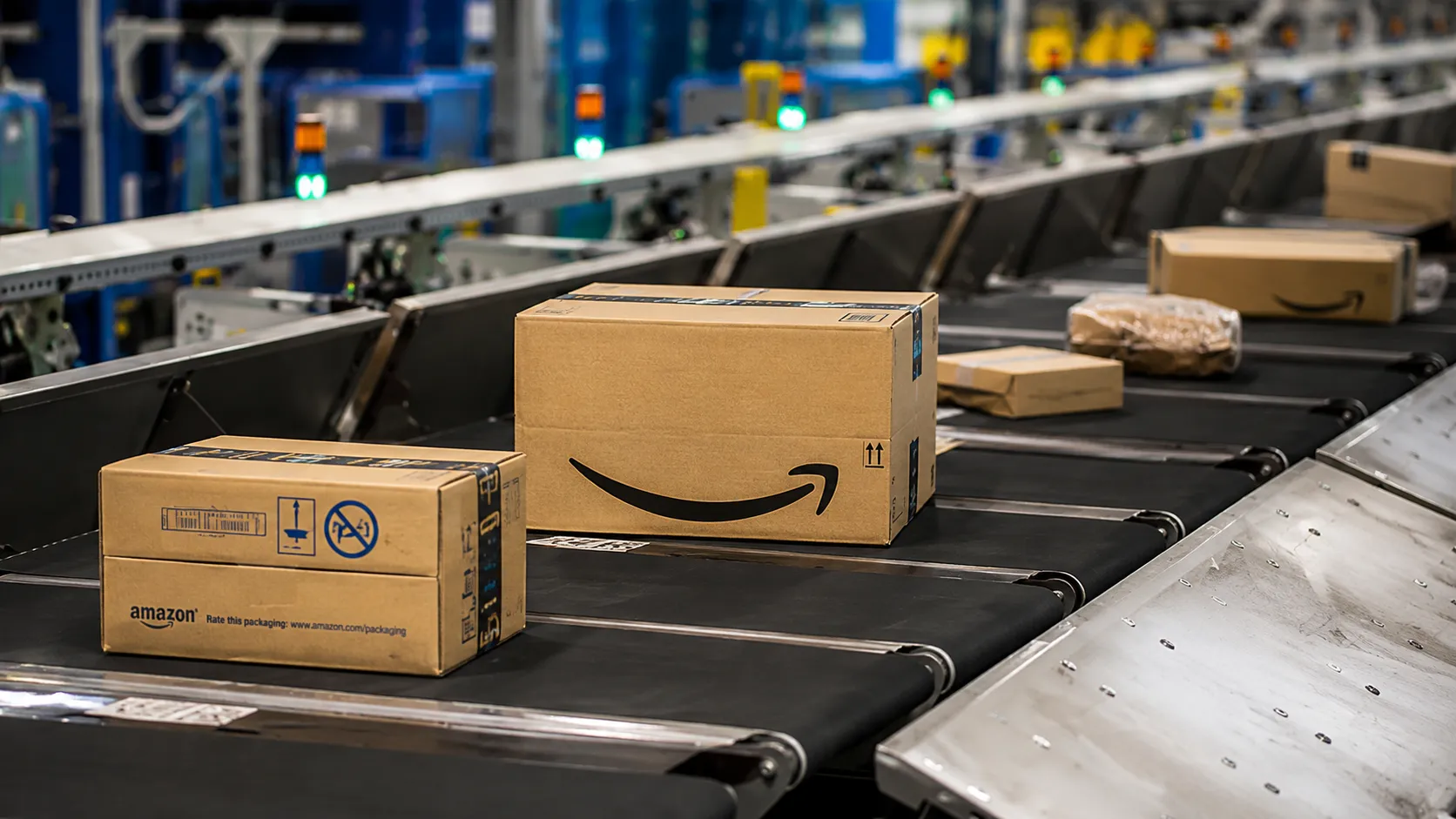
Not everyone is convinced that Amazon's spending is prudent. The company's stock fell sharply following the initial $200 billion capex announcement, and even with a recovery, shares are up just 10% in 2026—meaningfully trailing the S&P 500's returns and far behind the gains many AI beneficiary stocks have seen .
The bear case rests on two concerns. First, the spending has nearly erased Amazon's free cash flow, which fell to $1.2 billion from $25.9 billion a year earlier . Second, there is no clear end in sight. Data center hardware must be steadily replaced as older chips reach the end of their useful lives and as the state of the art continuously improves . This could potentially put Amazon in a situation where high levels of capex spending must be maintained indefinitely.
The bull case is simpler: demand is already here. AWS's 28% revenue growth, its $364 billion backlog, and the $100 billion-plus Anthropic commitment all point to capacity constraints, not speculative overbuild. As one analyst put it, "Even if we consider it overspending, in this case, I think it's much better to overspend and be overprepared than to underspend and be underprepared" .
Andy Jassy has pushed back on investor concerns directly. "When you have shifts that are this momentous … you want to bet big," he told CNBC in May . He drew a parallel to Amazon's early investment in Amazon Web Services, arguing that the pattern of heavy upfront capital spending eventually producing strong operating margins and free cash flow would repeat itself at a larger scale with AI . Amazon's AI business has already reached an annualized revenue run rate above $15 billion, Jassy said .
The Bottom Line
The $17.5 billion loan is not an isolated event. It is a piece of a much larger mosaic. Amazon is spending $200 billion in 2026. It is investing $50 billion in OpenAI and more than $10 billion in Anthropic. It is building custom chips that have become a $20 billion business. And it is borrowing billions to fund it all.
The strategic logic is coherent. AWS is the most profitable part of Amazon's business, and AI is the most significant driver of cloud demand since the cloud itself was invented. The companies that control the most compute capacity will train the best models, serve the most customers, and generate the most data for continuous improvement. Amazon intends to be one of those companies.
The loan provides flexibility. The delayed-draw structure means Amazon can access capital as needed rather than taking the full amount at once. The absence of financial covenants means the company faces no restrictions on how it uses the funds. And the favorable interest rates mean the cost of borrowing is low relative to the potential returns.
Whether the bet pays off will be determined not by the scale of the spending but by the returns it generates. AWS's backlog suggests that demand is real. The growth rate of Amazon's AI business suggests that the market is expanding. And Jassy's track record—turning AWS from a risky experiment into Amazon's most profitable division—suggests that the company knows how to execute on long-term infrastructure bets.
For now, the message from Seattle is clear: the AI arms race will not be won by the cautious. And Amazon is not planning to be cautious.
Share on