The Week That Changed Tech Finance
The second week of June 2026 will be remembered as the moment Big Tech's relationship with capital markets fundamentally changed.
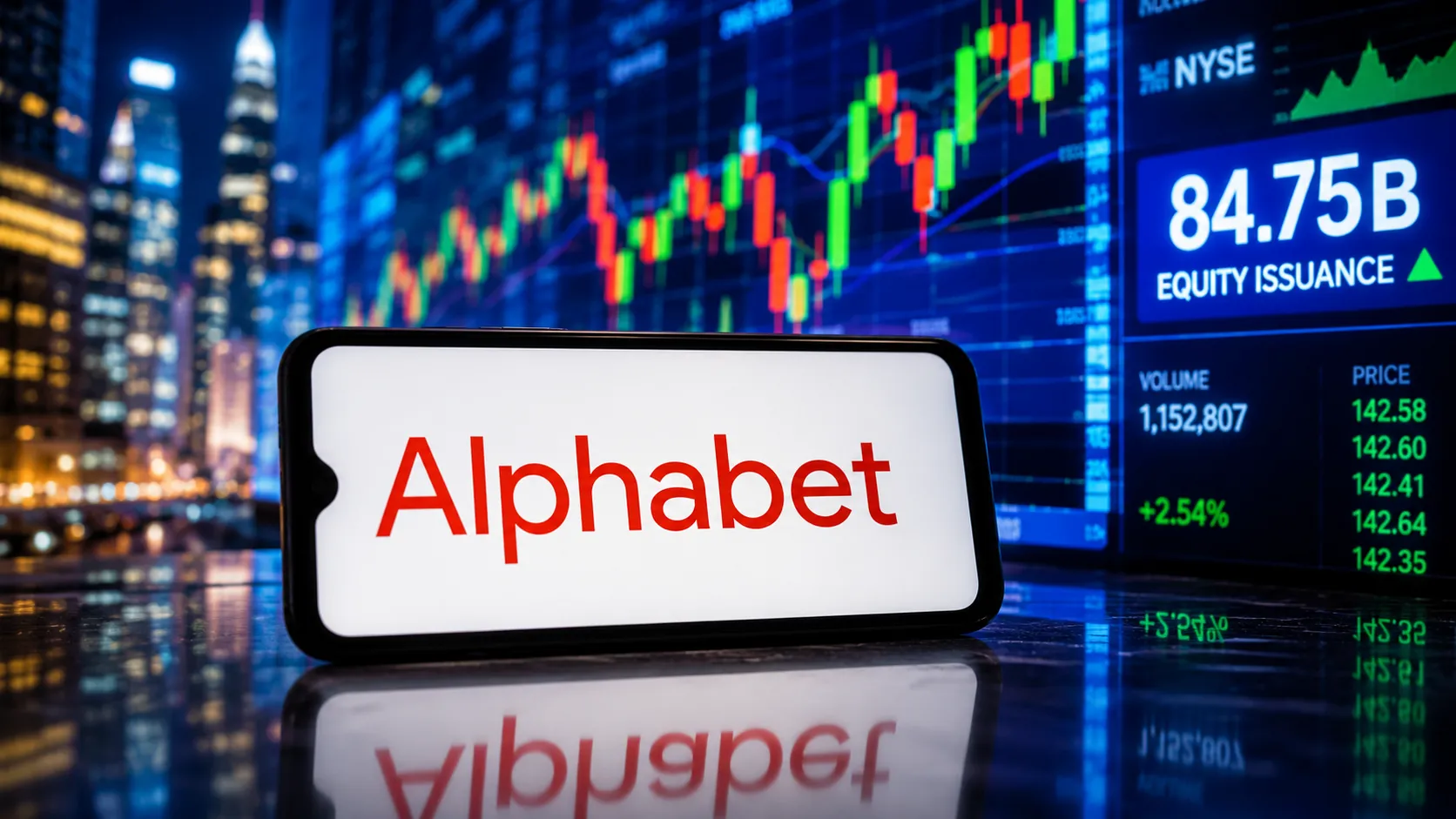
On June 1, Alphabet announced an $84.75 billion equity issuance, one of the largest stock sales in corporate history . The offering included a $10 billion private placement to Berkshire Hathaway, $30 billion in underwritten public offerings, and a $40 billion at-the-market program scheduled for the third quarter of 2026 .
Days later, on June 8, Amazon entered into a $17.5 billion delayed-draw term loan with a syndicate of major banks including Citi, JPMorgan, Bank of America, HSBC, and Wells Fargo . The loan carries favorable interest rates and no financial covenants, a testament to Amazon's investment-grade credit rating.
These were not isolated decisions. They were the latest moves in a broader shift that has been building over the past year. Microsoft has been raising debt to fund its AI expansion. Meta has filed for its largest bond offering ever. Together, the four major hyperscalers—Amazon, Microsoft, Alphabet, and Meta—are on track to pour roughly $700 billion into AI data centers, chips, and computing infrastructure in 2026 alone .
What makes the current moment different is the funding mix. Instead of relying solely on operating cash flow and existing cash reserves, these companies are increasingly turning to equity markets, debt markets, or both. The AI arms race is too expensive for even the richest companies to fight with their own money alone.
Alphabet's $84.75 Billion Blueprint
Alphabet's equity issuance was structured to minimize market disruption while maximizing capital raised. The three-pronged approach revealed a sophisticated understanding of how to tap public and private markets simultaneously.
The Berkshire Hathaway private placement was the headline act. Warren Buffett's firm agreed to buy $10 billion of Alphabet stock, split evenly between Class A common stock at $351.81 per share and Class C capital stock at $348.20 per share . Buffett had been building Alphabet positions since the third quarter of 2025, and this private placement added significantly to that stake . The investment served as a high-profile endorsement of Alphabet's AI strategy from one of the world's most respected investors.
The $30 billion underwritten public offering included depositary shares representing mandatory convertible preferred stock, alongside Class A and Class C common stock . The convertible structure allows investors to participate in equity upside while receiving preferred dividends until conversion, making the offering attractive to a broader range of institutional buyers.
The $40 billion at-the-market program represents the most flexible component. Alphabet can sell shares gradually into the open market over time, reducing immediate price pressure while maintaining the ability to raise capital as needed . The program is scheduled to begin in the third quarter of 2026, giving Alphabet room to time its sales based on market conditions.
The timing of the raise was not accidental. Alphabet's capital spending forecast for 2026 is between $180 billion and $190 billion, a more than 100 per cent increase from the roughly $106 billion spent in 2025 . The company has also cautioned that 2027 spending could rise even higher, with Bloomberg Intelligence analyst Mandeep Singh projecting capital expenditures could reach $300 billion next year .

Amazon's Borrowing Strategy
Amazon's $17.5 billion loan represents a different but equally significant financing strategy. Instead of selling equity and diluting existing shareholders, Amazon is tapping debt markets.
The delayed-draw structure is particularly strategic. Amazon can access the funds incrementally as needed rather than taking the full amount immediately. Commitments expire on September 30, 2026, unless fully borrowed before that date, and any loans drawn carry a maturity date three years from the date of borrowing . This gives Amazon flexibility to match borrowing with actual spending needs, reducing interest costs on capital that would otherwise sit idle.
The loan carries no financial covenants, a reflection of Amazon's investment-grade credit rating and the confidence lenders have in its ability to repay . Interest will be calculated at Amazon's option using either a floating base rate or a term SOFR rate, with an applicable margin ranging from 0.625 per cent to 0.875 per cent for SOFR-based loans .
The loan came just days after Amazon filed for a five-part debt offering in Canada for up to C$14 billion . Taken together, the two moves represent a significant pivot in how Amazon is funding its most ambitious expansion in years.
Amazon plans to invest roughly $200 billion in capital expenditures in 2026, with the bulk tied to AI infrastructure . In the first quarter of 2026 alone, capital expenditures reached $44.2 billion, up from $25 billion in the same period a year earlier . Free cash flow on a trailing 12-month basis fell to $1.2 billion from $25.9 billion in the prior period, reflecting a year-over-year increase of $59.3 billion in property and equipment purchases .
The Microsoft Precedent
Microsoft was the first of the hyperscalers to signal a shift toward external financing for AI infrastructure. The company has been raising debt through regular bond issuances, using the proceeds to fund its expanding data center footprint and its partnership with OpenAI.
Microsoft's AI capital requirements are substantial. The company has committed to spending $80 billion on AI data centers in fiscal year 2026, up from approximately $50 billion in the previous year. Like Amazon, Microsoft has seen its free cash flow pressured by rising capital expenditures, even as operating cash flow remains strong.
What distinguishes Microsoft's approach is its reliance on the investment-grade debt market rather than equity issuance. The company has a long history of borrowing at favorable rates, and its AAA credit rating—one of only two corporations with that distinction—allows it to access capital more cheaply than almost any other borrower.
But even Microsoft has limits. The sheer scale of AI infrastructure spending—$80 billion in a single year—is larger than any previous technology buildout. While the company has not yet followed Alphabet into equity markets, the pressure on its balance sheet is mounting.
The Meta Bond Offering
Meta filed for its largest bond offering ever in October 2025, seeking up to $30 billion . The offering was structured to fund the company's expanding AI infrastructure, including data centers and custom chip development.
Meta's AI spending has grown dramatically. The company has guided to capital expenditures of $60-65 billion in 2026, up from approximately $38 billion in 2025. CEO Mark Zuckerberg has been clear about the company's commitment: "We're going to keep investing aggressively in AI infrastructure because I think there's going to be a huge opportunity to build a lot of valuable things here" .
Like Amazon, Meta has chosen debt over equity to fund this expansion. The company's balance sheet remains strong, with substantial cash reserves and consistent free cash flow generation. But the scale of the AI buildout has pushed even Meta to seek external capital.
Why Self-Funding No Longer Works
The shift toward external financing reflects a structural change in the economics of technology investment.
During the cloud computing buildout of the 2010s, the hyperscalers funded their data center expansion from operating cash flow. Capital expenditures were substantial but manageable, and the returns were predictable. Cloud adoption grew steadily, and AWS, Azure, and Google Cloud became profitable businesses within a reasonable timeframe.
AI is different in three critical ways.
First, the scale is larger. The $700 billion that the four hyperscalers plan to spend on AI infrastructure in 2026 exceeds the combined capital expenditures of the entire global oil and gas industry . This is not incremental expansion. It is a complete rebuild of the world's computing infrastructure.
Second, the timeline is compressed. The cloud buildout unfolded over a decade. AI infrastructure must be built in a fraction of that time because demand is already here. AWS's $364 billion backlog, the $100 billion-plus Anthropic commitment, and the rapid growth of AI workloads across every industry have created capacity constraints that cannot be satisfied with incremental investment .
Third, the returns are less certain. Cloud computing had a clear business model from the beginning: pay-as-you-go compute and storage. AI's business model is still evolving. While demand for AI compute is booming, the ultimate profitability of AI services—and whether the hyperscalers will capture that value or see it flow to application layers—remains an open question .

As one analyst put it: "The collective action of tech giants moving toward external capital is not a coincidence. It suggests a shared recognition that AI infrastructure is unlike any previous wave of technology investment—too large, too urgent, and too uncertain to be funded through traditional self-financing models" .
The Cash Preservation Calculus
The decision to raise external capital rather than spend cash reserves is not merely about the size of the investment. It is about preserving optionality.
Alphabet entered 2026 with $126 billion in cash and marketable securities . The company could have funded its $190 billion capital spending plan entirely from operating cash flow and existing reserves. It chose not to. Instead, it raised $84.75 billion in equity while preserving its cash balance.
The logic is simple: cash is flexibility. In an environment where AI is evolving rapidly, having dry powder allows companies to respond to unexpected opportunities or challenges. A startup with a breakthrough architecture may need to be acquired. A competitor may stumble, creating an opening. A regulatory shift may require sudden compliance spending.
Cash also provides a buffer against the unknown. The West Asia war has spiked oil prices and disrupted supply chains. Trade tensions with China continue to escalate. A recession, while not forecast, remains possible. In such an environment, preserving liquidity is not conservative. It is strategic.
The decision also reflects a shift in how investors value cash. For years, Big Tech's cash hoards were celebrated as signs of financial strength. Today, some investors view excess cash as a sign of insufficient ambition. Why is the company not deploying capital to capture the AI opportunity? The question has become more pointed as smaller, more agile competitors have captured market share in AI applications.
By raising external capital while maintaining cash reserves, Alphabet and Amazon are threading the needle. They are demonstrating ambition—committing hundreds of billions to AI infrastructure—while preserving the flexibility that cash provides.
The Investor Reaction: Dilution vs. Growth
The market reaction to Alphabet's equity issuance was muted relative to its size. The stock fell modestly on the announcement but recovered within days. This suggests that investors have accepted the necessity of external financing for AI infrastructure.
The muted reaction also reflects the structure of the offering. The Berkshire Hathaway investment provided a stamp of approval. The convertible preferred stock offered income-oriented investors a way to participate without immediate dilution. The at-the-market program was spread over time, reducing the impact of any single sale.
Amazon's loan, by contrast, caused barely a ripple. Debt financing does not dilute existing shareholders, and Amazon's interest coverage ratios remain healthy. The company's stock has performed in line with the broader market despite the pressure on free cash flow.
The real test will come if the returns on AI infrastructure disappoint. If the $700 billion buildout does not generate the expected revenue growth and profit margins, investors will question the wisdom of the spending. If it does, the current funding shift will be seen as prescient rather than desperate.
For now, investors appear willing to give the hyperscalers the benefit of the doubt. As Andy Jassy told CNBC: "When you have shifts that are this momentous … you want to bet big" . The market seems to agree.

The Bottom Line: A New Era of Tech Finance
The week of June 1-8, 2026, will be studied in business schools for years. In the space of seven days, two of the world's largest companies raised more than $100 billion in external capital—Alphabet through equity, Amazon through debt.
These moves were not isolated events. They were the most visible manifestations of a structural shift in how technology companies finance their growth. The era of self-funded expansion is ending. The AI arms race is too large, too urgent, and too uncertain for even the richest companies to fight alone.
The shift raises important questions for investors. Will equity dilution become the new normal for Alphabet? Will Amazon's debt load continue to rise? How will Microsoft and Meta respond as their own capital needs grow?
But the more important question is strategic. The companies that built the cloud computing era did so largely with their own money. The companies that are building the AI era are raising capital from outside. That change reflects not weakness but ambition. They are betting that the returns on AI infrastructure will justify the cost of capital, whether equity or debt.
As one analyst noted, "The collective action of tech giants moving toward external capital is not a coincidence. It suggests a shared recognition that AI infrastructure is unlike any previous wave of technology investment—too large, too urgent, and too uncertain to be funded through traditional self-financing models" .
The AI arms race is expensive. But for the hyperscalers, the cost of not building may be higher. And that is why they are raising money in every way available: equity, debt, private placements, public offerings, and delayed-draw loans. The goal is not to preserve the old model. It is to build the future before someone else does.