
Somewhere inside Bharti Airtel's Gurugram headquarters on Tuesday, August 4, 2026, the company's board of directors convened to do something it has now done with almost metronomic reliability for five consecutive quarters: sign off on another set of financial results that, if brokerage forecasts prove accurate, will show India's second-largest telecom operator continuing to pull away from its rivals on the one metric that matters most in Indian telecom — how much money it extracts from each and every subscriber, every single month.
The scheduling itself has been a matter of public record since an exchange filing confirmed the board would meet on August 4 to declare financial results for the quarter ended June 30, 2026 — Q1 of FY27. What has kept analysts, investors and telecom-watchers occupied in the days leading up to that meeting is not whether Airtel will post growth, but how much, and on which of the company's increasingly complex, multi-country, multi-segment set of businesses that growth will be concentrated.
The range of brokerage estimates circulating ahead of the results tells its own story about just how bullish Wall Street and Dalal Street have become on Airtel's trajectory. According to Business Standard's polling of analysts, the company's revenue could grow by around 15% year-on-year, while profit may increase in a considerably wider range of 26% to 45%. Elara Capital, one of the more detailed forecasts in circulation, projected net profit growing 36.4% year-on-year to ₹7,889 crore on a 14.4% rise in sales to ₹56,582 crore, alongside an ARPU estimate of ₹258 — a modest sequential improvement from the ₹257 reported in the March quarter, and a more substantial step up from the ₹250 recorded in the year-ago period. Axis Securities, at the more bullish end of the spectrum, projected profit for the quarter at a considerably higher ₹9,389 crore on sales of ₹56,934 crore, with revenue growth of 2.8% quarter-on-quarter driven by subscriber additions and continued strength in the Africa business, even as EBIT margin was expected to dip roughly 69 basis points sequentially on the back of higher operating costs tied to data centre investment and network expansion.
That divergence in profit estimates — anywhere from roughly ₹7,889 crore to ₹9,389 crore, a spread of well over ₹1,500 crore — reflects genuine uncertainty among analysts about exactly how several moving parts within Airtel's sprawling business will net out this particular quarter, even as there is near-unanimous agreement on the broader direction of travel. Brokerages quoted by Business Standard were explicit that Bharti Airtel will continue to gain market share in Q1 FY27, supported by higher customer stickiness and favourable market conditions — language that suggests the debate among analysts is less about whether Airtel's growth story remains intact, and more about precisely how large this particular quarter's numbers will land.
To understand why expectations are running so high, it helps to look at exactly where Airtel's business stood as it exited the previous quarter, Q4 FY26. According to Airtel's own disclosures, that quarter's numbers were, in the words of one industry tracker, mixed: net profit actually dropped 33.54% year-on-year to ₹7,325.1 crore, even as revenue jumped a healthy 15.68% to ₹55,383.2 crore. Buried within that headline profit decline, however, were signals that most analysts read as encouraging rather than alarming — ARPU rose 5% sequentially to ₹257, driven by continued growth in the smartphone user base, while India business revenue grew 7.7% year-on-year, powered by strong performance across both the mobile and home broadband segments. The profit decline, in other words, appears to have been driven by factors below the operating line — likely exceptional items, tax adjustments or one-off charges — rather than any deterioration in the company's core, underlying operating momentum.
That underlying momentum has, if anything, been building steadily over the past several years. Rewinding further back, Airtel's Q1 FY26 results — reported roughly a year before this week's announcement — showed consolidated net profit surging 43% year-on-year to ₹5,948 crore, with revenue from operations climbing 28.4% year-on-year to ₹49,463 crore, driven by strong performance in both India and Africa. ARPU that quarter stood at ₹250, already established at the time as the highest in the Indian telecom industry, comfortably ahead of both Reliance Jio's ₹181.7 and Vodafone Idea's ₹146 — a gap that has remained one of the defining features of the Indian telecom competitive landscape for several years running, and one that has only widened as Airtel has continued to lean into what management has repeatedly described as a strategy of premiumisation: deliberately courting higher-value customers rather than chasing subscriber volume for its own sake.
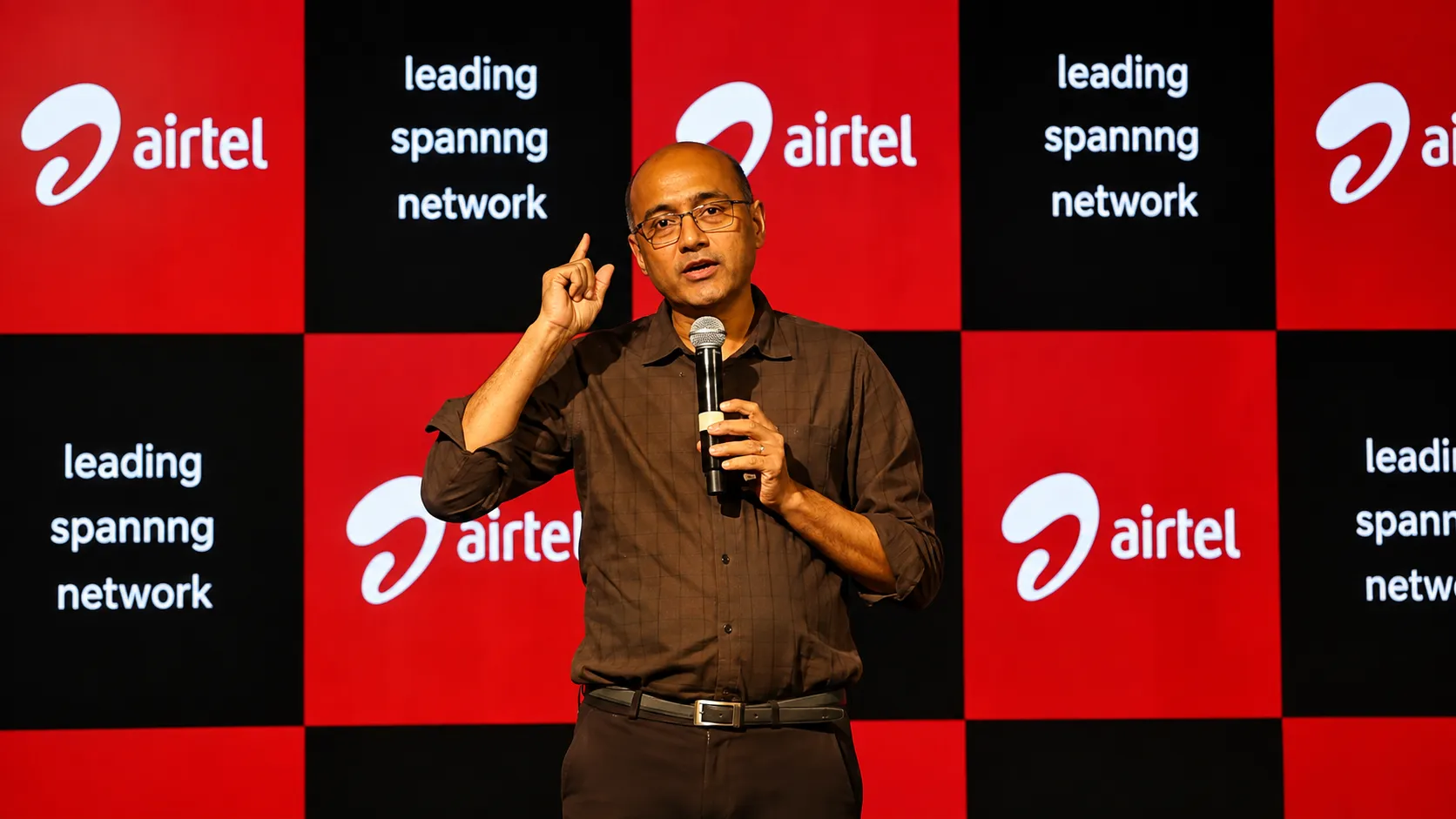
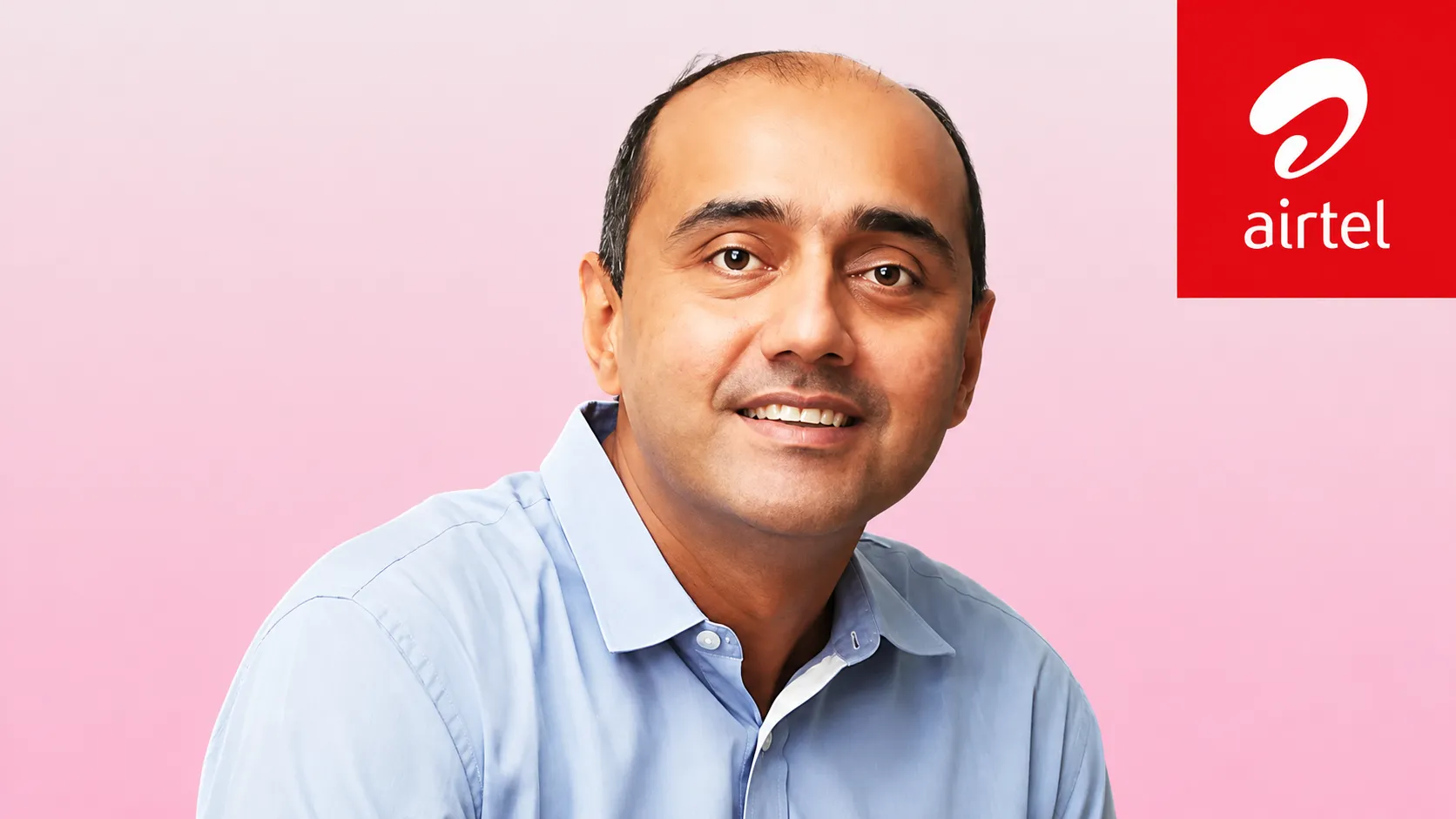
Gopal Vittal, Airtel's Vice Chairman and Managing Director, has been consistent in his public commentary about the mechanics behind that premiumisation strategy. Commenting on a previous quarter's results, Vittal specifically credited the India Mobile business's sequential growth to continued focus on portfolio premiumisation, alongside the addition of new smartphone data customers — in that instance, four million net additions in a single quarter — as the company has systematically worked to shift its subscriber mix toward higher-spending smartphone users capable of consuming the data-heavy services, including 5G, that Airtel has invested heavily in rolling out across its network.
That 5G investment is, in many ways, the central pillar of the story analysts and investors will be watching for in today's results, beyond the headline profit and revenue figures. Bharti Airtel's Q1 FY27 date announcement itself was explicitly framed around ARPU and 5G growth in focus, according to coverage previewing the results — a framing that reflects the broader industry narrative around Indian telecom's current phase: having largely completed the initial capital-intensive buildout of 5G infrastructure across the country's major markets, the question that now preoccupies investors is how quickly and how profitably that infrastructure investment can be converted into sustainable incremental revenue, rather than remaining a pure cost centre weighing on near-term margins.
Beyond India, Airtel's Africa operations have increasingly emerged as a second, distinct growth engine that analysts are watching just as closely as the domestic business. In previous quarterly commentary, Vittal specifically noted that Africa reported 6.7% growth in constant currency terms — a meaningful achievement given the historical volatility African currencies, particularly the Nigerian Naira, have periodically inflicted on Airtel's reported financial results through currency translation effects. In one previous quarter, for instance, Airtel actually recorded a modest ₹47.7 crore profit from foreign currency translation differences, a sharp reversal from a substantial ₹4,681 crore loss on the same line item in the year-ago period — illustrating just how significantly currency movements in Airtel's African markets can swing reported profitability, independent of the underlying operational performance of the business itself.
Segment-level detail from recent quarters also points to a business that, while broadly strong, is not without its softer pockets. Airtel Business, the company's enterprise-focused unit, has seen revenues decline in recent periods — down 7.7% year-on-year in one recent quarter — though management has been careful to frame this decline as a deliberate consequence of portfolio transformation, specifically the strategic decision to discontinue low-margin business lines, rather than a sign of genuine competitive weakness in the enterprise segment. Similarly, the Digital TV segment has seen modest revenue declines in recent quarters, even as the Passive Infrastructure Services segment has continued to grow, supported by the steady addition of new telecom tower sites — roughly 2,500 in one recent quarter alone — as Airtel continues to densify its network infrastructure to support both 5G rollout and growing data consumption.
Airtel's overall subscriber base and digital reach provide useful context for the scale at which these incremental quarterly shifts are now playing out. Vittal has previously described Airtel's digital network across India and Africa as now serving over 600 million customers — a figure that places the company among the handful of truly globally significant telecom operators by subscriber count, and underscores why even modest percentage-point shifts in metrics like ARPU or churn can translate into meaningfully large absolute revenue swings from one quarter to the next.
The formal mechanics of today's disclosure process are worth noting for investors tracking the announcement closely. Airtel's trading window — the period during which company insiders are restricted from trading in the stock ahead of material financial disclosures — remains closed until August 6, 2026, standard practice under Indian insider trading regulations designed to prevent any appearance of trading advantage around quarterly results. Beyond the board's approval of standalone and consolidated numbers today, Airtel has also scheduled a formal earnings webinar for August 5, from 12:00 pm to 1:20 pm IST, featuring a dedicated question-and-answer segment specifically addressing Bharti Hexacom Limited, the company's separately listed regional telecom subsidiary — a structural detail that gives analysts an additional lens through which to assess performance across Airtel's broader corporate family beyond the flagship listed entity alone.
For India's telecom sector more broadly, Airtel's results today arrive as one node within a much larger, extremely closely watched competitive narrative that has defined the industry for the better part of a decade: the ongoing three-way, and increasingly two-and-a-half-way, contest between Airtel, Reliance Jio and a financially strained Vodafone Idea for subscriber share, ARPU leadership and the enormous capital expenditure required to build out next-generation network infrastructure across a market of well over a billion potential mobile subscribers. Airtel's consistent ARPU leadership over recent years — a gap that has, if anything, widened rather than narrowed against both rivals — has become one of the clearest data points supporting the broader thesis that premiumisation, rather than raw subscriber-count competition, has become the defining battleground of Indian telecom's current era.
That premiumisation thesis also carries implications for how analysts think about Airtel's medium-term capital allocation priorities. With 5G infrastructure largely built out across the company's priority markets, brokerages have increasingly begun asking not just how quickly Airtel can add new 5G subscribers, but how effectively the company can convert that infrastructure investment into free cash flow generation capable of supporting sustained dividend growth and continued debt reduction — a shift in analytical focus from growth-stage capital expenditure questions toward more mature, cash-generation-focused questions that typically accompanies a telecom operator's transition from aggressive network buildout into a steadier harvesting phase.
Today's results will also be parsed closely for any updated management commentary on the competitive dynamics with Reliance Jio, whose own aggressive subscriber-acquisition strategy in prior years had, for a period, put pressure on industry-wide ARPU levels before the broader sector appeared to collectively pivot toward a more rational, premiumisation-focused pricing environment over the past several quarters. Any signs of renewed price competition, or conversely any further evidence of industry-wide pricing discipline, would likely move Airtel's stock, and its rivals', considerably more than the specific headline profit number itself.
Whichever end of the ₹7,889 crore to ₹9,389 crore profit range today's actual results ultimately land closer to, the more durable story likely to emerge from Q1 FY27 is less about the specific number and more about whether Airtel's underlying growth engines — premiumisation-driven ARPU gains in India, continued constant-currency growth in Africa, and the still-unfolding monetisation of its substantial 5G capital investment — remain firmly on track. For a company that has now delivered five consecutive quarters of profit growth, today's results represent not a make-or-break moment, but rather the latest data point in what has become one of the more consistent growth narratives in Indian corporate earnings.
Retail investors tracking the stock will also be watching how the market reacts in the trading sessions immediately following the results, given Airtel's history of occasionally posting strong headline profit growth that nonetheless disappoints relative to even more bullish analyst expectations — a pattern that has, in some previous quarters, triggered short-term share price declines even on objectively strong results, simply because the bar set by the most optimistic brokerage forecasts proved difficult to clear. With estimates this quarter spanning such a wide range, the market's reaction is likely to hinge less on whether Airtel grew, and more on precisely where within that wide expected range the actual reported figures land.
This report is based on Bharti Airtel's exchange filings, brokerage estimates reported by Business Standard and Business Today, and prior quarterly results commentary from Vice Chairman and Managing Director Gopal Vittal.