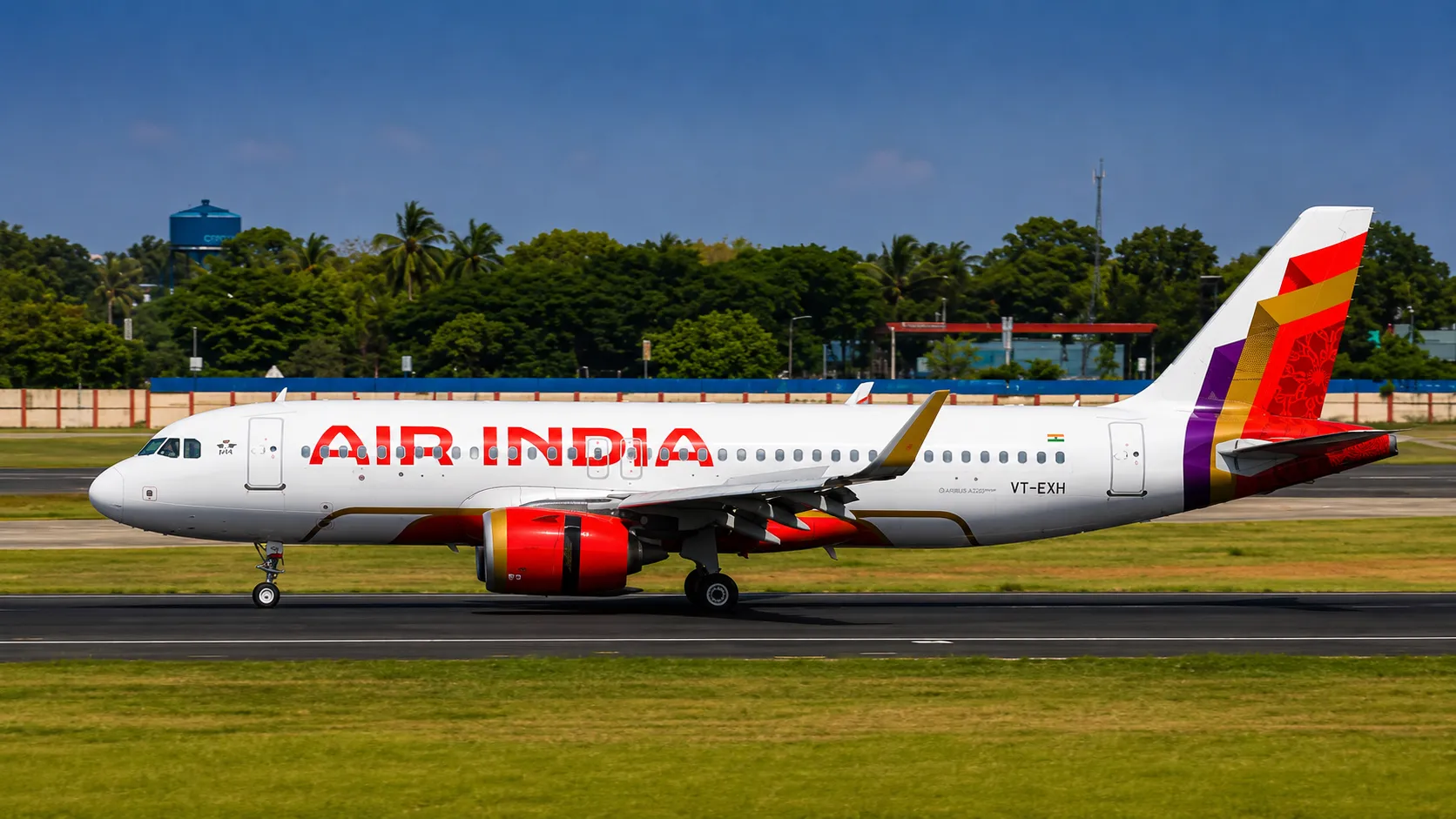
Mumbai: Just weeks after Indian carriers finally completed a hard-won, phased restoration of full flight service to the Gulf region, the region's aviation picture has darkened again. The European Union Aviation Safety Agency reinstated and toughened its airspace warning for West Asia this week, instructing airlines to avoid the airspace of Bahrain, Kuwait, Qatar, the United Arab Emirates and the Gulf of Oman as the US-Iran conflict flared up once more — a development that has put Indian carriers, and Air India Express and SpiceJet in particular, back on alert for further capacity cuts to what remains their single most important international market.
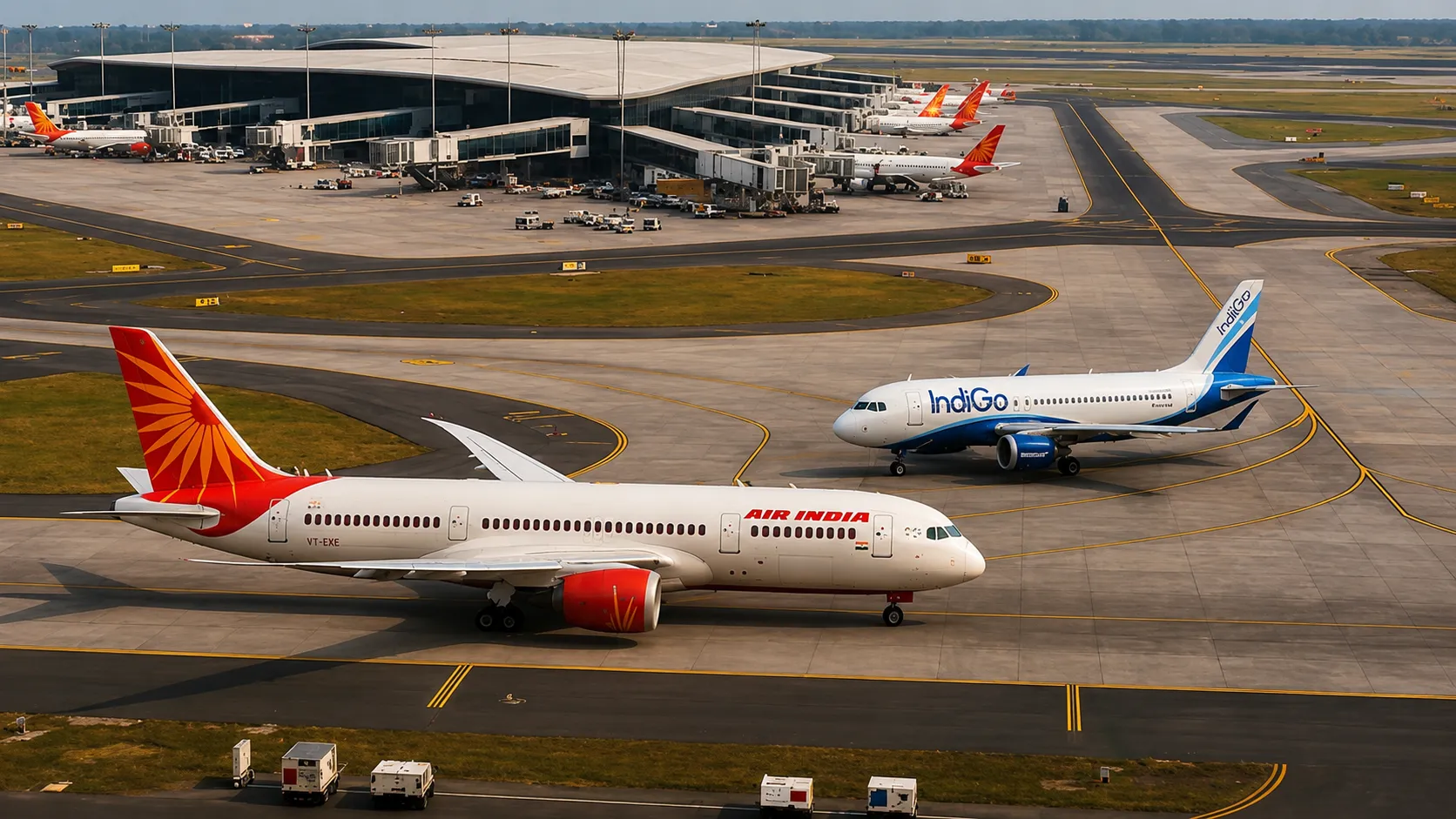
The stakes for these two carriers specifically are difficult to overstate. Air India Express and SpiceJet have more than 80 per cent of their total international capacity deployed to the Gulf region, according to industry data — a concentration that leaves both airlines acutely exposed to any renewed disruption in West Asian airspace in a way that more geographically diversified carriers such as IndiGo, Air India's full-service mainline operation, or Akasa Air, are comparatively better insulated against, even though all of India's major carriers have felt some degree of impact from the broader crisis.
To understand the significance of the current warning, it helps to trace the arc of disruption and recovery that Indian carriers have already navigated this year. When the US-Iran conflict first escalated sharply, the impact on Indian aviation was severe and immediate: approximately 180 flights were cancelled in the initial wave of disruption alone, with IndiGo recording the highest number of cancellations, followed by Air India Express, Air India, SpiceJet and Akasa Air. India's Directorate General of Civil Aviation subsequently ordered all Indian carriers to avoid eleven separate conflict-zone airspaces across West Asia, including Iran, Iraq, Syria and parts of Saudi Arabia, forcing westbound flights to take considerably longer detour routes — adding hours of flight time and substantial additional fuel costs that hit low-cost carriers, with their thinner operating margins, hardest of all.
At the peak of the crisis in March, the scale of disruption reached levels serious enough that the Federation of Indian Airlines — representing the country's largest private carriers including IndiGo, Air India and SpiceJet — warned publicly that the airline industry in India was, in the federation's own words, on the 'verge of closing down,' underscoring just how existential the West Asia disruption had become for an industry that depends heavily on Gulf routes for both passenger revenue and, critically, the movement of India's substantial expatriate workforce across the region.
Recovery, when it eventually came, was gradual and carefully sequenced. Air India Express completed a phased restoration of its full West Asia flight network by early July, reinstating key routes to Oman and Kuwait — the Kozhikode-Salalah route resumed on July 2, followed by Kozhikode-Kuwait on July 3 and Bengaluru-Kuwait shortly after — bringing the budget carrier's total Gulf operation back up to approximately 780 weekly flights connecting 18 Indian cities directly with key West Asian destinations. IndiGo, meanwhile, had separately restored more than 70 per cent of its own West Asia routes by late June, according to local media reports, even as full recovery across the industry remained incomplete.
Even with these restorations, the cumulative damage from the disruption period proved substantial. Indian airlines sold approximately 220,000 fewer seats across four key Gulf states — the UAE, Saudi Arabia, Oman and Qatar — in June 2026 compared with the same month a year earlier, according to data from UK-based aviation analytics firm OAG, illustrating just how much lasting impact the crisis had on booking volumes even months after the most acute phase of airspace disruption had technically passed.
The renewed EASA warning now threatens to interrupt what had been, until this week, a genuine recovery trajectory. According to OAG data cited in recent industry reporting, capacity has already contracted most sharply again in Kerala, falling by 27 per cent, followed by Goa, Tamil Nadu and Telangana, which saw contractions of 14.9 per cent, 14.2 per cent and 12.5 per cent respectively this month compared with the prior month. These four states share a common thread that explains their outsized exposure: each has a particularly large expatriate population working in Gulf countries, meaning that any reduction in Gulf flight capacity disproportionately affects what OAG describes as migrant worker traffic to West Asia — a category of travel demand that is considerably less discretionary, and therefore more economically consequential when disrupted, than typical leisure or business travel.
The Fujairah workaround that several carriers adopted during the depths of the earlier crisis illustrates just how disruptive full-scale Gulf airspace avoidance can become for airline operations. With Dubai International Airport operating at severely reduced capacity during the worst of the disruption, SpiceJet had shifted a portion of its repatriation flights to Fujairah International Airport in the UAE, a considerably smaller facility that faced less congestion and could process flights more reliably during the crisis — a workaround that kept some capacity flowing to stranded passengers, but at meaningfully higher operational cost and complexity than normal scheduled operations through Dubai's primary international hub.
The financial toll on individual carriers during the earlier disruption period was significant enough to show up clearly in quarterly results. During a comparable period of severe Gulf disruption, IndiGo posted what was at the time its highest-ever quarterly loss, a reminder that even India's largest and most consistently profitable carrier is not immune to the financial consequences of sustained West Asia airspace disruption, let alone smaller, Gulf-concentrated carriers like Air India Express and SpiceJet whose business models depend even more heavily on the affected routes.
Beyond the direct Gulf disruption, the broader ripple effects on Indian international aviation have extended well past the immediately affected West Asia corridor. Air India has confirmed temporary international capacity reductions and broader schedule restructuring extending through August 2026, reducing frequencies by approximately 15 to 30 per cent across several major long-haul routes including London, Frankfurt, Paris and New York — reductions attributed to a combination of the longer, more fuel-intensive detour routings necessitated by West Asia airspace avoidance and the broader supply pressure on jet fuel pricing created by disruption to Strait of Hormuz shipping traffic.
For travellers, the practical consequences of this renewed uncertainty are already visible in booking behaviour and pricing. International travellers flying between India and destinations across Europe, the Gulf, Southeast Asia and North America have faced higher booking costs tied to fuel surcharges and reduced airline capacity, with travel agencies reporting shifting booking patterns as passengers increasingly compare alternative routes and travel timing to manage rising airfare costs — a pattern that tourism-dependent businesses on both ends of these routes are monitoring closely given how directly it affects outbound Indian travel demand during what would otherwise be a peak summer and upcoming festive travel period.
Aviation analysts note that the competitive dynamics within India's domestic airline industry have also been reshaped by the uneven exposure to Gulf disruption across carriers. IndiGo, with a comparatively more diversified international route network relative to its total capacity, has recently posted its highest-ever market share even as Air India has cut capacity — a divergence that illustrates how carriers with lower relative Gulf concentration have, in relative terms, been better positioned to weather this specific geopolitical disruption than carriers like Air India Express and SpiceJet, whose business models were built around exactly the routes now facing renewed threat.
With EASA's toughened warning still fresh and the underlying US-Iran conflict showing no clear signs of near-term resolution, industry watchers expect Indian carriers to adopt a cautious, closely monitored approach to Gulf scheduling over the coming weeks rather than making any immediate, dramatic capacity announcements — continuing to operate flights where conditions allow while remaining prepared to scale back further, and quickly, should the security situation in West Asian airspace deteriorate in the way it has on at least two previous occasions already this year.
For an industry still absorbing the financial scars of the earlier disruption period, and for the millions of Indian workers, families and businesses whose connectivity to the Gulf region depends on these routes remaining viable, the coming weeks represent an anxious, closely watched test of whether the phased recovery achieved through June and early July can hold, or whether Indian aviation is heading into a fourth distinct wave of West Asia-driven capacity disruption in little over a year.
The economic significance of the India-Gulf air corridor extends well beyond airline revenue alone. Millions of Indian expatriate workers across the Gulf states rely on these routes not just for periodic travel home, but for the broader logistics of remittance-linked travel, family visits during religious and cultural holidays, and the movement of goods and documents that underpin one of the largest and most economically significant migrant labour corridors in the world. Any sustained reduction in flight capacity therefore carries consequences that extend well beyond airline balance sheets, touching household budgets and travel plans across some of India's most Gulf-dependent states.
Fuel cost dynamics add a further layer of complexity to carriers' capacity decisions. The longer detour routings necessitated by West Asia airspace avoidance do not merely add flight time; they materially increase fuel burn per flight, a cost that low-cost carriers operating on thinner margins than full-service competitors are particularly poorly positioned to absorb without either raising fares or reducing frequencies. This dynamic helps explain why Air India Express and SpiceJet, both fundamentally low-cost operators despite Air India Express's ownership under the broader Tata-owned Air India Group, have historically been quicker to cut capacity during periods of West Asia disruption than full-service carriers with more diversified route networks and correspondingly greater capacity to cross-subsidise temporarily loss-making routes.
Insurance and risk assessment considerations also factor meaningfully into airlines' capacity decisions during periods of heightened regional tension, even when specific airspace has not been formally closed by regulators. Aviation insurers routinely reassess war-risk premiums for carriers operating in or near active conflict zones, and any material increase in those premiums can itself become a factor pushing airlines toward more conservative capacity decisions independent of any formal regulatory mandate to avoid specific airspace — an additional, less visible layer of cost pressure that compounds the more obvious effects of longer routings and reduced passenger demand.

Government and industry bodies have continued to monitor the situation closely, with the Ministry of Civil Aviation having previously stepped in during the most acute phases of the crisis to coordinate special repatriation flights and provide updates on the evolving airspace situation. Should the renewed EASA warning translate into a similarly severe disruption to the one seen earlier this year, similar coordinated government responses, potentially including expanded use of alternate airports and coordinated capacity planning across carriers, would likely be required once again to manage the impact on stranded passengers and the broader Gulf-India travel corridor.
Travel industry bodies have also flagged the knock-on effects for India's outbound tourism and business travel sector more broadly, noting that repeated cycles of Gulf disruption and recovery have made forward booking considerably more difficult for both leisure travellers and corporate travel managers, who increasingly build in contingency planning and flexible rebooking options when purchasing tickets on routes that have shown this degree of susceptibility to sudden capacity changes over the past year.
Airline analysts note that the repeated cycle of disruption, recovery and renewed disruption Indian carriers have now experienced across three or more distinct episodes this year is itself beginning to reshape longer-term network planning decisions at several carriers, with some airlines reportedly reassessing the wisdom of concentrating such a large share of international capacity in a single geopolitically volatile region, even though the fundamental economics of the India-Gulf corridor — driven by expatriate labour flows and geographic proximity — remain difficult to replicate elsewhere in the near term.
Passengers with upcoming Gulf travel plans have been advised by travel agencies to maintain close contact with their booked carriers over the coming days, given how quickly scheduling decisions have shifted at previous points during this year's series of West Asia-related disruptions, and how directly those shifts have translated into short-notice cancellations, rebookings and route changes for travellers on the affected corridors.