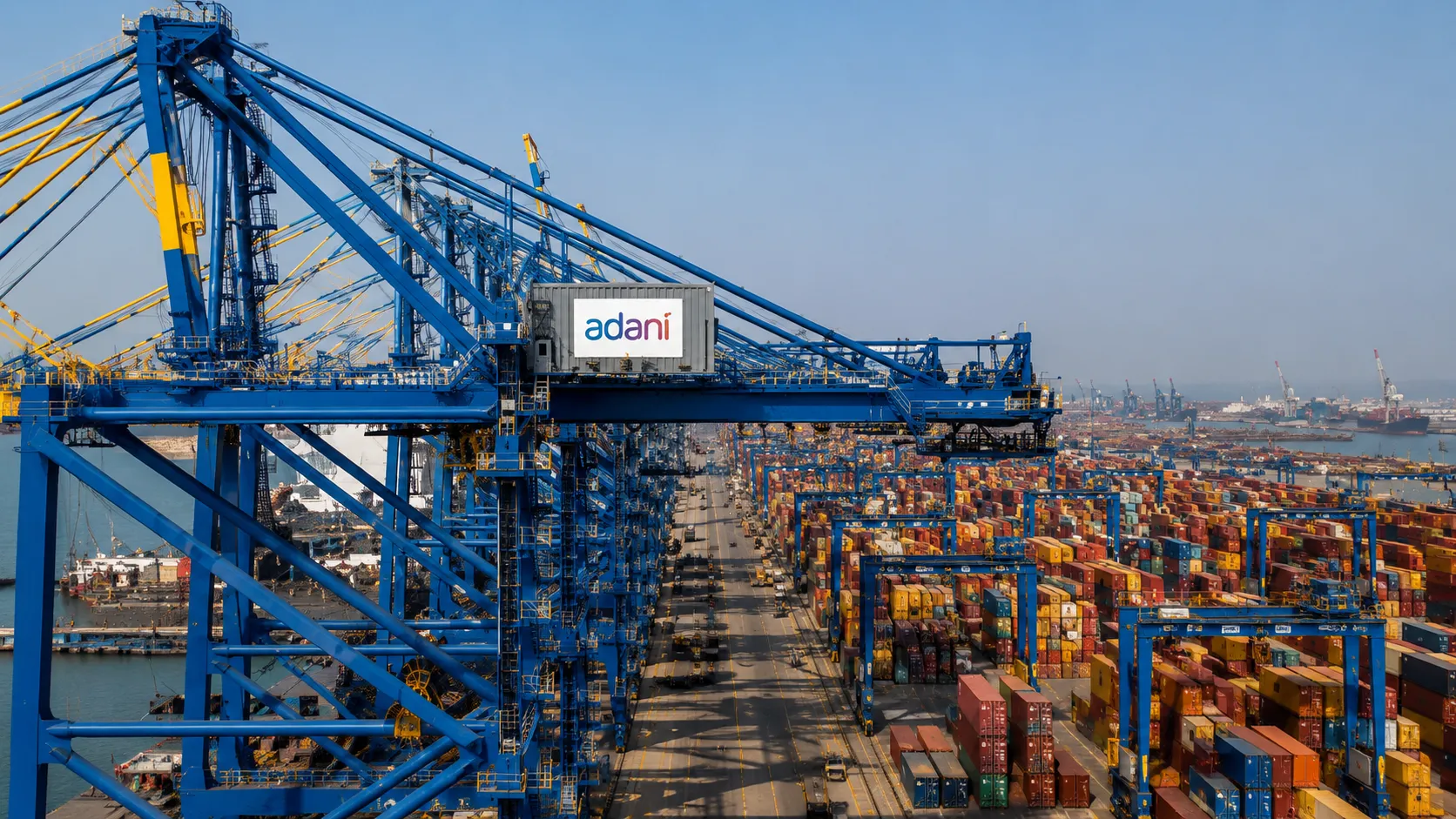
Adani Ports and Special Economic Zone entered Wednesday's trading session carrying a market capitalisation of approximately ₹4.09 lakh crore, following Tuesday's close at ₹1,777.15 per equity share, as the company prepared to report its first-quarter results for FY27 alongside a packed slate of other large-cap companies announcing earnings on the same day. For India's largest private port operator and one of the more closely watched entities within the broader Adani Group, Wednesday's results carry significance that extends well beyond the company's own shareholders, offering a useful window into the health of India's broader trade, logistics, and infrastructure sectors at a moment when global trade flows have faced their own share of disruption from tariff uncertainty and geopolitical tensions.
To appreciate why Adani Ports's results function as something of a bellwether for Indian trade activity more broadly, it helps to understand the scale and strategic positioning of the company's port network. Adani Ports operates a network of ports spanning multiple locations along India's extensive coastline, handling a diverse mix of cargo types including containers, bulk commodities, liquid cargo, and increasingly, specialised cargo categories tied to India's growing energy transition and infrastructure investment needs. This geographic and cargo-type diversification means the company's aggregate cargo volumes and revenue trends offer a genuinely broad-based read on Indian trade activity, rather than being narrowly tied to the fortunes of any single commodity, industry, or trading partner relationship.
Cargo volume trends will likely feature as the single most closely watched metric within Wednesday's results, since volume growth serves as perhaps the most direct available proxy for the health of India's broader import-export activity and industrial production trends. A quarter of strong cargo volume growth would suggest that, notwithstanding the various tariff and trade policy headwinds that have periodically made headlines over recent months — including the ongoing negotiations around Section 301 duties affecting India's exports to the United States — the underlying volume of goods moving through India's ports has remained resilient. Conversely, any signs of volume softness could raise fresh questions about whether global trade uncertainty has begun to meaningfully weigh on actual trade flows, beyond the pricing and tariff-cost impacts that have dominated much of the recent trade policy discourse.
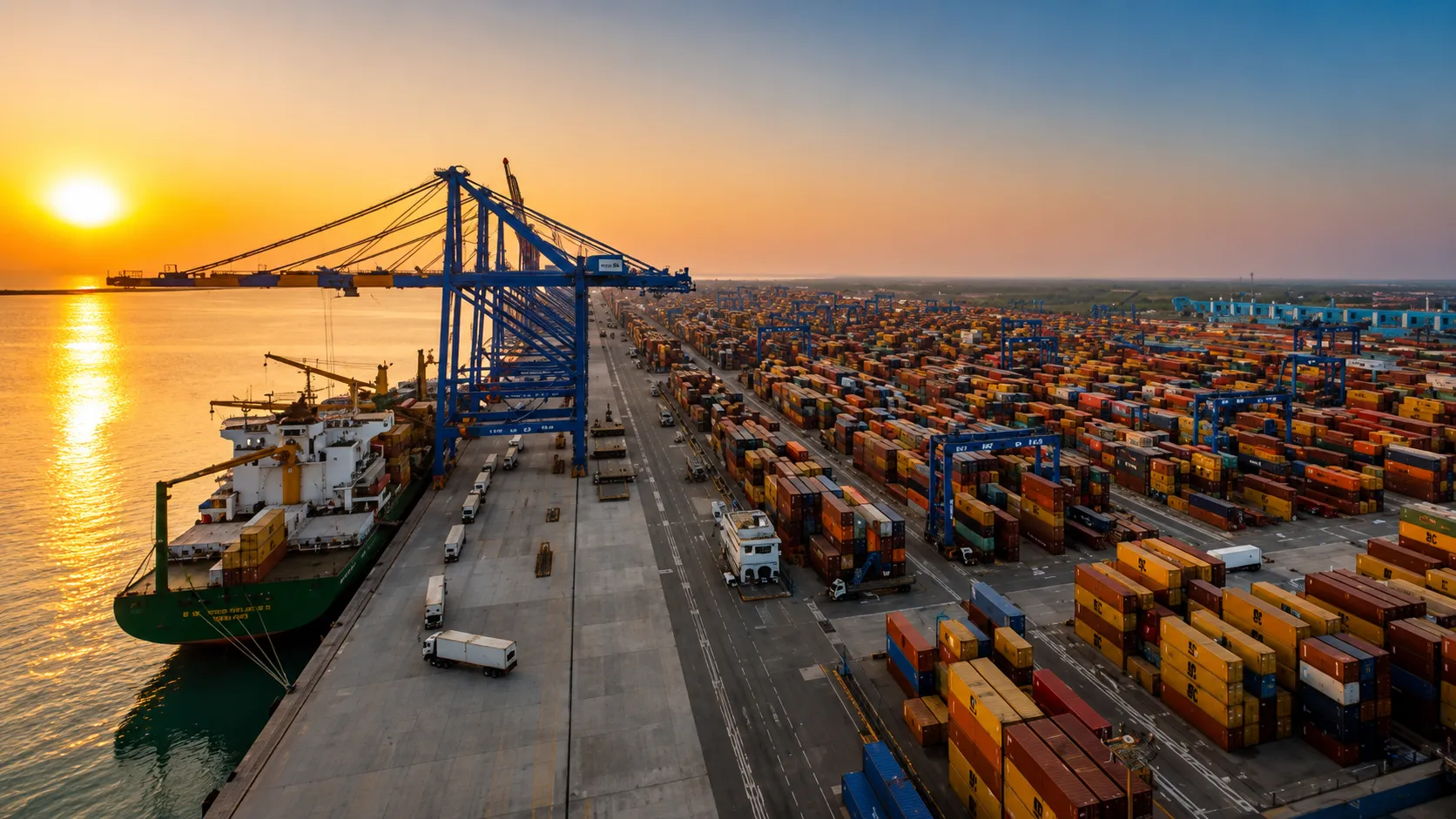
Tariff and pricing trends within the ports business represent a second key area of analyst focus heading into Wednesday's results. Port operators like Adani Ports typically generate revenue through a combination of cargo handling charges, storage fees, and various other port-related service charges, with pricing power varying considerably depending on the specific port, cargo type, and competitive dynamics in each particular market the company serves. Given that port infrastructure represents a capital-intensive, relatively high-barrier-to-entry business, well-positioned operators like Adani Ports have historically been able to exercise meaningful pricing power in many of their key markets, though regulatory oversight and competitive dynamics from other port operators, including state-owned port authorities and other private operators, place some constraints on the company's ability to raise prices unilaterally.
The company's ongoing capital expenditure programme and expansion plans will also likely feature prominently in Wednesday's results commentary and subsequent analyst discussions. Adani Ports has, over recent years, pursued an aggressive expansion strategy, both through organic capacity additions at existing ports and through acquisitions of additional port assets, part of a broader strategic ambition to build what the company has described as a comprehensive, pan-India port and logistics network capable of handling an increasing share of the country's growing trade volumes. Continued heavy capital expenditure, while generally viewed favourably by long-term growth-oriented investors as evidence of the company's ambition and confidence in future trade growth, also raises near-term questions about debt levels, capital allocation discipline, and the pace at which newly added capacity can be productively utilised and monetised.
Debt and balance sheet metrics carry particular significance for Adani Group companies specifically, given the intense scrutiny the broader conglomerate's financial structure and governance practices have periodically attracted from investors, analysts, and, at various points, international short-sellers and regulatory bodies. Adani Ports's own debt levels, interest coverage ratios, and overall balance sheet health will likely be parsed closely by analysts as part of Wednesday's results review, both on their own merits and as one data point within the broader mosaic of financial metrics that market participants use to assess the overall financial health and governance standards of Adani Group entities collectively.
The broader macro environment against which Adani Ports's results will be assessed adds further layers of complexity to how the market is likely to interpret Wednesday's numbers. Global crude oil prices have recently experienced significant volatility tied to the escalation and subsequent partial de-escalation of tensions between the United States and Iran, a dynamic with direct relevance to Adani Ports given the company's handling of liquid cargo including crude oil and petroleum products at several of its port facilities. Additionally, the ongoing evolution of India's trade relationship with the United States, including the recently clarified Section 301 tariff arrangement that leaves 45 per cent of India's US-bound exports outside the new duty's scope, carries indirect but real relevance for port throughput trends, since shifts in the competitiveness or volume of India's exports to its largest single-country trading partner ultimately flow through to cargo volumes at India's major ports.
Adani Enterprises, the Adani Group's flagship incubator entity, was also scheduled to report its own Q1 FY27 results on the same Wednesday session, creating an interesting dynamic where investors and analysts tracking the broader Adani Group would need to process two significant sets of results from different entities within the same conglomerate simultaneously. Adani Enterprises's results, spanning the group's newer, higher-growth businesses including green hydrogen, data centres, and airports, offer a rather different read on the conglomerate's trajectory than Adani Ports's more mature, cash-generative port and logistics operations, and the combined read-through from both companies' results is likely to feature prominently in broader market and media commentary on the Adani Group's overall trajectory through the first quarter of FY27.
India's broader port and logistics infrastructure investment story provides useful additional context for understanding the strategic backdrop against which Adani Ports operates. The Indian government has, over recent years, pursued substantial investment in port modernisation and expansion as part of its broader Sagarmala programme and related initiatives aimed at improving the efficiency and capacity of India's maritime trade infrastructure, recognising ports as a critical bottleneck that has historically constrained the competitiveness of Indian exports and the overall efficiency of the country's trade logistics chain relative to some regional competitors. Adani Ports's own aggressive expansion strategy can be understood, in part, as a private-sector complement to these broader government infrastructure priorities, with the company positioning itself to capture an increasing share of India's growing trade volumes as the country's overall economic growth and export ambitions continue to expand.
Competitive dynamics within India's port sector also merit consideration when evaluating Adani Ports's results and broader strategic position. The company competes with a mix of other private port operators and government-owned port authorities across India's various coastal regions, with competitive intensity varying considerably by specific geography and cargo type. Adani Ports's scale advantages, extensive network reach, and demonstrated operational efficiency have generally allowed the company to maintain a leading market position within India's private port sector, though continued vigilance around competitive dynamics, particularly as other players pursue their own capacity expansion and efficiency improvement initiatives, remains an important consideration for the company's longer-term strategic positioning.
For investors evaluating Adani Ports's Q1 FY27 results within the context of the stock's substantial existing market capitalisation, the central question will likely centre on whether the company's growth trajectory and cargo volume trends justify continued confidence in the premium valuation the market currently assigns to the stock relative to some other infrastructure and logistics companies. A market capitalisation of ₹4.09 lakh crore reflects investors' existing, considerable confidence in the company's long-term growth prospects and strategic positioning within India's expanding trade infrastructure landscape; Wednesday's results will offer an important, near-term data point in assessing whether that confidence remains well-placed.
As Wednesday's results are released and digested alongside the broader flood of Q1 FY27 earnings from other major companies reporting on the same day, Adani Ports's numbers will likely be analysed both on their own specific merits and as part of the broader narrative around Indian trade and infrastructure sector health heading into the second half of the fiscal year. Given the company's scale, strategic importance to India's trade infrastructure, and continued position at the centre of broader market and investor scrutiny around Adani Group governance and financial practices, Wednesday's results are likely to attract outsized attention relative to what a similarly-sized results announcement from a less closely watched company might typically generate.
International port and terminal operations represent a further dimension of Adani Ports's business worth considering ahead of Wednesday's results, since the company has, in recent years, expanded its footprint beyond India's domestic coastline to include port and terminal assets in several other countries, part of a broader strategy to build a genuinely international logistics and infrastructure platform rather than remaining exclusively focused on the Indian market. Performance trends within these international operations, where disclosed with sufficient granularity, will offer investors an additional data point in assessing the company's progress toward this broader internationalisation strategy, distinct from the core domestic port operations that continue to represent the bulk of the company's revenue and profit base.
The special economic zone component of the company's business, reflected in its full corporate name, also deserves brief mention, since Adani Ports operates not merely as a port company but as a developer and operator of integrated port-linked industrial and economic zones that combine port infrastructure with adjacent industrial, warehousing, and logistics real estate. This integrated model allows the company to capture value not just from cargo handling fees but from the broader industrial and logistics ecosystem that develops around its port facilities, a dimension of the business that analysts covering the stock typically evaluate somewhat separately from the more straightforward cargo volume and tariff metrics associated with the core ports business.
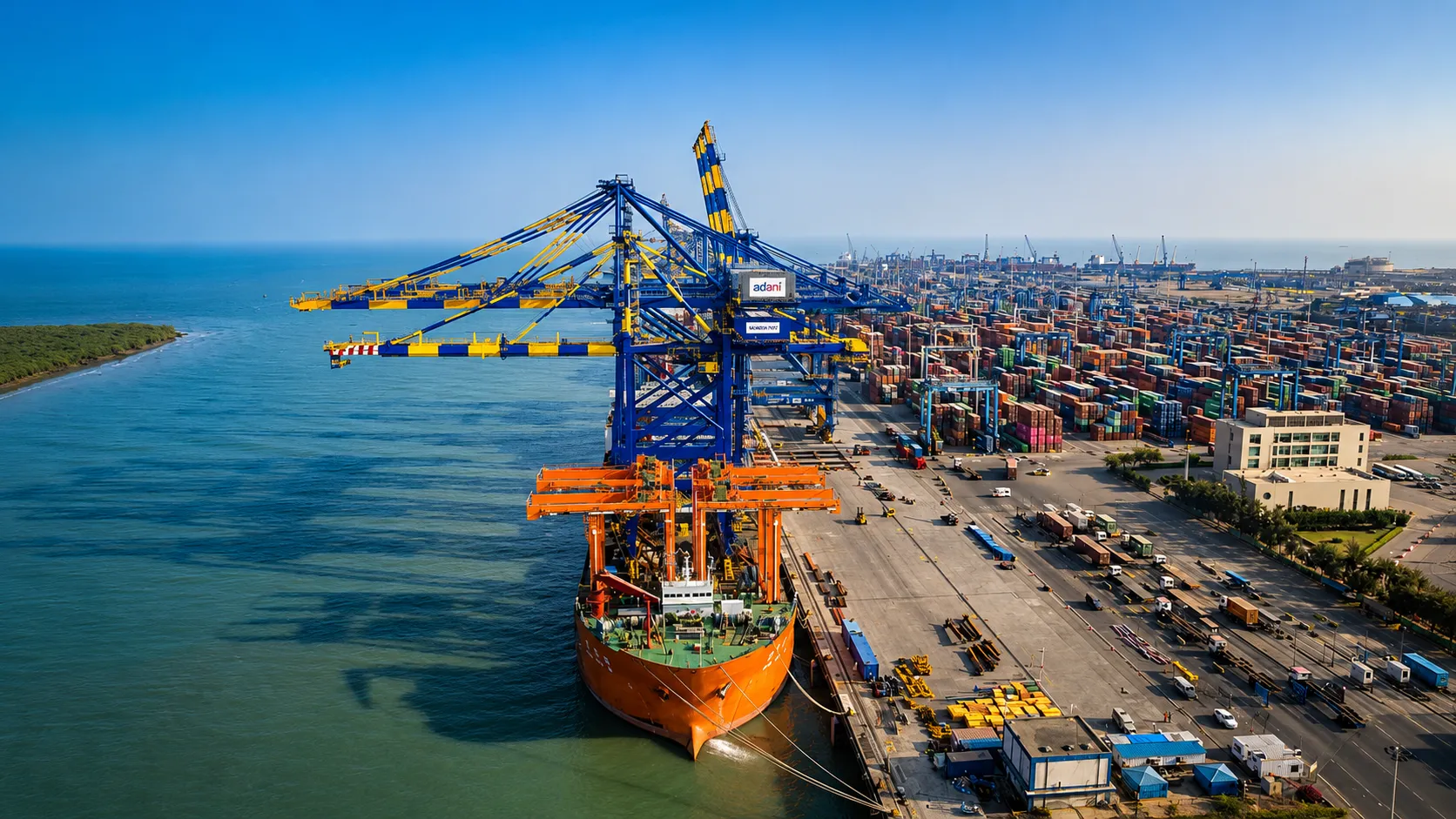
Credit rating agency commentary on Adani Ports, both domestic and international, will also likely factor into how the market interprets Wednesday's results, given the continued sensitivity among investors to any signals regarding the company's, and the broader Adani Group's, creditworthiness and access to capital markets on favourable terms. A results announcement that reinforces confidence in the company's cash flow generation and deleveraging trajectory would likely be viewed favourably not just for its immediate earnings implications but for its supportive read-through on the company's broader credit profile and cost of capital going forward.
For retail investors and market observers less focused on the granular operational metrics that professional analysts typically parse in detail, Wednesday's results offer a useful, broader opportunity to gauge sentiment toward one of India's most prominent and closely watched infrastructure conglomerates at a moment when the broader market has shown renewed appetite for risk assets. How Adani Ports's stock — and by extension, sentiment toward the broader Adani Group — responds to Wednesday's results will offer an important signal about whether the market's improved mood is broad enough to extend meaningful confidence even to companies that have, at various points over recent years, faced heightened scrutiny around governance and financial transparency.
Analyst price target revisions following Wednesday's results will offer a further useful gauge of how the market's professional research community interprets the company's near-term trajectory. Given the stock's substantial existing market capitalisation and the broad analyst coverage the company commands, any meaningful divergence between bullish and bearish analyst interpretations of the same results would itself be a notable outcome, potentially reflecting genuine uncertainty about how to weigh strong operational metrics against continued broader questions about Adani Group governance and capital structure that have persisted even as the group's individual businesses have continued to report generally solid operating performance.
Ultimately, Wednesday's results will be judged not in isolation but as one further data point in a longer-running assessment that investors, analysts, and rating agencies have been conducting on Adani Ports and its parent conglomerate for several years now — an assessment that has, over time, increasingly come to rest on the simple, repeated question of whether operational execution and cash flow delivery can continue to outpace the governance concerns that periodically resurface in market commentary. A strong, clean results print with encouraging cargo volume and margin trends would offer one more piece of evidence tilting that ongoing assessment in the company's favour.