Mumbai, July 31, 2026 — While much of India Inc's June-quarter earnings season has produced a mixed bag of results, one name has delivered exactly the kind of dependable, beat-the-street performance that long-term investors crave: Adani Ports and Special Economic Zone (APSEZ). The company reported a net profit of ₹3,620 crore for the first quarter of FY27, marking a 9.22% increase year-on-year and comfortably clearing the Bloomberg analyst consensus estimate of ₹3,418 crore — a beat of roughly 6% against Street expectations.
The quarter-on-quarter trend was equally encouraging, with net profit rising 8.8% compared to the preceding quarter, suggesting that whatever momentum APSEZ built through the tail end of the last fiscal year has carried cleanly into the new one. For a company operating in a capital-intensive, infrastructure-heavy sector where quarter-to-quarter volatility is often the norm, that kind of sequential consistency is itself a notable achievement.
Revenue growth outpaces profit growth — and that's a good sign
Perhaps the more telling number in APSEZ's Q1 FY27 scorecard is not the profit figure itself but the topline. Revenue from operations for the June quarter increased 18.6% year-on-year to ₹10,820.80 crore, a growth rate that comfortably outstrips the company's net profit growth of 9.22%. On the surface, a topline growing faster than the bottom line might raise questions about margin compression. But industry analysts reading the full breakdown point to a more nuanced and, in many ways, more encouraging explanation: the growth is being driven substantially by a structural shift in APSEZ's business mix, with a "substantial rise in revenues from the marine and international ports segment" doing the heavy lifting.
This distinction matters enormously for how investors should read the quarter. Marine services and international ports operations typically carry different margin profiles and capital intensity compared to APSEZ's legacy domestic cargo-handling business at flagship ports like Mundra. A company deliberately scaling into higher-revenue, strategically diversified segments — even at a temporarily different margin mix — is generally viewed as executing a long-term growth strategy rather than simply riding a cyclical volume upswing. For APSEZ, which has spent the better part of the last five years aggressively expanding beyond its original Gujarat-coast footprint into a pan-India and increasingly international ports network, this quarter's numbers read as validation of that diversification thesis playing out in real time.
The bigger Adani Group context
APSEZ's results land at a moment when the broader Adani Group's infrastructure businesses are under close market scrutiny, both from domestic institutional investors recalibrating exposure to conglomerate risk and from global funds re-evaluating India infrastructure plays amid a choppy tariff and trade backdrop. Against that backdrop, a clean earnings beat from the group's flagship ports and logistics arm carries outsized signalling value — reinforcing the narrative that APSEZ's core operating business remains fundamentally sound and cash-generative, independent of whatever headline-driven volatility affects group-level sentiment from time to time.
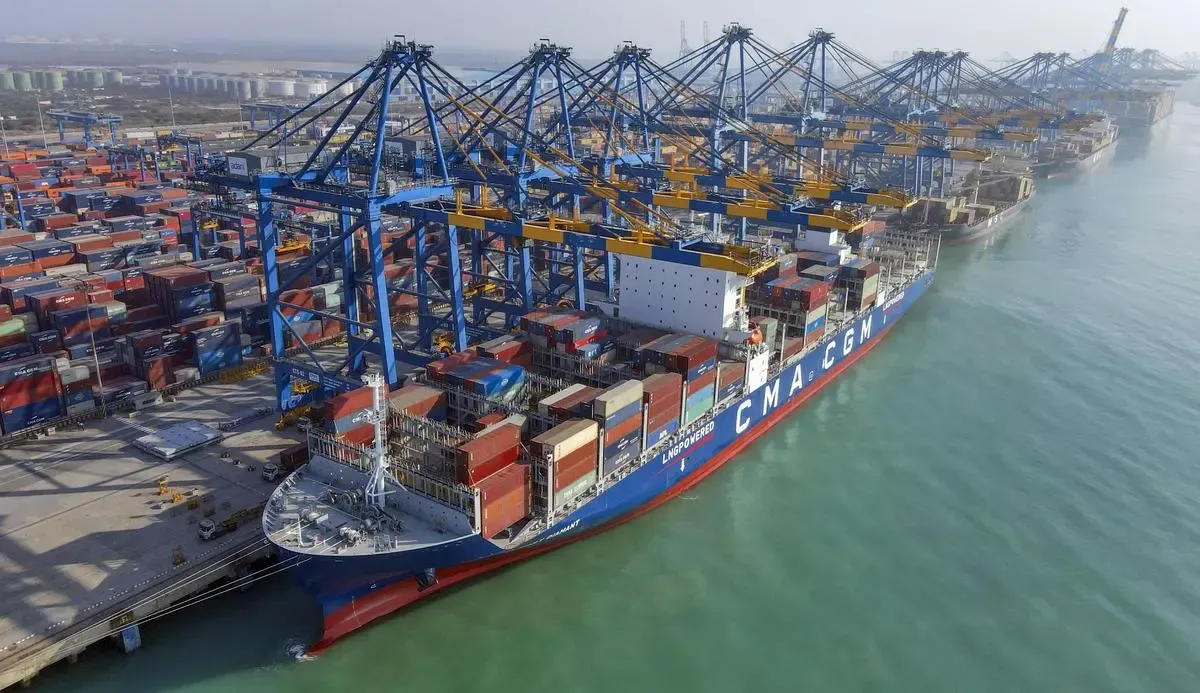
APSEZ has long been considered the crown jewel of the Adani Group's infrastructure ambitions, controlling a network of ports that collectively handle a substantial share of India's total containerised and bulk cargo volumes. Mundra Port alone remains one of the largest ports in the country by cargo throughput, and the group has steadily added capacity at ports including Kattupalli, Ennore, Krishnapatnam, Dhamra and Vizhinjam, alongside international footholds that management has increasingly emphasised in investor communications as a source of future growth beyond the constraints of India's domestic cargo cycle.
Reading the results alongside India's broader trade story
APSEZ's Q1 performance also arrives at a genuinely interesting inflection point for Indian trade flows more broadly. The quarter under review coincided with heightened uncertainty around India's tariff negotiations with the United States, with Washington imposing fresh duties on a range of Indian exports even as bilateral talks toward a more comprehensive trade agreement continued in fits and starts. In principle, that kind of trade-policy uncertainty might be expected to weigh on cargo volumes at India's ports, particularly for cargo categories directly exposed to US-bound export flows.
That APSEZ nonetheless delivered an 18.6% jump in revenue suggests the port operator's diversified cargo mix — spanning containers, bulk commodities, and increasingly marine services that are less directly tied to any single bilateral trade relationship — has provided meaningful insulation against the kind of single-market shock that a narrower, US-export-dependent logistics business might have felt more acutely this quarter. It is a small but telling data point for economists tracking how resilient India's broader export and logistics infrastructure has proven to be even as trade-policy headlines swing from optimistic to uncertain and back again.
Market reaction and analyst commentary
APSEZ shares had been trading marginally positive in the lead-up to the results announcement, with investors broadly anticipating a solid quarter given the company's consistent recent execution track record. The confirmed beat against consensus estimates is likely to reinforce brokerage confidence in APSEZ's near-term earnings trajectory, particularly heading into a fiscal year where the company's management has repeatedly signalled ambitions to further scale international operations and marine services as a proportion of overall revenue.
Sector analysts note that APSEZ's ability to beat estimates by a meaningful margin — roughly ₹200 crore above the Bloomberg-polled consensus — while simultaneously posting double-digit sequential profit growth, places it among the stronger performers in the broader infrastructure and logistics space this earnings season, at a time when several other large-cap names across sectors have delivered more muted, in-line results. For a company whose stock price often moves in sympathy with broader group-level sentiment rather than purely on its own operational merits, a standout quarter like this one offers a useful reminder to the market of the underlying operating strength that exists independent of headline noise.
Looking ahead: what to watch
As FY27 unfolds, several factors will determine whether APSEZ can sustain this quarter's momentum. First is the trajectory of the still-unresolved India-US trade negotiations; a more favourable final tariff outcome could further boost export-linked cargo volumes at APSEZ's ports, while a harsher settlement could weigh on specific cargo categories even as the company's diversification provides some cushion. Second is the pace of APSEZ's international expansion — investors will be watching closely for updates on capacity additions, new port acquisitions or concessions, and the ramp-up trajectory of marine services revenue that proved such a significant swing factor this quarter.
Finally, there is the question of capital allocation. APSEZ has historically balanced an aggressive expansion capital expenditure programme with efforts to maintain a manageable leverage profile — a balancing act that becomes more consequential as the company continues to scale internationally, where capital requirements and regulatory environments can differ significantly from its home domestic market. Investors and credit rating agencies alike will be parsing the company's upcoming investor commentary for clarity on how it plans to fund its next leg of international growth without compromising the balance-sheet discipline that has underpinned its consistent earnings delivery.
For now, though, the headline numbers speak for themselves: a 9.22% profit jump, an 18.6% revenue surge, and a comfortable beat against Street expectations, delivered in a quarter when many of India Inc's other large-cap names struggled to clear similarly high bars. Adani Ports has, once again, done what it has increasingly become known for doing — quietly compounding earnings while the market's attention drifts elsewhere.
A snapshot of the wider Q1 FY27 earnings season
APSEZ's results arrived amid one of the busiest single-day earnings blocks of the current results season, with more than 100 listed Indian companies reporting their June-quarter numbers on the same day. That cohort included Bajaj Finance, Mahindra & Mahindra, Tata Steel, Torrent Pharmaceuticals, Vedanta Aluminium, Hyundai Motor India, Indian Railway Finance Corporation, Mankind Pharma, and food delivery and quick-commerce player Swiggy, alongside a long tail of mid-cap names including Mazagon Dock Shipbuilders, Exide Industries, Gillette India and LIC Housing Finance. Against that backdrop of an unusually dense reporting calendar, APSEZ's clean beat stood out precisely because so many other results that day were, by market accounts, more mixed — some large-caps posting in-line numbers, others surprising to the downside on margin pressure from input costs or sector-specific headwinds.
Mahindra & Mahindra, for instance, posted a strong quarter of its own, with its stock rising over 2% on the back of robust June-quarter results that helped lead gains across the auto sector more broadly, with Maruti Suzuki and Tata Motors both following with solid single-day gains. Mazagon Dock Shipbuilders similarly delivered a strong quarter, with net profit rising 22% year-on-year to ₹550 crore on revenue growth of 12%. Torrent Pharmaceuticals posted an especially eye-catching 54.5% jump in revenue from core operations. Set against this broader mosaic of results, APSEZ's performance reinforced a picture of an Indian infrastructure and logistics sector that, on balance, continued to execute well even amid macro uncertainty — a notable contrast to some of the more caution-inducing commentary emerging from parts of the technology and financial services sectors during the same reporting window.
Understanding APSEZ's business model
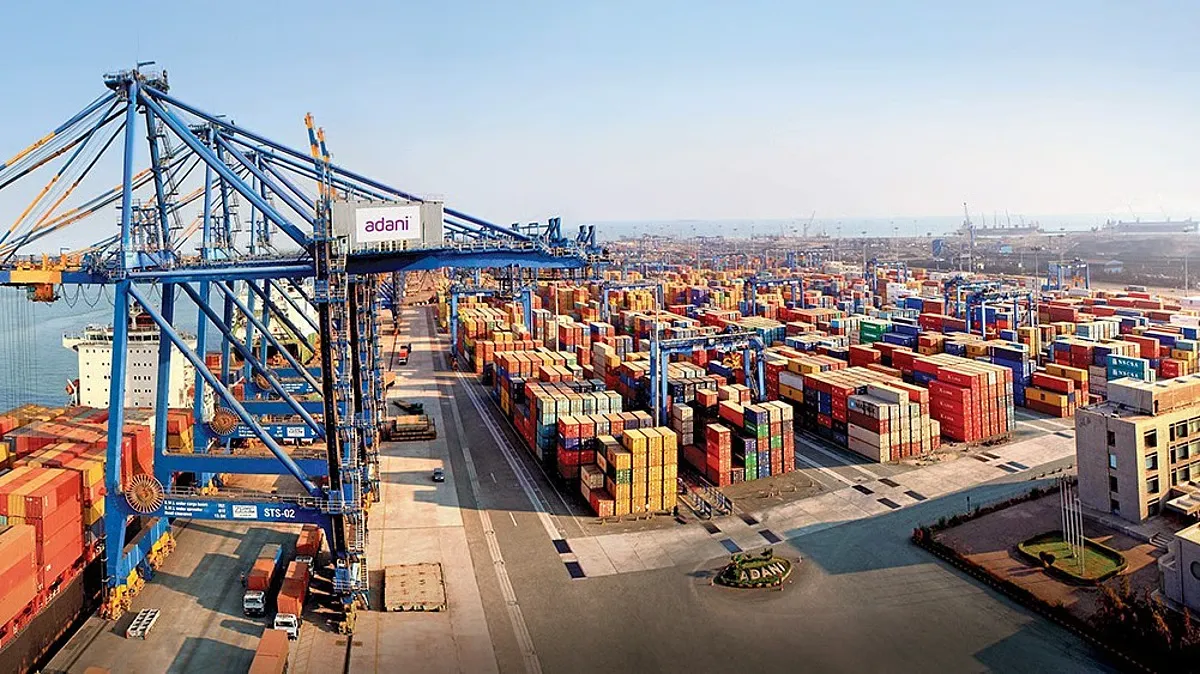
For readers less familiar with the mechanics of India's port infrastructure sector, it is worth briefly unpacking what actually drives APSEZ's revenue and profitability. The company generates income primarily through cargo-handling fees charged to shipping lines and cargo owners for the movement of containers, bulk commodities, liquid cargo and other freight categories through its network of ports. Beyond pure cargo handling, APSEZ has increasingly diversified into logistics services, rail freight, warehousing, and — as this quarter's results underline — marine services and international ports operations that extend the company's revenue base well beyond its original domestic port infrastructure.
This diversification strategy has been a deliberate, multi-year undertaking by APSEZ's management, aimed at reducing the company's historical dependence on cargo volumes tied narrowly to India's domestic trade cycle, and instead building a more globally diversified logistics and ports conglomerate capable of generating growth even when domestic cargo volumes face cyclical or policy-driven headwinds. This quarter's results, with marine and international ports revenue doing much of the heavy lifting behind the overall 18.6% topline growth, offer some of the clearest evidence yet that this diversification strategy is beginning to bear fruit at scale.
Credit profile and balance sheet considerations
APSEZ's consistent earnings delivery has also been a key factor supporting the company's credit profile with domestic and international rating agencies, several of which have highlighted the company's improving cash flow visibility and deleveraging trajectory in recent commentary. A capital-intensive infrastructure business inherently carries meaningful debt on its balance sheet to fund port construction, capacity expansion and international acquisitions, and the pace at which APSEZ can continue growing earnings while managing that leverage responsibly remains a central watchpoint for credit analysts and equity investors alike.
Encouragingly, this quarter's strong operating cash generation — implied by the solid profit growth alongside even stronger revenue growth — should provide APSEZ additional financial flexibility to continue funding its expansion ambitions without materially straining its balance sheet, a dynamic that rating agencies are likely to view favourably as they assess the company's credit trajectory heading into the back half of the fiscal year.
Investor takeaways heading into FY27
For retail and institutional investors evaluating APSEZ as part of a broader infrastructure or logistics allocation, this quarter's numbers offer several useful signals. The consistency of the earnings beat — the second consecutive quarter in which the company has cleared Street estimates by a meaningful margin, according to market commentary — suggests that whatever operational improvements management has been implementing across its port network and marine services business are translating into durable, repeatable earnings outperformance rather than a one-off quarter driven by unusual items or favourable one-time factors.
At the same time, prudent investors will want to watch how the India-US trade situation evolves over the coming months, given APSEZ's direct exposure to India's overall export and import cargo volumes. A favourable resolution to the ongoing tariff negotiations could provide a further tailwind to cargo volumes at APSEZ's ports, particularly for export-oriented cargo categories that have faced uncertainty through the interim tariff period. Conversely, any further escalation in trade tensions could introduce fresh headwinds, even if APSEZ's diversified cargo mix and growing international footprint provide meaningfully more insulation today than the company would have had five years ago, when its business was far more concentrated around domestic port operations tied closely to India's own trade cycle.
Taken together, Adani Ports' June-quarter performance offers a reminder that, amid all the noise surrounding India's markets this earnings season — from IPO pauses to unresolved trade negotiations to a startup ecosystem in the midst of a significant workforce correction — some of the country's largest and most consequential infrastructure businesses continue to execute with a level of operational discipline that, quarter after quarter, keeps delivering for shareholders.