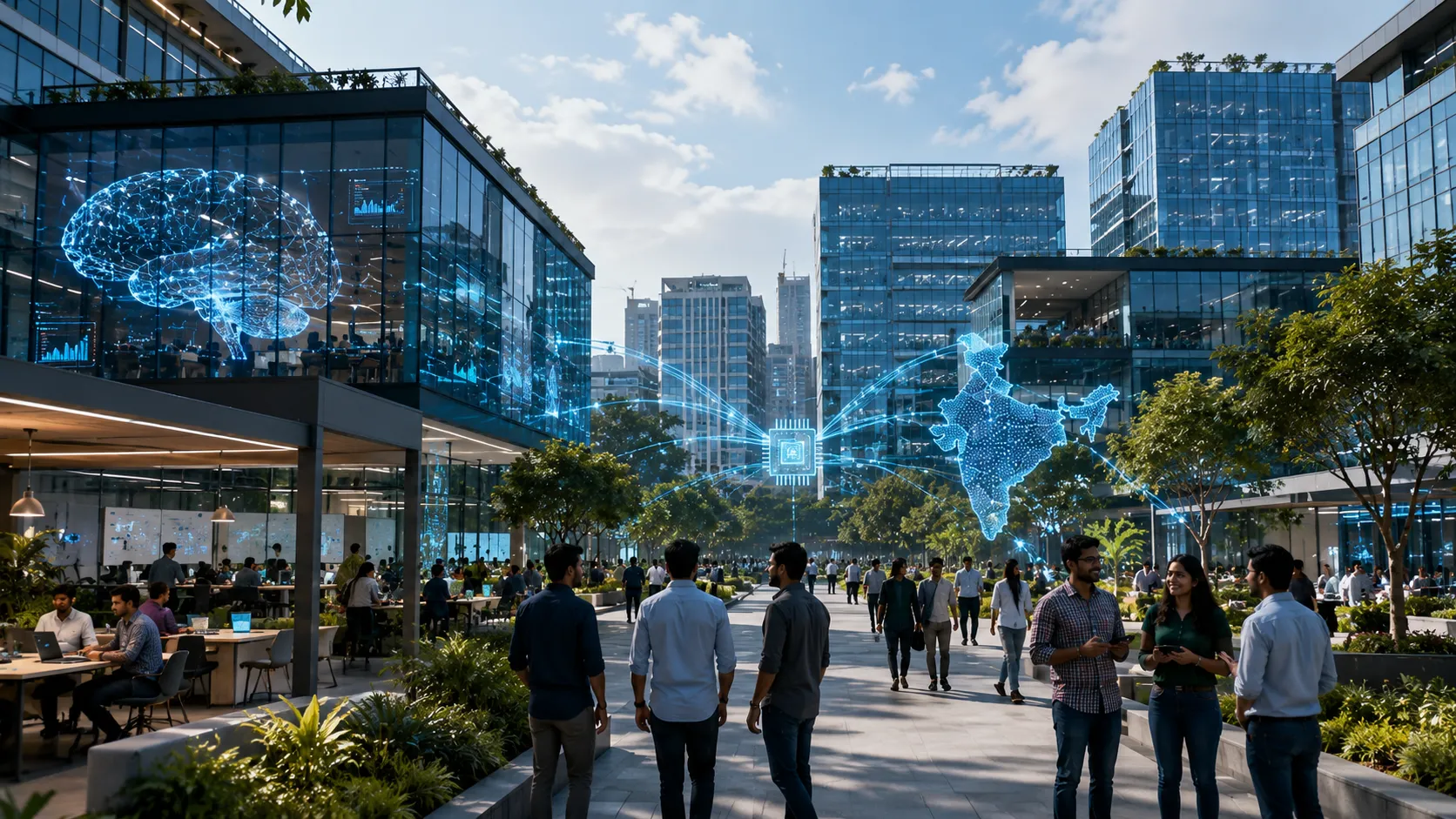
Over the last two years, artificial intelligence has transformed from an emerging technology discussion into one of the most powerful themes shaping global venture capital. Funding rounds involving AI startups increasingly dominate technology headlines, while investors continue searching for businesses capable of defining the next phase of innovation. Yet beneath those individual startup announcements, a more structural shift appears to be taking shape. Across multiple markets, investors are increasingly moving beyond isolated company bets and beginning to create dedicated investment ecosystems designed specifically around artificial intelligence.
India now appears to be entering that phase. The emergence of new India-focused AI and deep-tech investment funds suggests a growing belief that the country’s AI opportunity may be larger than a handful of successful startups. Investors increasingly seem interested in building frameworks capable of identifying and supporting entire generations of founders, technologies and infrastructure businesses before they become mainstream. The larger story therefore may not involve one investment or one company. It may involve a broader effort to position India at the center of a long-term artificial intelligence growth cycle.
Historically, startup ecosystems often matured in recognizable stages. Early phases typically involved scattered entrepreneurial activity and isolated funding events. Later stages introduced accelerators, founder communities, specialized investors and ecosystem institutions capable of supporting sustained growth. Artificial intelligence increasingly appears to be pushing India into that next stage.
Investors Increasingly View India Through A Different Lens
For many years, India occupied a familiar role within global technology ecosystems. International companies viewed the country as a major digital market and one of the world’s strongest sources of engineering talent. During earlier internet and mobile revolutions, India frequently became a destination for product expansion and technology adoption. But the infrastructure and foundational technology layers driving those revolutions often emerged elsewhere.
Artificial intelligence may be changing that narrative.
Today, investors increasingly appear to view India not only as a destination where AI products can gain users, but also as an environment capable of producing globally competitive AI businesses. Several conditions are contributing to this shift simultaneously. India combines a large technical workforce with rapidly expanding startup communities, improving digital infrastructure and increasing enterprise demand for AI systems. Software ecosystems developed over previous decades are now creating second-generation founders with deeper product and operational experience. Together, these factors increasingly suggest that India may possess the ingredients required to support long-term AI company creation.
This evolving perception is becoming visible in investment activity itself. Deep-tech and AI-focused venture initiatives are increasingly appearing across the ecosystem. Chennai-based venture firm Speciale Invest recently launched a ₹1,400 crore fund focused on deep technology sectors, including artificial intelligence and frontier innovation categories. Similar initiatives emerging across the country increasingly indicate that investors are preparing for sustained AI expansion rather than short-term market excitement.
Why Dedicated AI Funds Could Become More Important Than Individual Startup Bets

Traditional funding announcements frequently focus attention on company valuations and capital raised. However, long-term ecosystem development often depends on something less visible but equally important: the existence of specialized capital capable of supporting emerging technologies over extended periods.
Artificial intelligence introduces unique challenges compared with earlier startup categories. Companies building AI infrastructure, advanced systems or foundational technologies frequently operate with longer development cycles and more intensive technical requirements. Building sophisticated AI systems often demands specialized talent, access to computational infrastructure and substantial experimentation before products reach commercial maturity.
As a result, dedicated AI funds may increasingly become essential because they create investors specifically designed to understand these challenges. Rather than evaluating startups solely through conventional growth metrics, AI-focused funds often prioritize technical capability, research depth and long-term ecosystem value.
This distinction matters because transformative technology ecosystems rarely emerge through one successful company alone. Sustainable growth generally depends on multiple layers developing simultaneously. Startups require founders. Founders require capital. Capital requires supporting communities, technical expertise and infrastructure environments. Dedicated AI investment vehicles can increasingly help connect these components and create stronger foundations for future innovation.
India’s New Generation Of AI Founders Is Beginning To Look Different
The founders emerging within India’s artificial intelligence ecosystem increasingly differ from earlier startup generations. Previous waves often focused heavily on ecommerce, marketplaces and consumer internet expansion. AI entrepreneurs today frequently combine software expertise with research backgrounds, machine learning specialization and infrastructure capabilities.
Many founders now entering the ecosystem previously worked at SaaS companies, cloud platforms and engineering-focused businesses. Others emerge from research environments and technical institutions. Increasingly, entrepreneurship in AI appears to require interdisciplinary expertise where software capability intersects with data science, machine learning and product design.
Investors appear to recognize that shift. Rather than waiting for businesses to reach substantial scale before participating, venture firms increasingly seek opportunities earlier. Categories involving AI infrastructure, developer platforms, enterprise automation and model deployment systems are attracting stronger attention because investors increasingly believe these sectors may become foundational layers beneath future AI ecosystems.
This shift also reflects changing investor psychology. Earlier technology cycles often rewarded rapid expansion and market capture. Artificial intelligence increasingly requires patience. Technical defensibility and long-term capability may ultimately prove more valuable than immediate growth.
Artificial Intelligence Is Gradually Becoming Infrastructure Rather Than A Product Category
One reason AI-focused funds are gaining momentum may involve the changing role of artificial intelligence itself. During earlier periods, AI often appeared as a feature integrated into existing products. Today, many investors increasingly view artificial intelligence as foundational infrastructure capable of influencing multiple industries simultaneously.
The implications extend across sectors including healthcare, financial services, manufacturing, logistics and enterprise software. AI systems increasingly shape decision-making processes, operational workflows and customer experiences. As AI capabilities expand, businesses built around enabling these transitions may become increasingly important.
This shift helps explain why investors appear interested in creating broader ecosystem structures rather than chasing isolated trends. Infrastructure opportunities often generate long-term value because they support multiple categories rather than serving single use cases.
The Larger Signal May Matter More Than The Capital Itself
The emergence of India-focused AI funds may ultimately become important because of what it signals. Venture ecosystems often operate through confidence and momentum as much as through capital itself. When new funds emerge around specific technologies, they frequently encourage participation from founders, institutions and additional investors.
For India, that effect could become especially important during the coming decade. Artificial intelligence increasingly appears likely to influence nearly every sector of the economy. Countries capable of creating stronger ecosystems around AI may eventually gain advantages extending beyond startup activity into broader economic competitiveness.
The larger question therefore may not simply involve whether AI startups will continue attracting funding. Increasingly, it involves whether India can build the institutions, infrastructure and investment environments capable of supporting long-term innovation. Recent activity increasingly suggests investors believe that possibility may be real.