
What Initially Appeared To Be A Technology Partnership Is Beginning To Reflect Something Much Larger
For years, cross-border technology agreements largely followed a familiar pattern. Companies entered new markets, secured international investors or partnered with global firms to accelerate growth and expand products into new regions. These arrangements were usually interpreted through a commercial lens. Funding, expansion and scale often sat at the center of the narrative. Technology itself generally operated within an increasingly interconnected environment where collaboration across borders appeared both natural and necessary. International partnerships represented business ambition more than geopolitical significance.
Artificial intelligence increasingly appears to be changing that equation in meaningful ways. Today, AI partnerships are no longer being viewed simply as business announcements or strategic collaborations designed around market growth. Increasingly, they seem to represent something broader involving technological influence, infrastructure access and long-term economic positioning. Around the world, governments and technology firms continue announcing cross-border agreements involving semiconductor access, cloud infrastructure, AI computing environments and large-scale data center investments. While many of these developments initially appear like ordinary business stories, they increasingly reveal deeper concerns surrounding technological capability and control. Behind investment announcements and collaboration agreements sits a larger question that governments and institutions increasingly seem to be asking: who ultimately controls the systems that will power the future of artificial intelligence?
This question matters because artificial intelligence increasingly occupies a category very different from earlier waves of software innovation. Previous technology cycles frequently expanded through relatively open environments where products and platforms could move globally without requiring significant physical infrastructure. Artificial intelligence increasingly appears different because participation depends heavily on specialized hardware, semiconductor access, computational infrastructure and vast data-processing environments. These systems are expensive, highly concentrated and difficult to replicate rapidly. As a result, technological capability increasingly appears tied not simply to innovation but also to access itself.
This changing reality increasingly transforms the meaning of international partnerships. Agreements that once looked commercial increasingly appear strategic. Collaborations that previously centered around products increasingly involve infrastructure. What initially appears to be a technology partnership increasingly becomes a broader discussion involving future influence and long-term positioning.
Governments Increasingly View Artificial Intelligence As Critical National Infrastructure
One of the most significant shifts taking place globally involves changing attitudes among governments themselves. Historically, technology innovation frequently evolved primarily through private-sector leadership. Governments often supported growth through research initiatives, regulatory environments and public investment programs while allowing businesses to drive technological direction independently. Artificial intelligence increasingly appears to be creating a different environment altogether.
Across multiple regions, governments increasingly discuss AI through language historically associated with strategic infrastructure. Artificial intelligence now frequently appears alongside conversations involving energy security, telecommunications systems and industrial competitiveness. Policymakers increasingly seem to recognize that AI capability may influence future economic productivity, workforce competitiveness and geopolitical influence simultaneously. As a result, governments across regions continue expanding semiconductor initiatives, sovereign computing environments and domestic AI investment strategies designed around strengthening long-term technological resilience.
Recent developments increasingly illustrate this trend. The United States expanded large-scale efforts involving semiconductor manufacturing and AI infrastructure investment. Europe accelerated discussions involving sovereign AI ecosystems and digital independence. Countries across the Middle East continue announcing large-scale AI partnerships and computing ambitions while Asian economies increasingly strengthen domestic technology environments focused around computational infrastructure and semiconductor ecosystems. Although approaches vary across regions, many increasingly appear united around one assumption: artificial intelligence may become too strategically important to depend entirely on external systems.
This broader shift increasingly changes how international AI partnerships themselves are interpreted. Access to infrastructure increasingly appears connected to national competitiveness. Technology partnerships increasingly seem linked to economic capability. Artificial intelligence increasingly resembles infrastructure rather than software alone.
Semiconductors Are Quietly Becoming The Center Of The Global AI Story
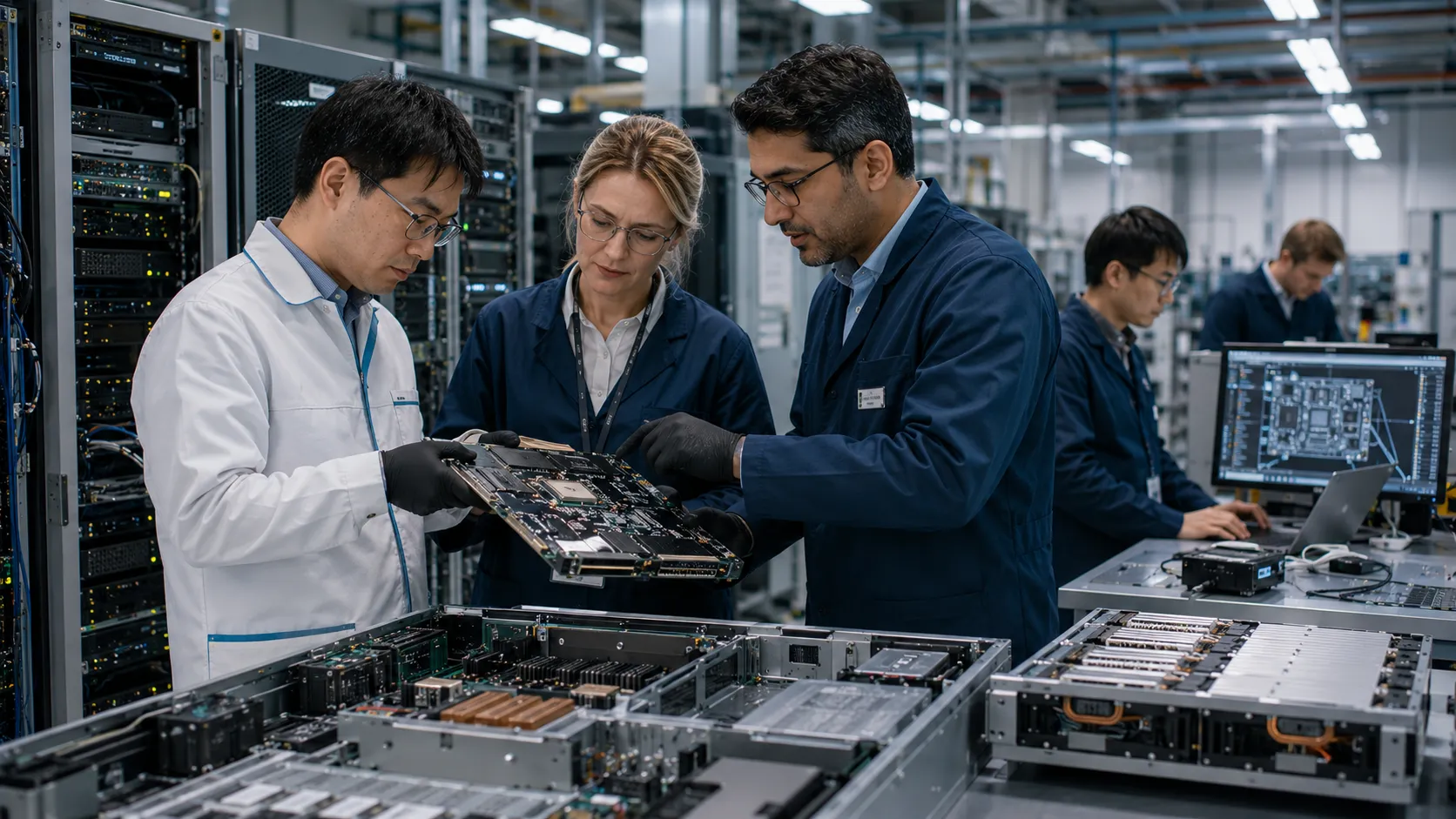
Beneath many of today’s artificial intelligence discussions sits a category that until recently remained largely invisible outside technology circles: semiconductors. Although software products frequently dominate public attention, the systems enabling AI capability increasingly depend on highly specialized chips capable of processing extraordinary workloads at scale.
Artificial intelligence models require immense computational environments. Training and deploying increasingly sophisticated AI systems demands powerful infrastructure capable of processing enormous volumes of information efficiently. Companies such as Nvidia increasingly occupy influential positions within these environments because computational capability itself often determines who can build advanced systems successfully.
Over recent years, global competition surrounding semiconductor ecosystems intensified dramatically. Export restrictions, industrial policies and supply-chain discussions increasingly highlighted how deeply AI development depends on access to specialized hardware environments. What initially appeared to be technical discussions surrounding chip manufacturing gradually evolved into larger conversations involving economic influence and strategic capability.
This shift increasingly affects international AI agreements themselves. Many cross-border partnerships today extend far beyond software collaboration or research initiatives. Increasingly, they involve semiconductor access, data-center development and infrastructure investments designed around long-term capability building. These partnerships often determine who gains access to computational environments capable of supporting future growth.
The implications increasingly extend beyond immediate business objectives. Countries lacking access to large-scale AI infrastructure may eventually encounter broader limitations involving participation within future technology ecosystems. Computational capability increasingly appears connected to opportunity itself. What once seemed like background infrastructure increasingly occupies the center of global technology conversations.
Digital Sovereignty Is Increasingly Reshaping Global Technology Priorities
Historically, sovereignty frequently referred to territorial control, economic independence and political authority. Increasingly, however, technological systems themselves appear to be reshaping how countries define strategic independence. Governments today increasingly discuss concepts involving digital sovereignty, technological resilience and infrastructure control because digital systems increasingly influence broader economic outcomes.
Artificial intelligence increasingly sits at the center of these conversations because future industries may depend heavily on computational capability and infrastructure access. Europe increasingly illustrates this transition clearly. Recent initiatives involving semiconductor investments, sovereign cloud environments and domestic AI infrastructure increasingly reflect ambitions extending beyond software development alone. Similar conversations continue emerging across Asia and the Middle East where countries increasingly pursue stronger domestic technological ecosystems capable of supporting long-term competitiveness.

Importantly, these developments do not necessarily suggest a retreat from globalization. Countries continue pursuing international partnerships and businesses continue collaborating across borders. Capital still moves internationally and technological ecosystems remain deeply interconnected. However, a different pattern increasingly appears to be emerging beneath those relationships. Governments and institutions increasingly seek collaboration while simultaneously attempting to maintain stronger influence over technologies viewed as strategically essential.
This changing balance increasingly suggests that globalization itself may be evolving rather than disappearing. International cooperation remains important, but infrastructure control increasingly matters too. Countries increasingly appear interested not simply in participating within global technology ecosystems but also in maintaining stronger influence over systems they increasingly believe future competitiveness may depend upon.
Businesses Increasingly Find Themselves Operating Inside A More Complex Global Environment
Perhaps one of the most important consequences surrounding this transition involves the changing position of technology companies themselves. For decades, businesses approached international expansion primarily through commercial frameworks involving growth opportunities, customer acquisition and market access. Technology ecosystems generally operated according to assumptions that products could move relatively freely across borders while global supply chains functioned through increasingly interconnected systems. Artificial intelligence is gradually creating a different environment. Companies now increasingly operate at intersections where business strategy, technological capability and geopolitical considerations overlap in ways that were previously less visible. Access to semiconductor infrastructure, cloud environments, computing partnerships and regulatory frameworks increasingly influences business decisions that once focused largely on traditional commercial variables.
This changing environment means that cross-border AI partnerships frequently carry significance extending well beyond immediate financial outcomes. Agreements involving infrastructure investments and AI ecosystems increasingly reveal where technological alliances themselves may be forming. Businesses today often seek access not simply to customers but also to computing power, research ecosystems and strategic environments capable of supporting long-term development. As a result, technology companies increasingly appear to be operating inside systems where infrastructure relationships and geopolitical realities shape opportunities alongside traditional business objectives. The implications are creating a more complex environment where partnerships frequently represent multiple goals simultaneously. Commercial growth remains important, but technological positioning increasingly appears just as significant.
Why This Story Extends Beyond One AI Agreement
The broader significance surrounding emerging cross-border AI partnerships may ultimately involve what they reveal about how globalization itself is evolving. For decades, technology industries expanded under assumptions involving openness, interconnected supply chains and increasingly integrated digital ecosystems. Artificial intelligence increasingly appears to be introducing different dynamics because infrastructure concentration, semiconductor access and technological resilience now play much larger roles within the broader innovation landscape.
What appears today as a series of partnership announcements may therefore reflect a larger transition involving how countries and institutions increasingly think about technological capability itself. Artificial intelligence no longer appears limited to software products or digital services. Increasingly, it intersects with infrastructure planning, economic competitiveness and strategic influence. Governments now appear more actively involved in shaping technological environments because future economic outcomes increasingly seem tied to AI capability and computational access.
This broader shift may ultimately explain why international AI agreements increasingly attract attention beyond investment communities or technology circles. These partnerships increasingly reveal assumptions surrounding who controls future infrastructure, who gains access to emerging systems and how technological influence itself may be distributed globally over the coming years. What initially appears to be a technology partnership increasingly begins to resemble something larger: a story involving power, resilience and the future architecture of the global economy itself.