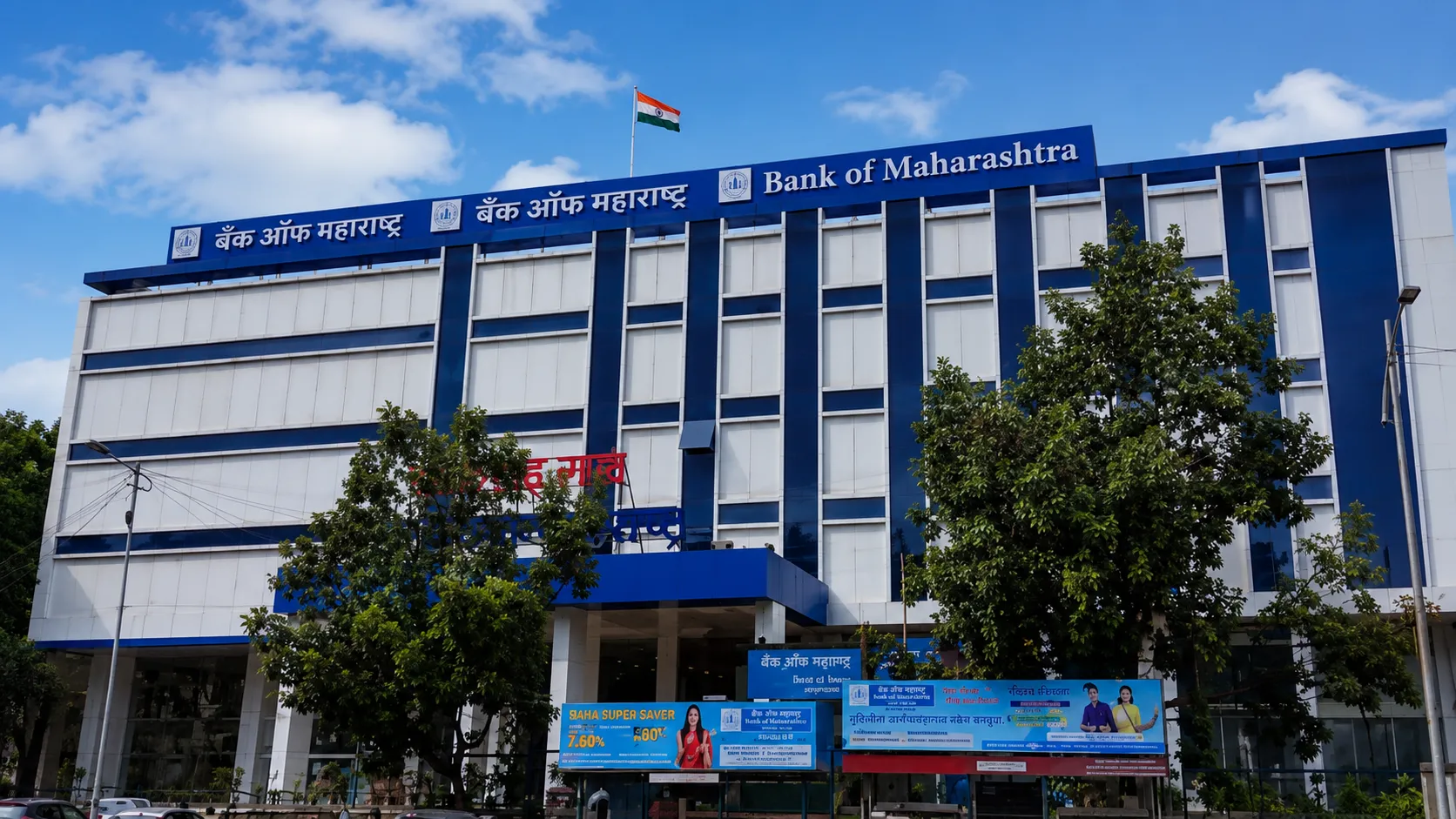
Quarterly results season is typically a time for banks to showcase steady, incremental progress — loan book growth, deposit mobilisation, margin trends, and asset quality metrics that tell a story of gradual, predictable improvement. This quarter, Bank of Maharashtra's results told a different kind of story: one dominated by a single, extraordinary line item that dwarfed the routine metrics analysts usually focus on. The state-owned lender disclosed that it has absorbed a one-time exceptional charge of ₹5,680 crore, tied to a $600 million settlement connected to NMC Health, the once-prominent UAE-based hospital operator whose spectacular collapse several years ago sent shockwaves through Gulf corporate governance circles and left a trail of exposed lenders across multiple jurisdictions, India included.
For a bank of Bank of Maharashtra's scale, a charge of this magnitude is not a routine accounting adjustment — it is a headline event, one that required the bank to clearly flag it as an "exceptional" item precisely because it falls well outside the normal operating rhythm of the institution's core lending and deposit-taking business. Understanding why this charge has arrived now, years after NMC Health's initial collapse, requires revisiting one of the more dramatic corporate governance failures in recent Gulf business history.
THE NMC HEALTH STORY: A BRIEF RECAP
NMC Health was, for much of the past decade, one of the most celebrated corporate success stories to emerge from the UAE's healthcare sector — a hospital and healthcare services operator that grew rapidly, eventually securing a listing on the London Stock Exchange and briefly commanding a valuation that made its founder one of the most prominent business figures in the Gulf region. The company's rapid growth story unravelled dramatically when short-seller research and subsequent independent investigations revealed a web of undisclosed debt, related-party transactions, and what auditors and investigators later characterised as systemic governance failures that had been concealed from shareholders, creditors, and regulators for an extended period.
The scale of the undisclosed debt, once it came to light, proved substantially larger than what had previously been reported in the company's financial statements, triggering a collapse in its share price, a suspension of its listing, and ultimately the company's entry into administration proceedings in the United Kingdom. For the numerous banks — spanning UAE domestic lenders, international banks, and, as this current disclosure confirms, at least one major Indian public sector bank — that had extended credit to NMC Health or its associated entities based on financial statements that later proved to be materially misstated, the company's collapse triggered years of complex, multi-jurisdictional legal and recovery proceedings aimed at determining how much of the outstanding exposure could ultimately be recovered, and from which of the company's various assets and associated corporate structures.
WHY THIS SETTLEMENT IS ARRIVING NOW
Financial settlements connected to a corporate collapse of this scale and complexity typically take years to resolve, given the multiple layers of legal proceedings involved: administration and insolvency processes in the jurisdiction where the company was headquartered or listed, parallel legal actions in jurisdictions where lenders and creditors are based, and often separate regulatory or criminal investigations into the individuals and entities responsible for the underlying governance failures. Throughout this process, creditor banks typically need to make ongoing provisioning decisions based on their best estimate of eventual recovery, adjusting these provisions as the legal and administrative process yields clearer information about the ultimate outcome.
The disclosure of a ₹5,680 crore exceptional charge suggests that Bank of Maharashtra has now reached a point in this multi-year process — likely a formal settlement agreement or a definitive resolution of the recovery proceedings connected to its NMC Health exposure — that has crystallised the actual financial impact with sufficient certainty to require full recognition in its current quarter's results, rather than the more provisional, estimate-based provisioning that may have characterised the bank's treatment of this exposure in earlier reporting periods.
This pattern — years of provisional provisioning followed by a large, one-time crystallisation charge once a settlement or definitive legal outcome is reached — is a familiar one in banking, particularly for exposures connected to complex, cross-border corporate collapses where the eventual recovery amount can remain genuinely uncertain for an extended period while legal proceedings across multiple jurisdictions play out.
UNDERSTANDING THE SCALE OF THE CHARGE
A ₹5,680 crore charge is a substantial sum by any measure, and it is worth contextualising what this means for a bank of Bank of Maharashtra's size. Public sector banks of this scale typically report annual profits in a range that would make a charge of this magnitude highly significant to any single quarter's reported results, even though the bank has been at pains to characterise the charge as a one-time, exceptional item rather than a reflection of any deterioration in its core, ongoing lending and deposit business.
This distinction — between a one-time exceptional charge and an indication of underlying business deterioration — matters enormously for how analysts, rating agencies, and investors interpret the result. A bank absorbing a large but clearly identified, one-time legacy exposure charge, while its core lending book continues to show healthy growth in advances, deposits, and net interest margins, tells a fundamentally different story than a bank whose core operations are themselves deteriorating. Bank of Maharashtra's own characterisation of the result — emphasising that core business growth "remains resilient" even as it absorbed this exceptional charge — reflects a deliberate communication strategy aimed at reassuring the market that this is a legacy issue being resolved and put behind the institution, rather than a sign of ongoing operational weakness.
WHAT THIS MEANS FOR THE BANK'S FINANCIALS GOING FORWARD
For investors and analysts tracking Bank of Maharashtra, the key question following this disclosure is whether this charge represents the full and final resolution of the bank's NMC Health-related exposure, or whether there remains any residual risk of further charges connected to this same legacy issue in future quarters. Banks typically aim to fully crystallise and resolve legacy exposures of this nature in a single reporting period specifically to avoid the market uncertainty that can arise from drip-feeding bad news across multiple quarters, which tends to weigh more heavily and persistently on investor sentiment than a single, clearly delineated one-time charge that can be more cleanly separated from ongoing operational performance in analyst models and valuation frameworks.
Assuming this settlement does represent full and final resolution, the more relevant forward-looking question becomes how quickly the bank's reported profitability normalises in subsequent quarters, once this exceptional item drops out of the year-on-year comparison base. Banks that have absorbed large one-time charges of this nature often see reported profit growth appear artificially inflated in the subsequent year purely due to this high-charge quarter serving as a low base for comparison — a dynamic that analysts typically adjust for when assessing genuine underlying earnings trends rather than headline year-on-year percentage changes.
THE BROADER LESSON FOR INDIAN BANKS' OVERSEAS EXPOSURE
Beyond the specifics of this particular case, the NMC Health saga and its long tail of settlement charges for creditor banks around the world — including, evidently, at least one major Indian public sector lender — serves as a broader cautionary case study regarding the risks associated with cross-border lending to corporate entities in jurisdictions where governance standards, disclosure requirements, and regulatory oversight may differ meaningfully from what Indian banks are accustomed to in their domestic lending operations.
Indian banks, including several public sector institutions, have historically maintained meaningful overseas lending books, often connected to servicing the substantial Indian diaspora business community across the Gulf region and other international markets, as well as broader international trade finance and corporate banking relationships. The NMC Health case illustrates how governance failures at a borrower entity — even one that had appeared, based on publicly available financial statements and its stock exchange listing status, to be a well-regulated, transparent corporate entity — can nonetheless expose lending banks to significant, multi-year recovery and settlement processes once underlying problems come to light.
This is likely to reinforce, within risk management and credit committees across Indian banking institutions with overseas lending exposure, the importance of independent due diligence that goes beyond simply relying on a borrower's published financial statements and stock exchange listing status, particularly for lending relationships in jurisdictions with less stringent governance and disclosure requirements than India's own increasingly robust corporate governance and banking regulatory framework.
MARKET AND ANALYST REACTION
In the immediate aftermath of this disclosure, banking sector analysts have generally focused their commentary on separating the one-time nature of this charge from their ongoing assessment of Bank of Maharashtra's core operational trajectory. The bank's own emphasis on resilient core business growth, even as it absorbed this substantial one-time hit, appears aimed precisely at helping analysts and investors make exactly this distinction when modelling the bank's forward earnings trajectory and assessing whether the current quarter's headline results should meaningfully alter longer-term valuation assumptions for the stock.
Rating agencies, too, are likely to focus their assessment on whether this charge affects the bank's capital adequacy position in any material way, and whether the bank's core profitability and provisioning coverage for its ongoing domestic loan book remain adequate and consistent with sector peers, independent of this legacy exceptional item. Should the bank's core metrics continue to demonstrate the resilience it has emphasised in its communications around this result, the expectation among most banking analysts is that this episode will likely be treated as a discrete, resolved legacy issue rather than a persistent overhang on the stock's valuation — though this assessment will naturally depend on confirmation, in subsequent quarters, that no further charges connected to this same NMC Health exposure materialise.
A REMINDER OF HOW LONG FINANCIAL RECKONINGS CAN TAKE
Perhaps the most striking dimension of this story, for observers outside the banking industry, is simply the timeline involved. NMC Health's governance failures came to light years before this settlement charge was recognised, underscoring just how protracted cross-border insolvency and recovery proceedings can be when they involve multiple jurisdictions, complex corporate structures, and numerous creditor institutions each pursuing their own claims through parallel legal processes. For depositors and retail investors accustomed to the relatively fast-moving news cycle of daily banking sector headlines, the NMC Health settlement is a useful reminder that some of the most consequential financial reckonings unfold not in days or weeks, but over years, often resurfacing in quarterly results long after the original news event has faded from public attention.
For Bank of Maharashtra specifically, putting this chapter behind it — assuming the settlement does indeed prove final — allows management and investors alike to redirect attention toward the metrics that will actually determine the bank's medium-term trajectory: credit growth in a competitive Indian banking landscape, deposit mobilisation amid intensifying competition for retail deposits across the sector, and asset quality trends in a domestic lending book that, unlike this one legacy overseas exposure, remains squarely within the bank's core area of operational expertise and regulatory comfort.
WHAT RETAIL INVESTORS AND DEPOSITORS SHOULD TAKE FROM THIS
For retail shareholders of Bank of Maharashtra and, more broadly, depositors evaluating the safety and soundness of public sector banks in India, this episode offers a useful lens through which to evaluate quarterly banking results more generally. Headline profit or loss figures in any given quarter can be significantly distorted by one-time items — whether exceptional charges of this nature, gains from asset sales, or other non-recurring items — and a more informative approach to evaluating a bank's underlying health typically involves looking through to core, pre-exceptional operating metrics: net interest income growth, provisioning coverage ratios on the ongoing loan book, and trends in gross and net non-performing assets within the bank's core domestic lending portfolio.
India's banking regulator, the Reserve Bank of India, has over the years pushed for greater transparency and more conservative provisioning practices across the banking sector precisely to reduce the likelihood of exactly this kind of large, delayed-recognition surprise charge catching investors and depositors off guard. Whether this particular episode prompts any broader regulatory review of how Indian banks manage and disclose overseas exposure risk remains to be seen, but it would not be surprising if the case features in future supervisory discussions around cross-border lending risk management practices across the public sector banking space.