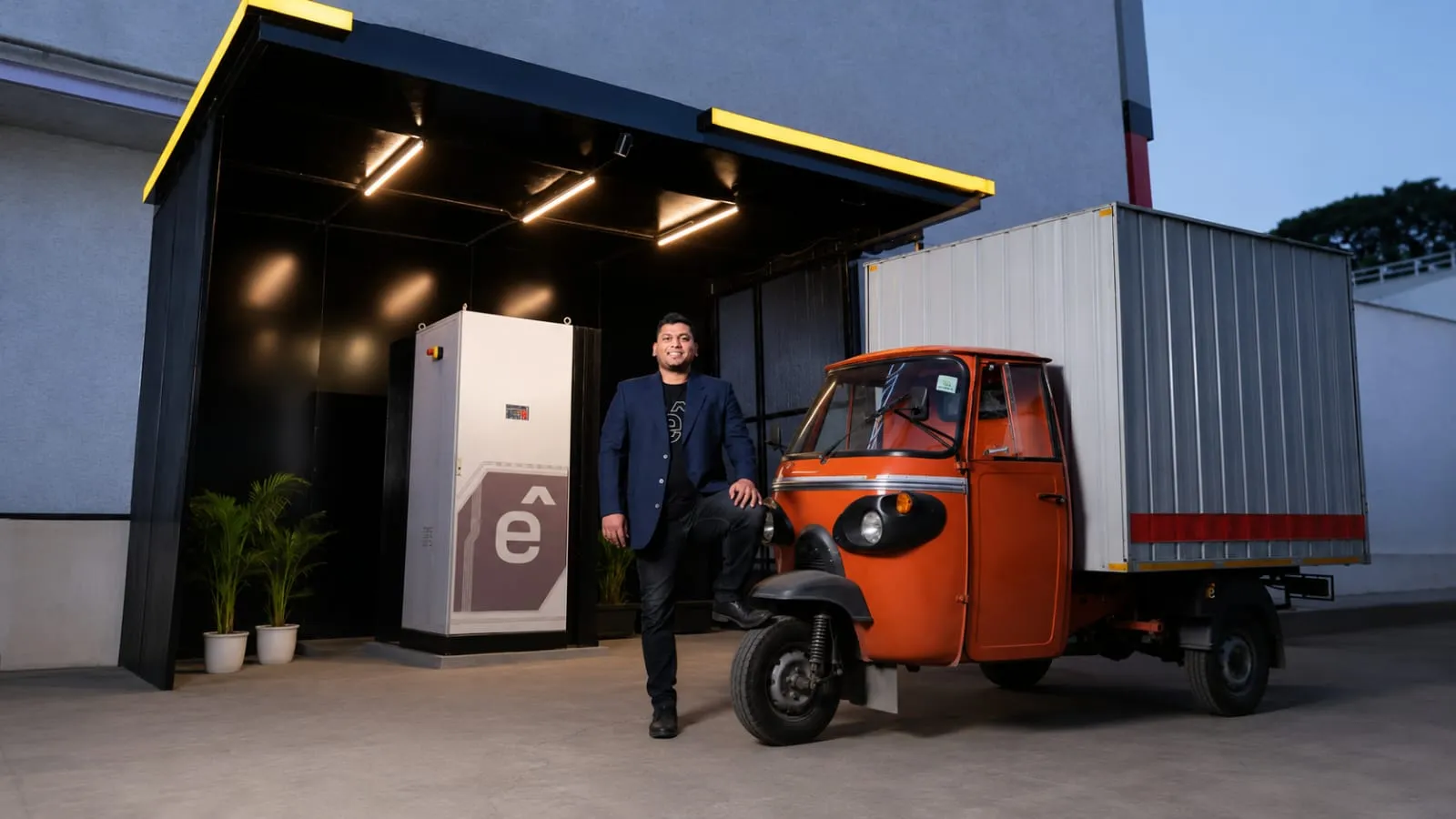
The Startup That Solved India's Biggest EV Problem Just Got ₹200 Crore to Prove It
There is one question that every commercial fleet operator in India asks before switching to electric vehicles. It's not about the price of the vehicle. It's not about government subsidies. It's this: how long will my vehicle be off the road waiting to charge?
For an e-rickshaw driver, downtime is lost income. For a logistics company running delivery trucks, a four-hour charging window means missed deliveries and broken promises. For a bus operator, an overnight charge is manageable — until it isn't. The charging problem isn't just a technical inconvenience. It's the single biggest barrier standing between India's commercial transport sector and an all-electric future.
Exponent Energy was built to solve exactly that problem. And on June 10, 2026, ₹200 crore landed in their account to prove the solution works at scale.
15 Minutes. Full Charge. That's the Promise.
Founded in 2020 by Arun Vinayak and Sanjay Byalal in Bengaluru, Exponent Energy has developed a proprietary full-stack energy solution — combining its own battery technology and charging infrastructure — that enables compatible commercial EVs to achieve a full charge in approximately 15 minutes. Not 4 hours. Not overnight. Fifteen minutes — comparable to the time it takes to fill a tank of diesel.
That single capability changes the entire economics of commercial EV adoption. A vehicle that charges in 15 minutes can run the same utilisation schedule as a diesel vehicle. The driver doesn't lose income. The fleet operator doesn't redesign their logistics. The switch to electric becomes commercially viable rather than commercially punishing.
Tobias Jahn, Partner at Hitachi Ventures, described the investment case bluntly: Exponent sells fleet uptime and energy charging — their complete battery and charging stack is what guarantees that promise. That full-stack proprietary solution is what builds the moat, and the recurring revenue flywheel from here is what makes this a genuinely exciting EV charging investment.
The ₹200 Crore Round — Who's In and Why It Matters
The Series B2 round was co-led by 360 ONE Asset — making its first-ever investment in the EV sector — and TDK Ventures, the venture arm of Japanese electronics giant TDK, which increased its existing stake through a follow-on investment. Hitachi Ventures joined as a new investor, marking its first-ever investment in India's energy sector. Existing backers Eight Roads Ventures, Lightspeed, 3one4 Capital, and AdvantEdge VC all participated alongside YourNest — Exponent's very first institutional investor — which invested an additional $4 million through its Continuum Fund.
The presence of both Hitachi Ventures and TDK Ventures — two Japanese industrial technology giants — in the same round is particularly significant. Japan has been at the forefront of battery technology and industrial electronics for decades, and both companies have deep expertise in exactly the domains Exponent is operating in. Their backing is a technical endorsement as much as a financial one. The family office of Hero MotoCorp Chairman and CEO Pawan Munjal is also a backer — connecting India's largest two-wheeler company to the charging infrastructure that will power its electric future.
With this round, Exponent's total funding since inception reaches $65.7 million — a significant war chest for a six-year-old startup targeting a market that is only just beginning to accelerate.
More Than Just a Charger — A Full-Stack Energy Platform
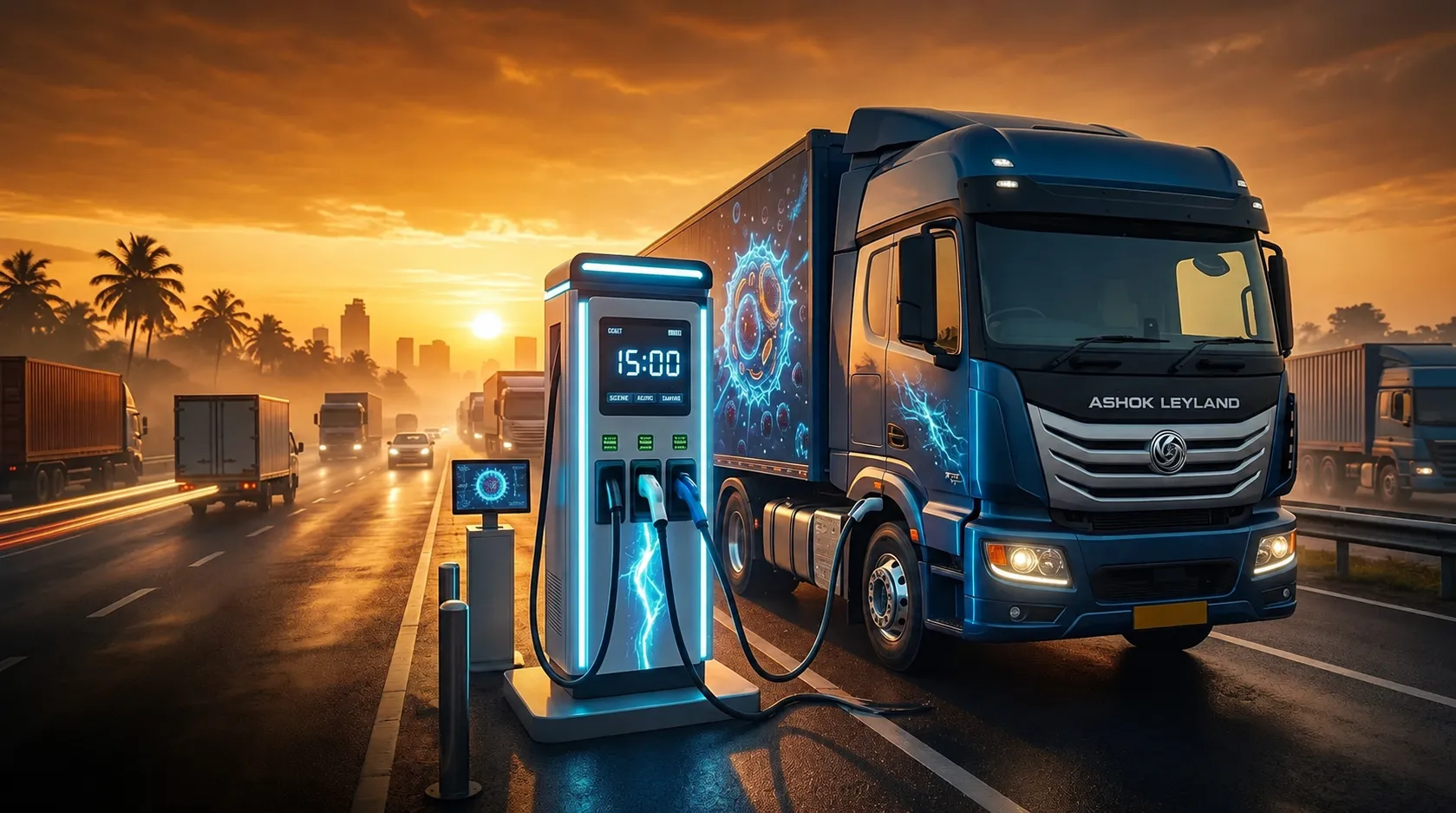
What makes Exponent genuinely different from the dozens of EV charging companies that have sprung up across India is its full-stack approach. The company isn't just building charging stations. It has built three interlocking businesses that address every barrier to commercial EV adoption simultaneously.
The first is the core energy stack — Exponent's proprietary battery and charging technology that delivers the 15-minute charge. This is the hardware foundation that everything else is built on. Because Exponent owns the battery and the charger design, it can guarantee performance in a way that companies using third-party components simply cannot.
The second is Exponent OTO — the company's mobility platform that connects fleet operators to charging infrastructure, manages scheduling, tracks vehicle performance, and provides the operational intelligence that modern fleet management requires. Think of it as the operating system that runs on top of the charging hardware.
The third is Exponent ONE — a financing and asset management arm that addresses the capital barrier. Many fleet operators who want to switch to electric can't afford to buy new electric vehicles outright. Exponent ONE provides the financing solutions that make the transition financially accessible — turning what would otherwise be a capital-intensive switch into a manageable operational decision.
Together, these three pillars address the three biggest barriers to commercial EV adoption: energy infrastructure, vehicle availability, and access to capital. It's a complete solution rather than a component of one.
Where the ₹200 Crore Goes
The fresh capital will be deployed across three areas: geographic expansion into new cities across India, entry into additional vehicle categories beyond the segments Exponent currently serves, and continued investment in research and development to push the boundaries of what ultra-fast charging can achieve.
India's commercial EV market is still in its early innings. Electric two-wheelers are crossing 8% market penetration nationally, with Kerala hitting 19%. But commercial three-wheelers, delivery trucks, buses, and heavy transport vehicles — the backbone of India's logistics economy — are still overwhelmingly diesel-powered. Exponent's 15-minute charging technology is built specifically for this larger commercial opportunity.
Ravi Jain, Investment Director at TDK Ventures, said it clearly: what began as a breakthrough 15-minute rapid-charging technology has evolved into a full-stack energy and asset management platform — and that evolution is exactly what justifies continued and deepened investment.
The Bigger Picture — India's Commercial EV Race
India has set ambitious targets for electric vehicle adoption — and the two-wheeler story is already well underway. But the commercial vehicle transition is where the real carbon reduction lives. Commercial vehicles account for a disproportionate share of India's fuel consumption and emissions. Electrifying them is harder — but the economic and environmental prize is enormous.
Exponent Energy isn't just building charging infrastructure. It's building the financial case, the operational case, and the technical case for Indian businesses to make the switch from diesel to electric — and to never look back.
Fifteen minutes to a full charge. ₹200 crore to take it everywhere. India's commercial EV revolution just got its most important infrastructure partner yet.