There are busy days on the Indian corporate calendar, and then there is August 4, 2026 — a single Tuesday on which nearly 129 separate companies, spanning telecom, energy, financial services, FMCG, e-commerce, pharmaceuticals, power and infrastructure, are scheduled to release their financial results for the quarter ended June 30, 2026. It is, by any reasonable measure, one of the most densely packed single-day reporting stretches of India's entire Q1 FY27 earnings season, itself part of a broader week that will see more than 350, and by some counts over 600, companies file results between August 3 and August 8 alone.
The roster of companies reporting today reads like a genuine cross-section of the Indian economy's largest and most closely tracked listed businesses. At the top of the list sits Bharti Airtel, India's second-largest telecom operator, whose board meets today to approve results that brokerages expect to show anywhere from 26% to 45% profit growth, alongside continued gains in its industry-leading average revenue per user. Sharing the spotlight is Oil and Natural Gas Corporation, India's largest upstream oil and gas explorer, whose Q1 FY27 numbers are expected to benefit meaningfully from crude oil prices that ran significantly higher during the April-June quarter compared with the same period last year — a dynamic that stands in direct, structural contrast to the losses posted this same reporting season by downstream oil marketing companies squeezed by those very same elevated crude costs.
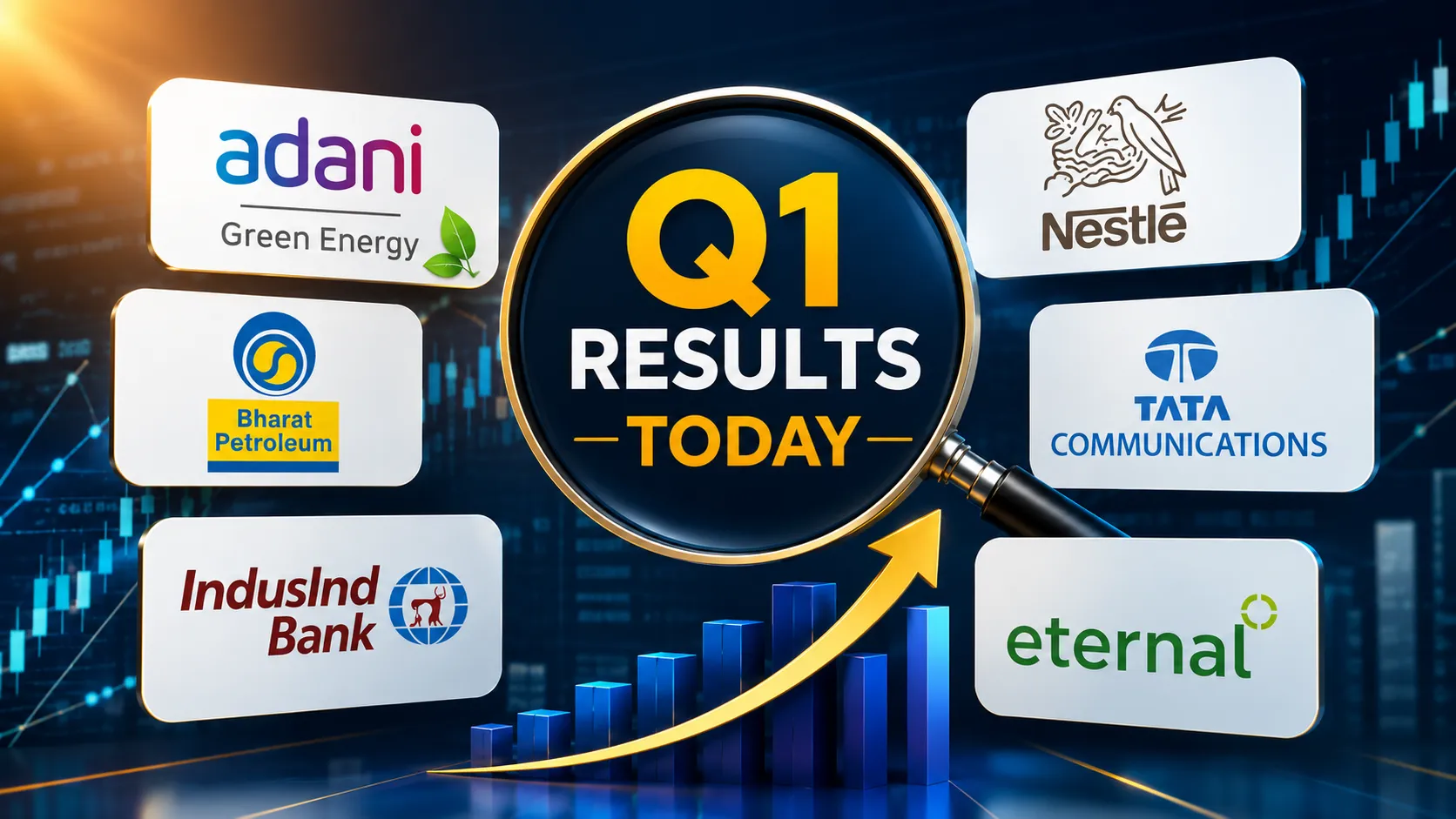
Beyond these two headline names, today's reporting roster spans a genuinely diverse set of sectors and business models. BSE Limited, the operator of India's oldest stock exchange, reports alongside Multi Commodity Exchange, the country's dominant commodity derivatives bourse — both market infrastructure businesses whose own quarterly fee income tends to track the volume and volatility of the broader trading activity happening on their platforms, making this particular reporting season, marked by a genuinely volatile few months of crude oil-driven market swings, a period of potentially elevated transaction volumes for both exchanges to report against.
FMCG major Marico rounds out today's list of headline names, having already flagged strong early guidance well ahead of its board meeting, alongside Pidilite Industries, the adhesives and specialty chemicals major best known for its ubiquitous Fevicol brand — a company whose fortunes tend to track India's broader construction, renovation and small-business activity given how deeply embedded its core adhesive products are in everyday commercial and household use across the country.
The consumer-facing e-commerce and retail space is represented today by FSN E-Commerce Ventures, the parent company of beauty and personal care platform Nykaa — a name that has, since its own headline-grabbing 2021 IPO, become something of a bellwether stock for investor sentiment toward India's broader online consumer commerce sector, with its quarterly results routinely scrutinised for signs of whether India's still-maturing digital-first beauty and fashion retail category is moving convincingly toward sustained profitability or continuing to prioritise growth at the expense of near-term margins.
Telecom investors tracking Bharti Airtel's results today will also be watching a closely related but separately listed entity: Bharti Hexacom, the regional telecom subsidiary covering specific circles within Airtel's broader national footprint, whose own results — reporting on the same day as its larger parent — offer a useful additional data point on regional-level telecom performance beneath the headline national Airtel numbers.
Power and infrastructure names on today's list include NHPC, India's largest hydropower generation company, whose results will be watched partly for updates on monsoon-driven reservoir levels and hydro generation output during a quarter that has, as this earnings season's broader coverage has repeatedly noted, been characterised by genuinely unusual and at times disruptive rainfall patterns across several of India's key river basins. RITES, the railway consultancy and infrastructure engineering PSU, also reports today, offering a further data point on the broader pace of India's rail infrastructure investment cycle — a theme that has separately been in sharp focus this week given the blockbuster IPO debut of railway electronics manufacturer MV Electrosystems.
Consumer and pharmaceutical names rounding out today's roster include United Breweries, the country's largest beer manufacturer, whose results traditionally carry seasonal significance given how closely beer consumption in India tracks the arrival of the hotter summer months that fall within this specific April-June reporting quarter; Zydus Wellness, the consumer health and wellness arm of the broader Zydus pharmaceutical group; Castrol India, the lubricants manufacturer whose results tend to offer an indirect read on vehicle usage and industrial activity levels across the country; and Alembic Pharmaceuticals, one of India's established generic drug manufacturers with meaningful exposure to both domestic and US export markets.
The sheer density of today's reporting calendar reflects a broader structural feature of how India's corporate results season has evolved: with SEBI listing regulations requiring companies to disclose quarterly results within 45 days of quarter-end, and with the vast majority of India's listed companies following the standard April-March fiscal year, the weeks immediately following each quarter's close inevitably compress an enormous volume of corporate disclosure into a relatively narrow reporting window — a pattern that repeats with predictable regularity every quarter, but that nonetheless tends to generate genuine scheduling collisions like today's 129-company reporting day, simply because so many companies' board meeting and audit timelines converge around similar points within that 45-day disclosure deadline.
For investors and analysts trying to actually track and digest results across such a large number of simultaneously reporting companies, today's calendar represents a genuine test of research bandwidth — brokerage teams typically divide coverage responsibilities across sector specialists precisely to handle days like this one, with telecom analysts focused on Airtel and Bharti Hexacom, energy analysts on ONGC, FMCG analysts on Marico and Pidilite, and so on, rather than any single team attempting to meaningfully cover the full breadth of today's 129-company reporting list.
Looking at the broader week within which today's reporting day sits provides useful additional context. August 3, the day immediately preceding today's marathon, saw more than 90 companies report, including DLF, Torrent Power, SBI Funds Management and IREDA — several of which have already generated significant standalone coverage given the specific, often company-specific stories embedded within their individual results. August 5, the day immediately following today, is scheduled to bring results from Power Grid Corporation of India, Cummins India, PB Fintech and more than 120 other companies, while August 6 will see approximately 124 companies report, headlined by Life Insurance Corporation of India, Trent, Britannia Industries and Hero MotoCorp — meaning this entire first full week of August effectively functions as the single most information-dense stretch of India's corporate reporting calendar for the whole of FY27's opening quarter.
That density carries real implications for how markets process and react to individual company results. On a day when 129 companies report simultaneously, even a company posting genuinely exceptional results may find its stock price movement somewhat muted simply because investor and media attention is being pulled in dozens of different directions at once — a dynamic that stands in sharp contrast to quieter reporting days earlier or later in the broader results season, when an individual company's numbers might command outsized, undivided market attention purely by virtue of having the reporting calendar largely to itself.
For retail investors specifically, navigating a reporting day of this scale typically means relying heavily on curated summary coverage — the kind of consolidated stocks-to-watch roundups that financial news outlets specifically compile on days like today — rather than attempting to independently track primary company disclosures across the full breadth of today's reporting list. That reliance on curated intermediary coverage is itself a structural feature of how India's retail investing ecosystem has evolved to cope with an earnings calendar that, particularly during the first week of August each year, routinely compresses more corporate news than any individual investor could realistically absorb directly from primary sources alone.
As markets digest today's flood of results over the coming days, the specific standout stories — whether Bharti Airtel's profit growth lands closer to the bullish or conservative end of brokerage estimates, whether ONGC's upstream results validate the sector-wide split analysts have been forecasting against downstream oil marketing companies' losses, or whether any of today's less headline-grabbing names deliver a genuine earnings surprise in either direction — will likely emerge only gradually, as analyst notes and follow-up coverage sift through today's genuinely overwhelming volume of simultaneous corporate disclosure.
The sectoral spread visible across today's reporting list also offers a useful snapshot of just how broad and interconnected India's listed corporate universe has become. A single day's results can move markets in seemingly unrelated sectors simultaneously — strong telecom numbers from Bharti Airtel might lift sentiment across the broader Nifty even as energy investors are separately parsing ONGC's upstream performance against the same day's downstream oil marketing company weakness, while FMCG investors focus on Marico's volume recovery story entirely independent of either the telecom or energy-sector news flow unfolding on the very same trading day.
For financial journalists and research teams covering the Indian market, days like today also represent a genuine test of editorial triage: with dozens of legitimately newsworthy corporate results competing for attention within a single 24-hour news cycle, decisions about which specific results warrant standalone coverage versus a brief mention within a broader roundup inevitably shape which parts of today's corporate story reach the widest audience, and which remain confined to more specialist, sector-focused coverage read primarily by institutional investors and dedicated sector analysts rather than the broader investing public.

The historical pattern of India's Q1 reporting season also offers a useful frame for understanding why this particular week has become so uniquely compressed. Unlike some global markets where quarterly reporting is spread more evenly across a longer window, India's SEBI-mandated 45-day disclosure deadline, combined with the overwhelming majority of listed companies sharing an identical April-March fiscal year, creates a structural incentive for boards to schedule their results-approving meetings within a relatively narrow band of dates clustered toward the back half of that 45-day window — producing precisely the kind of reporting-day pile-up seen today, year after year, with only modest variation in exactly which specific companies land on which specific day from one reporting season to the next.
By the time the market closes today and the dust settles on this particular 129-company reporting marathon, the real work for analysts, journalists and investors alike will only just be beginning: cross-referencing today's results against brokerage estimates, updating financial models, and beginning to build the sector-by-sector narrative that will define how this entire Q1 FY27 earnings season is ultimately remembered — a process that, given the sheer volume of information generated on days like today, will likely continue unfolding for days, if not weeks, after the last of today's 129 companies has filed its final regulatory disclosure.
Tomorrow's calendar offers little respite, with more than 120 additional companies scheduled to report on August 5 alone — a reminder that today's marathon, however dense, is simply one particularly crowded leg within a broader, week-long sprint that will not meaningfully ease until the final stragglers of this reporting season file their own results well into the second half of August.
For long-term investors, the practical takeaway from a day as densely packed as this one is less about trying to absorb every single result in real time, and more about identifying which specific companies within one's own portfolio are reporting, and focusing analytical energy there — a discipline that becomes increasingly important precisely because days like today make it genuinely impossible for any individual investor, however diligent, to meaningfully process the full breadth of corporate news generated within a single 24-hour window.
As the trading day unfolds and results continue rolling in through the afternoon and evening, one thing is already certain: by tomorrow morning, today's 129-company marathon will simply be old news, replaced by an entirely fresh wave of disclosures from the more than 120 companies scheduled to report on August 5 — the relentless, compressed rhythm of India's Q1 earnings season showing no signs of slowing down even as this single, remarkably crowded Tuesday draws to a close.
This report is based on the Q1 FY27 earnings calendar compiled by Upstox, Goodreturns, Kotak Neo and S P Tulsian, tracking company reporting schedules for the week of August 3-8, 2026.