The World Just Made Its Biggest Bet Yet on India's Green Hydrogen Dream
For years, green hydrogen has occupied a curious space in India's energy conversation — universally celebrated as transformative, widely discussed in policy circles, and yet stubbornly slow to attract the kind of institutional capital that turns ambition into infrastructure. That chapter may have just closed.
On June 5, 2026, Hygenco Green Energies announced the signing of definitive agreements for a $105 million equity investment — co-led by three of the world's most credible institutional investors: the International Finance Corporation, Siemens Financial Services, and the Fullerton Carbon Action Fund. All three are making their first direct green hydrogen investment in India through this deal. That's not a coincidence. That's a signal.
Who Is Hygenco — And Why Does This Deal Matter?
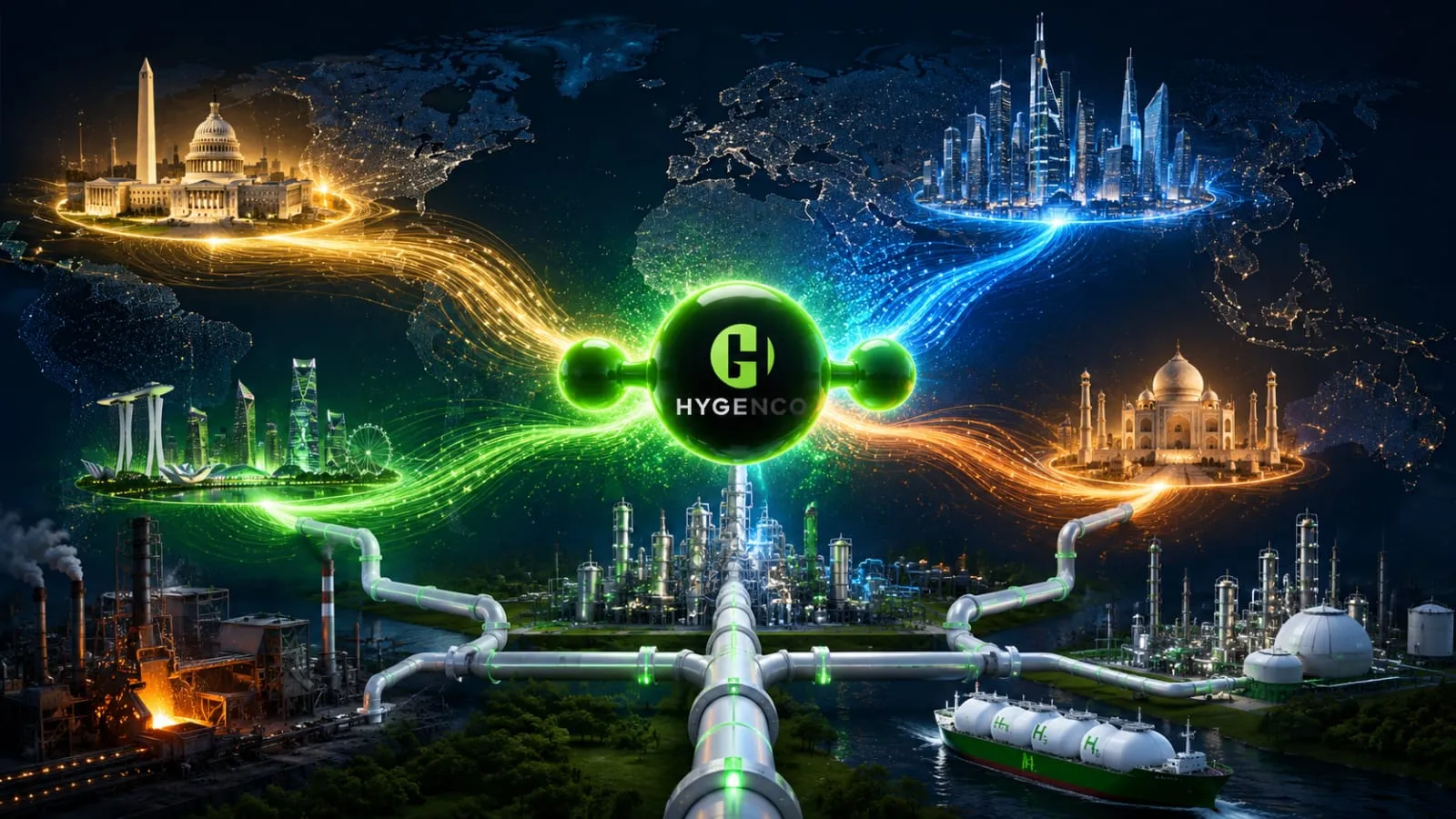
Hygenco Green Energies is India's leading green hydrogen solutions platform — a company that doesn't just talk about clean energy but actually designs, engineers, builds, operates, and delivers commercially viable green hydrogen at scale. That last word — commercially — is what separates Hygenco from the dozens of hydrogen startups that have raised money on a concept but never shipped a molecule.
Founded by Amit Bansal and his co-founders, Hygenco currently operates two commercial green hydrogen plants in India — real, functioning facilities producing zero-emission green molecules for industrial customers. That operational track record is exactly what attracted this calibre of investor. Bansal put it plainly at the announcement: this investment underscores investor confidence in Hygenco's execution capabilities and its ability to scale commercial green hydrogen solutions.
The company is also a recipient of the Production Linked Incentive under the government's Strategic Interventions for Green Hydrogen Transition — known as the SIGHT programme — meaning it sits squarely within India's national green hydrogen strategy and carries the government's formal backing alongside private capital.
Breaking Down the $105 Million
The investment structure is carefully layered — and that layering tells an important story about how serious investors de-risk frontier clean energy bets.
IFC — the World Bank Group's private sector investment arm — is investing $50 million in total. This includes $25 million from its own account plus $20 million from the Clean Technology Fund, part of the Climate Investment Funds, and $5 million from the Frontier Opportunities Fund backed by the German government. Siemens Financial Services, the B2B financing arm of Siemens AG, is contributing $25 million. And Fullerton Carbon Action Fund — Singapore's climate-focused institutional vehicle — is committing up to $30 million.
That's capital from the World Bank Group. Capital from one of the world's largest industrial engineering conglomerates. Capital from a Singapore-based Asian institutional investor with deep climate conviction. And blended finance from the German government's climate fund. Four different pools of capital, four different geographies, one Indian green hydrogen company at the center.
Imad N Fakhoury, Regional Director at IFC, described the ambition clearly: this partnership aims to scale a commercially viable model, pioneer Hydrogen-as-a-Service, and expand the supply of affordable and reliable green hydrogen solutions — while signalling confidence in the sector's long-term growth potential.
What Happens Next
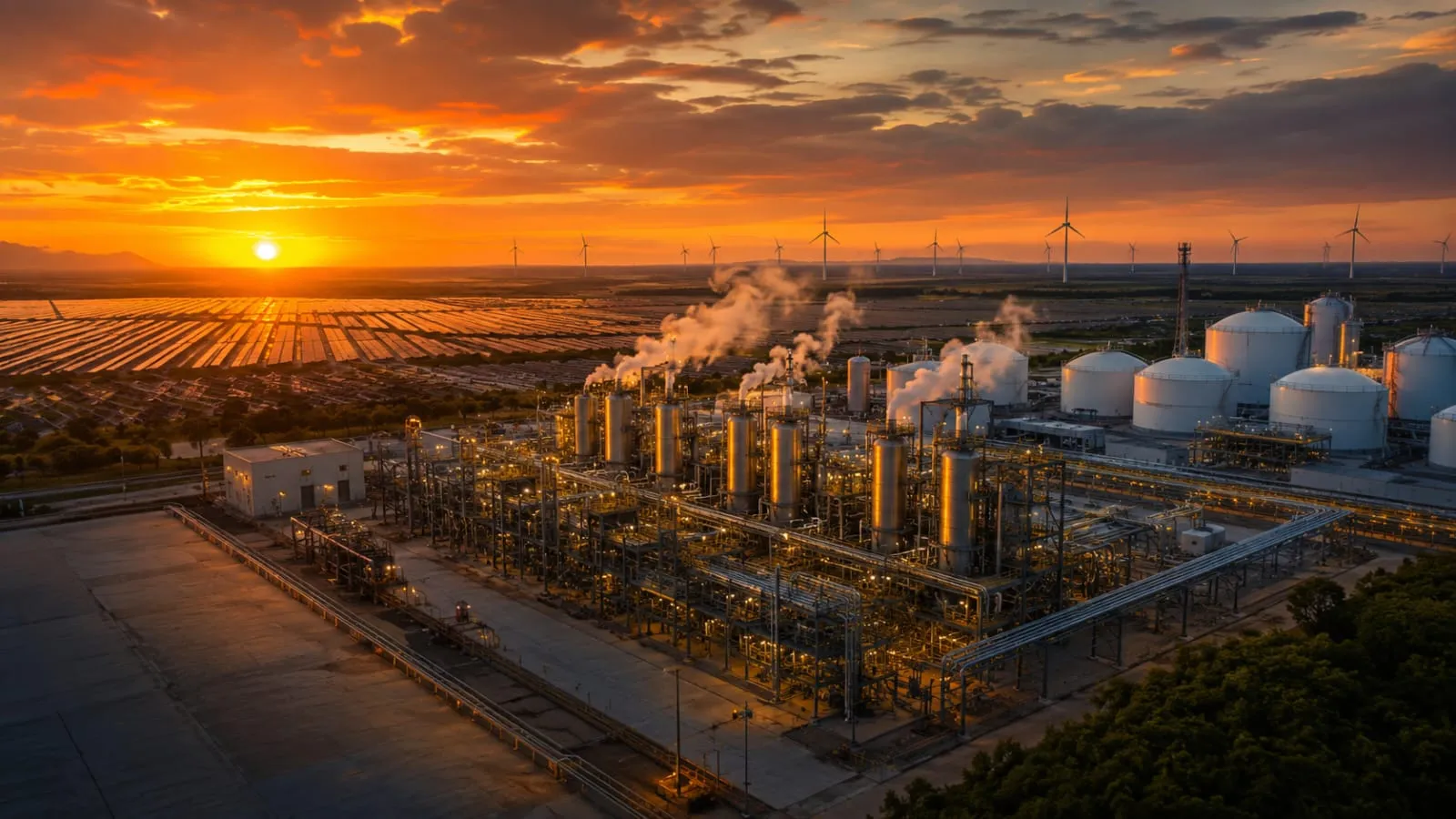
The $105 million will fuel two parallel tracks of growth. First, at the holding company level, the capital supports the development of multiple new commercially attractive green hydrogen projects across India. Three to four new plants are set to begin construction in 2026-27 — expanding Hygenco's footprint well beyond its current two operational facilities.
Second — and perhaps more significantly — the investment at the holding company level is designed to catalyse additional private sector capital at the individual project level. This is the classic infrastructure investment playbook: anchor the platform with credible institutional equity at the top, then use that credibility to attract project-specific financing for each facility. If it works as designed, the $105 million becomes a multiplier — unlocking two to three times that amount in total project investment.
The end goal is to supply zero-emission green molecules to India's hardest-to-decarbonise industrial sectors — refining, fertilizers, steel manufacturing, chemicals, and heavy transportation. These are industries that cannot simply switch to solar panels or electric motors. They need a clean fuel that can replace fossil fuels at high temperatures and in chemical processes. Green hydrogen is the only credible answer — and green ammonia, one of its key derivatives, is increasingly central to the global fertilizer supply chain.
India's National Green Hydrogen Mission — And Hygenco's Role In It
India's National Green Hydrogen Mission, launched in January 2023, targets the production of 5 million metric tonnes of green hydrogen annually by 2030 — enough to power a significant portion of India's industrial energy needs with zero-emission fuel. The government has committed over ₹19,700 crore to this mission, including the SIGHT programme that Hygenco is already a beneficiary of.
But government intent alone doesn't build hydrogen plants. What turns policy into infrastructure is private capital showing up — and the $105 million Hygenco just closed is the clearest signal yet that global institutional investors believe India's green hydrogen story is real, executable, and commercially viable right now.
The fact that IFC, Siemens, and Fullerton are all making their first direct India green hydrogen investment through this deal adds another dimension to its significance. First-mover institutional capital in a frontier sector doesn't just fund one company — it opens the door for every other investor sitting on the sidelines, waiting for someone credible to go first.
The Bigger Picture — India's Clean Energy Race
India has committed to achieving net zero emissions by 2070 and to having 500 GW of renewable energy capacity by 2030. Green hydrogen is the bridge between renewable electricity and industrial decarbonisation — and India, with its abundant solar resources, large industrial base, and growing renewable energy infrastructure, is positioned to become one of the world's most competitive green hydrogen producers.
The global green hydrogen market is projected to reach $150 billion by 2030. India wants a significant share of that — not just for domestic decarbonisation but as a green hydrogen and green ammonia exporter to energy-hungry markets in Europe, Japan, and South Korea that are desperately seeking clean fuel alternatives.
Hygenco's $105 million raise is one chapter in that much larger story. But it's an important one — because it proves that commercial green hydrogen in India isn't a future aspiration anymore.