
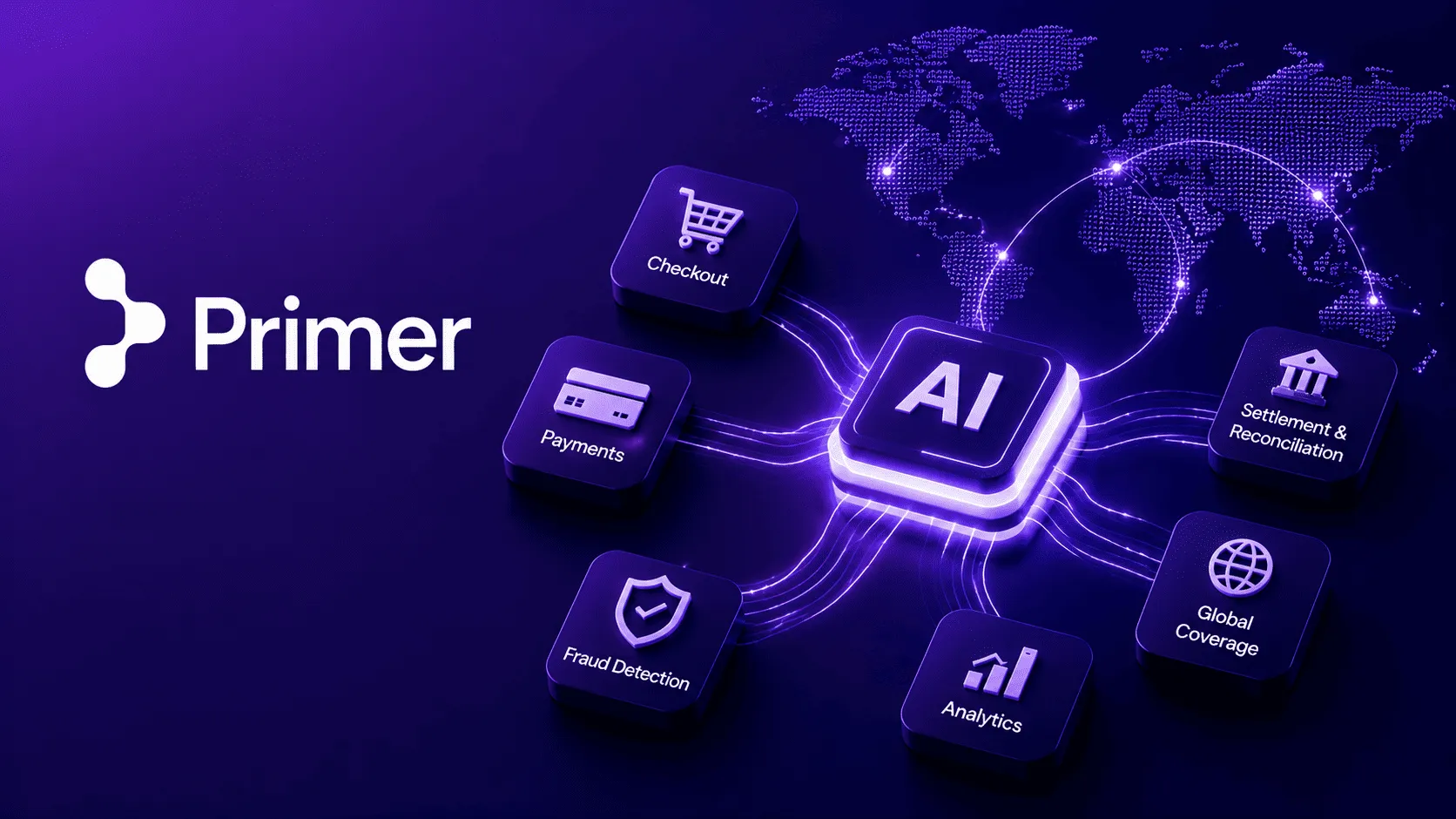
Primer's $100 million Series C funding highlights growing investor confidence in AI-powered infrastructure designed to optimize global payments and digital commerce.
<h3 style="line-height: 1.38;"><span style="color: rgb(0, 0, 0); font-family: Arial, sans-serif;"><strong>Consumers See A Payment Completed In Seconds. Behind The Scenes, A Growing Network Of AI Systems Is Deciding How That Payment Gets Processed. Investors Believe That Layer Could Become One Of The Most Valuable Parts Of Commerce.</strong></span></h3><p style="line-height: 1.38;"><span style="color: rgb(0, 0, 0); font-family: Arial, sans-serif;">For most consumers, payments feel remarkably simple.</span></p><p style="line-height: 1.38;"><span style="color: rgb(0, 0, 0); font-family: Arial, sans-serif;">A customer enters card details, taps a smartphone or clicks a checkout button, and the transaction is completed within moments. The experience appears seamless because years of technological innovation have removed much of the friction that once accompanied digital payments. Yet behind every successful transaction lies an extraordinarily complex system involving banks, payment processors, fraud-prevention tools, compliance requirements, currency conversions and dozens of interconnected financial networks. As commerce becomes increasingly global, managing that complexity has become one of the biggest challenges facing businesses.</span></p><p style="line-height: 1.38;"><span style="color: rgb(0, 0, 0); font-family: Arial, sans-serif;">The problem is growing rather than shrinking.</span></p><p style="line-height: 1.38;"><span style="color: rgb(0, 0, 0); font-family: Arial, sans-serif;">Modern companies often sell products across multiple countries, support numerous payment methods and operate through various digital channels simultaneously. A payment that succeeds in one market may fail in another. Different providers perform better under different circumstances. Fraud risks vary by geography and transaction type. Businesses therefore face a constant challenge: determining how to route payments in ways that maximize success rates while minimizing costs and risk.</span></p><p style="line-height: 1.38;"><span style="color: rgb(0, 0, 0); font-family: Arial, sans-serif;">That is where Primer believes artificial intelligence can play a transformative role.</span></p><p style="line-height: 1.38;"><span style="color: rgb(0, 0, 0); font-family: Arial, sans-serif;">The London-based payments infrastructure company has raised $100 million in Series C funding to accelerate its AI-powered commerce platform. The company helps businesses orchestrate payments across multiple providers rather than relying on a single processor. While the funding round is significant in its own right, the larger story is that investors increasingly believe the future of commerce will depend not only on payment networks but also on the intelligence managing them.</span></p><h2 style="line-height: 1.38;"><span style="color: rgb(0, 0, 0); font-family: Arial, sans-serif;"><strong>Payments Are Becoming An Infrastructure Business</strong></span></h2><p style="line-height: 1.38;"><span style="color: rgb(0, 0, 0); font-family: Arial, sans-serif;">For years, fintech's most visible success stories focused on consumer-facing products.</span></p><p style="line-height: 1.38;"><span style="color: rgb(0, 0, 0); font-family: Arial, sans-serif;">Digital wallets, payment applications and buy-now-pay-later services captured attention because they directly influenced how consumers spent money. These innovations changed behavior and introduced millions of people to new financial experiences. Yet as digital commerce matured, many investors began looking deeper into the infrastructure supporting those transactions.</span></p><p style="line-height: 1.38;"><span style="color: rgb(0, 0, 0); font-family: Arial, sans-serif;">The reason is simple.</span></p><p style="line-height: 1.38;"><span style="color: rgb(0, 0, 0); font-family: Arial, sans-serif;">Every payment involves multiple layers of technology working together. Merchants require connections to processors. Processors require relationships with financial institutions. Fraud-prevention systems monitor activity. Compliance tools ensure regulatory requirements are met. The complexity increases dramatically as businesses expand internationally. What appears to be a simple transaction often relies on a sophisticated network of services operating behind the scenes.</span></p><p style="line-height: 1.38;"><span style="color: rgb(0, 0, 0); font-family: Arial, sans-serif;">Companies like Primer sit at the center of this ecosystem.Rather than competing to become another payment processor, they focus on helping businesses manage and optimize relationships across multiple providers. In many ways, they function as operating systems for payments, enabling companies to route transactions more efficiently while adapting to changing market conditions.</span></p><h2 style="line-height: 1.38;"><span style="color: rgb(0, 0, 0); font-family: Arial, sans-serif;"><strong>Artificial Intelligence Is Moving Into Financial Infrastructure</strong></span></h2><p style="line-height: 1.38;"><span style="color: rgb(0, 0, 0); font-family: Arial, sans-serif;">One reason the funding round has attracted attention is the growing role of AI within financial systems.</span></p><p style="line-height: 1.38;"><span style="color: rgb(0, 0, 0); font-family: Arial, sans-serif;">Much of the public conversation around artificial intelligence revolves around chatbots, image generation and productivity software. However, some of the most commercially significant applications are emerging within infrastructure layers that consumers rarely see. Financial services, in particular, generate enormous amounts of data that can be analyzed to improve decision-making.</span></p><p style="line-height: 1.38;"><span style="color: rgb(0, 0, 0); font-family: Arial, sans-serif;">Payments are a natural fit for this approach.</span></p><p style="line-height: 1.38;"><span style="color: rgb(0, 0, 0); font-family: Arial, sans-serif;">Every transaction creates information regarding geography, customer behavior, payment methods, fraud patterns and processing performance. AI systems can evaluate these variables in real time and determine how transactions should be routed for optimal outcomes. Instead of relying on static rules, businesses can increasingly depend on adaptive systems capable of learning and improving continuously.</span></p><p style="line-height: 1.38;"><span style="color: rgb(0, 0, 0); font-family: Arial, sans-serif;">This creates substantial value.Even small improvements in payment success rates can generate significant revenue gains for large merchants. Reducing failed transactions, minimizing fraud and lowering processing costs all contribute directly to profitability. Investors therefore see AI not as a feature but as a core component of future payment infrastructure.</span></p><h2 style="line-height: 1.38;"><span style="color: rgb(0, 0, 0); font-family: Arial, sans-serif;"><strong>Global Commerce Is Becoming More Complex</strong></span></h2><img src="/api/files/1780740635343-3e12cf255ebdd7887888dc6c.webp" alt="image.png"><p style="line-height: 1.38;"><span style="color: rgb(0, 0, 0); font-family: Arial, sans-serif;">The rise of companies like Primer reflects broader changes in international commerce.</span></p><p style="line-height: 1.38;"><span style="color: rgb(0, 0, 0); font-family: Arial, sans-serif;">Selling globally has become easier than ever before. A business can reach customers across dozens of countries through digital channels without establishing physical operations in every market. While this creates opportunities, it also introduces operational complexity. Payment preferences differ widely between regions, regulatory requirements vary and infrastructure performance is rarely consistent across geographies.</span></p><p style="line-height: 1.38;"><span style="color: rgb(0, 0, 0); font-family: Arial, sans-serif;">Managing these differences has become increasingly important.</span></p><p style="line-height: 1.38;"><span style="color: rgb(0, 0, 0); font-family: Arial, sans-serif;">Consumers expect seamless checkout experiences regardless of where they live. Businesses that fail to provide those experiences risk losing customers during the payment process itself. As a result, merchants are investing heavily in systems capable of improving transaction reliability and performance.</span></p><p style="line-height: 1.38;"><span style="color: rgb(0, 0, 0); font-family: Arial, sans-serif;">This is the market Primer is targeting.The company is effectively betting that the future of commerce will require greater intelligence at the infrastructure level. Payments are no longer simply about processing transactions. They are about optimizing them continuously.</span></p><h2 style="line-height: 1.38;"><span style="color: rgb(0, 0, 0); font-family: Arial, sans-serif;"><strong>Investors Are Funding The Invisible Layer</strong></span></h2><p style="line-height: 1.38;"><span style="color: rgb(0, 0, 0); font-family: Arial, sans-serif;">One of the most interesting aspects of the funding round is that it highlights a shift in venture-capital priorities.</span></p><p style="line-height: 1.38;"><span style="color: rgb(0, 0, 0); font-family: Arial, sans-serif;">For years, investors focused heavily on applications visible to consumers. Increasingly, some of the largest opportunities appear to be emerging within the invisible layers supporting those applications. Infrastructure businesses may attract less public attention, but they often become deeply embedded within the operations of thousands of customers.</span></p><p style="line-height: 1.38;"><span style="color: rgb(0, 0, 0); font-family: Arial, sans-serif;">This creates attractive economics.</span></p><p style="line-height: 1.38;"><span style="color: rgb(0, 0, 0); font-family: Arial, sans-serif;">Once integrated, infrastructure platforms can become difficult to replace because they sit at the center of critical business processes. Customer relationships tend to be long-term, and revenue often grows alongside the success of the businesses using the platform. Investors frequently value these characteristics because they create predictable and scalable business models.</span></p><p style="line-height: 1.38;"><span style="color: rgb(0, 0, 0); font-family: Arial, sans-serif;">Primer fits neatly into this category.The company is building tools that most consumers will never notice but that businesses may increasingly depend upon as digital commerce continues expanding.</span></p><h2 style="line-height: 1.38;"><span style="color: rgb(0, 0, 0); font-family: Arial, sans-serif;"><strong>The Next Fintech Winners May Operate Behind The Scenes</strong></span></h2><p style="line-height: 1.38;"><span style="color: rgb(0, 0, 0); font-family: Arial, sans-serif;">The funding also reflects how fintech itself is evolving.</span></p><p style="line-height: 1.38;"><span style="color: rgb(0, 0, 0); font-family: Arial, sans-serif;">The industry's first major wave focused on digitizing financial experiences. The next wave appears increasingly focused on optimization. As digital systems become ubiquitous, the competitive advantage shifts from enabling transactions to improving how those transactions occur. Businesses are looking for better performance, greater flexibility and more intelligence across financial operations.</span></p><p style="line-height: 1.38;"><span style="color: rgb(0, 0, 0); font-family: Arial, sans-serif;">Artificial intelligence is accelerating this trend.</span></p><p style="line-height: 1.38;"><span style="color: rgb(0, 0, 0); font-family: Arial, sans-serif;">Systems capable of making real-time decisions can improve efficiency in ways that manual processes cannot easily match. Payments represent just one example. Similar developments are occurring across lending, fraud detection, compliance and treasury management. The common theme is that infrastructure is becoming smarter.</span></p><p style="line-height: 1.38;"><span style="color: rgb(0, 0, 0); font-family: Arial, sans-serif;">Investors are positioning themselves accordingly.Rather than chasing every consumer-facing fintech trend, many are backing the platforms helping financial systems operate more effectively.</span></p><h2 style="line-height: 1.38;"><span style="color: rgb(0, 0, 0); font-family: Arial, sans-serif;"><strong>The Bigger Story Is About Commerce Intelligence</strong></span></h2><p style="line-height: 1.38;"><span style="color: rgb(0, 0, 0); font-family: Arial, sans-serif;">Viewed narrowly, Primer's Series C funding is a startup financing announcement.</span></p><p style="line-height: 1.38;"><span style="color: rgb(0, 0, 0); font-family: Arial, sans-serif;">Viewed more broadly, it represents a growing belief that the future of commerce will be shaped by intelligence embedded within infrastructure. As businesses expand globally and transaction volumes increase, managing complexity becomes a competitive advantage. Companies capable of simplifying that complexity through software and AI may occupy increasingly important positions within the digital economy.</span></p><p style="line-height: 1.38;"><span style="color: rgb(0, 0, 0); font-family: Arial, sans-serif;">That is ultimately what investors appear to be funding.</span></p><p style="line-height: 1.38;"><span style="color: rgb(0, 0, 0); font-family: Arial, sans-serif;">They are not simply backing another payments company. They are backing the idea that commerce itself is becoming more automated, more data-driven and more dependent on intelligent infrastructure. Payments may be the first layer experiencing this transformation, but they are unlikely to be the last.Because in the future, the most valuable part of a transaction may not be the payment </span><a target="_blank" rel="noopener noreferrer ugc" href="http://itself.It"><span style="color: rgb(0, 0, 0); font-family: Arial, sans-serif;">itself.It</span></a><span style="color: rgb(0, 0, 0); font-family: Arial, sans-serif;"> may be the intelligence deciding how that payment happens.</span></p>
“We are witnessing the birth of ‘Statist Silicon’—where the location of a transistor’s manufacture is as important as its clock speed.”
The Rise of Regional Fabric
