
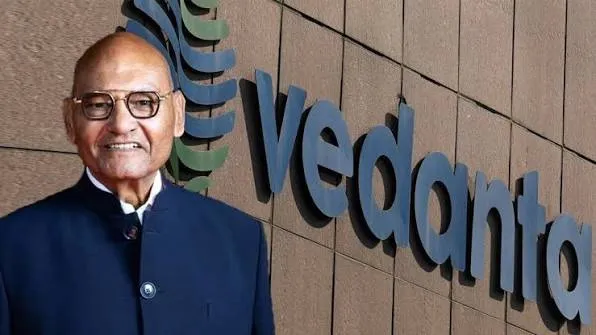
Fresh off splitting itself into five independent listed companies, the Vedanta group is preparing to plough $20 billion into India over the next three to five years, betting heavily on execution,...
<p>Few business stories in India this year carry quite the sweep and ambition of the one now unfolding at Vedanta Resources, where chairman Anil Agarwal is preparing to stake what may be the single largest bet of his four-decade career in Indian industry: an investment of roughly $20 billion in the country over the next three to five years, financed largely through the group's own internal cash generation rather than fresh external borrowing. It is a wager that, in equal measure, hinges on flawless execution, the direction of global commodity cycles, and a conviction — one Agarwal has voiced repeatedly and publicly — that India's appetite for natural resources over the coming decade will only deepen as the economy continues its rapid industrial and infrastructure expansion.</p><p>The context in which this investment ambition is being unveiled matters enormously. Vedanta has just completed one of the most significant corporate restructurings in recent Indian industrial history, reshaping itself from a single, sprawling diversified conglomerate into five independent, separately listed companies, each focused on a distinct vertical within the broader natural resources and industrial value chain. The logic behind such demergers is well established in corporate finance theory, even if it is notoriously difficult to execute cleanly in practice: conglomerates trading as a single entity often suffer from what analysts call a "conglomerate discount," where the market values the sum of a diversified company's parts at less than those parts would be worth if allowed to trade independently, each attracting investors and valuation multiples specific to its own sector, growth profile, and risk characteristics, unclouded by the performance or perception of unrelated businesses bundled into the same corporate shell.</p><p>For Vedanta, the bet is that splitting the group into focused, sector-specific listed entities — freed from having to answer for the performance of unrelated businesses elsewhere in the old conglomerate structure — will unlock precisely this kind of value for shareholders, while simultaneously giving each individual business the financial flexibility, strategic focus, and direct capital markets access it needs to pursue its own growth agenda more aggressively than it could as one division among many inside a sprawling parent. It is against this newly demerged backdrop that the group's next phase of growth, anchored by the proposed $20 billion investment programme, is now being framed — not as a single conglomerate deploying capital across a scattered portfolio, but as a coordinated push across a family of now-independent, sector-focused champions, each pursuing its own capital expenditure plans within a shared strategic vision for India's resource-intensive growth story.</p><p>The scale of the number itself deserves some unpacking. Twenty billion dollars, funded substantially through internal cash generation rather than external debt, represents an enormous vote of confidence in the underlying cash-generating capacity of Vedanta's various business lines — spanning zinc, aluminium, oil and gas, power, iron ore, steel, and other core natural resource verticals — at a moment when global commodity markets have been anything but placid. Financing an investment programme of this magnitude primarily from internal accruals, rather than leaning heavily on fresh borrowing, also speaks to a deliberate strategic choice: Vedanta, whose parent entity has faced its own well-documented periods of balance sheet stress and refinancing pressure in past years, appears to be signalling a preference for a more conservative, self-funded approach to this next expansion phase, one less exposed to the vagaries of credit markets and interest rate cycles than a heavily debt-financed capital expenditure programme would be.</p><table class="tt-table" style="min-width: 25px;"><colgroup><col style="min-width: 25px;"></colgroup><tbody><tr><td colspan="1" rowspan="1"><p></p><img src="/api/files/1784982161245-33349ea859b368b0eedaee72.webp" alt="image.png"></td></tr></tbody></table><p>That said, "hinges on execution, commodity cycles and India's long-term demand for natural resources" is not merely a rhetorical flourish describing the investment thesis — it is, quite literally, an honest acknowledgment of the principal risks embedded in a plan of this scale. Execution risk in large-scale industrial capital expenditure is rarely trivial anywhere in the world, and India adds its own particular complexities: land acquisition processes that can stretch on for years, environmental and forest clearance procedures that require careful navigation across multiple layers of central and state regulatory authority, and the logistical challenge of coordinating large workforces and complex supply chains across projects that may span several states and multiple business verticals simultaneously. Commodity cycle risk is equally real and, by its nature, largely outside any single company's control: zinc, aluminium, and oil prices are all subject to global supply and demand dynamics, geopolitical disruptions, and macroeconomic cycles that can swing capital-intensive projects from highly profitable to marginal, or worse, within the span of a single commodity price cycle — a lesson the natural resources sector globally has learned and relearned many times over past decades.</p><p>The India demand thesis underpinning the investment, however, is where Vedanta's leadership appears most confident, and arguably with good reason. India's infrastructure build-out — encompassing everything from renewable energy capacity additions and grid modernisation to highways, railways, ports, and urban housing — continues to run at a pace that requires enormous, sustained volumes of base metals, energy, and industrial inputs, categories squarely within Vedanta's core areas of operation. The government's own stated ambitions around expanding domestic manufacturing capacity, reducing import dependence in strategic sectors, and accelerating the energy transition all point toward a multi-year, potentially multi-decade runway of elevated domestic demand for exactly the kinds of resources Vedanta produces, from zinc used in galvanising steel for construction and infrastructure, to aluminium increasingly favoured in lightweight vehicle manufacturing and electrical applications, to the oil and gas that, notwithstanding the broader energy transition narrative, remains foundational to India's current energy mix and is likely to remain so for years to come even as renewable capacity scales up in parallel.</p><p>Industry observers examining the investment programme have pointed to several specific areas likely to absorb significant portions of the announced capital. Expansion of existing zinc and aluminium smelting and refining capacity, given India's structural dependence on imports for a meaningful share of its aluminium consumption despite being a major producer, represents one obvious avenue, particularly as downstream demand from the automotive, construction, and packaging sectors continues to grow. Oil and gas exploration and production investment, aimed at squeezing incremental output from existing fields and developing new ones, represents another likely area of focus, particularly given India's persistent and strategically significant dependence on crude oil imports — a dependence that has been thrown into sharp relief this year by the extreme volatility in global oil prices driven by escalating tensions in West Asia, underscoring the strategic as well as commercial value of any incremental increase in domestic production capacity.</p><p>Power generation, including both conventional thermal capacity to meet India's still-substantial baseload electricity demand and a growing allocation toward renewable energy generation, is widely expected to feature prominently in the investment plan as well, reflecting both the group's existing exposure to the power sector and the broader industry-wide recognition that India's electricity demand growth, driven by rising per-capita consumption, industrial expansion, and the electrification of transport, shows little sign of slowing in the years ahead. Steel and iron ore, another core vertical within the demerged group structure, stands to benefit from the same infrastructure and construction-driven demand tailwinds supporting the broader investment thesis, particularly as India continues to position itself as one of the world's fastest-growing steel consumption markets.</p><table class="tt-table" style="min-width: 25px;"><colgroup><col style="min-width: 25px;"></colgroup><tbody><tr><td colspan="1" rowspan="1"><img src="/api/files/1784982338862-6ee3e6a4018b7623f029952b.webp" alt="12q.jpg"></td></tr></tbody></table><p>The demerger itself provides useful context for understanding how this capital is likely to be allocated and governed going forward. With Vedanta now organised as five independent, separately listed entities rather than a single conglomerate, each business unit is expected to pursue its own capital expenditure priorities, financing strategy, and investor communication independently, subject to its own board oversight and its own set of institutional and public shareholders, rather than having capital allocation decisions made centrally within a single diversified holding structure. This decentralised approach carries its own advantages and risks: on one hand, it should, in theory, allow capital to flow more efficiently toward the highest-return opportunities within each specific business vertical, unclouded by cross-subsidisation decisions that conglomerate structures sometimes impose across unrelated business lines; on the other hand, it places a greater premium on each individual demerged entity's management team executing well independently, without the implicit backstop or cross-support that a unified conglomerate balance sheet might have historically provided during periods of stress in any single business line.</p><p>Market reaction and analyst commentary around the investment announcement have been broadly, if cautiously, constructive. The prevailing view among analysts covering the group is that the demerger, if successfully executed and followed through with disciplined, well-targeted capital deployment of the kind now being outlined, could meaningfully re-rate how the market values Vedanta's various businesses, potentially narrowing or eliminating the conglomerate discount that analysts have long argued weighed on the parent entity's valuation relative to the sum of its individually assessed business segments. That said, the same analysts have also been careful to flag that a $20 billion investment programme of this scale and complexity will take years to fully play out, and that intermediate milestones — project approvals, construction timelines, commodity price realisations, and the pace of internal cash generation relative to the capital expenditure schedule — will need to be watched closely to assess whether the programme is on track, rather than treating the headline $20 billion figure itself as a guaranteed or already-realised outcome.</p><p>Vedanta's broader positioning within India's evolving industrial and geopolitical context also merits attention. As global supply chains continue to be reshaped by geopolitical tensions, trade policy shifts, and a general push among major economies toward greater resource security and reduced dependence on any single supplier nation, India's own push to expand domestic natural resource production and processing capacity takes on added strategic significance beyond its purely commercial rationale. A well-capitalised, focused domestic natural resources champion — or rather, a family of them, following the demerger — investing at this scale could play a meaningful role in India's broader ambitions around resource security, import substitution in critical minerals and metals, and the kind of domestic manufacturing capacity expansion that successive Indian governments have prioritised under various industrial policy initiatives in recent years.</p><p>Financing structure aside, the choice to fund this expansion primarily through internal accruals also carries implications for how the market is likely to judge management's capital discipline in coming quarters. Analysts have noted that a self-funded expansion programme of this scale places a premium on the group's ability to sustain strong operating cash flows across its various commodity-linked businesses even through periods of cyclical price weakness, since a shortfall in internal cash generation relative to planned capital expenditure would force a choice between scaling back investment plans, drawing on debt after all, or both — each of which would carry its own set of consequences for how the market prices the demerged entities' growth prospects and balance sheet risk going forward. This makes the pace and discipline of capital deployment, rather than simply the headline $20 billion figure, the metric analysts say they will be watching most closely over the coming several years.</p><table class="tt-table" style="min-width: 25px;"><colgroup><col style="min-width: 25px;"></colgroup><tbody><tr><td colspan="1" rowspan="1"><p></p><img src="/api/files/1784982199857-c53794d07a1339127c6445fc.webp" alt="image.png"></td></tr></tbody></table><p>The timing of Vedanta's investment announcement also deserves attention against the backdrop of India Inc.'s broader capital expenditure mood this year. Business confidence surveys tracking corporate India through 2026 have painted a picture of resilient underlying fundamentals shadowed by genuine near-term caution, as companies across sectors navigate geopolitical risks, energy market volatility of the kind that has gripped markets this month, and a still-unresolved India-US trade negotiation that has left exporters and import-dependent businesses alike planning around uncertainty rather than clarity. Against that cautious backdrop, a $20 billion, multi-year commitment from one of India's most prominent industrial groups stands out as a distinctly contrarian, long-horizon bet — a signal, whether intentional or not, that at least one major Indian industrial house is choosing to look through near-term macro turbulence toward what it evidently believes is a durable, multi-decade domestic demand story for natural resources.</p><p>For Anil Agarwal personally, the $20 billion investment programme represents something of a culminating chapter in a business career defined by bold, often contrarian bets on Indian and global natural resources — from his early acquisitions that built the foundation of what would become the Vedanta group, through the complex and at times controversial history of the group's balance sheet management and corporate structure, to this latest, most ambitious restructuring and reinvestment programme yet. Whether this chapter is remembered as the moment Vedanta successfully reinvented itself into a family of focused, well-capitalised sectoral champions delivering genuine shareholder value, or as a cautionary tale about the perils of overextending an investment programme against uncertain commodity cycles, will likely become clear only gradually, as the individual pieces of this enormous capital deployment plan are executed, project by project, over the several years management itself has indicated the programme will take to fully unfold.</p>
“We are witnessing the birth of ‘Statist Silicon’—where the location of a transistor’s manufacture is as important as its clock speed.”
The Rise of Regional Fabric
