
India has 15 million gig workers – delivery partners, drivers, freelancers – who often face cash flow mismatches. They earn daily but need to pay weekly expenses: rent, school fees, medical emergencies. Traditional banks reject them because they lack steady salary slips or collateral. Credit cards are out of reach. Informal moneylenders charge 5‑10% per month, trapping workers in debt cycles. Zing, a Bengaluru fintech startup, has built a lending platform that uses real‑time earnings data from partner platforms to approve small, instant loans. The company has raised $30 million in Series B funding led by QED Investors, with participation from existing investors Accel and Y Combinator. The round values Zing at $180 million and brings total equity raised to $45 million.
Zing’s product is simple: a delivery partner logs into the Zing app, which pulls their last 30 days’ earnings from Zomato, Swiggy, Uber, Amazon Flex, or Dunzo. Based on that income, Zing offers a credit line of ₹2,000 to ₹20,000 ($24 to $240) at an interest rate of 1.5% per month (18% APR). The loan is disbursed instantly to the user’s bank account or digital wallet. Repayment is deducted automatically from future earnings, with no prepayment penalty. In its first 18 months of operation, Zing has disbursed ₹300 crore ($36 million) to 500,000 unique gig workers, with a default rate of only 2.5% – far lower than typical unsecured consumer loans (which average 5‑8%) and even lower than many credit card portfolios.
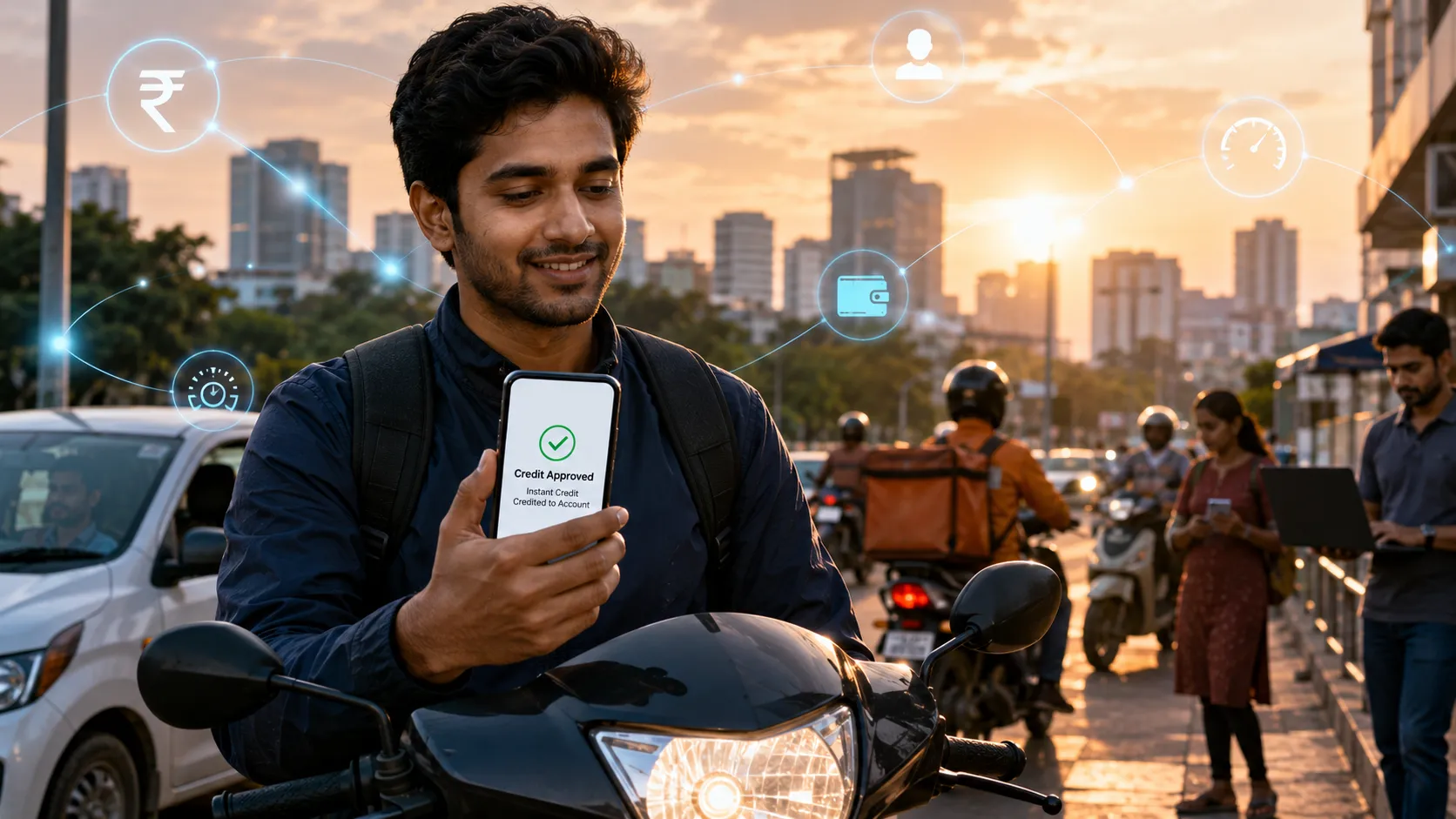
“Gig workers are financially excluded not because they are risky, but because they are invisible to traditional credit bureaus,” said co‑founder and CEO Ritika Menon, a former Paytm product manager. “We use the data they generate every day – deliveries completed, ratings, earnings, consistency – to build a dynamic credit score. It’s the same approach as Klarna or Affirm, but for the informal workforce.” Zing’s algorithm analyzes over 50 signals, including delivery times, customer ratings, and even weather conditions (which affect earnings). It also incorporates the worker’s tenure with each platform and their frequency of breaks. This data‑driven approach allows Zing to approve loans instantly, with no paperwork and no human intervention.
The Series B funding will be used to expand Zing’s platform to 10 new cities (currently live in 8: Bengaluru, Delhi, Mumbai, Pune, Hyderabad, Chennai, Ahmedabad, and Kolkata). The company also plans to onboard more earning platforms, including Urban Company (beauty and home services), Porter (logistics), and Swiggy’s Instamart. Zing will launch a “savings and insurance” product: a zero‑fee savings account with automatic round‑ups from daily earnings, and an accidental death and hospitalization insurance policy for ₹50 ($0.60) per month, underwritten by ICICI Lombard. Gig workers currently have almost no safety net; a single hospitalization can wipe out months of savings. Zing’s insurance product aims to fill that gap.
Zing will also pilot a “pay‑as‑you‑earn” EMI product for gig workers who want to buy scooters or smartphones – their primary tools for work. Many delivery partners currently rent scooters at high daily rates, which eats into their earnings. Zing’s EMIs would be deducted automatically from future earnings, similar to the loan product. The company is in discussions with Ola Electric and Bajaj Auto to offer subsidized vehicles.
QED Investors partner Sandeep Patil said: “Zing is solving a massive pain point. The informal workforce is growing at 20% per year, and traditional financial services cannot serve them. Zing’s underwriting model is the best we’ve seen – it’s both inclusive and profitable.” The startup’s gross merchandise value (GMV) grew 400% year‑on‑year, and it expects to become EBITDA‑positive in 2027. Zing’s unit economics are strong: customer acquisition cost is ₹150 ($1.80) via platform referrals, while lifetime value is ₹1,200 ($14.40) per active user, giving an LTV/CAC ratio of 8x. The company earns revenue from interest spreads (borrowing from banks at 12% and lending at 18%) and a small platform fee.
Competitors include FlexSalary, EarlySalary, and the earned‑wage access offerings from some platforms themselves (e.g., Zomato’s “Daily Pay”). But Zing’s advantage is its platform‑agnostic approach – it works across multiple gig apps, so the user’s credit score stays with them even if they switch delivery partners. A driver who works for Uber in the morning and Zomato in the evening gets a unified credit line based on combined earnings. The startup also has a patent‑pending algorithm that predicts future earnings based on historical patterns, allowing it to lend larger amounts to reliable workers – up to ₹50,000 ($600) for top performers.
The social impact is significant. A 2025 study by the Indian Institute of Management Bangalore found that 60% of gig workers had taken a loan from an informal source in the past year, at an average interest rate of 60% per annum. Zing’s 18% APR is a fraction of that, saving the average borrower ₹5,000 ($60) per year. Moreover, timely access to credit allows workers to avoid selling assets (e.g., their phone) or borrowing from family at the cost of dignity. In user surveys, 85% of Zing customers reported reduced financial stress, and 40% said they had increased their working hours because they could afford to maintain their vehicle.
Zing’s long‑term vision is to become the “primary financial relationship” for India’s gig workers – offering not just credit but savings, insurance, remittances, and even tax filing assistance. The startup has already registered as a non‑banking financial company (NBFC) to reduce dependency on bank partners and offer more competitive rates. It is also exploring a “gig worker credit bureau” that would allow workers to carry their credit history across platforms, increasing their bargaining power.
For the 15 million gig workers who keep India’s e‑commerce and delivery economy running, Zing offers a financial lifeline. A delivery partner can now borrow to repair a broken scooter without losing a week’s income. A driver can advance a day’s earnings to pay for a child’s school fees. A freelancer can smooth out the feast‑and‑famine cycle of project work. “We are not charity; we are a business,” said Menon. “But we are a business that aligns incentives. When gig workers succeed, we succeed. That’s the kind of capitalism we believe in.”