The numbers, laid flat, are arresting.
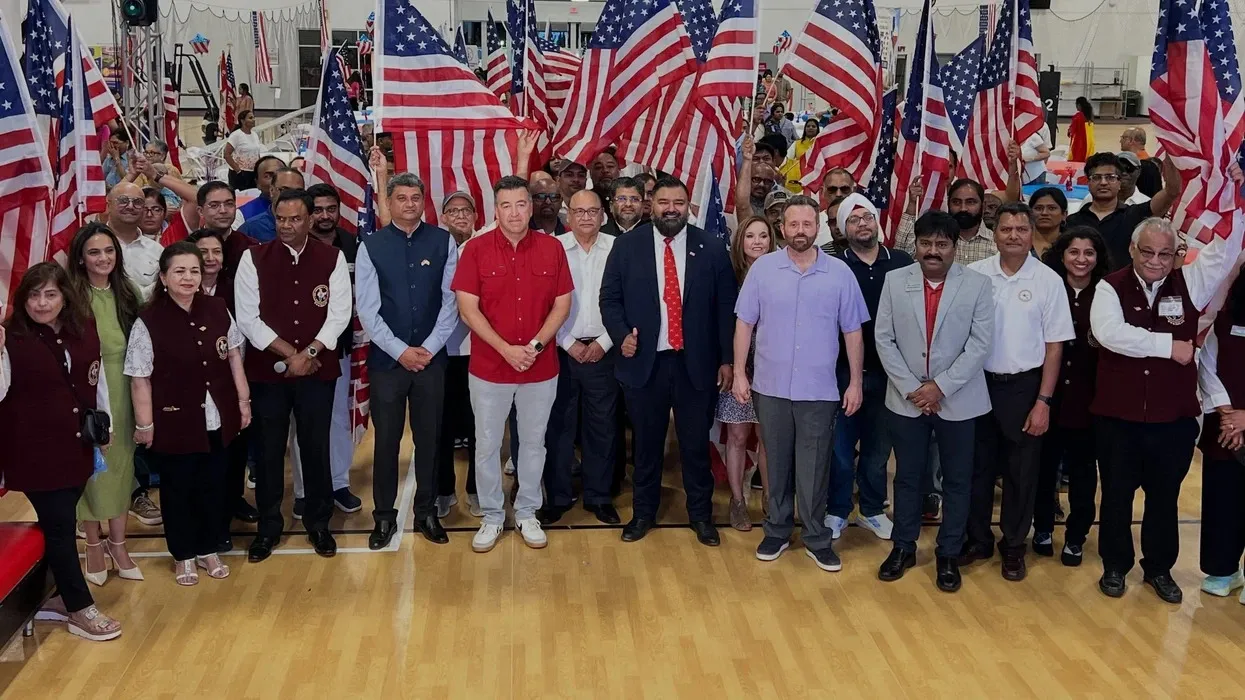
Indian-Americans constitute approximately 1.5 per cent of the United States population — roughly 4.5 million people in a country of 330 million. By every conventional measure of demographic weight, they should be a minor consideration in the story of American business leadership.
They are not. They are, by many measures, the most consequential immigrant community in American corporate history — and the story of how they got there, and what it means for American business going forward, is one of the most important and least examined power shifts in the country's recent economic life.
Fortune 500 Leadership — the Numbers That Opened the Conversation
The headline that most people cite first is the most visible one: 11 Chief Executive Officers of Fortune 500 companies are of Indian origin in 2026, overseeing companies with a combined market capitalisation exceeding $6.5 trillion. The list includes leaders whose names have become synonymous with some of the most important companies in the world.
Sundar Pichai leads Alphabet, the parent company of Google, whose search infrastructure underpins a significant fraction of the world's digital activity. Satya Nadella leads Microsoft, which he has transformed from a company that was perceived to be losing relevance into one of the most valuable companies in the world — first through the cultural renovation of the organisation itself, then through the $69 billion acquisition of Activision Blizzard and the pivot to AI that has made Microsoft's Azure the dominant enterprise AI infrastructure platform. Sanjay Mehrotra leads Micron Technology, the memory chip company whose HBM chips are central to the AI training and inference infrastructure that is reshaping the technology industry. And Kruti Patel Goyal became the CEO of Etsy on January 1, 2026, adding online marketplace leadership to the already extensive Indian-origin CEO roster.
Close to one in six of the 60 largest US technology companies is now led by an Indian-origin executive. That concentration is not coincidental. It is the product of specific historical decisions, specific cultural values, and a specific policy environment that intersected in ways that produced this outcome — and understanding the intersection is what makes the story interesting rather than simply impressive.
How It Happened — the Three Forces Behind the Concentration
The Indian-American concentration in business leadership is the product of three forces that compounded across six decades.
The first was the 1965 Immigration Act. The Hart-Celler Act abolished the national-origin quota system that had restricted immigration from Asia and opened a skills-based pathway that prioritised professionals with advanced degrees and specialised expertise. The first wave of Indian immigrants who arrived under the new law were not a random sample of India's population. They were the most educated, the most technically credentialled, and in many cases the most ambitious members of a generation — selected by American immigration policy for exactly the attributes that produce professional advancement.
The second was the IIT system. India's Institutes of Technology, modelled partly on MIT and established through a combination of Indian and American academic partnerships, produced a generation of engineers whose training intensity and competitive selection produced professionals who were genuinely among the most technically capable in the world. The IIT degree became a credential recognised by American technology companies as a reliable predictor of engineering excellence — and the connection between IIT and Silicon Valley became a self-reinforcing pipeline that brought successive cohorts of technically exceptional Indians into the American technology workforce.
The third was the specific cultural orientation of the families that made this journey. The emphasis on education as the primary vehicle of social mobility, the investment of family resources and emotional capital in a child's academic and professional achievement, the willingness to defer personal consumption in favour of educational investment — these values, deeply embedded in the middle-class Indian families who sent their children abroad, produced professionals who arrived in America not merely with degrees but with the kind of sustained work ethic and long-term orientation that corporate advancement rewards.
The compound effect of these three forces — a policy that selected for talent, an educational institution that produced it, and a cultural orientation that sustained it — is what the Fortune 500 CEO list reflects.
Entrepreneurship — the Numbers Behind the Numbers
The leadership of established companies is the visible tip of a much larger entrepreneurial contribution.
The Stanford Business School study cited earlier in this series found that 8.3 per cent of founders across 500 US unicorns were born in India — more than three times India's demographic share of the US population, and the highest representation of any immigrant nationality. These are not people who climbed the corporate ladder of companies others built. They are people who built the companies themselves.
The list of Indian-origin US unicorn founders includes names across almost every major technology category — enterprise software, consumer internet, fintech, health tech, data infrastructure, and AI. The common thread is not sector. It is the founding profile: technical depth acquired through Indian education, market insight acquired through American professional experience, and the specific ambition that comes from knowing both what is possible and what it costs to get there.
This entrepreneurial contribution is the less celebrated but arguably more consequential dimension of Indian-American business influence. A CEO who runs a large company shapes the trajectory of that company. A founder who builds a new company from nothing creates the company itself — the jobs, the value, the technology, and sometimes the category. The 90-plus Indian-born unicorn founders have not just contributed to American business. They have, in meaningful ways, defined it.
Venture Capital — Capital Following Achievement
The immigrant-to-investor transition that the previous essay in this series examined in detail represents the third wave of Indian-American business influence — after corporate leadership and entrepreneurship, the accumulation of capital that is now being deployed to fund the next generation.
Indian-American general partners are now present at virtually every major venture capital firm. Indian-American angel investors, organised through networks like TiE and through informal diaspora connections, are the first-cheque writers for a growing proportion of Indian-origin startup founders in the US and in India. The abolition of the angel tax in India in April 2025 accelerated the flow of NRI capital into Indian startups. And at the 2026 SelectUSA Investment Summit, Indian companies announced a record $20.5 billion in investments into the United States — capital flowing in both directions simultaneously.
The venture capital presence matters beyond the capital itself. The Indian-American investor at the table is the person who recognises a founder's capability before the metrics justify it, who makes the customer introduction that opens the first revenue relationship, and who provides the cultural and professional mentorship that converts immigrant ambition into American business outcomes. That function — the informed early backer — is where the highest-value returns in venture capital are generated, and it is where the diaspora's information advantage is most pronounced.
Economic Impact — the Aggregate That Rarely Gets Named
The economic contribution of the Indian diaspora to both the United States and India is large enough that naming the specific numbers changes how one understands its scale.
Globally, the Indian diaspora of 35 million people has a combined annual income exceeding $730 billion — a figure that would make it the 17th largest economy in the world if it were a country. In the United States specifically, Indian-Americans earn at rates significantly above the national median, pay taxes that make a disproportionate fiscal contribution, and create companies that employ millions of people across every sector.
India received $137 billion in remittances in 2024 — making it the world's top remittance-receiving country for the 14th consecutive year. A significant proportion of that flow comes from Indian-Americans whose continued connection to India is expressed not just emotionally but financially — supporting families, funding education, and increasingly investing in Indian startups and real estate.
The Indian-American community does not merely benefit from the American economy. It contributes to it at a rate that is, relative to its demographic size, without parallel among any immigrant community in American history.
Future Trends — What the Next Decade Looks Like
The Indian-American business story is not reaching its peak. It is accelerating.
Several forces are converging to expand the community's influence in the decade ahead. The first is the generational shift: the second and third generations of Indian-Americans — those born in the US or brought here as children — are entering their peak professional years with all of the cultural and educational advantages of the first generation and none of the structural barriers of immigration status. They are founding companies, running funds, and entering politics at rates that the first generation could not.
The second is the India opportunity: the growing ease and attractiveness of investing in India — the world's third-largest startup ecosystem, the fastest-growing major economy, the country that produces more engineers annually than any other — is drawing Indian-American capital, expertise, and ambition back toward India in ways that create bi-directional value. The diaspora that helped build Silicon Valley is now helping build Bengaluru, Hyderabad, and Mumbai as global technology hubs.
The third is the political dimension: as the Carnegie Endowment's 2026 Indian American Attitudes Survey documents, Indian-Americans are becoming more politically engaged, more electorally visible, and more institutionally organised than at any previous point in their history. Political power and economic power tend to compound. A community that has built one is beginning to build the other.
The fourth is AI: the technology that is reshaping every industry is one where Indian-Americans are disproportionately represented among the researchers, engineers, and executives driving its development. The same pipeline that produced the Google CEO and the Microsoft CEO is producing the team leads and the founding engineers of the companies building the AI infrastructure of the next decade.
Less than 2 per cent of the US population. Eleven Fortune 500 CEOs. Eight point three per cent of unicorn founders. Record capital flows into and out of India. A political awakening. And an AI revolution where the community is at the centre of what is being built.
The story of Indian-American business influence is not a finished story. It is a compounding one. And the rate of compounding is increasing.


