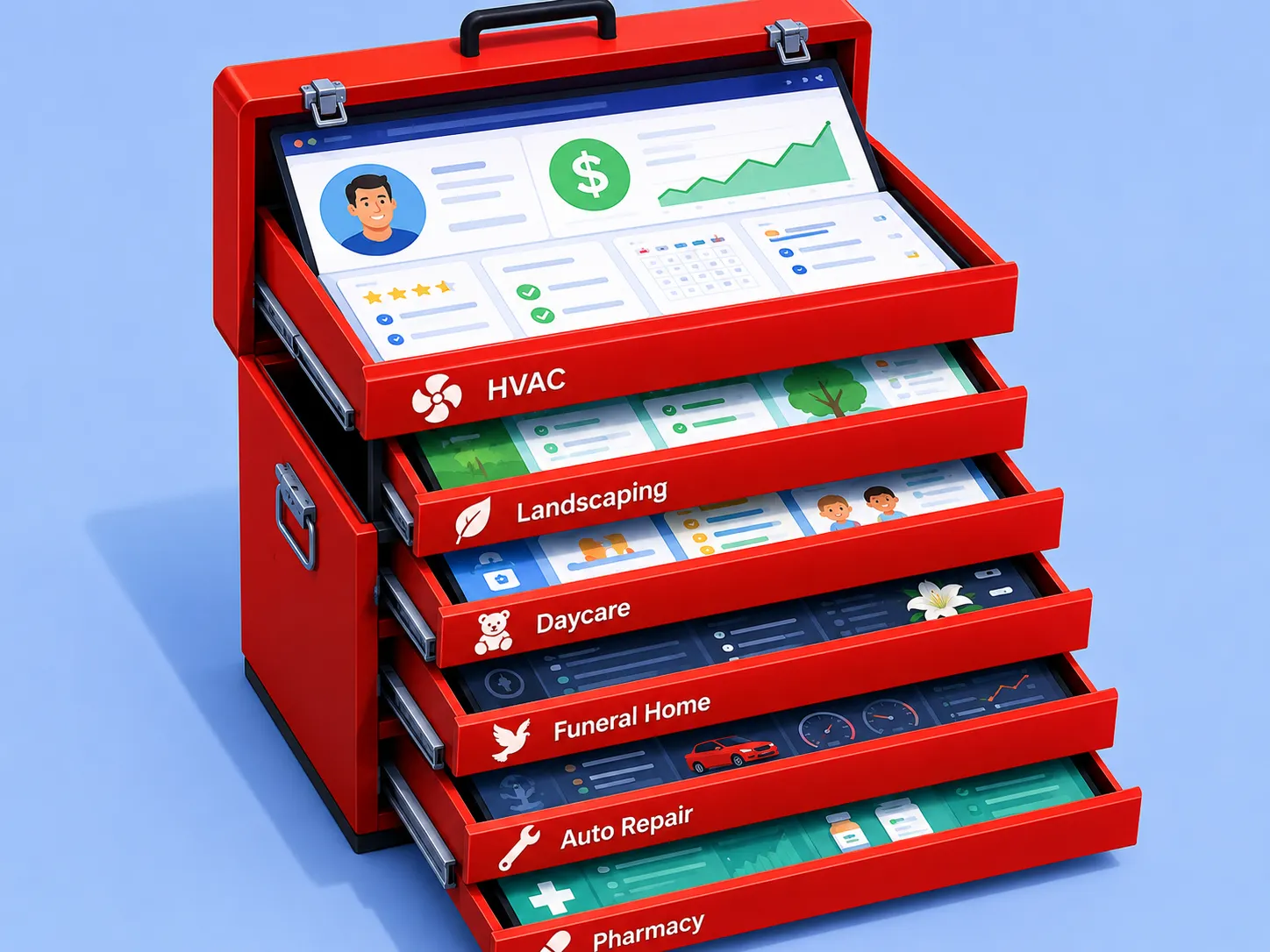
VERTICAL SAAS IS BACK
How startups are dominating long‑tail industries – and why horizontal software lost its magic
CHICAGO, Illinois – For a decade, the software world was obsessed with horizontal platforms.
Salesforce would sell to every company, regardless of industry. HubSpot would do marketing for everyone. Workday would handle HR for anyone. The logic was seductive: build once, sell infinitely.
But that logic has cracked.
A new generation of startups has discovered that the biggest opportunities are not in the center of the market. They are in the long tail – the obscure, idiosyncratic, underserved industries that horizontal software ignores. Plumbing companies. Funeral homes. Daycare centers. Auto repair shops. Dental offices.
These are not glamorous markets. But they are enormous, profitable, and desperate for modern software. And the startups that serve them are growing faster than almost any other category in enterprise tech.
The numbers tell the story. According to Bessemer Venture Partners, vertical SaaS companies that went public in 2024–2025 had a median exit multiple of 8x revenue – significantly higher than horizontal SaaS at 5x. And private vertical SaaS startups are raising at valuations that would have seemed absurd five years ago.
"Horizontal software tries to be everything to everyone," says Mary D'Onofrio, a partner at Bessemer who leads the firm's vertical SaaS practice. "Vertical software is the opposite: be everything to someone. That someone is often a $100 billion industry that has been ignored by Silicon Valley. That is where the gold is."
Why Horizontal Failed (And Vertical Won)
To understand the vertical SaaS boom, you have to understand where horizontal software falls short.
A plumber does not need Salesforce. They need a system that schedules appointments, dispatches trucks, processes payments, manages inventory, sends invoices, and tracks vehicle maintenance – all in one place. Salesforce does none of those things out of the box. You would need to bolt on a dozen integrations, customize everything, and still end up with a mess.
A funeral home does not need HubSpot. They need a system that tracks next‑of‑kin, manages legal paperwork, coordinates with cemeteries, handles obituaries, and processes insurance claims – while being respectful and compassionate. No horizontal CRM can do that.
"Horizontal software forces you to adapt your business to the software," says Ari Silverman, co‑founder of Tribute, a vertical SaaS for funeral homes. "Vertical software adapts to your business. That is a fundamental difference in philosophy."
The result is that vertical SaaS companies enjoy lower churn (customers rarely switch once they are deeply embedded), higher pricing power (there are no alternatives), and stronger unit economics (marketing is targeted, not spray‑and‑pray).
The New Kings of Vertical SaaS
Several vertical SaaS startups have already achieved unicorn status – and a few are preparing to go public.
1. ServiceTitan (Los Angeles) – The Home Services Giant
ServiceTitan is the undisputed king of vertical SaaS for home services – plumbers, electricians, HVAC technicians, and landscapers. The company's software handles scheduling, dispatching, invoicing, payments, marketing, and even financing for customers.
ServiceTitan was founded in 2012 but has only recently exploded. The company raised a $500 million round in 2024 at a $9.5 billion valuation, led by ICONIQ Growth. It is widely expected to file for an IPO in late 2026 or early 2027.
"We are not a glorified calendar," says Vahe Kuzoyan, ServiceTitan's co‑founder. "We are the operating system for the trades. Our customers run their entire business on us. That is why they never leave."
ServiceTitan's net dollar retention is reportedly over 120% – meaning existing customers spend 20% more each year as they add modules and users. Churn is below 5% annually.
2. Toast (Boston) – The Restaurant Standard
Toast is not a startup – it went public in 2021 – but it is the template for modern vertical SaaS. The company builds software for restaurants: point‑of‑sale, online ordering, loyalty programs, payroll, and even hardware (card readers, kitchen displays).
Toast now has over 100,000 restaurant locations on its platform and processes over $100 billion in annual payment volume. The stock has more than doubled since its post‑IPO dip.
"Restaurants were using paper and clunky POS systems from the 1990s," says Steve Fredette, Toast's co‑founder. "We gave them an iPad, a payment processor, and a full software suite. They never looked back."
3. Procore (Carpinteria, California) – Construction's Backbone
Procore builds software for construction project management – bid management, job costing, quality control, safety inspections, and document control. The company went public in 2021 and now has a market cap over $10 billion.
Procore's secret sauce is deep industry expertise. The founders spent years on construction sites, learning the vocabulary, workflows, and pain points of general contractors. That domain knowledge is impossible to replicate.
"Construction is one of the largest industries in the world, yet it was one of the least digitized," says Tooey Courtemanche, Procore's CEO. "We saw an opportunity to build software that actual construction workers would actually use. That sounds simple, but it is incredibly hard."
The New Wave: Funeral, Daycare, Auto Repair, and More
Beyond the established giants, a new wave of vertical SaaS startups is emerging in even narrower niches.
Tribute (Austin, Texas) builds software for funeral homes – tracking family contacts, managing service arrangements, coordinating with cemeteries, and processing insurance claims. The company just raised a $40 million Series B and is growing 300% year‑over‑year.
"There are 20,000 funeral homes in the United States," says Tribute's Silverman. "Most of them still use paper files and fax machines. That is a massive opportunity."
Kangaroo (New York) builds software for daycare centers – attendance tracking, parent communication, billing, staff scheduling, and compliance reporting. The company raised a $25 million Series A led by Tiger Global.
"Daycare owners are not tech people," says Sofia Lee, Kangaroo's CEO. "They need software that is so simple that a busy director can learn it in 10 minutes. That is our design principle."
Shopmonkey (San Francisco) builds software for auto repair shops – digital vehicle inspections, estimates, invoicing, and customer communication. The company has raised over $100 million and now serves 10,000 repair shops.
Birdseye (Boston) builds software for independent pharmacies – prescription management, inventory tracking, insurance billing, and patient communication. The company is still in stealth but has raised $50 million from Andreessen Horowitz.

The Vertical SaaS Playbook: Five Rules
Based on interviews with a dozen founders and investors, here is the playbook for building a successful vertical SaaS company.
1. Go deeper than anyone else
The winning vertical SaaS companies do not just build software. They build an operating system for an entire industry. They handle payments, financing, inventory, HR, marketing, and even hardware.
"Depth is a moat," says Bessemer's D'Onofrio. "If you only solve scheduling, you are a feature, not a platform. You need to solve everything."
2. Hire from the industry, not from tech
The best vertical SaaS founders have deep domain experience. ServiceTitan's founders grew up in the trades. Procore's founder was a construction project manager. Tribute's founders worked in funeral homes.
"You cannot learn an industry from a whiteboard," says Tribute's Silverman. "You need to live it. That is why we hire funeral directors, not Stanford CS grads."
3. Price by value, not by seat
Horizontal SaaS usually charges per user per month. Vertical SaaS often charges a percentage of revenue – because the software directly drives revenue.
"We take 1% of every transaction that runs through our system," says a vertical SaaS CEO who asked not to be named. "Our customers love it because we only get paid when they get paid. That alignment is powerful."
4. Sell to the owner, not the IT department
In most vertical industries, the decision maker is the owner – a plumber, a funeral director, a daycare operator – not a professional buyer. They do not want a demo with slides. They want to see how the software saves them time and money.
"We do not do 30‑minute sales calls," says Kangaroo's Lee. "We go to the daycare, watch them work, and say 'here is how we fix that specific problem you are having right now.' That closes deals."
5. Build a community, not just a product
The most successful vertical SaaS companies also build communities – forums, user groups, conferences, and training programs. Customers become evangelists.
ServiceTitan's annual user conference, Pantheon, draws over 5,000 attendees. Procore's Groundbreak conference sells out months in advance.
"When you serve a specific industry, your customers know each other," says Procore's Courtemanche. "We help them connect. That turns software into a movement."
The Bottom Line: The Long Tail Is Long
The vertical SaaS boom is not a fad. It is a structural shift in enterprise software. Horizontal platforms have won the center of the market, but the edges are where the growth is.
And the edges are endless. Plumbing, electrical, landscaping, roofing, flooring, painting, locksmithing, pest control, pool cleaning, window washing – every trade, every service, every small business category is a potential vertical SaaS market.
"The long tail is very long," says ServiceTitan's Kuzoyan. "We have barely scratched the surface. In ten years, every major industry will have a dedicated software stack. We are just getting started."
In the new era of SaaS, the winner is not the company that builds for everyone. It is the company that builds for someone – deeply, obsessively, and completely.


