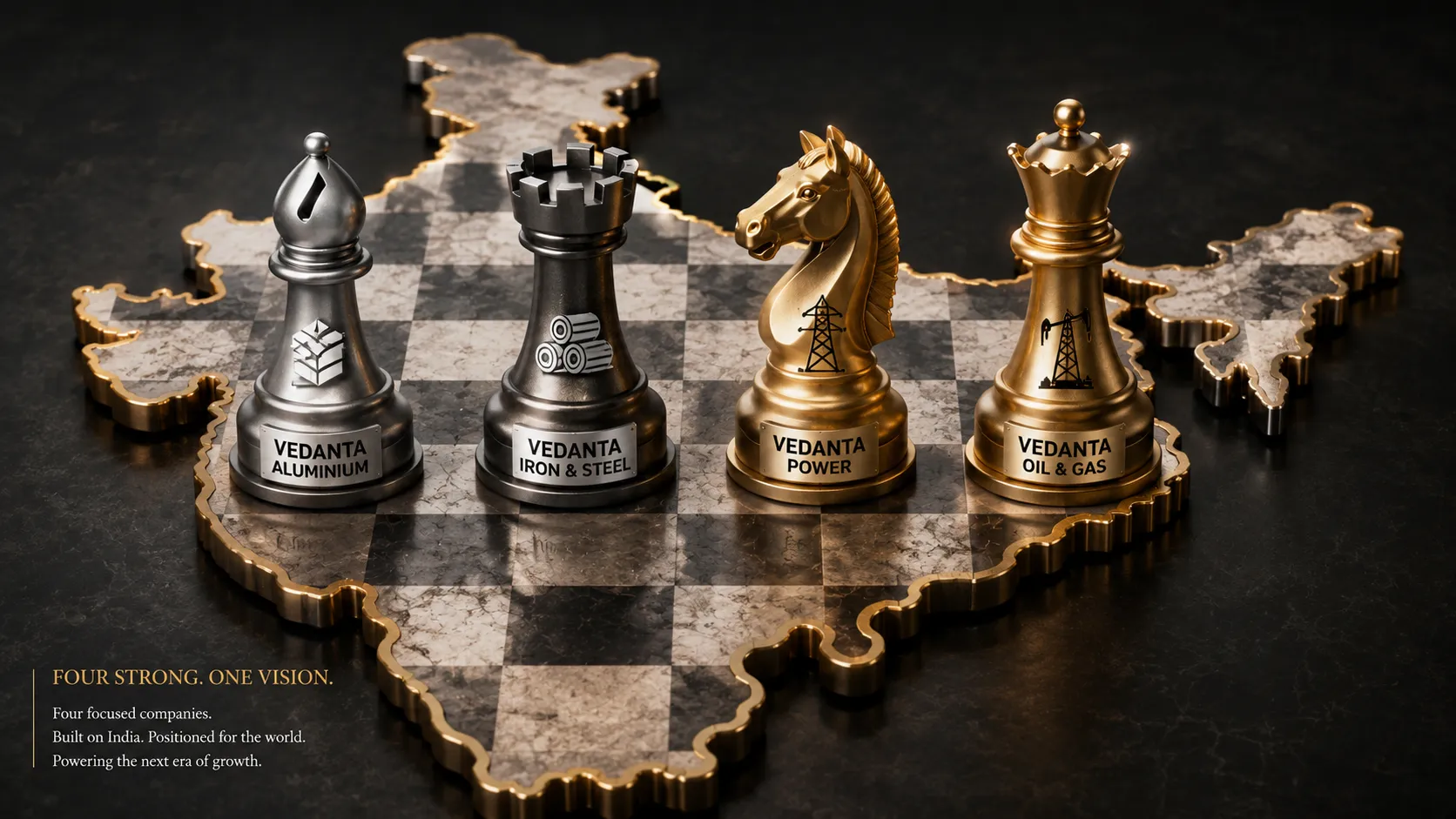
The mining giant just split into four separate companies — Aluminium, Oil & Gas, Iron & Steel, and Power. Anil Agarwal calls it the birth of giants. The market isn't so sure.
The banyan tree has been pruned.
At the stroke of the trading bell on Monday morning — June 15, 2026 — Vedanta's four demerged businesses began trading independently on India's stock exchanges. Aluminium here. Oil & Gas there. Iron & Steel. Power. Four separate companies where once there was one sprawling, unwieldy conglomerate.
It is the biggest corporate restructuring in Indian metals and mining in a decade. Anil Agarwal, the billionaire founder who built Vedanta from a scrap-metal trading shop in Mumbai into a global natural resources powerhouse, has a simple message for investors: the saplings are now ready to become giants.
But the early numbers tell a more complicated story.
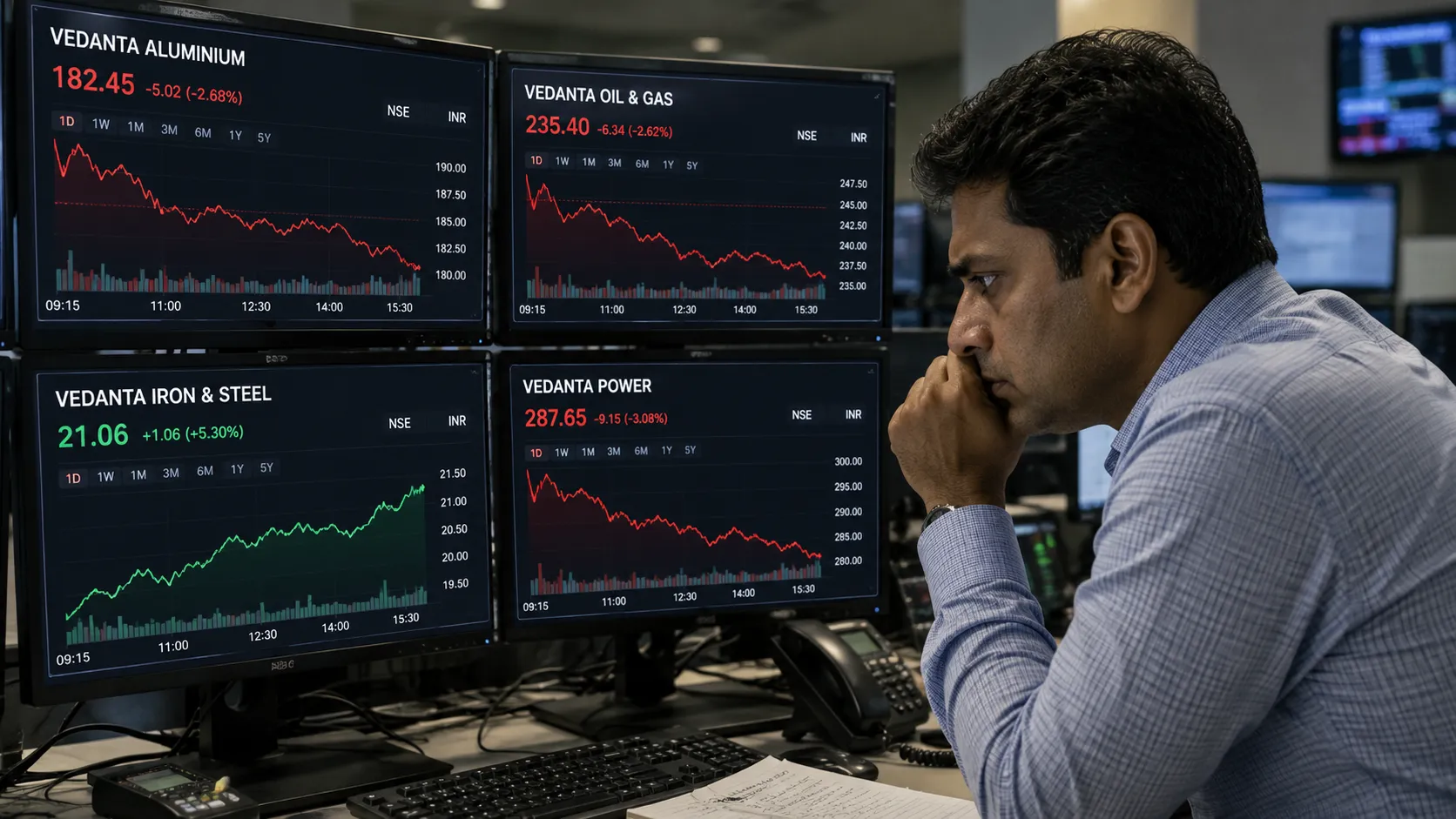
Vedanta Aluminium, India's largest aluminium producer, immediately slid 5 percent on its first day of independent trading. Vedanta Oil & Gas dropped the same. Only Vedanta Iron & Steel gained ground, rising 5.3 percent to ₹21.06. The parent company — still holding Hindustan Zinc and the critical minerals portfolio — fell 1.18 percent to ₹306.
Welcome to the messy, uncertain, and potentially transformative business of breaking up a banyan tree.
'The Seed We Sowed'
Speaking at the listing ceremony in Mumbai, Agarwal invoked the company's 24‑year journey. Vedanta was the first Indian company to list on the London Stock Exchange, back in 2003. It grew into a FTSE100 giant. It acquired assets across the globe — copper in Zambia, oil in Rajasthan, iron ore in Goa, aluminium in Odisha.
"The seed we sowed that day has grown into a vast banyan tree," Agarwal told the assembled bankers, journalists, and investors. "The saplings nurtured under it are now ready to become giants in key sectors and contribute significantly to India's rapid growth."
The demerger strategy is not new. Global conglomerates like General Electric, Siemens, and United Technologies have all pursued similar breakups in recent years, arguing that focused, sector‑specific businesses can allocate capital more efficiently, attract more targeted investors, and respond faster to market changes than a sprawling parent company.
For Vedanta, the logic is straightforward. Each of the four new companies operates in a different capital cycle. Aluminium prices are driven by global energy costs and Chinese supply. Oil & Gas lives and dies by crude prices and government regulation. Iron & Steel is tied to infrastructure spending and real estate. Power is a regulated utility business with its own dynamics.
Why keep them all under one roof?
The demerger, approved by shareholders in early 2026, splits Vedanta Limited into four independent listed entities:
Vedanta Aluminium Limited — India's largest aluminium producer, with smelters in Odisha and Jharkhand.
Vedanta Oil & Gas Limited — the operator of the prolific Rajasthan block, which produces roughly a quarter of India's domestic crude oil.
Vedanta Iron & Steel Limited — owner of iron ore mines in Goa and Karnataka, and a steel plant in Punjab.
Vedanta Power Limited — thermal and renewable power assets across three states.
Each company starts with its own balance sheet, its own board, and its own stock price. And each is now responsible for its own destiny.
The Debt Question
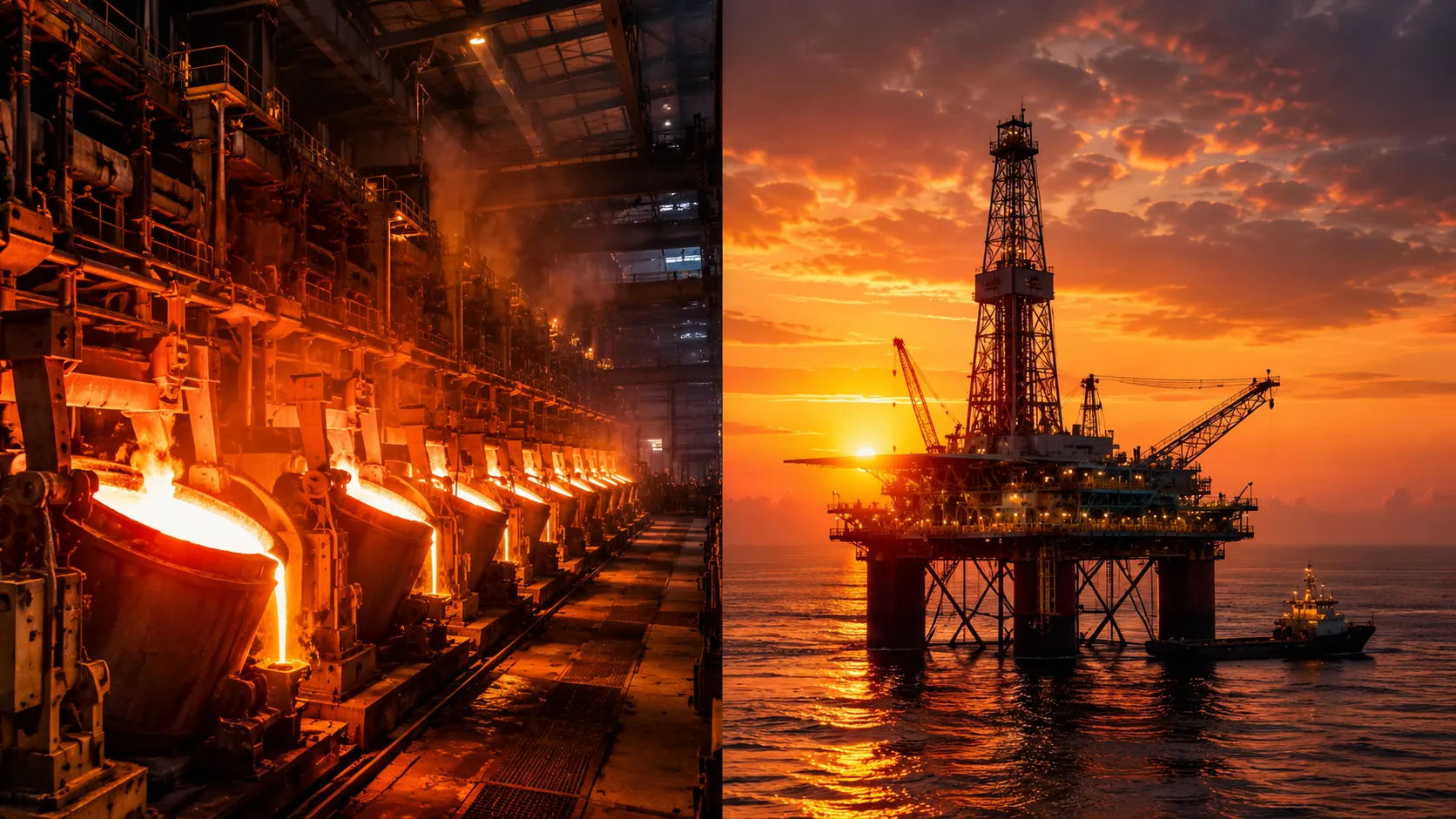
One of the biggest selling points of the demerger was the promise of cleaner balance sheets. Vedanta Oil & Gas, in particular, starts operations as a debt‑free company — a rare distinction in the capital‑intensive energy sector, where most producers carry billions in borrowings.
"A debt‑free oil and gas company in India is almost unheard of," said an energy analyst at a Mumbai brokerage, who spoke on condition of anonymity because his firm has dealings with Vedanta. "That gives them enormous flexibility. They can invest in exploration, bid for new blocks, or return cash to shareholders. Most of their competitors can't say that."
Vedanta Iron & Steel and Vedanta Power will carry some legacy debt, but management has assured investors that the debt‑to‑equity ratios are manageable. Vedanta Aluminium, the largest of the four, carries the most debt — but also the most predictable cash flow, given its dominant market position.
Agarwal noted in his speech that demand for metals and energy will only accelerate with the rise of advanced manufacturing and artificial intelligence. "The companies we have listed today will play a significant role in bridging the huge demand‑supply gap for these vital raw materials," he said.
But for now, the market is watching, waiting, and — in the case of three of the four — selling.
Why the Mixed Debut?
Analysts point to several factors behind the lukewarm first day of trading.
First, the macroeconomic backdrop is uncertain. The Iran‑US war has pushed oil prices to multi‑year highs, benefiting Vedanta Oil & Gas on revenue but raising costs for Vedanta Aluminium and Vedanta Iron & Steel. The monsoon deficit is threatening agricultural demand for power. Global aluminium prices have been volatile.
Second, investors are still trying to understand the standalone financials of each entity. For years, Vedanta reported consolidated numbers. Now, each company must prove itself on its own.
Third, the demerger creates a temporary accounting headache for mutual funds and ETFs that track broader indices. Many funds are required to sell their holdings in the new entities if they don't meet certain liquidity or sector criteria, creating short‑term selling pressure.
"The mixed debut doesn't tell us much about the long‑term prospects," said a fund manager at a domestic asset management company. "Give it three months. By then, each company will have reported two quarters of standalone results, and investors will have a much clearer picture of who the winners are."
Who Could Be a Takeover Target?
Here's the unspoken question hanging over the demerger: will any of the four new companies become acquisition targets?
Vedanta Oil & Gas, with its debt‑free balance sheet and Rajasthan block — one of India's most productive onshore fields — is the obvious candidate. Indian state‑owned oil companies, international majors, and even Middle Eastern national oil companies have all expressed interest in Indian upstream assets. A standalone, debt‑free Vedanta Oil & Gas could be an attractive prize.
Vedanta Aluminium, as the market leader, is less likely to be acquired — antitrust concerns would be significant — but it could become a consolidator, snapping up smaller aluminium producers. Vedanta Iron & Steel sits in a crowded market dominated by Tata Steel, JSW Steel, and ArcelorMittal Nippon Steel. Consolidation in that sector has been predicted for years, and a focused, standalone iron and steel company could be a natural participant.
"The breakup makes Vedanta's individual parts more visible, more accessible, and more vulnerable," the energy analyst said. "That's the risk Agarwal is taking. But it's also the opportunity. If each part is valued more highly on its own than it was inside the conglomerate, the demerger was a success."
What Agarwal Does Next
Anil Agarwal, at 72, is not retiring. He remains the chairman of each of the four new companies, as well as the parent entity that still holds Hindustan Zinc and the critical minerals portfolio. But his role is changing.
In the past, Agarwal was the deal‑maker — the man who flew around the world, shaking hands with heads of state, and returned to Mumbai with a new mine or a new refinery. Now, he is the chairman of four independent boards. His job is oversight, strategy, and capital allocation, not day‑to‑day management.
"For 24 years, I have been the captain of one ship," Agarwal told the listing ceremony. "Now I am the admiral of a fleet. Each ship has its own captain. My job is to make sure they all sail in the same direction."
The metaphor is apt. But admirals don't control the wind, the tides, or the enemy. And in the rough seas of global commodities, where Chinese demand can vanish overnight and wars can shut down shipping lanes, even the best‑captained ships can founder.
For now, the fleet has set sail. The initial waves have been choppy. But Agarwal is betting that the long voyage will reward those who stay on board.
The Bottom Line
Vedanta's demerger is the most significant corporate restructuring in Indian metals and mining since the breakup of the original Tata group in the 1990s. Four standalone companies are now listed, each with its own balance sheet, board, and stock price. Early trading was mixed — aluminium and oil fell, steel rose, and the parent company dipped — but the long‑term success or failure will be measured in years, not hours.
For investors, the demerger creates both opportunity and uncertainty. For Agarwal, it's the biggest bet of his career. For Indian industry, it's a test case of whether the conglomerate model has outlived its usefulness, or whether focused, sector‑specific companies can truly outperform the banyan tree they came from.
The market's verdict, for now, is still being written.


