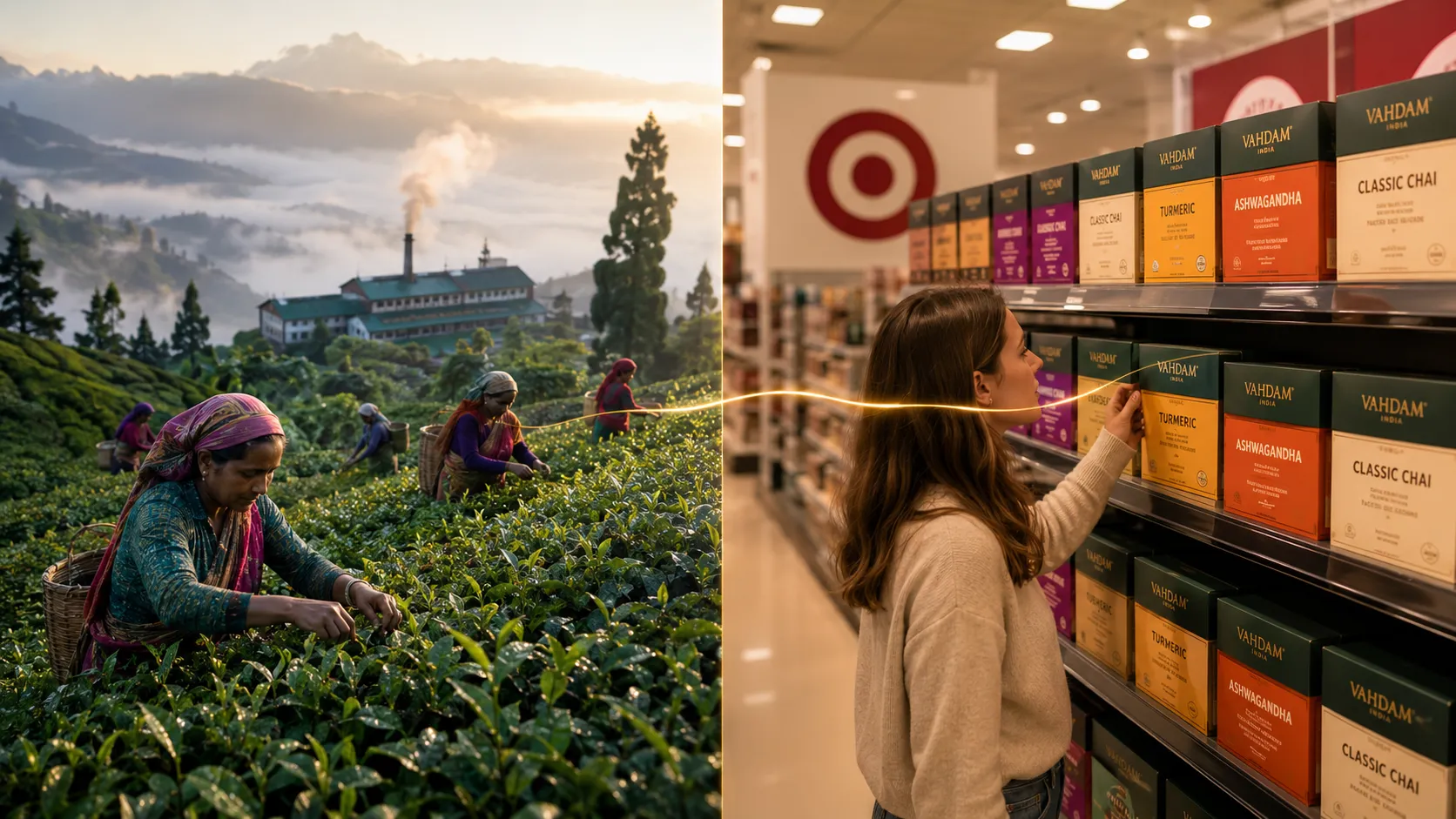
The Tea Brand That Conquered 180 Countries Before Selling a Single Bag in India—And the $65 Crore Bet That Comes Next
DELHI — May 22, 2026 — Bala Sarda was 23 years old when he made a decision that defied every convention of Indian entrepreneurship. He was the scion of a 90-year-old tea dynasty—the Sardas of Darjeeling, whose plantations had produced some of the finest loose-leaf tea in the world for four generations. He could have spent his twenties learning the family business from a corner office, taking over the export operation, and settling into the comfortable trajectory of a legacy industry. Instead, he looked at the tea industry and saw that it was broken. Not the tea. The business model.
The finest Indian teas—Darjeeling first flush, Assam orthodox, Nilgiri winter harvest—were sold in bulk to European and Middle Eastern buyers, who packaged them under their own labels and captured the premium. The farmer got a commodity price. The brand got zero recognition. The country that invented tea culture was invisible in the global tea economy. "We were exporting the raw material and importing the value," Sarda told Fortune India last month. "That had to change."
In 2015, Sarda launched VAHDAM India—the name is a portmanteau of his father's initials—with a thesis so contrarian it bordered on absurd. He would build a premium Indian tea and wellness brand, sell it directly to consumers in the world's most competitive markets—the United States, Europe, Canada—through Amazon and his own website, and never touch the wholesale commodity trade that had made his family wealthy. He would compete with Twinings and Lipton on their home turf, with an Indian name on the box and an Indian flag on the supply chain. He would bypass the middlemen who had captured the value of Indian tea for a century, and he would build a brand, not a commodity business.
Eleven years later, the bet has paid off. VAHDAM India closed FY26 with ₹350 crore in revenue, growing 31 percent year-on-year while remaining profitable for the second consecutive year. It ships to more than 180 countries. Its products sit on the shelves of Target, Walmart, and Costco in the United States. Its functional herbal supplements portfolio—immunity, gut health, sleep, stress management—now accounts for 30 percent of total revenue. And this year, for the first time, the brand that was built for the world is coming home. VAHDAM will launch a dedicated product lineup in India in 2026, marking the final chapter in a journey that has inverted the traditional trajectory of Indian consumer brands.
The Born-Global Thesis
The most radical thing about VAHDAM India is not the tea. It is the sequence. The company went global first—built a supply chain that could deliver Darjeeling tea to a doorstep in Berlin or Boston within days, built a brand on Amazon's U.S. marketplace that competed with established Western labels, built a direct-to-consumer operation that collected data on customer preferences in 180 countries—and only now, eleven years after its founding, is it turning its attention to India.
The sequence matters because it inverts the typical path of Indian consumer brands. For decades, Indian brands grew domestically first, built scale in their home market, and then—if they survived—tentatively pushed into international markets. VAHDAM reversed the logic. It built its brand reputation in the world's most demanding markets, where competition is fierce and margins are thin, and it is now returning to India with the credibility of a global brand. "India presents a significant opportunity with its deep-rooted affinity for natural wellness," Sarda said. "Our entry will focus on bringing clinically backed, premium herbal solutions to Indian consumers."
The numbers support the thesis. VAHDAM's U.S. business, which was hit by the end of the de minimis trade exemption in 2025—a policy change that eliminated duty-free treatment for low-value shipments from China and other countries—has not only survived but grown. The company weathered the tariff shock by deepening its retail partnerships, expanding into Walmart and Costco, and shifting a portion of its fulfillment to U.S.-based warehouses. The result was a 31 percent revenue growth rate that surpassed its pre-tariff trajectory. "We were able to pivot quickly," Sarda told The Telegraph. "The brand equity we had built with American consumers allowed us to absorb the tariff impact without losing market share."
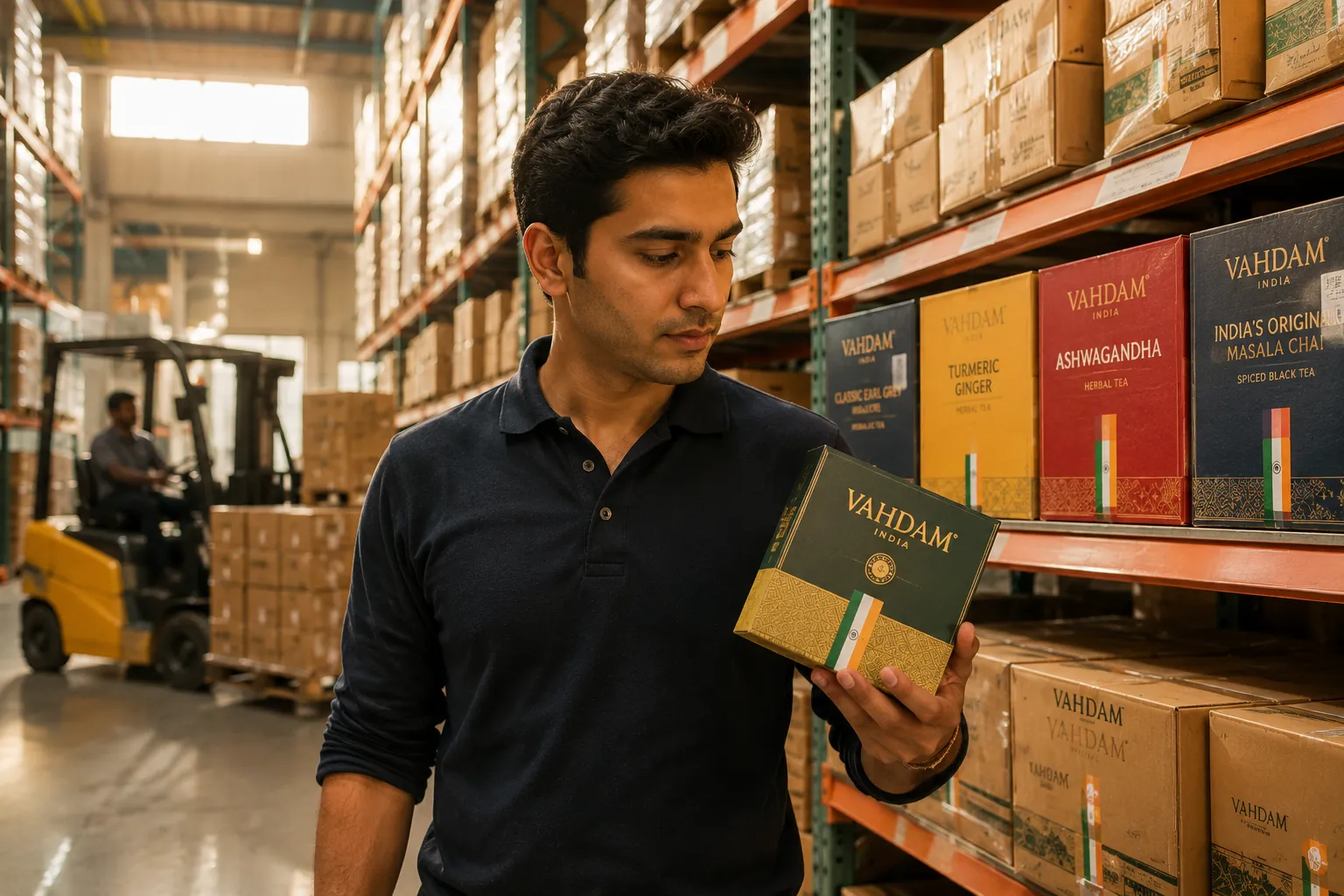
The Indian Opportunity
The Indian wellness market that VAHDAM is now entering is both enormous and fiercely contested. India's herbal and ayurvedic products market is projected to exceed $20 billion by 2028, driven by rising disposable incomes, a cultural preference for natural remedies, and a government that has aggressively promoted traditional medicine through the Ministry of AYUSH. Incumbents like Dabur, Patanjali, and Himalaya have deep distribution networks, established brand recognition, and decades of consumer trust.
VAHDAM's counterargument is that those incumbents are legacy brands, built for an older generation of Indian consumers who bought their wellness products from kirana stores and Ayurvedic pharmacies. The next generation—urban, digital-native, brand-conscious, increasingly influenced by global wellness trends—is looking for something different. They want the clinical validation that Western consumers demand. They want the contemporary packaging that looks at home on a minimalist kitchen shelf. They want the supply-chain transparency that allows them to trace their turmeric back to the farm where it was grown. VAHDAM, which has spent eleven years competing against the world's most sophisticated wellness brands on their home turf, believes it can offer all three.
"The Indian consumer today is far more discerning than even five years ago," Sarda said. "They are reading labels. They are researching ingredients. They are looking for brands that combine India's traditional knowledge with global standards of quality and transparency. That is exactly the space we occupy."
The launch strategy is focused on premium positioning. VAHDAM will not compete on price with mass-market Ayurvedic brands. It will offer functional supplements—clinically tested formulations targeting specific health outcomes—at a premium that reflects the quality of the ingredients, the rigor of the testing, and the equity of the brand. The target customer is the Indian urban professional who already buys imported wellness brands and is looking for an Indian alternative that matches their quality expectations.
What This Signals
The VAHDAM story is not just about tea. It is about a structural shift in how Indian brands are being built. For a century, India exported raw materials and imported finished goods. The country's greatest natural resources—tea, spices, herbs, textiles—were processed, packaged, and branded by Western companies that captured the premium. The Indian producer was a supplier, not a seller. The Indian brand was an oxymoron.
VAHDAM is part of a wave of Indian brands that are rewriting that script. It is not alone. Forest Essentials has built a luxury Ayurvedic brand that competes with Estée Lauder. Saffola has transformed from a commodity cooking oil into a health-food platform. Licious has created a premium meat brand in a country where meat was traditionally bought from wet markets. Each of these companies is doing the same thing: taking an Indian product, building an Indian brand around it, and selling it at a premium to consumers who have been conditioned to believe that quality comes from elsewhere.
The difference with VAHDAM is the sequence. By going global first, the company acquired something that no amount of domestic marketing could have given it: the credibility of a brand that had already won in the world's toughest markets. When VAHDAM finally launches in India later this year, it will not be introducing itself to Indian consumers as a new brand. It will be returning as a global success story—the tea brand that conquered 180 countries and is finally coming home. The boxes are on the shelves at Target and Costco. The Indian consumer is next.


