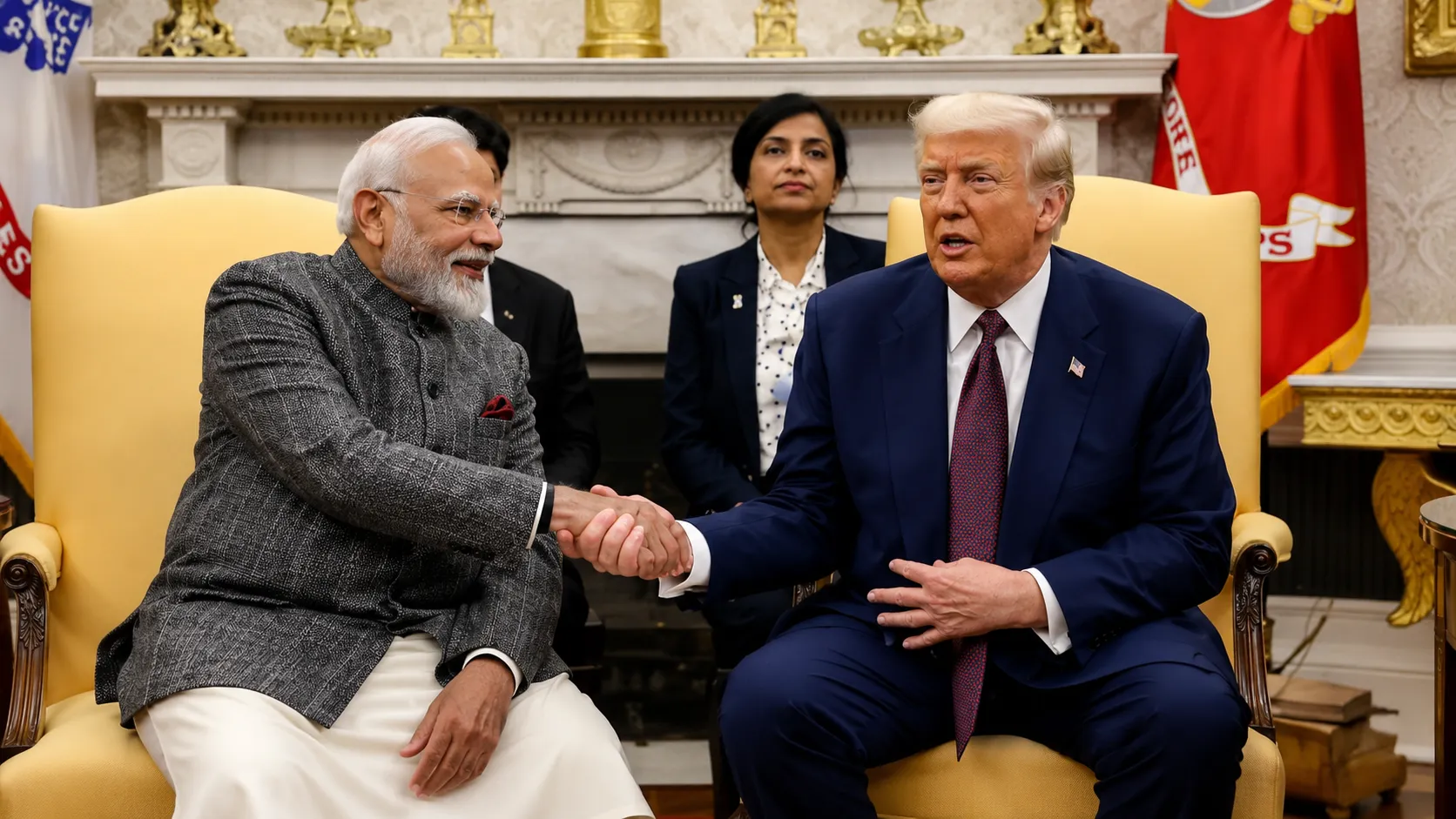
While much of the current business news cycle around India-US trade focuses on the diplomatic drama of an approaching deadline and the promise of a rate cut once a deal is signed, a more immediate and less glamorous story is playing out on factory floors and in export order books across India: exporters in textiles, gems and jewellery, and auto parts are currently living with a US tariff rate around 50% on many of their products — a level steep enough to functionally price significant volumes of Indian goods out of competitiveness in the US market, right now, regardless of how the ongoing negotiations eventually conclude.
What a 50% Tariff Actually Does to a Business
It's worth pausing to unpack what a tariff rate in the range of 50% actually means for an exporting business, because the abstraction of a percentage figure can obscure just how commercially devastating it is in practice. For a textile exporter selling into the US market, a 50% tariff doesn't simply mean the end customer pays 50% more — in a competitive market, that cost typically gets split in some combination between the exporter (who may need to lower their price to remain competitive, eating directly into already-thin manufacturing margins), the US importer or retailer (who may absorb some of the cost to avoid passing the full increase to consumers), and the end consumer (who ultimately faces higher retail prices, potentially reducing demand). In most cases, the exporter bears a disproportionate share of this burden, particularly in price-sensitive categories like basic textiles and garments, where global competition from other low-cost manufacturing hubs like Vietnam, Bangladesh, and Cambodia means Indian exporters often have limited pricing power to simply pass the tariff cost through without losing market share entirely.
For gems and jewellery — a category where India has historically held a globally dominant position, particularly in diamond cutting and polishing, alongside finished jewellery manufacturing — the tariff impact compounds an already margin-thin business model. Jewellery manufacturing and trading has traditionally operated on relatively modest percentage margins even in normal circumstances, given the high value of the underlying raw materials (gold, diamonds, precious stones) relative to the value-added manufacturing and craftsmanship component. A 50% tariff applied on top of this cost structure can easily exceed the entire margin many gems and jewellery exporters would otherwise expect to earn on a transaction, effectively making continued US-bound shipments unprofitable for many players unless they can either restructure sourcing, absorb losses temporarily, or find alternative markets.
How Exporters Are Actually Coping Right Now
Faced with this immediate, ongoing cost pressure — separate from whatever happens with the broader trade deal negotiations — Indian exporters across these affected sectors have been pursuing several practical coping strategies. Market diversification has been the most commonly cited response, with many exporters actively working to redirect shipments and cultivate new buyer relationships in markets across Europe, the Middle East, and Southeast Asia, reducing their dependence on the US market even if it remains, in absolute terms, one of the largest single-country destinations for many of these product categories. This diversification isn't instantaneous — building new buyer relationships, navigating different regulatory and quality certification requirements, and establishing logistics and distribution channels in new markets typically takes months to years to fully mature, meaning many exporters are simultaneously absorbing near-term US market losses while investing in longer-term market diversification that won't fully offset the impact for some time.
Operational efficiency improvements represent another common response, with exporters looking to reduce their overall cost base — through process automation, sourcing optimization, energy efficiency improvements, or logistics consolidation — to at least partially offset the tariff burden without needing to fully pass the cost onto either their own margins or their US buyers. Some exporters, particularly larger and better-capitalized players, have also explored longer-term supply contract negotiations with US buyers, seeking to lock in volume commitments and pricing arrangements that provide some predictability even amid tariff uncertainty, effectively sharing the tariff burden more explicitly and contractually with buyers who value supply chain continuity and quality consistency enough to accept some cost-sharing arrangement.
The Auto Parts Sector's Particular Challenge
India's auto parts and components export sector faces a somewhat distinct dynamic compared to textiles or gems and jewellery, given the sector's deep integration into complex, multi-country global automotive supply chains. Many Indian auto parts exporters supply components not directly to end consumers, but to automotive original equipment manufacturers (OEMs) or larger tier-1 suppliers who themselves are managing complex, multi-sourced global supply chains. In this context, a sustained tariff burden can trigger supply chain reconfiguration decisions that unfold over a longer timeframe than typical consumer goods trade — automotive supply chain relationships often involve multi-year sourcing agreements, extensive quality certification processes, and significant switching costs, meaning that even if tariffs make Indian-sourced components meaningfully more expensive, US and global automakers may not be able to immediately pivot to alternative suppliers, providing some near-term insulation even as the tariff cost pressure builds toward eventually influencing longer-term sourcing decisions as existing contracts come up for renewal.
The Human and Economic Stakes Behind the Numbers
Beyond the corporate and trade-policy framing, it's worth noting that India's textile, gems and jewellery, and auto parts manufacturing sectors are significant employers, particularly of relatively lower-skilled and semi-skilled labor in manufacturing clusters across states including Gujarat, Tamil Nadu, Punjab, and Maharashtra. Sustained tariff pressure that meaningfully reduces export order volumes carries direct employment implications in these manufacturing hubs, a dimension of the trade story that receives less coverage than the macro-level trade deficit or GDP growth figures, but which represents a genuinely significant real-economy consequence of the ongoing tariff dispute, independent of how the broader diplomatic negotiations eventually resolve.
Living With Uncertainty
Perhaps the most challenging aspect of the current situation for affected exporters is less the tariff level itself — businesses can, over time, adapt to a known, stable cost structure — and more the sustained uncertainty about how long current tariff levels will persist and what the eventual negotiated outcome will look like. This uncertainty makes it genuinely difficult for exporters to make confident medium-term capital investment, hiring, or market strategy decisions, since a favorable trade deal resolution could substantially improve their competitive position within weeks, while continued stalemate or an unfavorable outcome could require more fundamental business model adjustments. Until the current round of India-US trade negotiations reaches some form of resolution, expect India's textile, gems and jewellery, and auto parts exporters to continue operating in this uncomfortable holding pattern — absorbing real, immediate costs today while hoping for a more favorable trade environment tomorrow.