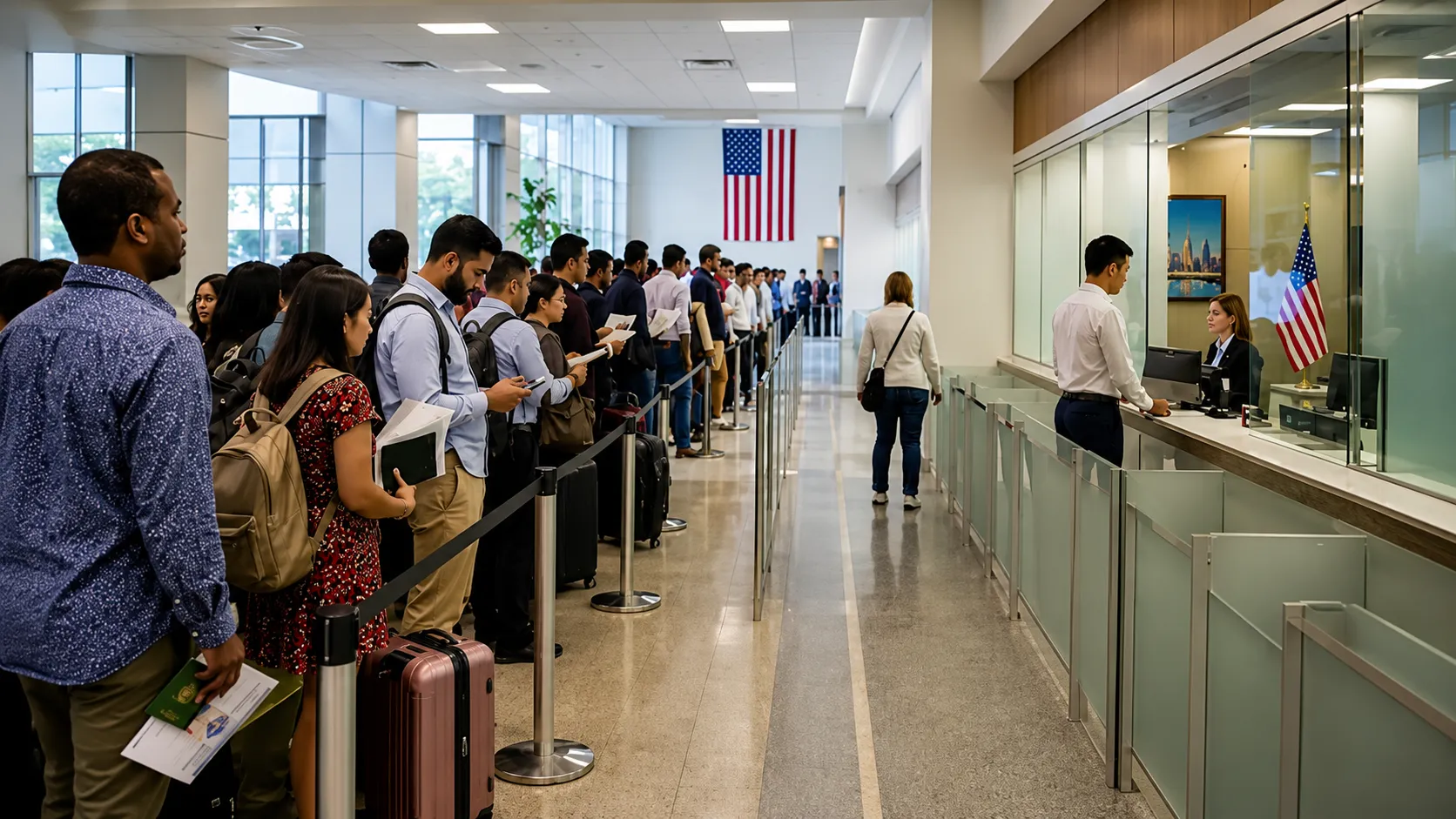
The U.S. Department of State has introduced a new paid fast-track option for certain visa applicants, allowing some business and tourist travelers to secure interview appointments considerably sooner than the standard queue by paying an additional fee — a shift in approach that marks one of the government's more direct attempts yet to address the chronic visa appointment delays that have plagued applicants at U.S. consulates worldwide, India prominent among them, for several years running.
The Nonimmigrant Visa Expedited Appointment Pilot Program, which took effect on July 1, 2026, gives eligible B-1/B-2 visa applicants — the category covering short-term business and tourist travel to the United States — the option to pay $750 for an interview appointment within 10 business days, subject to slot availability at participating embassies and consulates. The pilot programme is scheduled to run through December 31, 2026, after which the State Department will decide whether to extend, modify, or discontinue the initiative based on its performance and reception during the trial period.
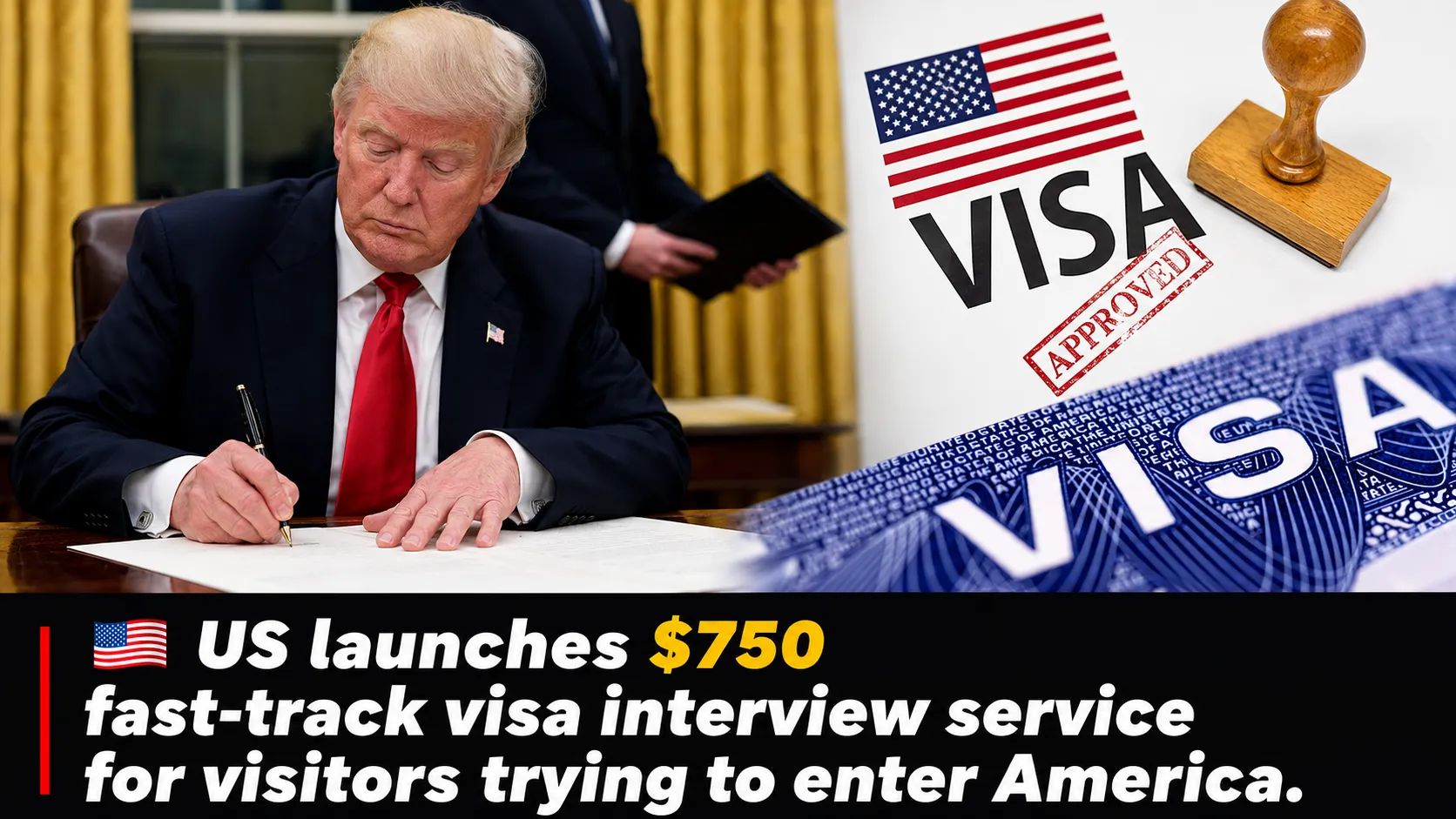
For India specifically, a country whose consular posts have for years struggled with some of the longest visa interview wait times of any major U.S. diplomatic mission network globally, the introduction of any expedited option is likely to draw considerable attention from business travelers, students, and family visitors alike, even as the programme's actual scope and limitations warrant careful understanding before any applicant commits the additional expense. The initiative is explicitly designed to help travelers with urgent business or personal travel needs while easing pressure on the broader visa interview queue, though participation remains entirely optional, and the State Department has been explicit that applicants who choose the expedited route remain subject to precisely the same screening, vetting, and eligibility standards as every other applicant.
The mechanics of qualifying for the expedited option are fairly specific. Applicants must first complete the standard visa application process in full, including payment of the standard $185 Machine Readable Visa fee and booking of a regular interview appointment through the normal consular scheduling system. Only after completing that standard process might eligible applicants at participating locations see a 'Paid Expedite' option appear within the appointment system, at which point the additional $750 fee — separate from and on top of the regular application fee — must be paid within just 10 minutes of selecting an available expedited slot, with each participating consular post releasing only a limited number of these priority interview slots on any given day.
The programme's terms come with notably strict conditions once an expedited appointment is confirmed. Applicants cannot reschedule a confirmed expedited slot, and those who cancel or simply fail to attend forfeit the $750 fee entirely, with the State Department explicitly describing the charge as non-refundable and non-transferable under essentially all circumstances. That rigidity places a genuine premium on applicants having real certainty about their travel plans and availability before committing to the paid expedite option, since any subsequent scheduling conflict or change in plans would result in the full fee being lost with no recourse.
Perhaps the most important caveat embedded in the programme, and one the State Department has gone out of its way to emphasise publicly, is that the $750 fee buys speed and nothing more. The department has stated plainly that the programme allows applicants to receive an earlier appointment only, with every visa applicant continuing to undergo the same thorough screening and vetting process regardless of whether they paid for expedited scheduling, and with no visa issued until an applicant has independently demonstrated eligibility under U.S. immigration law during their actual interview. In other words, paying the fee does not improve an applicant's chances of visa approval, does not accelerate any post-interview administrative processing that a case might require, and does not guarantee visa issuance in any way — it purchases only an earlier date on the calendar for the interview itself.
That distinction carries real practical significance for prospective applicants weighing whether the expense is worthwhile. Because the programme only advances the interview date itself, applicants whose cases require additional administrative processing or supplementary security checks following their interview could still face meaningful delays after paying the $750 fee, meaning the total time from application to eventual visa issuance may not shrink nearly as much as the headline 10-business-day interview turnaround might initially suggest. Immigration experts quoted in early coverage of the programme have specifically cautioned businesses and individual travelers to carefully weigh whether the additional cost is genuinely worthwhile given their specific circumstances, particularly for applicants whose travel schedules retain some flexibility and who might reasonably be able to wait for a standard appointment slot instead.
The rollout itself has begun cautiously, with the U.S. Embassy and consulates in Mexico serving as the first diplomatic missions to implement the pilot, joining the programme on July 21, 2026 — just days before this report. The State Department has indicated additional embassies and consulates could be added to the pilot before it concludes at the end of the year, though as of this week, it remains unclear precisely when, or whether, India's own consular posts — including the high-volume missions in New Delhi, Mumbai, Chennai, Hyderabad, and Kolkata — will be added to the participating locations list, a detail that will matter enormously to the millions of Indian nationals who apply for B-1/B-2 visas each year.