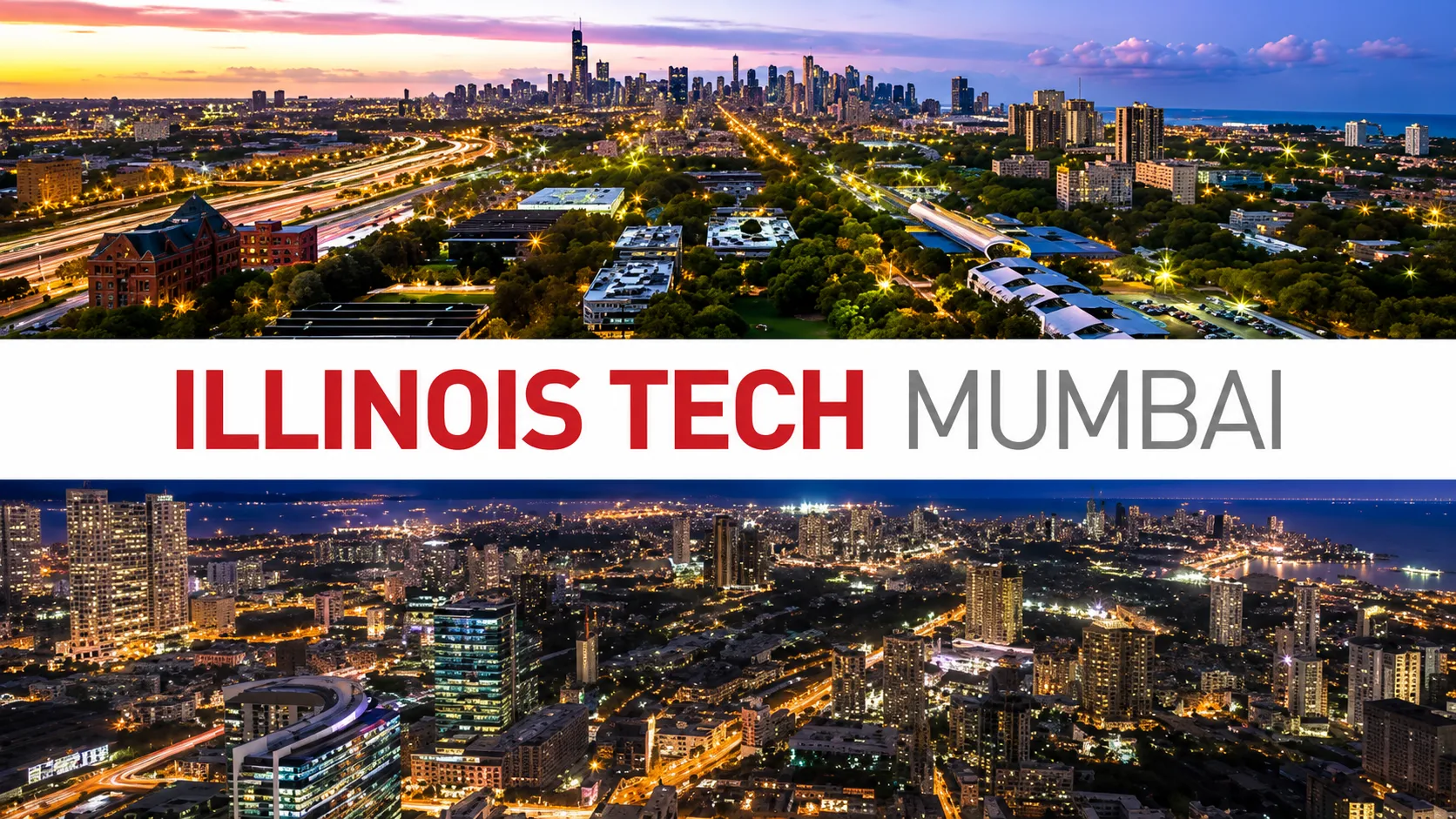
Amid a year dominated by headlines about visa interview backlogs, a proposed H-1B and OPT overhaul, and hard survey data confirming a genuine decline in Indian student enrollment across US campuses, a quieter but structurally significant countertrend has been building: for a growing number of Indian students, getting a genuine US-accredited degree may no longer require boarding a plane at all. The Illinois Institute of Technology's move to become the first US university cleared by India's University Grants Commission (UGC) to open an independent, degree-granting campus on Indian soil — Illinois Tech–Mumbai, opening in the city's Vikhroli neighborhood this Fall 2026 — represents the clearest, most concrete example yet of a policy shift years in the making finally translating into a real, enrollable alternative for Indian families increasingly wary of the US visa system's current volatility.
Why This Timing Matters
The timing of Illinois Tech's Mumbai campus launch is, whether by design or coincidence, striking. It arrives in the same year that a unified federal regulatory agenda has signaled the most sweeping tightening of F-1, OPT, and H-1B rules in years, and in the same year that hard survey data from the Institute of International Education has confirmed a genuine, measurable decline in Indian student applications and enrollment across US campuses, driven substantially by visa processing uncertainty. For Indian families evaluating their options against this backdrop, a pathway that delivers the same underlying US-accredited academic credential without requiring an F-1 visa, a consular interview, OPT eligibility calculations, or any exposure to the current wave of regulatory uncertainty represents a genuinely compelling structural hedge — not a consolation alternative, but in some respects a more predictable and lower-risk pathway to a comparable outcome.
This development builds on provisions within India's National Education Policy (NEP) 2020, which explicitly opened the door for foreign universities to establish independent, degree-granting campuses in India under a regulatory framework overseen by the UGC — a genuine departure from the pre-2020 landscape, in which foreign institutions could only operate in India through more limited twinning arrangements, articulation agreements with Indian partner institutions, or online and distance-learning programs, none of which offered the full, independently accredited degree experience that Illinois Tech's Mumbai campus is now positioned to deliver.
What Illinois Tech–Mumbai Actually Offers
Illinois Institute of Technology, a private research university based in Chicago with particular strength in engineering, computer science, architecture, and business, chose Vikhroli — a Mumbai locality known for its concentration of corporate offices and residential development — as the site for its India campus, a decision that positions students within reach of Mumbai's dense financial services and technology employer base, potentially facilitating the kind of internship and post-graduation employment pathways that have historically been a major part of the value proposition for studying at a US institution in the first place. Students enrolling at Illinois Tech–Mumbai this Fall 2026 will be pursuing the same underlying Illinois Tech degree that students on the Chicago campus receive, delivered through a combination of local faculty, potentially rotating faculty from the flagship US campus, and Illinois Tech's established curriculum and accreditation framework.
For prospective students, the appeal centers on several distinct advantages over the traditional path of studying in the US directly: significantly lower total cost, given the absence of US cost-of-living expenses and the likely pricing of the India-based program at a discount to the Chicago campus tuition, even while still commanding a premium over purely domestic Indian degree programs; complete elimination of F-1 visa risk, consular interview scheduling delays, and the kind of arrival-timing constraints that disrupted so many students' Fall 2025 enrollment plans; and continued proximity to family and the broader Indian job market, an important consideration for students and families who may be increasingly wary of committing to a multi-year, capital-intensive US education plan given the current uncertainty around post-graduation work authorization pathways like OPT and H-1B.

The Reciprocal Story: IIT Bombay Heads to New York
Notably, this emerging corridor between Indian and American higher education isn't a one-way transplant of US institutions into India — it runs in both directions. Around the same period as the Illinois Tech-Mumbai announcement, the Indian Institute of Technology Bombay, widely regarded as one of India's most prestigious engineering and technology institutions, announced a partnership with the State University of New York (SUNY) Old Westbury, seeding what will become IIT Bombay's first sub-campus in the United States, targeted for a 2027 launch. This reciprocal expansion signals a genuine maturation in the India-US higher education relationship, moving from a historically one-directional flow — Indian talent traveling outward to earn American credentials — toward something closer to true bilateral institutional partnership, with IIT Bombay's own brand, curriculum, and research relationships now extending a physical footprint into the US market as well.
For American students and researchers, an IIT Bombay US campus would offer direct access to one of India's most respected engineering brands and its associated faculty and research networks without requiring travel to India — potentially opening a reciprocal flow of interest that has historically been far smaller in scale than the traditional India-to-US student flow, given the relative novelty of Indian universities establishing standalone physical presences abroad.
A Genuine Hedge, Not a Replacement
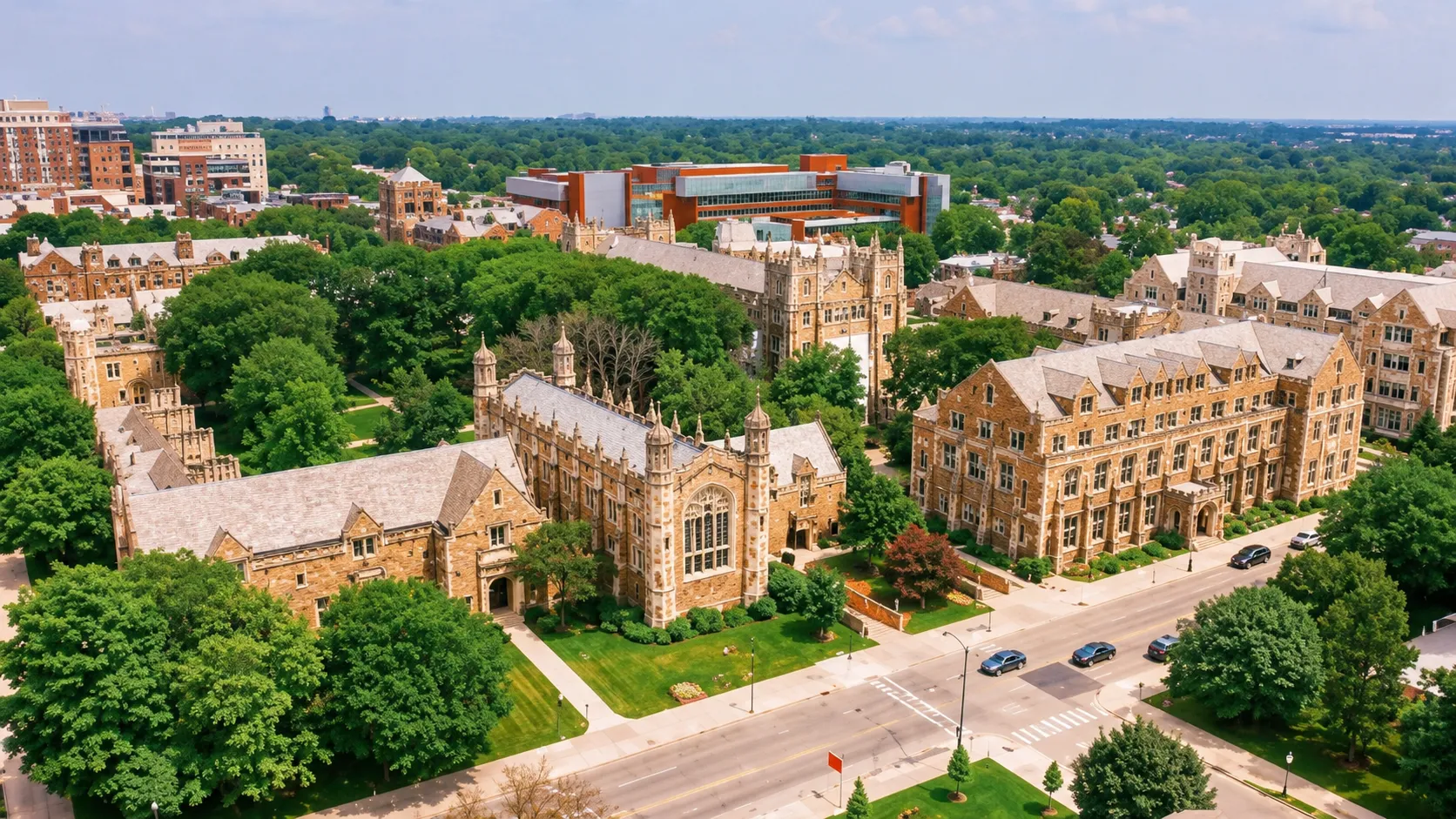
It's important to be precise about what this emerging corridor does and does not represent. For the large cohort of Indian students specifically seeking the most elite, most globally recognized US institutions — the MITs, Stanfords, and Ivy League-caliber programs that, even amid the broader enrollment decline, continue to report exceptionally strong Indian applicant demand — a Mumbai-based Illinois Tech campus, however credible an institution Illinois Tech itself is, does not substitute for the specific brand prestige, alumni network scale, and campus experience of studying physically in the United States at one of those top-tier institutions. What the emerging India-based foreign campus model does offer is a genuinely new option for a different, and considerably larger, segment of the Indian student population: those who want a credible, internationally recognized US-accredited degree, but for whom the current combination of visa uncertainty, rising costs, and post-graduation employment unpredictability has made the traditional full US study-abroad pathway a meaningfully riskier proposition than it was even two or three years ago.
What Success Would Look Like
As Illinois Tech-Mumbai prepares to welcome its first cohort this fall, several signals will determine whether this pioneering model becomes a genuinely significant structural alternative for Indian students, or remains a relatively niche option alongside the dominant traditional pathway of studying directly in the US. Strong enrollment demand for the inaugural cohort, evidence that graduates are being taken seriously by employers and, where relevant, graduate schools on comparable terms to a Chicago-campus degree, and continued UGC approval of additional foreign university campus applications at a healthy pace would all suggest this model is scaling into a genuine structural fixture of Indian higher education rather than a one-off experiment. Given everything else unfolding this year — the proposed H-1B and OPT overhaul, and hard data confirming a real decline in direct US enrollment — the timing suggests Indian students and families now have, for the first time in a generation, a credible, lower-risk alternative pathway to a US-branded education that doesn't require betting an entire multi-year plan on the outcome of America's current visa policy volatility.


