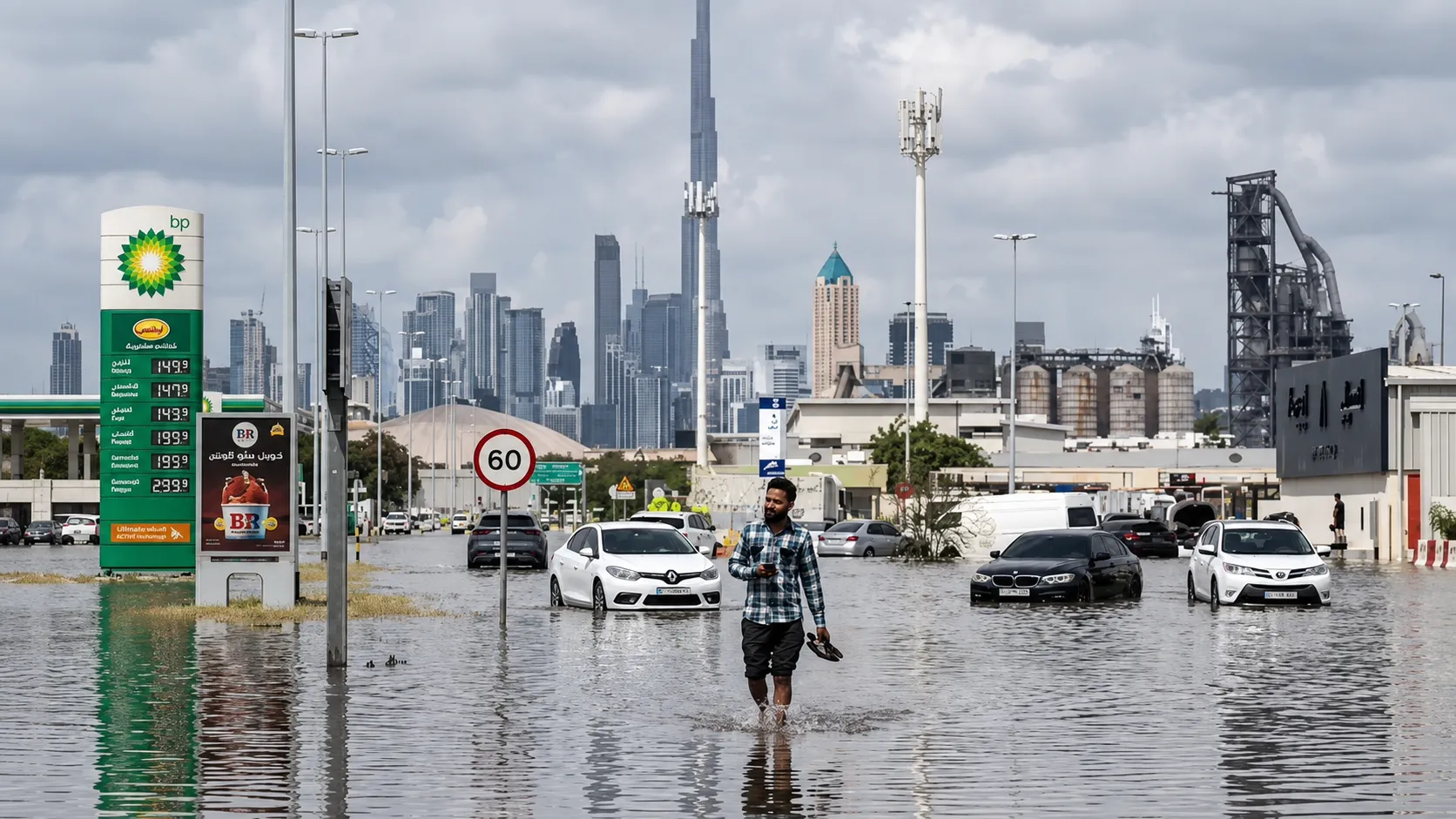
For most of the roughly four million Indians who call the United Arab Emirates home — making up by far the largest single nationality group in the country — the defining feature of an August week is usually heat, not rain. But this week, residents across several emirates are being asked to prepare for both at once, as the National Centre of Meteorology (NCM) forecasts a stretch of unusually unsettled weather that meteorologists say will bring heavy rainfall to parts of the country even as temperatures in interior regions climb toward a scorching 50 degrees Celsius.
According to the NCM's latest forecast, skies over Al Ain, Fujairah and Ras Al Khaimah are expected to be partly cloudy, with the potential for heavy rainfall, continuing through Friday, as atmospheric conditions favourable to the formation of convective clouds persist across the country. Residents in some internal, eastern and southern regions may also see cloud formations capable of producing sudden, localised downpours — the kind of fast-moving summer storm system that UAE residents, and particularly newer arrivals from India unfamiliar with the desert's occasional violent contrast between extreme heat and flash rainfall, are being urged to take seriously.
Why This Matters So Much to the Indian Community Specifically
It would be easy to read a weather forecast as background noise — the kind of story that scrolls past on a phone screen without registering. But for the Indian community in the UAE, weather events of this kind carry an outsized practical weight, for reasons rooted in exactly where and how that community lives and works.
Indians in the UAE are not evenly spread across the country; they are concentrated, in very large numbers, in precisely the kinds of neighbourhoods, labour accommodations, and outdoor-facing occupations that are most exposed to sudden extreme weather. Estimates place the Indian population in the UAE at approximately four million people, constituting roughly 35 per cent of the country's total population of over eleven million — a scale that makes the Indian community not just the largest expatriate group in the UAE, but arguably the demographic most directly affected by any significant weather disruption, simply as a matter of sheer numbers.
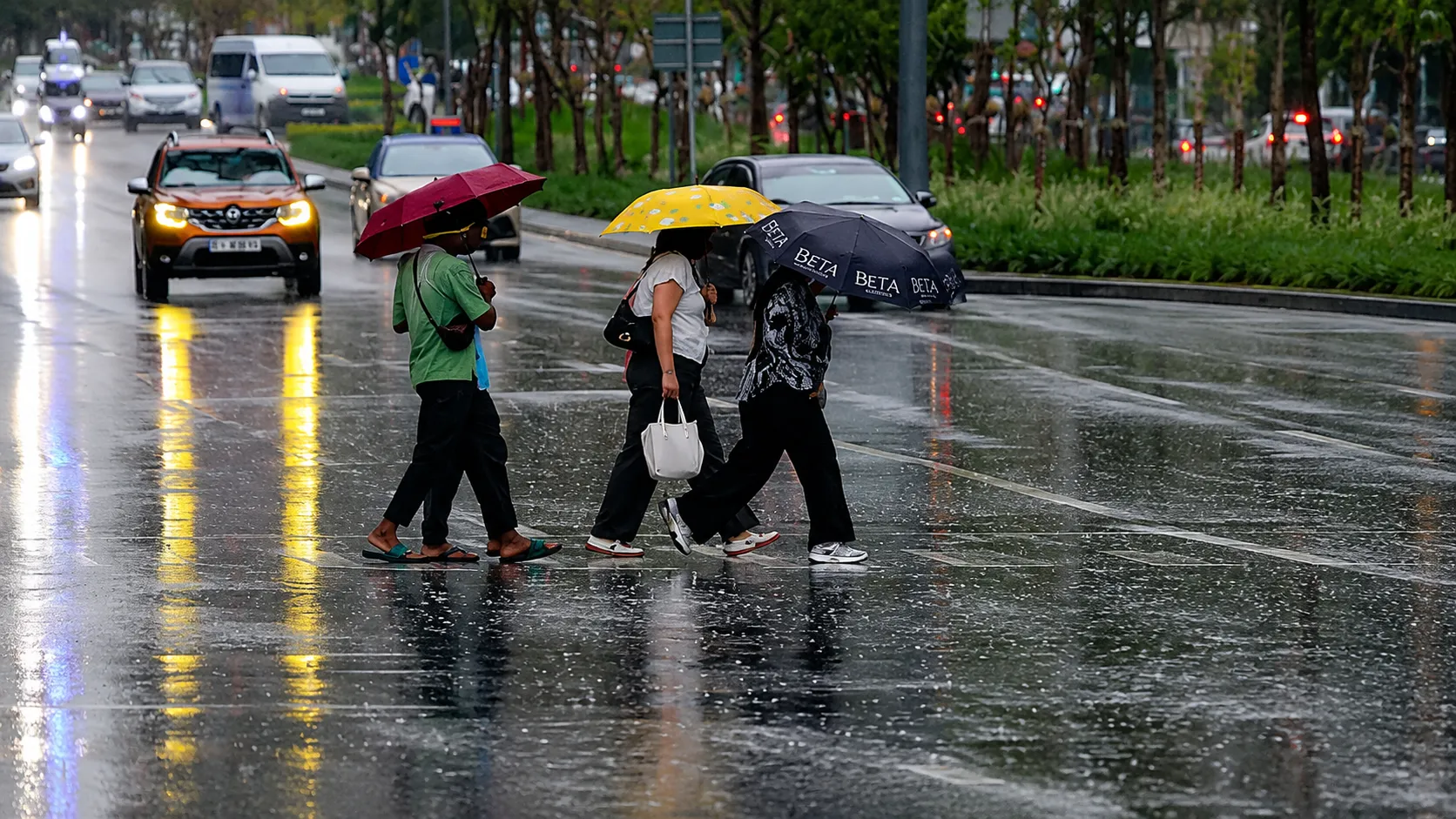
Within that population, the regional breakdown is telling: Dubai alone is home to an estimated two million Indian residents, with Abu Dhabi accounting for roughly 800,000, Sharjah around 720,000, and smaller but still substantial communities in Ajman, Ras Al Khaimah, Fujairah and Umm Al Quwain — precisely the emirates named in this week's rainfall forecast. Ras Al Khaimah and Fujairah, in particular, are home to significant populations of Indian labourers working in construction, logistics, and the hospitality sector, alongside a large and growing Malayali, Tamil and Telugu-speaking professional and small-business community.
For workers in outdoor trades — construction, delivery, landscaping, and the vast informal economy of Indian-run small businesses that keep much of the UAE's daily commercial life running — a forecast of heavy convective rainfall is not an inconvenience to be shrugged off. It is a direct operational and safety concern. Sudden downpours in a country whose infrastructure is built primarily around managing extreme heat rather than heavy rain can produce flash flooding on roads, disruption to outdoor labour schedules, and, in worst-case scenarios, genuine safety hazards for workers caught outdoors when a storm cell moves through quickly and with little warning.
The Dual Threat: Rain and Extreme Heat, Simultaneously
What makes this particular forecast unusual — and worth paying closer attention to — is that it does not describe a simple cooling-off period brought by rain. Quite the opposite: even as Al Ain, Fujairah and Ras Al Khaimah brace for cloud cover and rainfall, other parts of the country are forecast to see temperatures climb as high as 50 degrees Celsius in internal regions over the same window, with the wet conditions persisting until Friday.
This combination — punishing heat in some areas, sudden heavy rain in others, often within the same 24-hour period as weather systems move across the country — creates a genuinely challenging set of conditions for residents to navigate. The NCM has explicitly advised residents to take all necessary precautions and to follow official channels closely for updates as the week progresses, a piece of guidance that carries particular weight for a diaspora community many of whose members are newer arrivals, still building familiarity with the UAE's distinctive, and sometimes dramatic, summer weather patterns.
For Indian families with young children, elderly parents recently arrived on visit visas, or household staff working both indoor and outdoor shifts, the practical advice distilled from this forecast is straightforward but important: stay updated through official NCM channels rather than relying on secondhand information circulating on social media or community WhatsApp groups; avoid unnecessary outdoor travel during periods of active heavy rainfall, particularly in the eastern and internal regions named in the forecast; and exercise particular caution around roads and low-lying areas that are prone to water accumulation during sudden downpours, since the UAE's road drainage infrastructure, built for a predominantly dry climate, can struggle to cope with intense, short-duration rainfall events.
A Community That Has Learned to Adapt
It is worth situating this week's forecast within the broader context of how the UAE's weather patterns have evolved, and how the Indian community — by now deeply rooted in the country across multiple generations of migration — has adapted to that evolution. Sudden, intense rainfall events, while still less common than the searing dry heat most associate with the Gulf, have become a more regular feature of UAE summers in recent years, prompting both government infrastructure investment and community-level behavioural adaptation.
Indian community organisations across the UAE — from the various state-based associations representing Kerala, Tamil Nadu, Andhra Pradesh and Telangana, Punjab, Gujarat and Uttar Pradesh communities, to professional bodies and workers' welfare groups — have increasingly built weather-preparedness messaging into their regular community communications, recognising that a population this large, this economically essential, and this geographically concentrated in exposed areas needs reliable, community-language information during exactly these kinds of events.
That infrastructure of community communication matters enormously in moments like this one. A forecast issued in formal, technical English by a national meteorological authority does not always travel efficiently to every household, particularly among newer arrivals or workers in labour accommodations with limited independent access to official government channels. It is often the informal network — the WhatsApp group run by a Malayalam community association in Ras Al Khaimah, the Telugu cultural body's messaging list in Fujairah, the mosque or temple announcement board, the labour camp supervisor relaying an official advisory in Hindi or Malayalam — that ultimately determines whether an NCM forecast reaches the people who most need to hear it, in time to act on it.