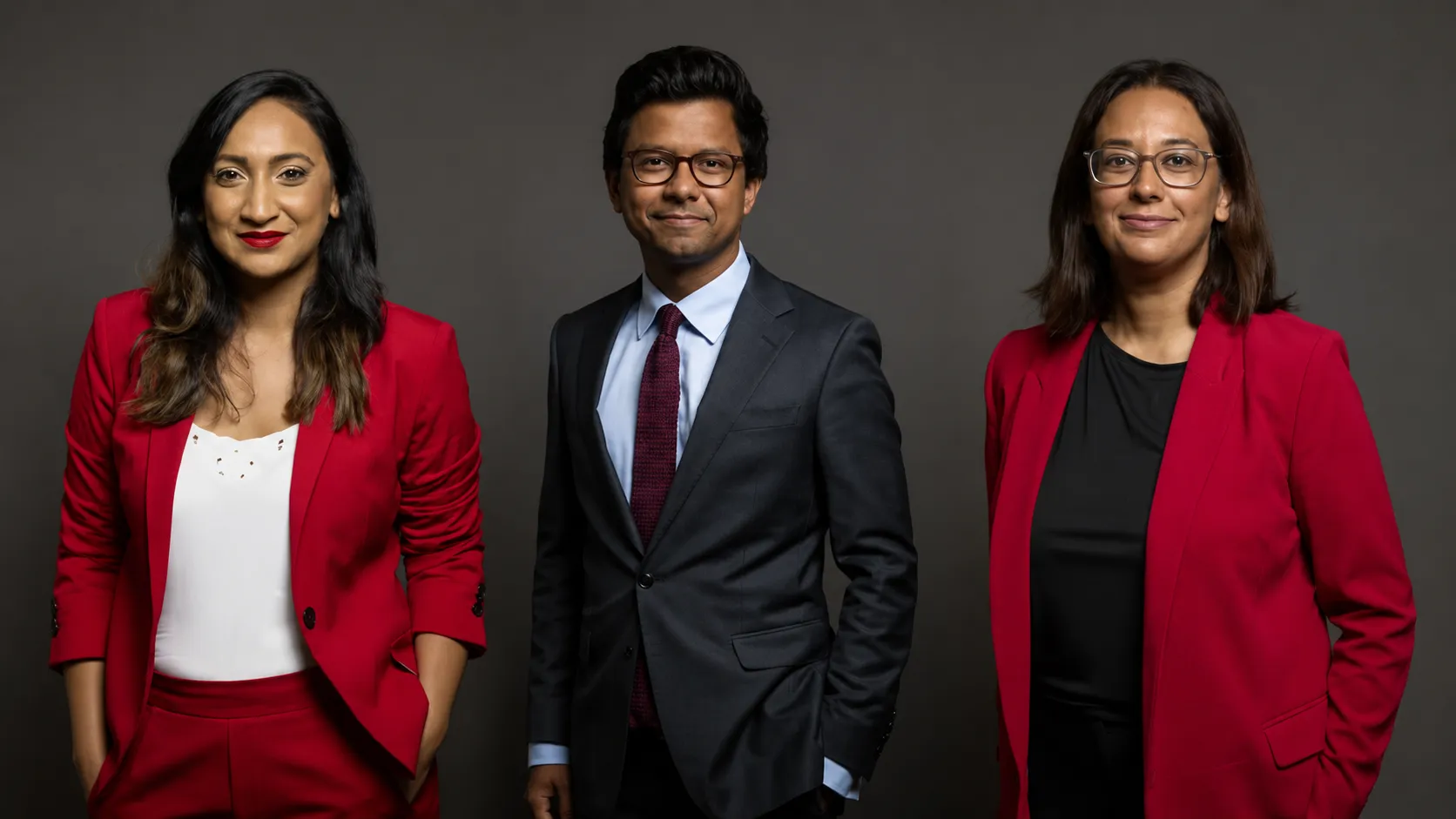
Satvir Kaur and Harpreet Uppal, two Labour Members of Parliament of Sikh Punjabi heritage, have been promoted to frontbench government roles as part of Prime Minister Andy Burnham's Cabinet reshuffle this week, joining fellow Indian-origin MP Kanishka Narayan in a set of appointments that collectively mark a significant increase in Indian-origin representation within senior tiers of the British government. The promotions bring the Labour frontbench to include two Hindu and two Sikh ministers of Indian heritage, alongside Culture Secretary Lisa Nandy, whose father was born in Kolkata.
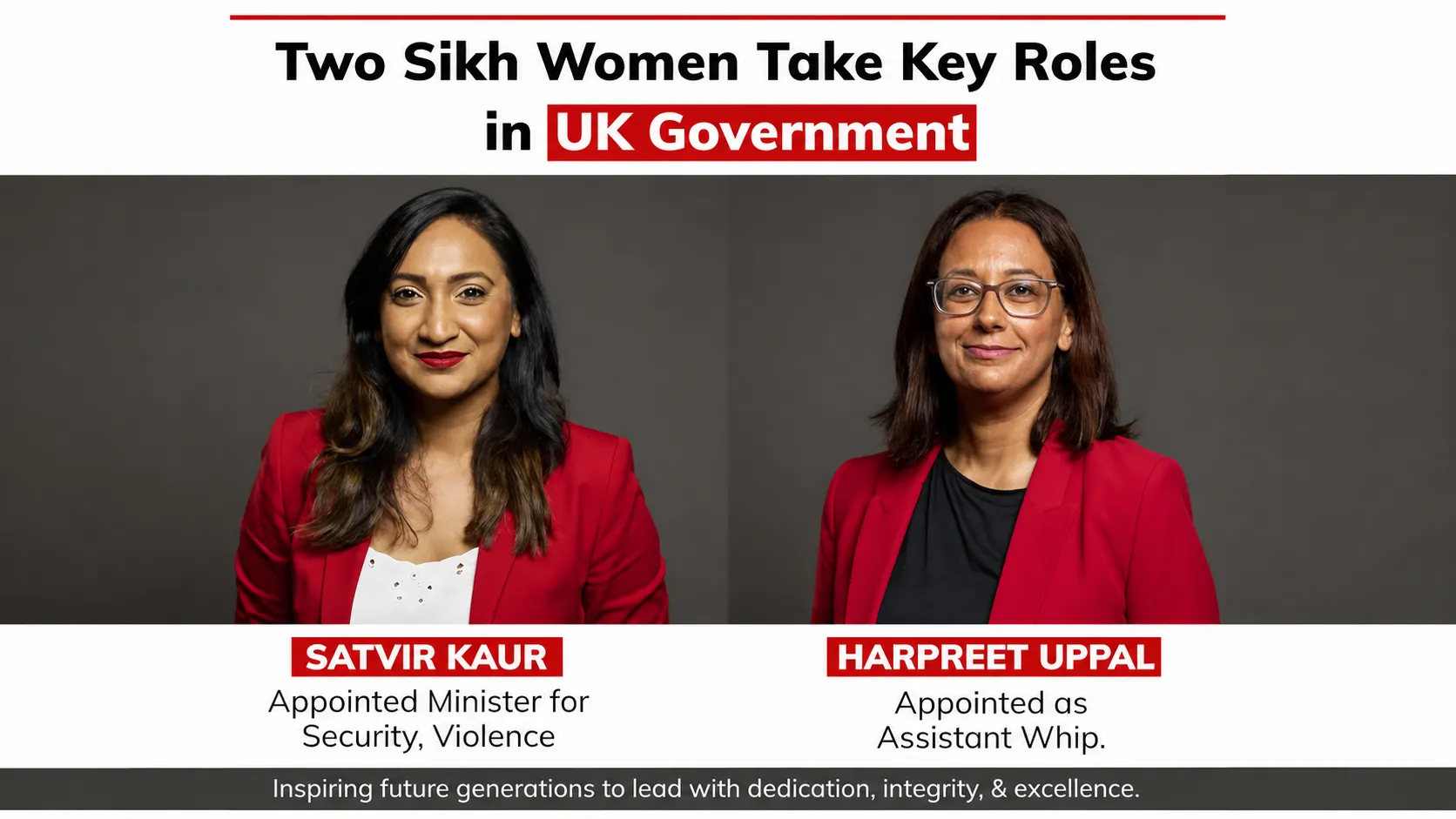
Kaur, the Labour MP for Southampton Test since July 2024, has been appointed Parliamentary Under-Secretary of State, serving as Minister for Equalities within the Ministry of Housing, Communities and Local Government, while simultaneously holding a Parliamentary Under-Secretary of State role within the Home Office. Her expanded portfolio spans safeguarding, tackling violence against women and girls, and broader equalities policy — a substantive brief reflecting both her prior ministerial experience and her long track record of community-focused advocacy work in Southampton before entering national politics.
Kaur's own background carries particular resonance given the nature of her new equalities-focused portfolio. Born and raised in Southampton, her family owned a sari shop in the city's Bevois area, and she began her political career at the local level, representing Shirley on Southampton City Council from 2011 before becoming the first female Sikh leader of a local authority anywhere in Britain when she was elected Leader of Southampton City Council in 2022, a position she held until 2023. She was elected to Parliament for Southampton Test in the July 2024 general election, succeeding long-serving Labour MP Alan Whitehead, who had held the seat for 27 years, before serving as Parliamentary Secretary in the Cabinet Office from September 2025 and returning to ministerial duties this year following maternity leave.
Uppal, the Labour MP for Huddersfield since July 2024, has been appointed Assistant Government Whip, a role that carries responsibility for coordinating parliamentary business and helping ensure party discipline during key legislative votes — a position that, while less publicly visible than a full ministerial brief, places her within the essential operational machinery that determines how the government's legislative agenda actually moves through Parliament. Before entering Parliament, Uppal built a career in Labour Party organising and local government, having served as a Kirklees Council member and worked as Deputy Chief of Staff for fellow Labour MP Debbie Abrahams.
Uppal's connection to Prime Minister Burnham specifically predates her own parliamentary career by several years, having worked on Burnham's successful 2017 campaign to become Mayor of Greater Manchester — an early campaign relationship that Burnham subsequently drew upon when he endorsed her own run for Parliament, and one that likely factored into her selection for this latest Whip's Office appointment as Burnham has assembled his top team following his own more recent elevation to the premiership. Uppal studied politics at Nottingham Trent University before completing a master's degree in international politics at the University of Bradford, building an academic and professional foundation in exactly the policy areas she now works on professionally within government.
The broader reshuffle in which both promotions occurred also saw two other senior Indian-origin politicians depart government roles and return to the backbenches: Seema Malhotra, who had served as Indo-Pacific minister, and Preet Kaur Gill, previously a junior health minister. Both were widely regarded as close allies of former Prime Minister Keir Starmer and had publicly defended his leadership following Labour's disappointing performance in recent local elections — meaning the reshuffle's net effect on Indian-origin representation within government reflects both new promotions and departures, rather than a simple, uncomplicated expansion.
Political analysts tracking the reshuffle have specifically highlighted the growing visibility of Sikh representation within the current Labour government's senior ranks, with Kaur and Uppal's promotions arriving alongside Narayan's own Cabinet-level AI Minister appointment to produce what commentary has described as an unusually diverse frontbench composition by the standards of recent British political history, spanning both religious and gender diversity within the specific cohort of Indian-origin ministers now serving under Burnham.
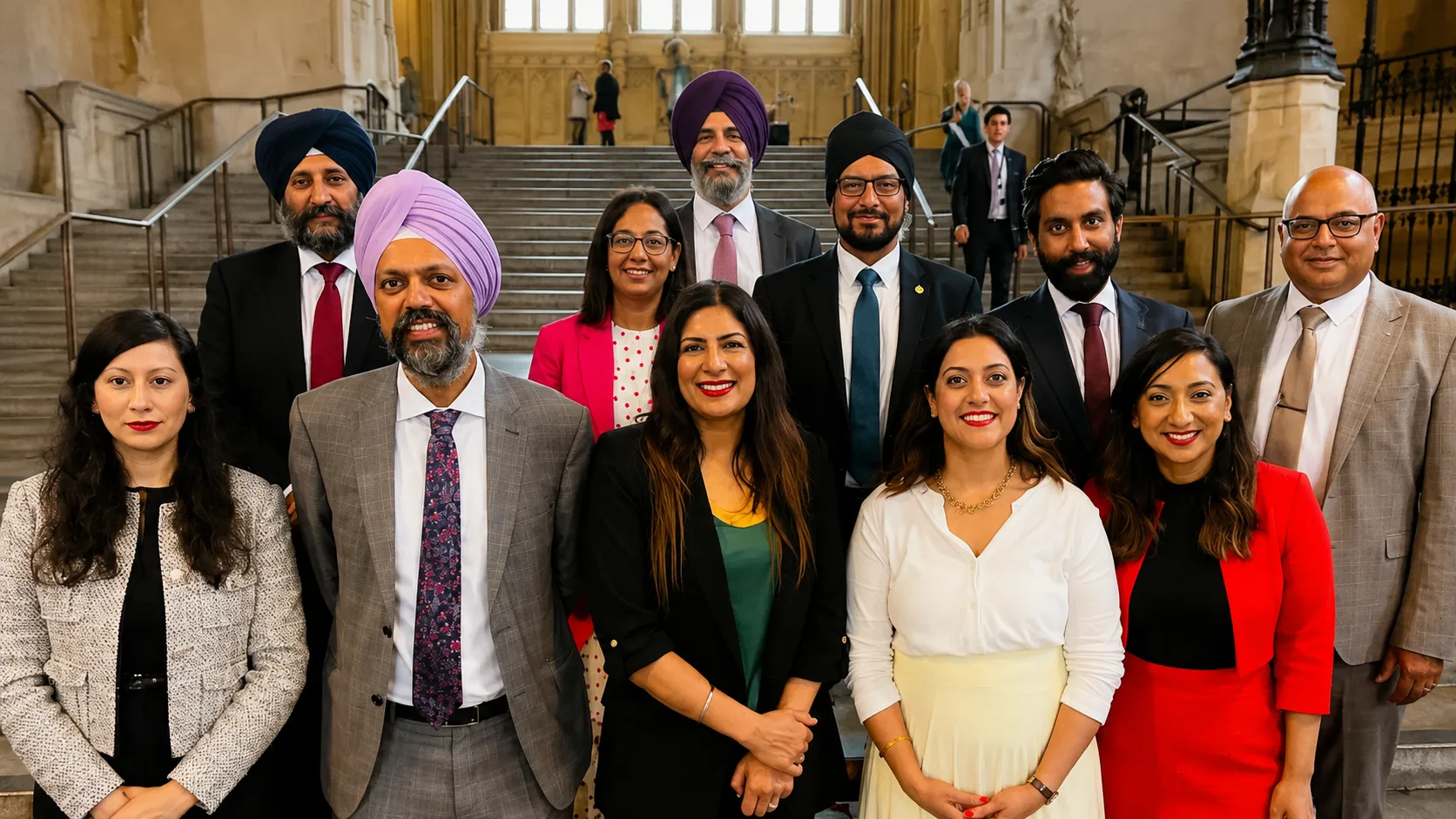
For the UK's substantial Sikh community specifically, Kaur and Uppal's simultaneous promotion carries particular symbolic weight, given the community's own distinctive migration and settlement history across Britain, from Southampton's historically significant Punjabi Sikh trading community to Huddersfield's own long-established Sikh population within West Yorkshire's broader South Asian diaspora. Both MPs' personal biographies — daughters of small business-owning immigrant families who built political careers through sustained local community engagement before reaching Westminster — reflect a familiar and well-documented pathway through which Britain's Sikh political representation has gradually expanded over successive parliamentary cycles.
The reshuffle's broader political context also matters considerably for understanding these appointments' significance. Burnham's relatively recent elevation to the premiership has involved him assembling a government team drawing on his own long-standing political relationships and alliances built over decades in Greater Manchester and national Labour politics, and the promotion of MPs like Uppal, with direct personal ties to his earlier mayoral campaigns, alongside Kaur, whose equalities-focused portfolio aligns closely with priorities Burnham has emphasised throughout his political career, suggests these appointments reflect genuine strategic alignment rather than purely symbolic diversity considerations.
As both newly promoted ministers settle into their expanded responsibilities, their performance in these roles is likely to be watched closely both within the UK's broader Indian and Sikh diaspora communities, for whom Westminster representation carries genuine symbolic and substantive importance, and within the Labour Party's own internal political calculus as Burnham continues shaping a government team that will need to demonstrate concrete policy delivery well beyond the immediate news cycle generated by any individual reshuffle announcement.
Westminster commentators tracking gender and religious representation within the current government have specifically noted that Kaur and Uppal's promotions, arriving in the same reshuffle as Narayan's Cabinet elevation, represent one of the more concentrated single-week expansions of Indian-origin ministerial representation in recent British political history, even accounting for the simultaneous departure of Malhotra and Gill from their own prior government roles.
For both newly promoted MPs, the coming parliamentary session will offer their first sustained test of ministerial delivery under genuine public scrutiny, with Kaur's equalities and safeguarding brief in particular likely to face close attention given the consistently high public and media interest historically attached to violence-against-women-and-girls policy within UK domestic politics.