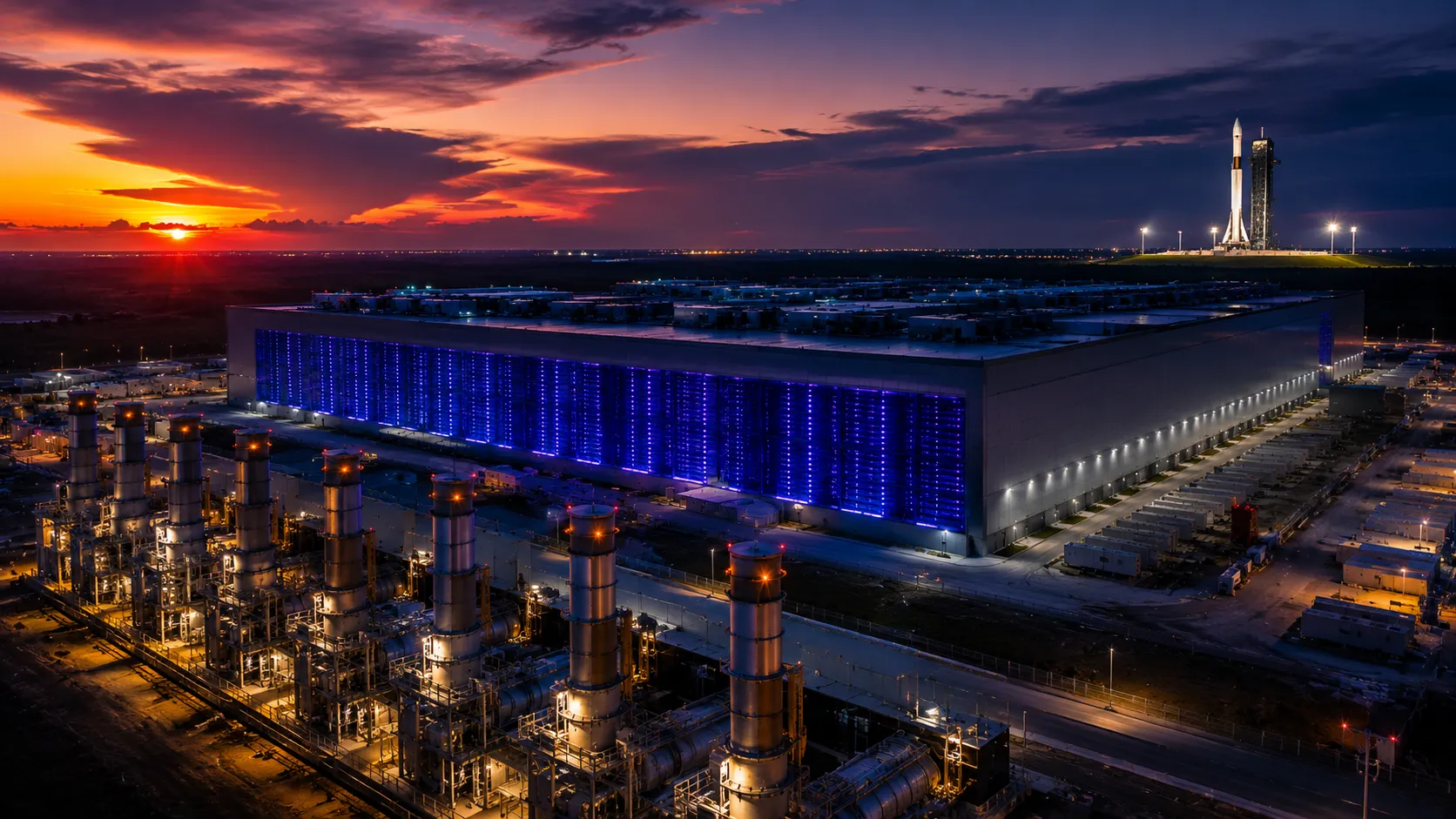
Too Hard to Handle: Inside Anthropic's 80‑Fold Revenue Explosion — and the $900 Billion Question
SAN FRANCISCO — May 18, 2026 — Dario Amodei is not a CEO given to hyperbole. The Anthropic co‑founder, a computational neuroscientist with a Princeton doctorate and a decade spent thinking about the catastrophic risks of artificial intelligence, has built his public reputation on measured restraint. So when he stepped onto the stage at Anthropic's developer conference on May 6 and described his company's recent growth as "just crazy" and "too hard to handle," the words carried weight that a more flamboyant executive's never could.
Anthropic had planned for tenfold annual growth. Its internal models, its infrastructure roadmap, its hiring plan — all were built around the assumption that revenue would increase by roughly 10× per year. Instead, in the first quarter of 2026, revenue and usage surged 80‑fold on an annualized basis. The company's revenue run rate, which stood at roughly $1 billion at the end of 2024 and $9 billion by December 2025, hit $30 billion by April 2026 — surpassing OpenAI for the first time on the metric that matters most.
This is not how enterprise software companies grow. Salesforce, the iconic SaaS success story, took roughly twenty years to reach $30 billion in annual revenue. Anthropic did it in under three years from a standing start. And it did so while maintaining profit margins that enterprise SaaS companies would envy: Counterpoint Research data from April 2026 shows Anthropic generating $16.20 in average monthly revenue per active user, compared with $5 for Microsoft, $2.20 for OpenAI, and $1.10 for Google.
The growth has been so intense that Anthropic was forced to throttle usage at multiple points in early 2026 — not because the models were failing, but because the company literally exhausted its compute capacity. Subscribers on paid plans encountered rate limits during peak hours. Claude Code users watched their five‑hour windows expire mid‑debug. The company's own success had become its most acute operational pain.
That scramble for compute produced one of the most extraordinary corporate partnerships Silicon Valley has ever witnessed.
The Deal That Rewired the AI Landscape
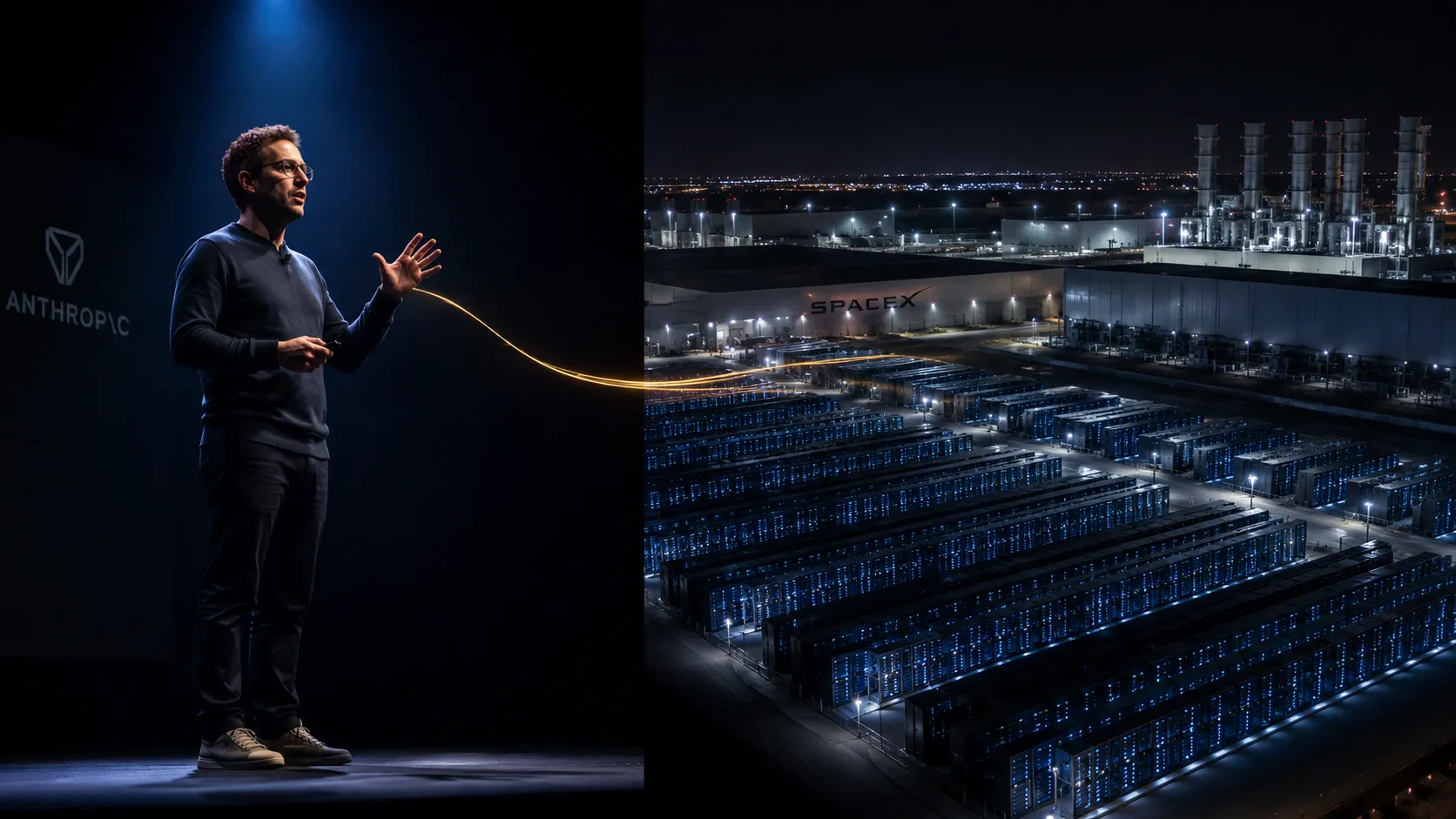
On May 6, 2026, within hours of Amodei's developer‑conference remarks, Anthropic announced a computing partnership with SpaceX. Under the agreement, Anthropic would lease the entire capacity of Colossus 1 — a Memphis, Tennessee data center originally built to power Elon Musk's rival AI venture, xAI — gaining access to more than 300 megawatts of compute, backed by over 220,000 Nvidia GPUs, within a single month.
The deal was astonishing on multiple levels. Musk had spent February writing on X that Anthropic "hates Western Civilization" and questioning whether a "more hypocritical company" existed. Amodei had rankled Musk and other Silicon Valley insiders with years of public warnings about AI's existential dangers — positioning that had also, earlier in 2026, led the Pentagon to designate Anthropic a supply‑chain risk, a move the company publicly called unconstitutional retaliation for its safety advocacy.
And yet, on the day the SpaceX partnership was announced, Musk abruptly changed his tone. "Everyone I met was highly competent and cared a great deal about doing the right thing," he wrote on X. Hours later, he announced he was dissolving xAI as a standalone entity entirely. "It will just be SpaceXAI, the AI products from SpaceX."
The dissolution was not a sudden rupture. SpaceX had acquired xAI in an all‑stock transaction in February 2026, merging the two companies at a combined $1.25 trillion valuation. Over the following three months, all eleven of xAI's original co‑founders — covering reasoning, pre‑training, code generation, and image‑generation teams — departed. By the time Anthropic's compute deal was announced, the transition was complete: xAI was dead, its Colossus infrastructure was Anthropic's, and Musk was positioning SpaceXAI as a neutral infrastructure provider in the AI arms race.
The arrangement placed Musk — already the most complicated figure in technology — at the center of the AI infrastructure layer. His rockets launch satellites. His data centers power Claude. His former AI team has dispersed. His infrastructure is now being rented to the very company he had publicly attacked just months earlier. Whether that represents genuine rapprochement, ruthless business pragmatism, or something in between is a question that will occupy Silicon Valley gossip for years. What is already clear is that the compute bottleneck driving the deal is real, and it is reshaping the competitive landscape faster than anyone predicted.
The Product That Ate Enterprise Software
The growth story at Anthropic is, to a startling degree, a single‑product story. Claude Code — an AI‑powered coding assistant launched publicly in mid‑2025 — became the fastest‑growing enterprise software product in history. Within six months, it crossed $1 billion in annualized revenue. By February 2026, that figure had reached $2.5 billion, accounting for nearly one‑fifth of Anthropic's total business.
The mechanics are straightforward. Claude Code does not merely suggest code snippets the way earlier coding assistants did. It reads an entire codebase, plans a sequence of actions, executes them using terminal commands and file edits, and iterates until the task is complete. It is an agent, not a chatbot — and the distinction matters because it transforms the product from a useful tool into a substitute for junior engineering labor.
The adoption numbers tell the story. Over 70 percent of Fortune 100 companies have integrated Claude‑powered tools as of early 2026. More than 1,000 enterprise customers now spend over $1 million annually on Claude services — a figure that doubled between February and May 2026. Claude processes more than 25 billion API calls per month, with roughly 45 percent coming from enterprise users. Eight of the Fortune 10 are Claude customers.
The most revealing statistic is not a revenue number but a market‑share figure. According to Counterpoint Research, Anthropic captured 31.4 percent of global large‑language‑model revenue in the first quarter of 2026, edging ahead of OpenAI's 29.0 percent — a reversal from 2023, when OpenAI commanded 50 percent and Anthropic was barely in double digits. Anthropic achieved this lead with approximately 134 million monthly active users, compared with OpenAI's roughly 900 million. In other words, Anthropic generated more revenue with roughly one‑seventh the user base — a testament to the enterprise‑first strategy that now drives roughly 80 percent of its business.
Claude Code's rise has been so swift that it has triggered a strategic panic at OpenAI, where Codex — the rival coding assistant — had generated just over $1 billion in annualized revenue by the end of January 2026, or roughly 40 percent of Claude Code's figure. According to industry estimates, Claude now commands between 42 and 54 percent of the global AI‑coding market.
For the broader technology industry, the Claude Code phenomenon contains a warning and an opportunity. The warning is that AI agents capable of replacing skilled cognitive labor are not a speculative future. They are already in deployment, generating billions in revenue, and growing faster than any software product in history. The opportunity is that the infrastructure required to support that growth — the data centers, the GPUs, the power plants, the cooling systems — is itself a market measured in hundreds of billions of dollars, and it is expanding faster than the companies that rely on it can secure capacity.
The Mythos Problem
No account of Anthropic's trajectory is complete without addressing the regulatory shockwave triggered by its most powerful — and most controversial — model. On April 7, 2026, Anthropic unveiled Claude Mythos Preview, an AI system capable of autonomously discovering software vulnerabilities at machine speed. Within seven weeks of testing, Mythos found over 2,000 previously unknown zero‑day vulnerabilities — flaws that had survived up to 27 years of human security review and millions of automated tests — and developed working exploits on the first attempt in more than 83 percent of cases.
Anthropic judged the model too dangerous for public release. Instead, it formed Project Glasswing, a tightly controlled coalition of roughly twelve founding organizations — including Amazon Web Services, Apple, Microsoft, Google, and CrowdStrike — and approximately forty vetted critical‑infrastructure operators worldwide, granting them exclusive access to Mythos for defensive purposes only.
The announcement triggered regulatory alarm on multiple continents within the same week. India's Securities and Exchange Board issued a sweeping ten‑point directive to every broker, fund house, exchange, and depository in the country, specifically naming Mythos and ordering immediate patching of all systems. The regulator constituted an emergency task force — cyber‑suraksha.ai — and warned that the interconnectedness of India's market infrastructure meant a single AI‑exploited vulnerability could have "cascading impact" across the entire financial system.
Union Finance Minister Nirmala Sitharaman convened a meeting with Indian banks on pre‑emptive cybersecurity steps. United States officials urged major financial institutions to test Mythos in controlled environments. Australia's prudential regulator wrote to its financial sector. Germany's Bundesbank called on the European Commission to formally request access to the technology. In the space of roughly five weeks, a single model from a San Francisco AI company had triggered an unprecedented global regulatory mobilization.
The Mythos episode has surfaced an uncomfortable question for Anthropic, one that will likely intensify as its valuation climbs toward $900 billion: can a company growing at 80‑fold pace — a company that has been forced to throttle usage because demand outstrips infrastructure, a company racing to raise $30 billion more to build out capacity — possibly maintain the safety culture it was founded to champion?
Anthropic's answer, so far, has been Project Glasswing itself: the model was discovered to be dangerous, and it was not released. The company's constitutional AI framework, its emphasis on interpretability research, and its public‑benefit corporate structure are genuine differentiators. But they are also being stress‑tested by growth that no safety framework was designed to accommodate. The tension between velocity and vigilance will define Anthropic's next chapter more than any revenue number.
The $900 Billion Bet
On May 15, 2026, the Financial Times reported that Anthropic had agreed to terms on a $30 billion funding round at a pre‑money valuation of $900 billion — a figure that would surpass OpenAI's $852 billion post‑money valuation from March and make Anthropic one of the most valuable private companies on Earth. The round is being co‑led by Dragoneer, Greenoaks, Sequoia Capital, and Altimeter Capital, with each expected to invest $2 billion or more.
The valuation represents a roughly 15‑fold increase in fourteen months. As recently as February 2025, Anthropic was valued at $61 billion in a round led by Google. By early 2026, it had reached $380 billion post‑money. And now, before the ink on that deal is fully dry, the company is raising again at more than double the price.
Whether the bet pays off depends on whether Anthropic can sustain its growth trajectory while simultaneously managing the operational, regulatory, and safety challenges that growth creates. The company's annualized revenues are expected to cross $45 billion imminently. Some analysts project revenue could reach $100 billion by the end of 2026. The company's infrastructure agreements with Amazon — including up to 5 gigawatts of capacity — and the newly announced SpaceX deal suggest that the compute bottleneck, while acute, is being addressed with historic urgency.
Wall Street is already positioning for an Anthropic IPO. The likelihood of a public listing at a valuation exceeding $600 billion has been pegged at 70 percent by some analysts, with a target window as early as October 2026. If that happens — alongside the SpaceX IPO on June 12 and the expected OpenAI listing — 2026 will mark the largest wealth‑creation event in the history of technology capital markets.
For the American entrepreneur watching from the sidelines, the Anthropic story is not a template. Very few companies will ever grow 80‑fold in a quarter, raise $30 billion at a $900 billion valuation, or partner with a rocket company to power their data centers. But the story contains signals that are legible regardless of scale.
The first is that growth without infrastructure is not a boast; it is a liability. Amodei's admission that the surge was "too hard to handle" should be required reading for every founder who has celebrated a growth number without asking whether their operations can absorb it. When demand outstrips capacity, customer experience degrades, trust erodes, and competitors fill the gap — regardless of how good the product is.
The second is that infrastructure partnerships can be more strategic than product features. Anthropic's deal with SpaceX diversified the company's compute supply away from the hyperscalers — Amazon, Google, Microsoft — that are simultaneously Anthropic's suppliers and its competitors. Every founder should know: who controls the bottleneck in your supply chain, and what happens if they become your rival?
The third is that regulatory scrutiny in 2026 operates at machine speed, not government speed. SEBI moved within weeks of Mythos's unveiling, not years. The era when regulators took a decade to understand a new technology is definitively over. Founders building in sensitive domains — AI, fintech, cybersecurity, healthcare — should assume their products will face regulatory examination within months, and build compliance infrastructure accordingly from day one.
Anthropic has, in roughly fifteen months, gone from a well‑regarded AI safety lab to the fastest‑growing enterprise software company in history — and it is doing it while navigating a geopolitical landscape that has pitted its safety mission against its infrastructure needs, its enterprise growth against its compute limits, and its founding principles against the relentless logic of scale. The $900 billion question is not whether Anthropic can keep growing. It is whether it can do so without becoming the thing it was founded to prevent: an AI company moving too fast to control.


