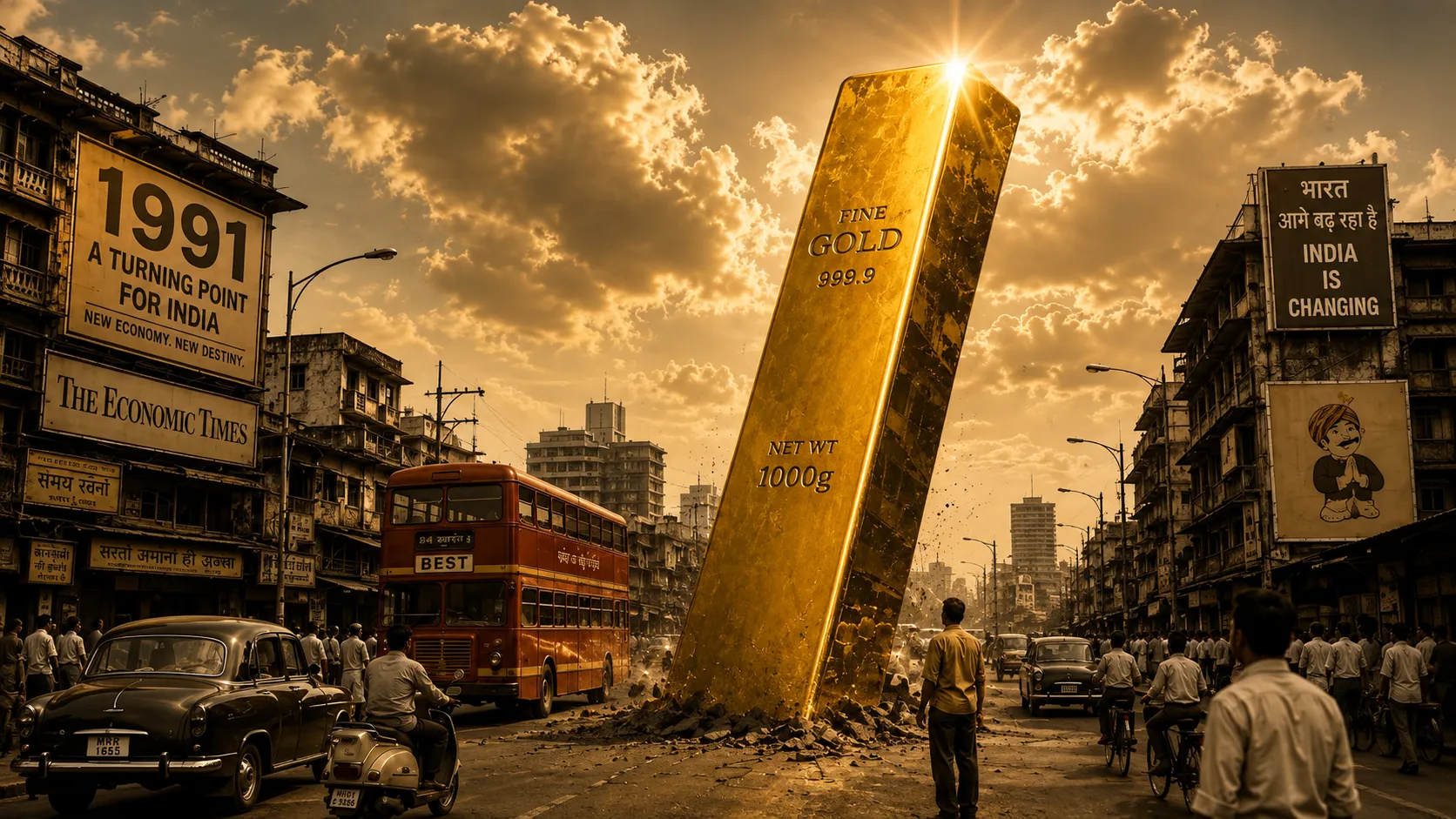
Thirty-five years ago this summer, a soft-spoken economist-turned-politician stood up in the Lok Sabha and, in the space of a single Budget speech, dismantled the economic architecture that had governed India since Independence. On July 24, 1991, then Finance Minister Manmohan Singh — who would go on to become Prime Minister more than a decade later — opened his address with words that read, even today, like a diagnosis of genuine crisis rather than routine fiscal housekeeping: there was, he told the House, no time to lose; neither the government nor the economy could continue living beyond its means year after year, because the room to keep borrowing money or time simply no longer existed.
That warning was not political theatre. By 1991, India stood on the edge of one of the most severe economic crises in its post-Independence history. Foreign exchange reserves had dwindled to a level barely sufficient to cover two weeks of imports, forcing the government into the humiliating position of physically pledging the country's gold reserves to raise emergency funds and stave off a sovereign default. Inflation was running high, economic growth had slowed to a crawl, and decades of an economy governed by industrial licensing, import restrictions and tight state control had left Indian industry uncompetitive, inefficient and largely cut off from global capital, technology and ideas.
Into that crisis, the government of Prime Minister P.V. Narasimha Rao, with Singh as his Finance Minister, introduced what became known as the New Economic Policy of 1991 — a sweeping reform package built around the now-familiar triad of liberalisation, privatisation and globalisation. Industrial licensing, the notorious system under which businesses required government permission simply to expand production or enter new lines of business, was dismantled for most sectors. Import restrictions were eased. Foreign investment, long treated with deep suspicion, was actively courted. And the private sector, for decades relegated to a subordinate role behind an expansive public sector, was handed a dramatically larger role in shaping the country's economic future.
The specific mechanics of the 1991 reforms, viewed from today's vantage point, read as a remarkably comprehensive rewiring of how the Indian economy functioned. On trade, the government devalued the rupee by roughly 18% to boost export competitiveness, eased import restrictions specifically for exporters, and liberalised capital goods imports so they no longer required prior government approval. On industrial policy, licensing was abolished for most sectors, public sector exclusivity in numerous industries was reduced, and previously closed sectors were opened to private entry in order to inject competition into markets long dominated by state monopolies or a handful of protected private conglomerates.
The reforms also reached into corporate regulation and foreign investment policy with equal ambition. The Monopolies and Restrictive Trade Practices Act, which had required large firms to seek government approval before expanding operations, was amended to remove that requirement, while small-scale industrial enterprises were permitted to sell up to 44% equity to larger companies — a change designed to help smaller businesses access growth capital that had previously been extremely difficult to raise. On foreign investment specifically, the government raised the Foreign Direct Investment cap from 40% to 51% in a defined set of priority industries and created the Foreign Investment Promotion Board to fast-track clearances, replacing what had previously been a notoriously slow and unpredictable approval process.
Perhaps nowhere is the cumulative impact of those reforms more visible today than in India's financial services sector, which has undergone what can only be described as a complete transformation over the intervening three and a half decades. In 1991, Indian banking was overwhelmingly dominated by public-sector lenders operating under tightly controlled interest rates, with private participation limited to the margins of the industry. The reforms progressively opened the door to new private banks, deregulated interest rates, and strengthened capital-market supervision — the Securities and Exchange Board of India, now the powerful statutory regulator overseeing India's stock markets, was itself established as a statutory body only in 1992, the year immediately following the reforms. Insurance, another sector long closed to private and foreign participation, was subsequently opened to private companies, while the rapid expansion of digital payments infrastructure after 2010 — culminating in India's now globally studied Unified Payments Interface — extended the reach of formal financial services deeper into the country than even optimistic reformers of 1991 likely imagined possible.
The scale of that transformation is captured in a striking data point from a Bajaj Finserv Asset Management Company study: the aggregate market value of India's banking and financial services companies rose from approximately ₹1.8 trillion in 2005 to roughly ₹91 trillion by 2025 — a more than fiftyfold increase in twenty years alone, let alone across the full 35-year span since liberalisation began. Mutual funds, insurance products, fintech lending platforms and UPI-based digital payments have collectively widened access to formal financial services for hundreds of millions of Indians who, in the pre-liberalisation era, would have had little to no meaningful interaction with organised banking or capital markets.
Yet even within this genuine success story, meaningful gaps remain stubbornly persistent. Credit availability for small businesses and farmers continues to lag behind the scale of the broader financial sector's growth, periodic stress among non-banking financial companies has repeatedly tested the resilience of India's shadow banking system, and gaps in financial inclusion — despite the undeniable progress delivered by digital payments infrastructure — remain a genuine policy challenge rather than a solved problem, particularly in rural and economically marginalised communities.
Financial services, however, represents only one thread of a much broader transformation story spanning telecommunications, information technology, pharmaceuticals and the automotive sector, each reshaped in its own way by the liberalisation, privatisation and globalisation logic set in motion in 1991. India's IT services industry, in particular, emerged as arguably the single most globally visible beneficiary of the reform era, building on the liberalised trade and investment environment to become a genuinely world-class export industry employing millions and generating billions of dollars in annual foreign exchange earnings — a complete inversion of the foreign exchange crisis that had originally forced the 1991 reforms into existence.
Beyond the sector-specific transformations, some of the most compelling evidence for the scale of change since 1991 comes from broader indicators of everyday material life across Indian households. Vehicle ownership has increased approximately 45 times since the reforms began, a figure that reflects both rising incomes and the dramatic expansion of India's domestic automotive manufacturing base, itself a direct beneficiary of the liberalised industrial licensing and foreign investment regime. Formal sector savings, meanwhile, have expanded even more dramatically: provident fund enrolments have risen roughly 75 times over the same period, signalling a substantial expansion in formal wage employment and the institutional savings infrastructure built to support it. Mobile phone penetration, stock market capitalisation and foreign exchange reserves have all followed similarly exponential growth trajectories — the last of these representing perhaps the most pointed historical irony of all, given that the entire reform process was triggered by reserves so depleted the country could barely finance two weeks of imports.
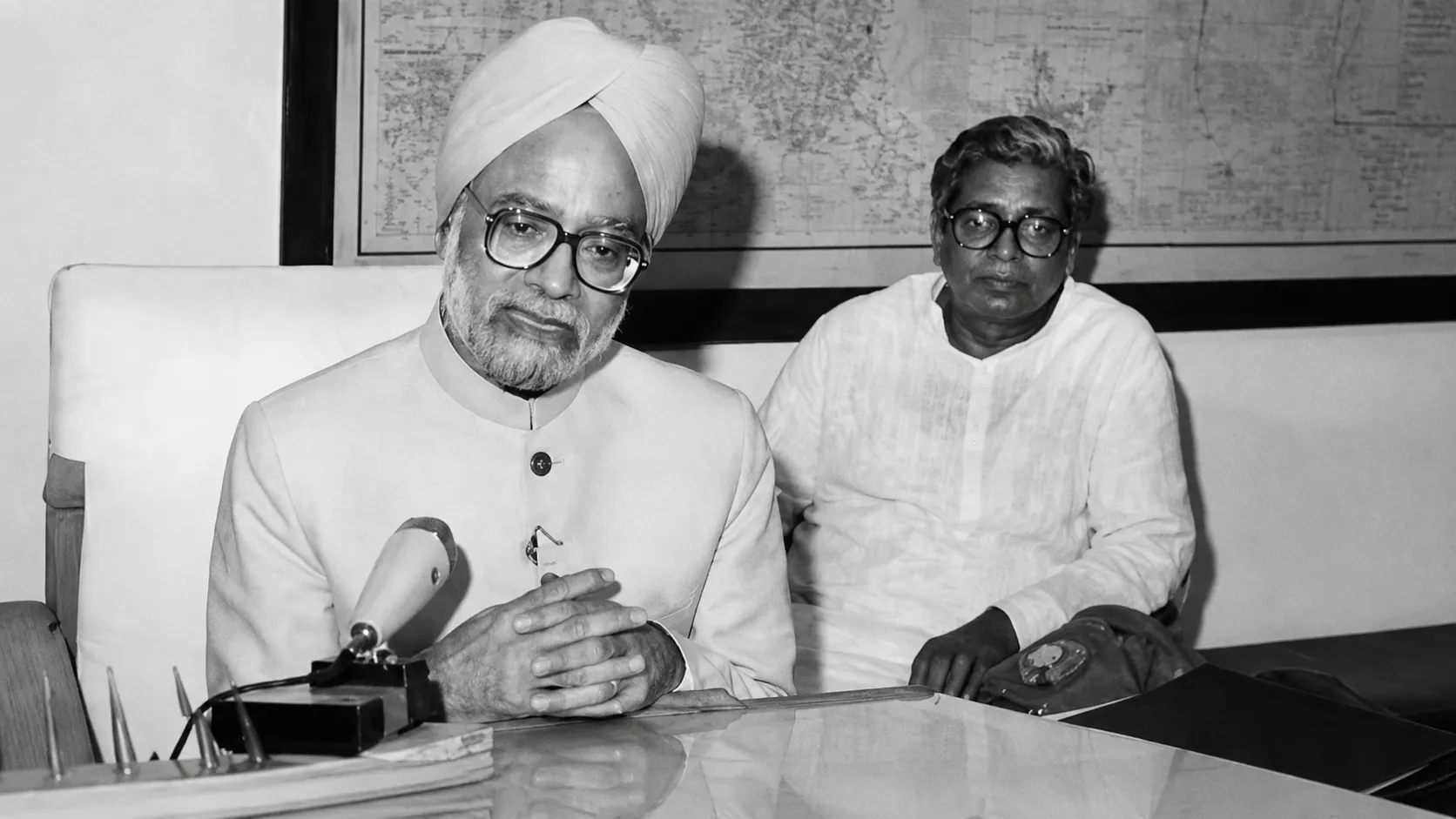
And yet, for all of this transformation, a growing body of economic commentary marking this year's 35th anniversary has been notably unwilling to treat 1991 as a simple, unqualified triumph. Writing in The Tribune on the actual anniversary of Singh's Budget speech, commentators observed that while the dismantling of industrial and trade controls unquestionably accelerated India's rate of economic growth and its pace of poverty reduction, the promise of 1991 has ultimately been redeemed only partially — a sentiment echoed across multiple retrospective analyses published around the anniversary, many of which draw a pointed comparison to China, whose per-capita GDP stood roughly on par with India's in 1991 but has since grown to approximately five times India's level today.
The specific gaps most frequently cited by economists examining the 35-year record centre on employment, manufacturing and inequality. Despite India's undeniable success in services-led growth — IT, financial services and a range of knowledge-economy sectors chief among them — the reforms have been judged by many economists as substantial but incomplete in creating the kind of mass non-farm employment that a country with India's demographic profile and workforce size genuinely requires. Manufacturing, in particular, has never achieved the scale of contribution to GDP and employment that policymakers across successive governments, from the original 1991 reformers through to more recent Make-in-India era initiatives, have repeatedly targeted and repeatedly fallen short of delivering.
Inequality has emerged as an equally persistent theme in this year's anniversary retrospectives. While liberalisation unquestionably lifted hundreds of millions out of poverty over the past three and a half decades, economists reviewing the 35-year record have pointed to a widening gap between India's globally competitive, services-led growth engines and large swathes of the population still dependent on low-productivity agriculture or informal employment, largely untouched by the reform era's most dramatic gains. That divergence, more than any single policy metric, is frequently cited as the clearest evidence that the 1991 reforms, whatever their undeniable successes, were never designed to be a complete or self-executing solution to India's development challenges on their own.
The Centre for Strategic and International Studies, which maintains an ongoing tracker of reforms undertaken by India since 1991, has identified a specific list of measures that remain either partially implemented or not yet begun at all, more than three decades on: further liberalisation of foreign direct investment rules, including persistent restrictions on foreign investment in multi-brand retail; the long-promised goal of guaranteeing business owners regulatory permits within ten days or less; and bringing electricity, real estate and alcohol — three sectors that remain notable exceptions to India's otherwise sweeping Goods and Services Tax regime — fully within the ambit of GST. Each of these represents, in effect, unfinished business from an agenda first set in motion by a single Budget speech delivered in the summer of 1991.
For India's business community and policymakers gathering to mark this 35th anniversary in the summer of 2026, the retrospective mood has therefore been one of genuine, substantial pride tempered by clear-eyed acknowledgment of work still undone. The India of 2026 is unrecognisably larger, more open, more globally integrated and, by virtually every available metric, considerably richer than the India that stood at the edge of default in the summer of 1991. But the specific vision Manmohan Singh articulated in that landmark Budget speech — of an India whose emergence as a major economic power was, in his own words, an idea whose time had come — remains, by the assessment of many of the economists now revisiting his legacy, a project still very much in progress rather than a story with a finished ending.
As India's current economic policymakers navigate their own set of challenges — from the Reserve Bank of India's careful balancing act on interest rates amid global energy market volatility, to a fresh wave of corporate earnings and capital market activity unfolding this very week — the 35-year retrospective on 1991 serves as a useful reminder that today's incremental, quarter-by-quarter policy decisions sit within a much longer arc of reform that began with a genuine crisis, a moment of political courage, and a Finance Minister who chose to tell Parliament, and the country, an uncomfortable truth rather than a comfortable one.
That longer arc also offers a useful corrective to the tendency, common in daily financial journalism, to treat each quarter's GDP print, each central bank decision or each IPO listing as an isolated event rather than part of a continuous story stretching back to the choices made in 1991. The gold loan boom powering Muthoot Finance's record quarter, the oversubscribed IPO of a Faridabad railway electronics manufacturer, and the RBI's own careful, data-driven approach to monetary policy are all, in their own ways, downstream consequences of the liberalised, globally integrated financial and industrial architecture that Manmohan Singh's Budget speech first set in motion thirty-five years ago — a legacy that today's policymakers, executives and investors continue to build upon, extend, and in some cases still struggle to fully realise.
This report is based on retrospective coverage and analysis published around the 35th anniversary of India's 1991 economic reforms by Business Standard, The Tribune, Business Today, ThePrint and the Centre for Strategic and International Studies' reform tracker.


