He Watched Korean Dramas With His Nieces and Saw a ₹2 Trillion Market Nobody Had Built For.
During the pandemic, when the world had gone inside and streaming platforms had become the dominant entertainment infrastructure for Indian households, Sumit Jasoria was watching television with his nieces. They were 10 and 12 years old. They were completely absorbed not just by the Korean dramas themselves but by the fashion in them — the specific aesthetic of K-drama style, the outfits that characters wore, the way the shows presented clothing as an expression of personality rather than a category of basic need.
And then Jasoria started looking at what was available in India for young women who wanted to dress the way they were seeing on screen.
He found a gap large enough to build a company in.
Zara and H&M had the aesthetics and the trend-consciousness, but at price points that most Indian Gen Z consumers — many of them students or early in their careers — could not regularly access. The fast fashion options on platforms like Myntra were faster and more affordable but lacked the personality and the trend relevance that the hyper-online Gen Z audience was demanding. And no Indian brand was moving at the speed that the social media content cycle required — the speed at which TikTok, Instagram, and YouTube were generating and spreading new trend signals that the Gen Z audience wanted to wear in real life almost before the content had finished loading.
The founding question that Jasoria articulated was specific: how do you bring trends faster than Zara, at one-third the price?
That question became NEWME.
What NEWME Built — and the Supply Chain That Makes It Possible
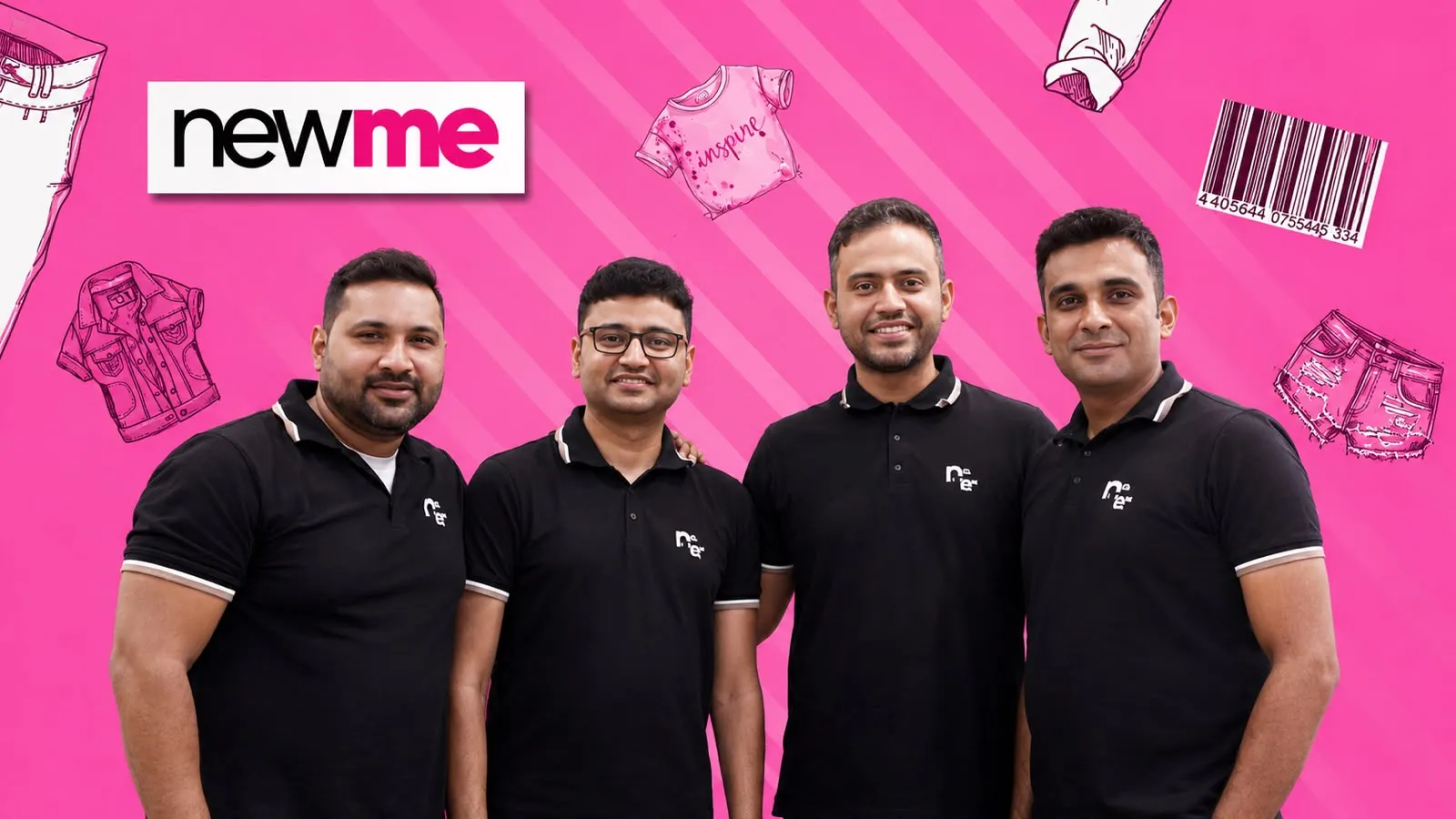
NEWME was founded in June 2022 by Sumit Jasoria, Vinod Naik, Shivam Tripathi, and Himanshu Chaudhary. It is headquartered in Bengaluru and focused exclusively on Gen Z women. The brand targets the customer who is hyper-connected to global trend signals, fashion-conscious about the specific aesthetics of those trends rather than generic clothing, and operating within a budget that puts Zara at the edge of occasional affordability rather than regular purchase.
The number that defines NEWME's operating model is 500. Five hundred new designs launched every week. Not new colourways of existing designs. Not seasonal refreshes. Five hundred distinct new styles, released weekly, across an inventory of more than 12,000 live designs across all channels.
No major Indian fashion brand does this. No international fast fashion brand operating in India does this at this scale at NEWME's price points. The reason is that building a supply chain capable of identifying a trend, designing a garment, manufacturing it at scale, and delivering it to a consumer within the window in which the trend is still culturally active — all at an affordable price — is one of the most technically and operationally demanding challenges in fashion. The complexity compounds at 500 designs per week.
Jasoria has been direct about why this is NEWME's moat: the supply chain is the biggest competitive advantage, and it is difficult to replicate due to the complexities of building something this efficient. The supply chain is not just a logistics capability. It is the data-driven process of identifying which trend signals to act on, how to translate them into garment specifications that Indian Gen Z consumers will actually purchase, and how to manufacture and deliver at the volume required to sustain 500 weekly launches without accumulating excess inventory.
Technology and data science are embedded throughout this process. The company's ability to track trend signals globally, test them against its user behaviour data, and act on the most promising ones within the time horizon the social media cycle allows is what separates NEWME from brands that design seasonally and discover too late that they built for a trend that had already moved on.
The Numbers That Made Investors Return
NEWME has raised $35.6 million across five funding rounds since its founding, and the trajectory of those rounds tells the story of investor conviction building over time.
The first funding in November 2022 was seed capital from All In Capital, AUM Ventures, and 2am VC. A $5.4 million pre-Series A followed in January 2024. The $18 million Series A led by Accel India, with Fireside Ventures and AUM Ventures participating, closed in July 2024. Then, in November 2025, the first close of the Series B: ₹108.66 crore — approximately $12 million — co-led by Accel India and Fireside Ventures, with Point72 Ventures joining as a new investor.
The investors returned. That is the most direct possible signal. Accel and Fireside both reinvested in the Series B after backing the Series A. When the investors who have the most detailed view of a company's unit economics, growth trajectory, and operational challenges choose to put more money in, the argument for the business model is made more credibly than any pitch deck can make it.
The revenue story supports the conviction. NEWME generated ₹3.4 crore in FY23, its first full year of operation. By FY25, revenue had crossed ₹180 crore. That is a 50 times increase in revenue in two years — a growth rate that is extraordinary even by the standards of Indian D2C fashion, where growth is plentiful but the consistency of unit economics at scale is rare.
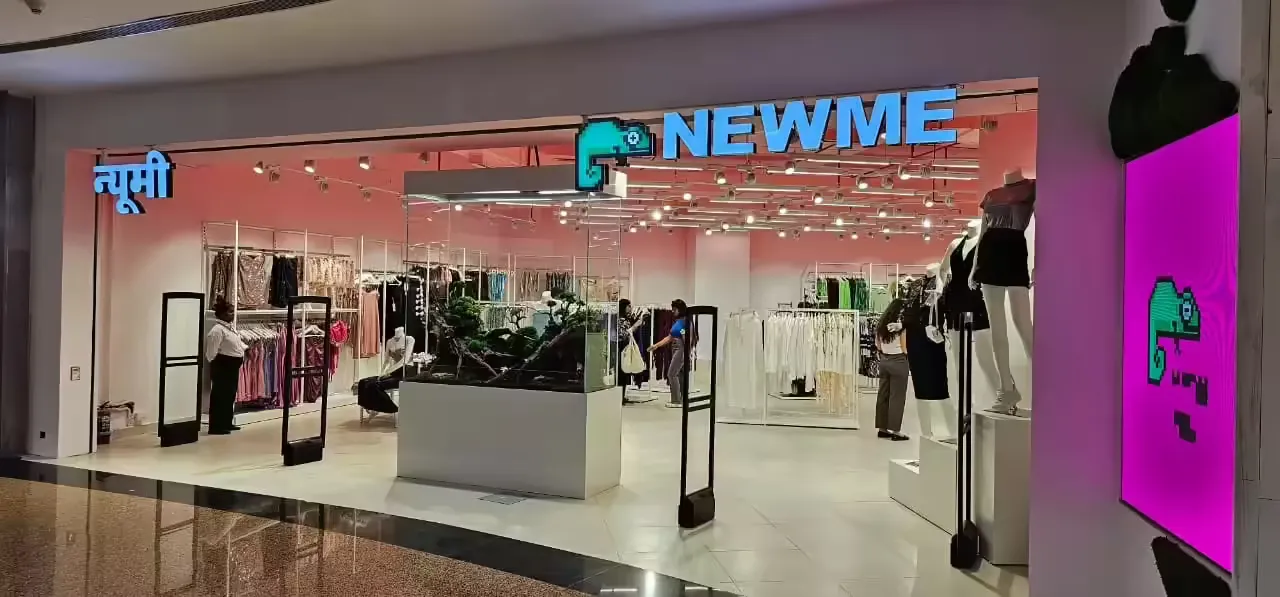
The app has crossed 7 million downloads. The registered user base across app and website reached 35 to 40 lakh users. Sixteen retail stores are now operating across Bengaluru, Hyderabad, Indore, Delhi NCR, Pune, Mumbai, and Chandigarh. The ambition for offline expansion was laid out explicitly: 40 to 50 stores across 20 key cities in the next 12 to 18 months, including markets like Guwahati, Shillong, and Imphal where modern fashion retail has historically been underserved.
NEWME Zip — Quick Commerce Comes to Fashion
The most recent strategic evolution is also the one with the most uncertain outcome: NEWME's entry into fashion quick commerce.
In late 2024, NEWME entered the quick commerce space with a 90-minute delivery service in Delhi NCR. In May 2025, it launched NEWME Zip in Bengaluru — a service offering over 1,500 styles for delivery in under 60 minutes, supported by a network of dark stores, zonal hubs, and a real-time inventory engine designed to keep the right styles near high-demand areas. In early trials, the company claims to have consistently delivered in under 30 minutes even during peak traffic hours.
The strategic logic is clear. Quick commerce has transformed the expectations of Indian urban consumers for groceries, pharmaceuticals, and electronics. If it can be applied to fashion with sufficient inventory depth and supply chain reliability, it creates a delivery experience that no offline store and no standard e-commerce delivery can match: want it now, have it within the hour.
The operational challenge is equally clear. Fashion is not groceries. Inventory management for clothing — across sizes, styles, and trend cycles that move in days rather than months — is significantly more complex than stocking fast-moving consumer goods. NEWME Zip's competitive advantage is that it has 500 new designs per week to populate the dark stores with. Its operational risk is that those same 500 weekly designs create an inventory complexity that even experienced quick commerce operators have not yet had to navigate at fashion's pace.
Anand Daniel, Partner at Accel, described the investment case in terms that go beyond the product and into the category: D2C brands are uniquely positioned to capitalise on India's retail sector, which is set to cross $2.2 trillion by 2030. NEWME has set the benchmark for customer obsession in the apparel category by integrating product innovation and data-driven market insights.
The Target — and Whether It Is Achievable
NEWME's stated goal is ₹1,000 crore in revenue within five years of founding. With ₹180 crore in FY25, that implies roughly 5.5 times growth in roughly three years. Against a four-year trajectory that has already delivered 50 times growth, that target is not absurd. But it comes with two constraints that the current momentum has not yet fully resolved.
The first is profitability. NEWME's rapid growth has come with rising operational costs — supply chain scale, dark store infrastructure, offline expansion, technology investment — that have produced mounting losses even as the top line has accelerated. The company's goal of breaking even soon has been a consistent feature of its public communications since the Series B, and its resolution is the primary financial question that will determine whether the ₹1,000 crore target arrives with an IPO attached or requires additional capital to sustain.
The second is competition. Shein — the Chinese fast fashion giant whose dominance globally provided much of the conceptual template for NEWME's approach — has been making moves toward the Indian market. If and when a platform of Shein's scale, data capability, and manufacturing efficiency competes directly in India, every Indian fast fashion brand will face a test of whether their advantages are durable or transitional.
NEWME's answer to both questions is the same: the supply chain and the customer relationship are the moat, and neither is easily replicated by any new entrant, foreign or domestic. The 500 weekly designs are not produced by a global manufacturing network. They are produced by Indian suppliers in a supply chain that NEWME has spent three years optimising for the specific requirements of Indian Gen Z consumers at Indian price points.
The brand that watches K-dramas and turns them into clothes in under a week is betting that knowing the customer — specifically, deeply, in the way that only years of transaction data and community feedback can produce — is the advantage that no foreign platform can buy quickly.
So far, the data agrees.


