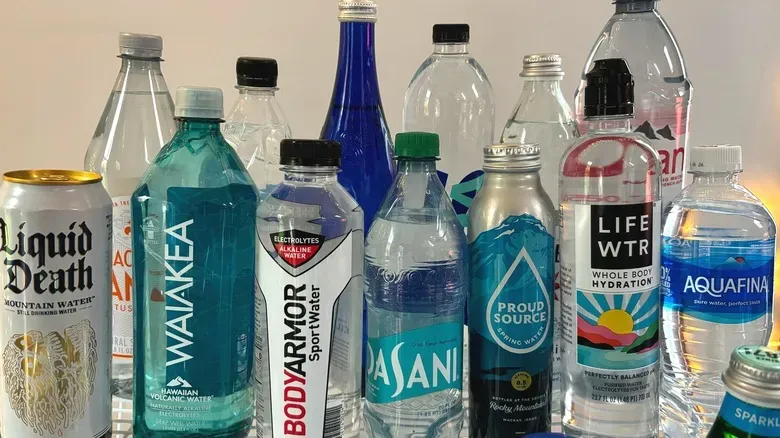
For decades, the Indian bottled water industry operated on a simple, volume-driven model. You paid ₹10 or ₹15 for a one-litre bottle of Bisleri or Kinley, you drank it, and you moved on. Water was water—a basic utility, a necessity, a commodity. But in 2026, that straightforward equation has been shattered. The industry is splitting into two distinct worlds. At one end, geopolitical turmoil has pushed the humble ₹10 bottle to ₹20, erasing tax cuts and testing consumer patience. At the other, a premium revolution is unfolding, with brands charging ₹200 for a 750 ml bottle of naturally alkaline Himalayan water.
What is happening in India's water business is nothing short of a fundamental restructuring. This article examines the forces driving this transformation—from the Iran crisis pushing up plastic costs to the rise of alkaline water as a health-conscious alternative—and explores what the future holds for this essential industry.
The Market: A Thirst That Cannot Be Quenched
The numbers are staggering. India's bottled water market was valued at approximately USD 8.28 billion (₹68,000 crore) in 2025 and is projected to reach USD 14.97 billion by 2031, growing at a compound annual growth rate of 10.39%. Other estimates place the market even higher, with IMARC Group valuing it at USD 10.71 billion in 2025 and projecting it to reach USD 29.70 billion by 2034 at a CAGR of 12%.
What is driving this relentless growth? The answer lies in a structural gap that government initiatives have failed to bridge. Despite the Jal Jeevan Mission investing over USD 50 billion to expand tap water access, issues such as inconsistent service reliability, last-mile contamination, and groundwater depletion continue to elevate perceived risks. Researchers estimate that 70% of India's groundwater is contaminated. For millions of Indians, packaged water is not a choice; it is a necessity.
The market is deeply segmented. Still bottled water dominates with 94.21% revenue share in 2025, while the functional and flavoured sub-segment is projected to expand at a 10.92% CAGR. The mass segment accounts for 85.12% of the market, but the premium segment is advancing at an 11.71% CAGR. Geographically, North India commands 32.31% market share, while West India is the fastest-growing region with a 12.25% CAGR.
The ₹20 Reality: When Geopolitics Meets Your Water Bottle
On March 19, 2026, a seemingly mundane announcement sent ripples through Indian households. Bisleri, the country's largest bottled water player commanding approximately 38% of the organised market, increased prices by 11%. A box of 12 one-litre bottles now costs ₹240, up from ₹216. The price of packaged drinking water had officially risen to ₹20 per litre.
The reason was anything but mundane. The Iran war had triggered a surge in oil prices, dramatically increasing the cost of polymer—the key material for plastic bottles. Packaging material costs surged by over 70% in a fortnight. The cost of material for plastic bottles rose by 50% to ₹170 per kilogram, while the price of caps more than doubled to ₹0.45 apiece. Even corrugated boxes, labels, and adhesive tape became more expensive.
"The price of packaged drinking water has risen to 20 rupees per litre, due to a significant increase in packaging material costs, which have surged by over 70% in the last fortnight," Angelo George, CEO of Bisleri, told Reuters. "What is happening is beyond anyone's control," he added.
The price increase reversed the benefits from Modi's September 2024 tax reforms, when the government reduced taxes on bottled water from 18% to 5%, prompting many companies to reduce prices. The Iran crisis had effectively erased those gains.
Other players followed suit. Parle Agro increased the price of its Bailley brand by approximately 11%. Nayan Shah, CEO of Clear Premium Water, raised retail prices by 8% to 11%, calling the revision "unavoidable". A two-litre pack of Bisleri now costs ₹30 compared with ₹27 earlier, and a 500 ml pack costs ₹10 compared with ₹9 earlier.
Yet even at ₹20, the pricing is inconsistent. At airports, multiplexes, and tourist spots, the same bottle is often sold for ₹40–60, with little enforcement of consumer protection laws.
The Premium Revolution: When Water Becomes Luxury
While mass-market consumers grapple with ₹20 bottles, a parallel universe is emerging at the top end of the market. The India premium bottled water market was valued at approximately USD 1,271.6 million in 2025 and is expected to reach USD 2,422.7 million by 2034, growing at a CAGR of 7.20%. Other estimates project growth from USD 933.3 million in 2024 to USD 1,996.5 million by 2033, at a CAGR of 8.7%.
What justifies a ₹200 price tag for a 750 ml bottle of water? The answer lies in emotion, context, and occasion. For some consumers, packaged water is a commodity—a necessity for filling gaps in unreliable water infrastructure. For others, it is a considered choice, used in premium offices, hotels, restaurants, and during high-end travel.
Price has become a marker of use case and portfolio tiering, rather than a simple mass-versus-premium divide. Large players increasingly operate across multiple price points and formats. Peace in a Bottle by Himalayan, a natural mineral water brand from Tata Consumer Products, embodies this dual reality—a premium offering in a category where the mass market is defined by price sensitivity.
The Alkaline Revolution: Hydration for All
Perhaps the most intriguing development in India's water business is the rise of alkaline water—and the audacious attempt to bring it to the masses at ₹20.
Alkaline water has a pH level of 8 or above, meaning it is less acidic, contains more minerals, and is marketed as capable of cleansing the body's "toxic" systems. For years, it was positioned as a premium product for the health-conscious elite. But a new wave of entrepreneurs is challenging that narrative.
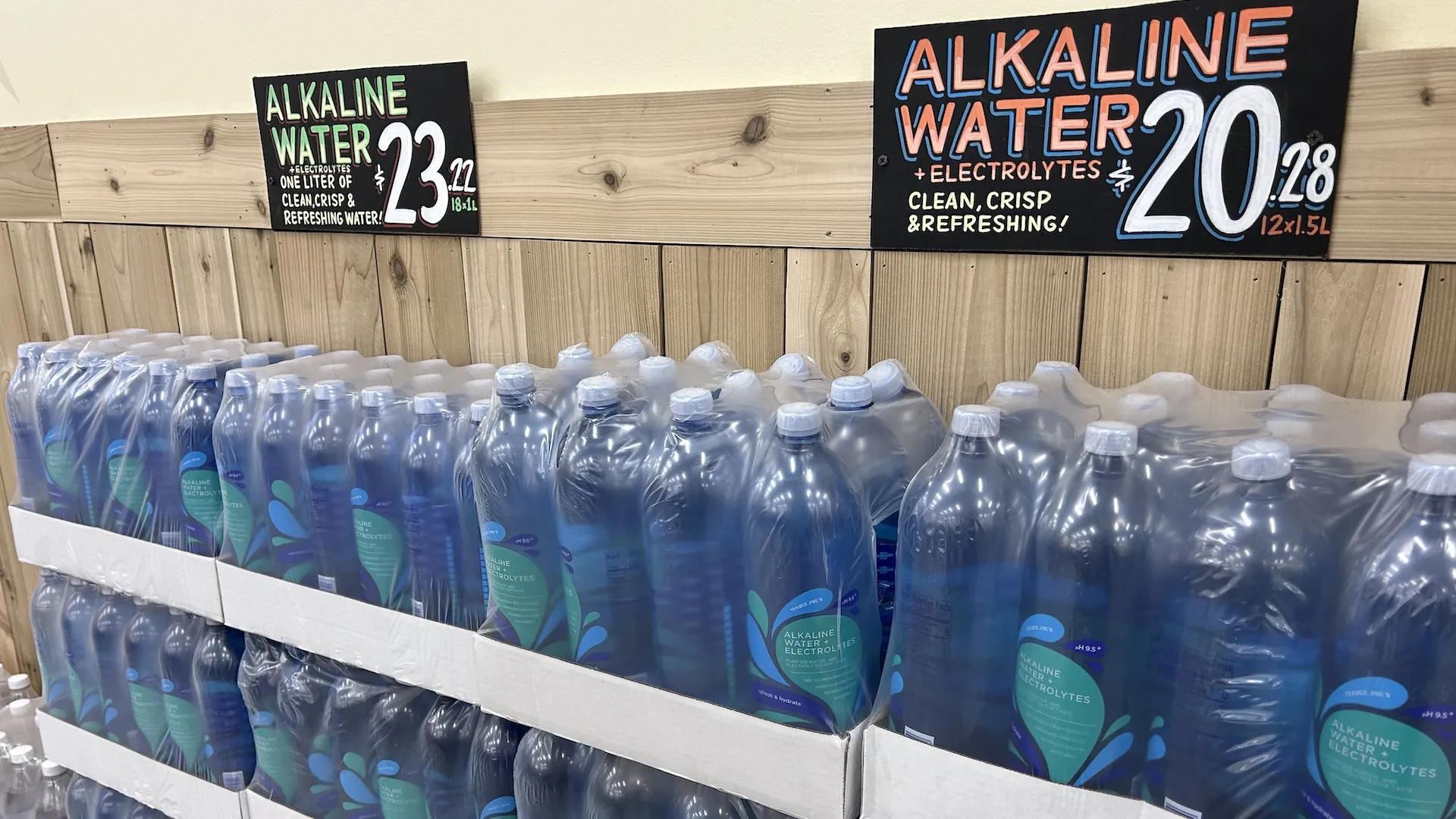
Browneagle Alkaline Water has set up a plant in Bhopal with a daily production capacity of 60,000 litres—and a price tag of just ₹20. The founder's mission is explicit: "Health will no longer be the property of the rich". This is not just a business; it is being positioned as a "Hydration for All" movement.
Similarly, Quick Pure Foods & Beverages has launched alkaline water at ₹20 for 500 ml, reflecting what it calls a "commitment to middle-class India".
These mass-market alkaline water brands are entering a category that is already attracting premium players. In August 2025, actor Bhumi Pednekar and her sister Samiksha launched Backbay, a naturally alkaline mineral water brand sourced from glacial melt in Himachal Pradesh. The water is bottled at source in a women-led facility and packaged in paper cartons, targeting the premium and functional hydration segment. Backbay's water is priced at ₹150 for a 500 ml packet and ₹200 for a 750 ml packet.
The contrast could not be starker. At one end, ₹20 for a bottle of alkaline water from a Bhopal plant. At the other, ₹200 for a 750 ml bottle of naturally alkaline Himalayan water from a celebrity-backed brand. Both are selling the same concept—alkaline hydration—but to entirely different audiences.
What Is Alkaline Water, and Does It Deliver?
The scientific community remains divided on the health benefits of alkaline water. Proponents claim it can neutralize acid in the body, help prevent disease, and even slow bone loss. Some studies have shown that regular consumption of alkaline reduced water has been linked to a lower incidence of chronic diseases and reduced fatigue.
A 2025 study on alkalinized filtered water found that consumption led to a consistent improvement in inflammatory status, with reduced IL1B gene expression in subjects drinking alkalinized water for three months. Electrolyzed alkaline water has shown preliminary effectiveness, though it lacks randomized controlled evidence and mechanistic studies at the microbiome-metabolome interface.
However, the Mayo Clinic cautions that "more research is needed to prove these claims". Other studies note that alkaline water is "widely marketed for its purported hydration and performance benefits, but there is limited research to support these claims".
Despite the scientific uncertainty, consumer demand is undeniable. Premium options such as mineral and alkaline water have gained popularity among health-conscious consumers. The functional water market in India is experiencing rapid growth, driven by increasing health consciousness and demand for innovative beverages.
The Business of Water: A Tale of Two Markets
What makes India's water business particularly fascinating is its simultaneous expansion in opposite directions.
At the mass-market end, the industry is defined by volume, distribution, and price discipline. Bisleri International reported an 82.8% increase in profit to ₹316.95 crore in FY24, while revenue from operations rose 14.8% to ₹2,689.69 crore. This performance underscores the strength of a volume-led model in a category where repeat consumption and dense distribution outweigh differentiation.
Recent developments suggest the category is fragmenting further rather than converging. At one end, Campa Sure—launched by Reliance in September 2025—foregrounded affordability with a ₹15 price point in a campaign featuring Amitabh Bachchan. The launch came shortly after the GST reduction on packaged drinking water to 5%, reinforcing bottled water's positioning as an accessible product. Reliance also launched Independence Water, focusing on the value-for-money segment.
At the premium end, the market is defined by sourcing, storytelling, and exclusivity. Brands compete on provenance—Himalayan glacial melt, mineral-rich formations, paper cartons instead of plastic. They compete on celebrity endorsement and lifestyle positioning. And they compete on the promise of functional benefits—alkaline, mineral-rich, naturally sourced water that does more than just quench thirst.
The Challenges Ahead
The Indian bottled water industry faces significant challenges that will shape its future trajectory.
Regulatory pressure is intensifying. New FSSAI regulations, effective December 2024, classify packaged water as "high-risk," requiring annual third-party audits. This poses significant challenges for smaller operators who may struggle to meet the financial demands of compliance. The result is likely to be consolidation, with smaller players either exiting or being acquired.
Cost volatility remains a persistent threat. The Iran crisis demonstrated how geopolitical events thousands of miles away can directly impact the price of a bottle of water in India. Packaging material costs, which surged by over 70% in a fortnight, are vulnerable to oil price fluctuations, supply chain disruptions, and currency movements.
Environmental concerns are growing. PET bottles held 92.05% of the India bottled water market share in 2025. The environmental footprint of this plastic consumption is increasingly difficult to ignore. While cans are forecast to register an 11.49% CAGR through 2031, the transition to sustainable packaging remains slow.
Consumer trust is fragile. In a market where 70% of groundwater is contaminated, consumers depend on branded water for safety. Any quality lapse can destroy a brand's reputation and shift consumer loyalty.
The Future: What Lies Ahead
The future of India's water business will be defined by several key trends.
Premiumization will accelerate. The premium bottled water market is expected to reach USD 2.4 billion by 2034, growing at nearly 7.5% annually. As incomes rise and health awareness increases, more consumers will trade up to functional and premium water.
Alkaline and functional water will go mainstream. The entry of mass-market players like Browneagle and Quick Pure at ₹20 price points will accelerate adoption. What was once a niche health product will become increasingly accessible.
Sustainability will become a competitive advantage. Brands that can offer sustainable packaging—paper cartons, recycled materials, refillable containers—will differentiate themselves in an increasingly crowded market.
Regulatory consolidation will reshape the industry. Smaller players will struggle to comply with new FSSAI regulations, leading to consolidation and the emergence of larger, more professional players.
Geopolitical risk will remain a wildcard. The Iran crisis demonstrated how vulnerable the industry is to external shocks. Companies will need to build more resilient supply chains and hedge against input cost volatility.
Conclusion
India's bottled water industry is at a fascinating crossroads. At one end, the humble ₹10 bottle has become ₹20, driven by geopolitical turmoil and packaging costs. At the other, a ₹200 bottle of premium alkaline water is finding willing buyers among India's growing affluent class.
The rise of alkaline water at ₹20 represents something more than just a new product category. It represents the democratization of health and wellness—the belief that alkaline hydration should not be the exclusive preserve of the rich. Whether the science fully supports the health claims or not, the market has spoken: Indian consumers want more from their water.
The water business in India is no longer just about quenching thirst. It is about health, status, sustainability, and aspiration. It is about ₹20 bottles and ₹200 bottles coexisting in a market that is expanding in every direction. And it is about an industry that, despite all its challenges, is poised for sustained multi-year growth in a country where safe drinking water remains a privilege, not a right.


