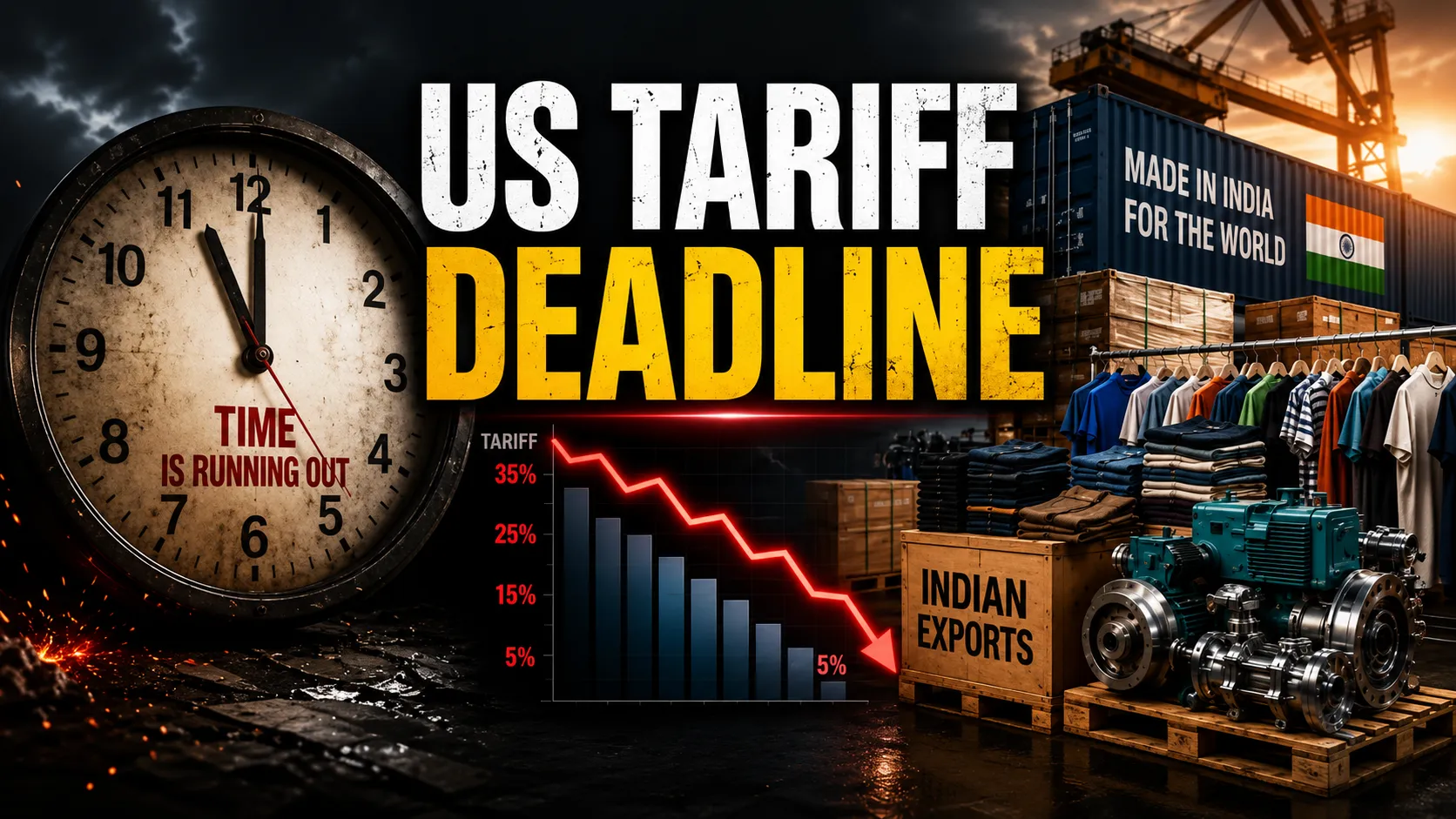
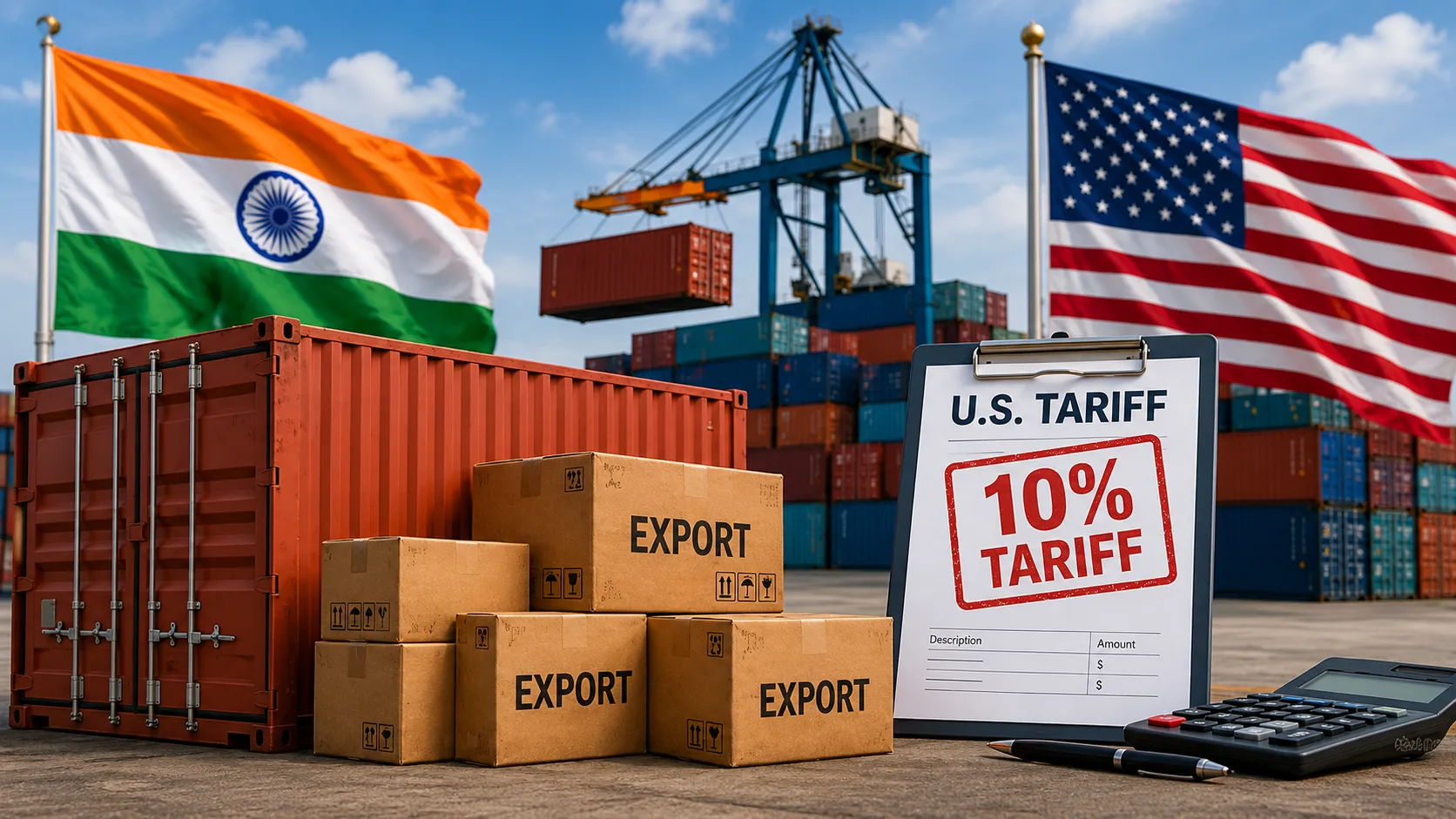
After months of negotiation, brinkmanship, and a deadline that came and went without the comprehensive agreement both sides had said they were working toward, India now finds itself operating under a fresh US tariff regime. Washington has imposed a 10 per cent duty on a broad swathe of Indian imports, part of a wider set of fresh tariffs applied to roughly five dozen trading partners that the Trump administration says have failed to adequately curb imports linked to forced labour practices. For Indian exporters, policymakers, and the broader business community that has spent the better part of the year bracing for this moment, the immediate reaction has been a curious mixture of relief and frustration — relief that the final number came in meaningfully lower than the 12.5 per cent rate that had been floated in earlier discussions, and frustration that, despite months of talks described by officials on both sides as being in their "final stage," no comprehensive bilateral trade agreement has yet been signed.
WHAT ACTUALLY CHANGED, AND WHAT DIDN'T
To understand the significance of this development, it is worth being precise about what has and has not happened. India has not been slapped with a new, standalone punitive tariff targeting it specifically. Rather, the fresh 10 per cent duty is part of a broader set of measures the United States has applied to a large group of trading partners as the temporary tariff arrangement that had been in place expired. Crucially, India's commerce ministry has confirmed that this fresh duty excludes several categories that matter enormously to India's export economy: generic pharmaceuticals, smartphones, steel, aluminium, and auto parts have all been carved out from the new tariff, meaning that some of India's largest and most strategically important export categories continue to access the US market without this additional layer of duty.
This selective exemption is significant for several reasons. Pharmaceuticals represent one of India's most globally competitive export sectors, with Indian generic drug manufacturers supplying a substantial share of certain medicine categories to the US market. A tariff on this category would have had outsized implications not just for Indian exporters but for US healthcare costs and supply chain resilience, given how dependent American consumers and healthcare providers have become on cost-competitive Indian generic pharmaceutical supply. Smartphones, similarly, represent a growing and strategically important export category as global electronics manufacturers have increasingly diversified production toward India as part of broader supply chain diversification away from single-country concentration. Steel, aluminium and auto parts, meanwhile, are categories where India has been building increasingly sophisticated manufacturing and export capacity, making their exemption from the fresh tariff a meaningful relief for these industries.
What remains subject to the new 10 per cent duty is a broader category of other Indian exports — a category that industry bodies and trade analysts are still working through in detail, but which is understood to include significant portions of India's textile and apparel export sector, among other categories not specifically carved out.
THE TEXTILE AND APPAREL QUESTION
For India's textile and apparel exporters — a sector that employs millions of workers, many of them women, across labour-intensive manufacturing hubs spanning Tamil Nadu, Gujarat, and several other states — the imposition of even a moderate tariff carries disproportionate significance given the sector's traditionally thin margins and intense competition from other low-cost manufacturing hubs across Asia, including Vietnam, Bangladesh, and Cambodia, several of which have historically enjoyed more favourable US tariff treatment under various trade preference arrangements.
Industry bodies representing textile and apparel exporters have been vocal, even before this latest tariff announcement, about the competitive disadvantage India faces relative to some of these Asian peers when it comes to US market access terms. A 10 per cent tariff, layered on top of existing competitive pressures, adds a further cost burden that exporters will need to either absorb through already-thin margins, pass through to US buyers, or offset through efficiency gains and cost reduction elsewhere in their supply chain — none of which are straightforward propositions in a highly competitive, price-sensitive global apparel market.
WHY A FULL DEAL HAS PROVEN SO ELUSIVE
The persistent gap between the extensive diplomatic engagement both governments have described — with officials on both sides variously characterising the negotiations as being at the "last one per cent" of finalising legal text — and the actual absence of a signed, comprehensive bilateral trade agreement, is itself one of the more curious features of this entire negotiation saga. Commerce and Industry Minister Piyush Goyal has repeatedly signalled that discussions remain constructive and that India is close to securing terms that would give it preferential access relative to competing Asian exporters, even as the temporary tariff arrangement that both sides had presumably hoped a comprehensive deal would supersede has now lapsed without that broader agreement materialising.
Several structural factors help explain why finalising this kind of agreement has proven so difficult, despite the apparent proximity to a deal that both sides have described. Trade agreements of this complexity typically require reconciling deeply technical, sector-specific provisions across agriculture, manufacturing, services, intellectual property, and regulatory standards — any one of which can become a sticking point capable of delaying finalisation even when the broader political will to conclude an agreement exists on both sides. India, in particular, has historically been protective of its agricultural and dairy sectors in trade negotiations, given the political sensitivity of these sectors domestically and the large number of smallholder farmers whose livelihoods could be affected by increased import competition — a sensitivity that has featured in India's trade negotiating posture across multiple agreements, not just this one with the United States.
India's negotiating stance throughout this process has also been explicitly framed by officials as prioritising the substance and durability of the eventual terms over the speed of reaching an agreement, with Minister Goyal and other officials repeatedly emphasising that India is negotiating for genuine competitive advantage relative to other Asian exporting nations, rather than simply rushing to beat an arbitrary calendar deadline. This posture, while defensible from a long-term national interest perspective, has meant that India has been willing to let temporary tariff arrangements lapse rather than accept terms it considers suboptimal, betting that the eventual, more durable agreement will be worth the near-term cost of operating under the less favourable interim tariff regime in the meantime.
THE BROADER STRATEGIC CONTEXT
This tariff episode cannot be understood in isolation from the broader trajectory of the India-US economic relationship, which has expanded substantially over the past decade and which both governments have repeatedly described as a priority strategic partnership extending well beyond trade into areas like defence cooperation, technology collaboration, and broader geopolitical alignment, particularly in the context of both countries' shared interest in a stable and diversified global supply chain landscape less dependent on any single manufacturing hub.
Against this backdrop, both governments have strong incentives to eventually conclude a comprehensive trade agreement that reflects the strategic importance both sides attach to the relationship, even if the specific technical negotiations required to get there have proven more protracted than either side's public statements might have suggested at various points over the past several months. Officials have pointed to leader-level engagement — including reported discussions between Prime Minister Modi and President Trump at multilateral gatherings — as evidence that the political commitment to eventually concluding this agreement remains intact, even as the technical negotiating teams continue working through the remaining details.
WHAT INDIAN BUSINESSES SHOULD DO NOW
For Indian exporters navigating this interim period of tariff uncertainty, trade policy experts have generally counselled a pragmatic, diversification-focused approach rather than waiting passively for the eventual comprehensive agreement to materialise. This includes exploring alternative export markets to reduce dependence on any single destination market, particularly for sectors like textiles and apparel that face the fresh 10 per cent duty without the exemptions extended to pharmaceuticals, electronics, and metals.
Exporters have also been encouraged to closely monitor the specific tariff classification of their products, given that the exemption list — covering generic pharmaceuticals, smartphones, steel, aluminium, and auto parts — involves precise customs classifications that determine whether a specific product qualifies for exemption or falls under the standard 10 per cent duty. Given the complexity of these classifications, industry bodies have been providing guidance to member companies on navigating this transition period, while also continuing to lobby, through formal and informal channels, for an eventual comprehensive agreement that would supersede the current interim arrangement altogether.
THE ROAD AHEAD
Looking forward, the central question for India's trade policy establishment, and for the thousands of exporting businesses affected by this tariff regime, is how much longer the gap between "last one per cent" diplomatic characterisations and an actual signed agreement will persist. Trade negotiations of this complexity have, in other contexts globally, taken considerably longer to conclude than initial optimistic timelines suggested, and there is no guarantee that the current interim tariff arrangement will not remain in place for an extended period while technical negotiations continue.
What does seem clear, based on the exemptions carved out in this latest tariff announcement and the continued diplomatic engagement both sides have described, is that neither government appears to view the current arrangement as a permanent breakdown in trade relations, but rather as an uncomfortable interim state while the more substantive, comprehensive agreement continues to be negotiated. For India's exporters, that distinction offers some reassurance about the broader trajectory of the relationship, even as they navigate the immediate, tangible cost implications of operating under the current 10 per cent tariff regime in categories not specifically exempted.
HOW OTHER ASIAN EXPORTERS ARE POSITIONED
India's trade negotiators have been explicit that a central objective of the ongoing talks is securing terms that place Indian exporters in a more favourable competitive position relative to other major Asian exporting economies, several of which have their own, separately negotiated tariff arrangements with the United States. Vietnam, Bangladesh, and other regional manufacturing hubs have, at various points in their own trade relationships with Washington, secured terms that Indian industry bodies have argued created a competitive disadvantage for Indian exporters in categories like textiles and apparel, where India competes directly with these countries for the same US retail buyers and import contracts.
This competitive dynamic adds a layer of urgency to India's trade negotiating posture beyond simply securing favourable terms in isolation — Indian officials are acutely conscious that any agreement needs to be evaluated not just on its own terms, but relative to what competing exporting nations have secured, since global buyers making sourcing decisions will inevitably compare landed costs across these competing origin countries when placing orders. A trade agreement that improves India's terms only modestly, while competitors retain more favourable arrangements, would do little to shift the competitive balance in India's favour — which is part of why Indian negotiators have reportedly been willing to extend the negotiation timeline in pursuit of terms that offer genuine, durable competitive advantage rather than simply matching what other exporting nations have already secured.
WATCHING THE CURRENCY AND EXPORT COMPETITIVENESS ANGLE
There is also a currency dimension to this story that adds further complexity. India's rupee has been under separate pressure in recent sessions, driven primarily by the concurrent oil price shock rather than the tariff situation itself. A weaker rupee, somewhat counterintuitively, can partially offset the cost impact of a new tariff for exporters, since it makes Indian goods cheaper in dollar terms even before accounting for the tariff itself — though this offsetting effect is generally modest relative to the direct cost of a 10 per cent duty, and it comes with its own downsides, including higher costs for imported raw materials and intermediate goods that many exporters, including textile manufacturers reliant on imported machinery and certain raw materials, depend upon.
For now, exporters, trade associations, and government officials alike are left monitoring two parallel and interconnected storylines — the currency and oil price dynamics on one hand, and the trade negotiation trajectory on the other — both of which will shape the competitiveness and profitability of Indian export businesses in the months ahead, regardless of which storyline ultimately dominates the headlines on any given day.


