
The Superconductor That Won't Die: Inside the Room-Temperature Claim That Could Change Civilization—If Anyone Can Replicate It
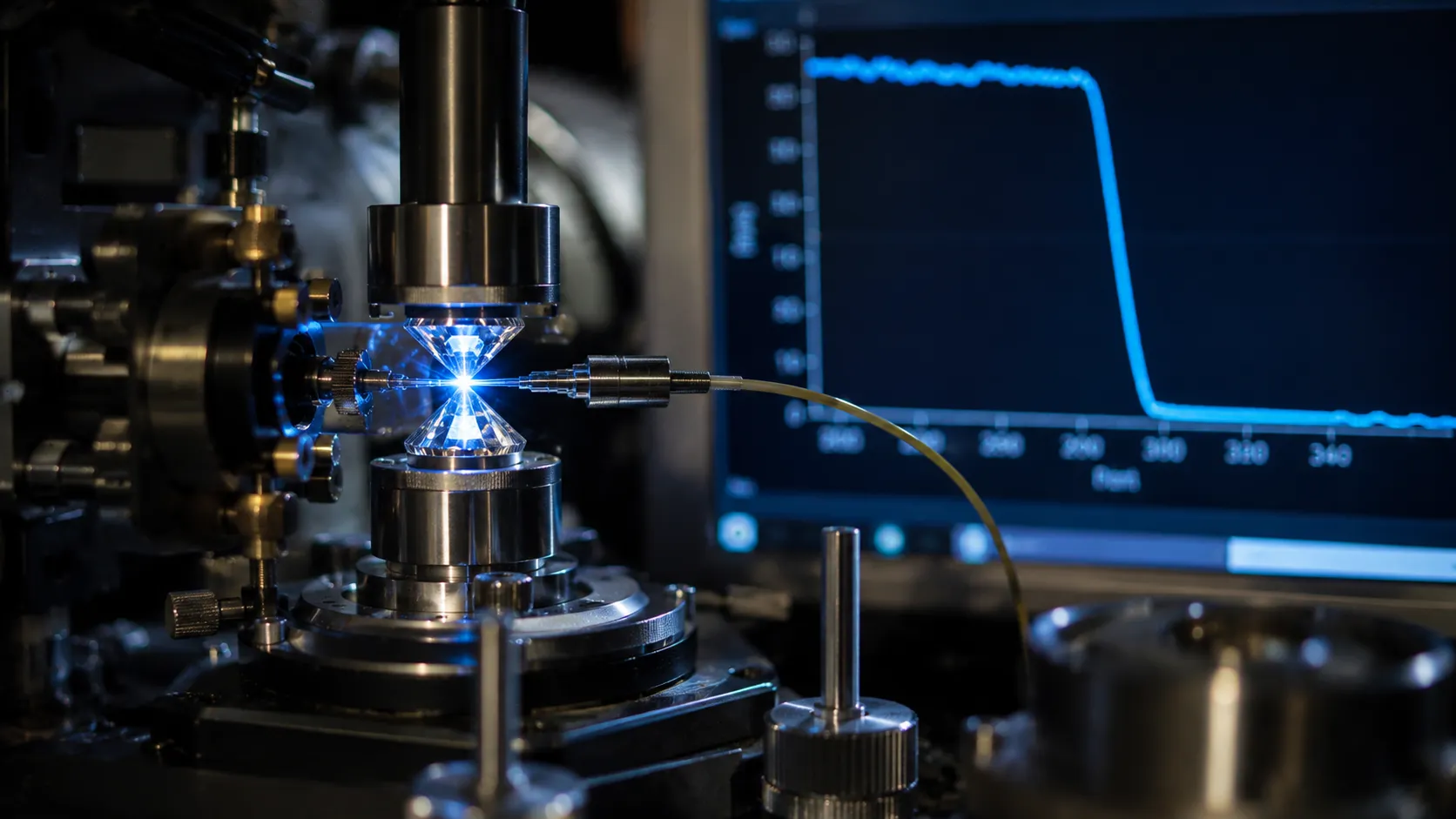
HOUSTON — May 21, 2026 — On the afternoon of May 12, 2026, a paper appeared in the journal Nature that sent a tremor through the global physics community. A team at the University of Houston, led by Professor Liangzi Deng, claimed to have achieved room-temperature superconductivity at 24 degrees Celsius—roughly the temperature of a comfortable living room—under moderate pressure in a nitrogen-doped lutetium hydride compound. The material, a blue-black crystal synthesized in a diamond anvil cell, carried electrical current with zero measurable resistance while expelling magnetic fields in the unmistakable signature of the Meissner effect. The data, at least in the paper, was clean. The resistivity dropped to zero at 294 Kelvin. The magnetic susceptibility showed a sharp diamagnetic transition. The graphs looked like textbook examples of superconductivity, except for one detail that made them extraordinary: they were recorded at room temperature.
If the result is confirmed by independent laboratories—and that remains a very large "if"—it would be the most significant physics discovery of the 21st century. Room-temperature superconductivity would transform the electrical grid, eliminating the 5 to 10 percent of electricity lost to resistance in transmission lines. It would enable magnetic levitation trains that float frictionlessly above their tracks, MRI machines that do not require liquid helium cooling, and fusion reactors that confine plasma with magnets that consume a fraction of the power of current designs. It would make possible technologies that have been stuck in the realm of science fiction for decades—lossless energy storage, quantum computers that operate at ambient conditions, and electric motors that are smaller, lighter, and vastly more efficient than anything on the market today. The global economic impact, according to a 2023 estimate by the International Energy Agency, could exceed $4.5 trillion over twenty years.
The problem is that the history of room-temperature superconductivity is littered with claims that turned out to be wrong. The most famous recent example—Ranga Dias of the University of Rochester, who published a room-temperature superconductor claim in Nature in 2020, only to have it retracted after other researchers could not replicate the results—hangs over the Houston paper like a shadow. The physics community has been burned before. It is not eager to be burned again.
The Physics of Zero
To understand why room-temperature superconductivity matters, it helps to understand what a superconductor actually is. In a normal conductor—copper wire, for example—electrons move through the material by bouncing from atom to atom. Each bounce transfers a tiny amount of energy to the atomic lattice, which manifests as heat. That is resistance, and it is why your phone charger gets warm, why power lines lose energy over distance, and why the world spends hundreds of billions of dollars annually on electricity that never reaches its destination.
In a superconductor, something fundamentally different happens. Below a critical temperature, electrons pair up—a phenomenon known as Cooper pairing—and move through the material without scattering. They do not bounce. They do not transfer energy to the lattice. They flow perfectly, without resistance, forever. The effect was discovered in 1911 by the Dutch physicist Heike Kamerlingh Onnes, who observed that mercury lost all electrical resistance when cooled to 4.2 Kelvin—roughly minus 269 degrees Celsius, colder than the space between stars.
For more than a century, the central challenge of superconductivity research has been to find materials that exhibit the effect at higher temperatures. Progress has been slow. By the 1980s, researchers had pushed the critical temperature up to about 30 Kelvin. The discovery of "high-temperature" superconductors—copper-oxide ceramics known as cuprates—raised the ceiling to around 138 Kelvin, still far below room temperature and requiring cooling with liquid nitrogen at minimum. The holy grail—a material that superconducts at ambient temperature and pressure—has remained elusive, glimpsed only in fleeting, unreproducible experiments and in the fever dreams of physicists who have spent their careers chasing it.
The Houston team's claim, if confirmed, would be the first credible demonstration of superconductivity at a temperature that does not require active cooling. The material—nitrogen-doped lutetium hydride—was compressed to roughly 1 gigapascal of pressure, about ten thousand times atmospheric pressure but far less than the millions of atmospheres required by earlier hydride superconductors. The pressure is low enough to be achievable in a diamond anvil cell, and potentially low enough to be engineered into a practical device if the material can be stabilized at ambient conditions.
The Shadow of Dias
The University of Houston study cannot be understood without understanding what happened at the University of Rochester. In 2020, Ranga Dias, a physicist at Rochester, published a paper in Nature claiming to have achieved superconductivity at 15 degrees Celsius in a carbonaceous sulfur hydride compressed to 267 gigapascals—roughly 75 percent of the pressure at the center of the Earth. The claim was sensational, and it was greeted with both excitement and skepticism. When other laboratories tried to replicate the results, they could not. The paper was retracted by Nature in 2022, and Dias was subsequently investigated by his university and by the National Science Foundation.
The Dias affair damaged the credibility of the entire field. It made journal editors more cautious, funding agencies more skeptical, and independent researchers more reluctant to invest months of effort in trying to replicate claims that might turn out to be artifacts. The Houston team is acutely aware of this context. Their paper includes extensive raw data, detailed descriptions of the synthesis process, and multiple independent measurements of the superconducting transition. They have invited replication, sharing samples and protocols with other laboratories. The lead author, Dr. Liangzi Deng, has been careful to frame the result as a measurement, not a breakthrough. "We are not claiming a revolution," he said. "We are claiming a measurement."
The replication effort is now underway. At least six independent laboratories—including teams at the Max Planck Institute in Germany, the University of Tokyo, and Argonne National Laboratory in the United States—are attempting to synthesize the nitrogen-doped lutetium hydride and measure its properties. The process is painstaking. The crystals are grown in diamond anvil cells under extreme pressure and temperature, and the measurements require months of careful work. The physics community expects results within the year.
The If-Then Calculus
If the Houston result is confirmed—and that remains a conditional that the physics community is not yet willing to remove—the implications would cascade across every sector of the global economy.
The electrical grid would be the first to transform. Superconducting transmission lines, buried underground and cooled only by the ambient air, could carry power from remote solar farms and wind turbines to population centers with zero loss. The economics of renewable energy, which depend heavily on transmission costs, would improve dramatically. The International Energy Agency has estimated that superconducting grids could reduce global electricity consumption by 7 to 10 percent, equivalent to eliminating the entire electrical demand of India.
Transportation would follow. Magnetic levitation trains, which currently operate only on short, expensive demonstration tracks in Japan and China, could become economically viable for intercity routes. Electric motors wound with superconducting wire could be half the size and weight of conventional motors while delivering the same power. The implications for aviation, shipping, and heavy industry would be profound.
Medical technology would be transformed. MRI machines, which currently require liquid helium cooling systems that add millions of dollars to their cost and limit their availability in developing countries, could operate at room temperature with no cryogenic infrastructure. The cost of an MRI scan could drop by an order of magnitude, making advanced diagnostic imaging accessible to billions of people who currently lack it.
And then there are the applications that cannot yet be predicted. Every major technological breakthrough—the transistor, the laser, the internet—has spawned applications that its inventors never imagined. Room-temperature superconductivity would be no different. It would be a platform technology, a new foundation on which generations of engineers and entrepreneurs would build.
What This Signals
The Houston paper is not the end of the room-temperature superconductivity story. It is, at best, the beginning of the replication phase—the period during which the claim is either confirmed, qualified, or withdrawn. The physics community has learned, through painful experience, to wait for replication before celebrating. The Dias retractions are still fresh. The memory of earlier false claims—there have been at least a dozen in the past decade—tempers the excitement.
But the Houston paper is also a reminder that the search for room-temperature superconductivity is not a fool's errand. The theoretical models suggest it is possible. The experimental techniques are improving. The materials being explored—hydrogen-rich compounds under pressure—have produced superconducting transitions at temperatures that were unimaginable a generation ago. The trajectory, if not the destination, is clear.
The crystal in the diamond anvil cell is small, fragile, and unproven. But if it works—if it really, truly, verifiably superconducts at 24 degrees Celsius—it will be remembered as the moment when one of the great scientific quests of the past century reached its goal. The superconductor that won't die may finally be ready to live.


