
The Streaming Checkbook: How Netflix, Amazon, and JioHotstar's Billion‑Dollar Bidding War for Post‑Theatrical Rights Is Quietly Reshaping the Risk Calculus of Every Film You Watch
MUMBAI — May 29, 2026 — Sometime in the spring of 2025, a negotiation took place in a Bandra‑Kurla Complex boardroom that, in retrospect, will be remembered as the moment the Indian film industry's financial centre of gravity permanently migrated from the box office to the streaming platform. The producers of Dhurandhar 2 were selling the post‑theatrical digital rights to their film—the right to stream it, exclusively, after its theatrical run ended. Three bidders were at the table: Netflix, Amazon Prime Video, and JioHotstar. The opening bid was ₹180 crore. The final price, after a week of escalating offers, exceeded ₹350 crore—a figure that, by itself, would have made the film profitable before a single ticket was sold.
The deal was not an outlier. It was the new normal. In the first five months of 2026, the four largest Indian films have together generated over ₹1,200 crore in post‑theatrical digital rights revenue—a figure that exceeds the total domestic box‑office collections of most Indian films released in the same period. The streaming platforms, which were once treated as a secondary revenue source—a "digital window" that opened after the "real" money had been made in theatres—have become the primary engine of film financing in India. The studio that secures a ₹300 crore streaming deal before its film releases has, in effect, pre‑sold the film to a single buyer. The theatrical run becomes the upside rather than the entire business case. The risk calculus that governed film production for decades—the gamble that the audience would show up, that the star would deliver, that the release date would work—has been fundamentally altered. And the power in the industry has shifted, quietly but unmistakably, from the studios that make the films to the platforms that buy them.
"The streaming platforms are no longer just buying content. They are commissioning it. The pre‑sale of digital rights now finances a substantial portion—in some cases, the majority—of a film's production budget. The platform is, in effect, the studio. And the studio is, in effect, a production services company that works for the platform. The hierarchy has been inverted, and the consequences are only beginning to be understood." — Media finance analyst, speaking anonymously to TIGI
The Pre‑Sale Revolution
The most significant structural change in the Indian film industry's financial architecture over the past three years is not the rise of the ₹500 crore blockbuster. It is the rise of the pre‑sale. The studio that secures a streaming deal for a film before production begins—or during production, or before the theatrical release—has, in effect, transferred a substantial portion of the film's risk to the platform. The pre‑sale revenue can be used to finance the production itself, reducing the studio's dependence on bank loans, private equity, or its own balance sheet. The theatrical run, which was once the primary source of a film's revenue, becomes the secondary source—the upside that the studio captures if the film performs, but not the foundation on which the film's financial viability depends.
The pre‑sale model has been adopted most aggressively by the mid‑budget, content‑driven films that constitute the majority of the Indian production slate. The ₹50 crore romantic drama that secures a ₹20 crore streaming pre‑sale has, in effect, recovered 40 percent of its production budget before a single frame is shot. The remaining ₹30 crore can be financed through a combination of theatrical revenue, satellite rights, music rights, and tax incentives. The risk to the studio is dramatically reduced. The model is not viable for the largest event films—the Dhurandhar 2s, the Ramayanas—whose budgets are too large to be covered by pre‑sales alone, but it is transforming the economics of the mid‑budget segment, and the studios that are using it most effectively are the ones that are generating the highest returns on their invested capital.
The pre‑sale model also changes the creative calculus. The studio that pre‑sells a film to a streaming platform is, in effect, making a film for that platform—and the platform's preferences, expressed through the price it is willing to pay, shape the kinds of films that get made. The platform that pays a premium for star‑driven thrillers will see more star‑driven thrillers in its pipeline. The platform that pays a premium for regional‑language dramas will see more regional‑language dramas. The market is not neutral, and the preferences of the three major platforms—Netflix, Amazon, and JioHotstar—are now among the most important determinants of the Indian film industry's creative output. The streaming checkbook is not merely a source of capital. It is a curator, a commissioner, and, increasingly, a censor—shaping the films that are made in its image.
The Three‑Platform Oligopoly
The Indian streaming market has consolidated around three major platforms—Netflix, Amazon Prime Video, and JioHotstar—that together control the vast majority of the subscription‑video‑on‑demand audience and the vast majority of the content‑acquisition budget. The consolidation is a function of the brutal economics of the streaming business: the cost of acquiring and producing content is enormous, the revenue per user is low, and the only path to profitability is scale. The platforms that have achieved scale—Netflix with its global subscriber base and its deep catalogue of Indian originals, Amazon with its Prime ecosystem and its aggressive investment in Indian content, JioHotstar with its cricket rights and its reach into the smallest Indian towns—are the ones that can afford to pay the prices that the studios now demand for their films.
The three‑platform oligopoly has created a seller's market for the largest Indian films. The studio that owns the rights to Dhurandhar 3 or Ramayana Part 2 or K.G.F 3 can play the three platforms against each other, extracting a price that reflects the scarcity value of the most desirable content. The platform that loses the auction for a major franchise film loses not just a title, but a subscriber‑acquisition engine—the kind of content that drives new sign‑ups, reduces churn, and justifies the platform's monthly subscription fee. The stakes of the auction are higher than the simple economics of the individual film, and the prices that the platforms are willing to pay reflect those higher stakes.
The oligopoly has also created a buyer's market for the smaller, mid‑budget films that do not have the scarcity value of the major franchises. The platform that is offered a ₹50 crore romantic drama can choose from dozens of similar films, and the price it pays reflects that abundance. The mid‑budget film that once depended on the theatrical box office for its survival now depends on the streaming platforms—and the platforms, which hold the leverage, are driving harder bargains than they did in the early years of the streaming boom, when the imperative to build content libraries outweighed the imperative to manage costs. The result is a two‑tier market: a handful of major franchises that command extraordinary prices, and a much larger number of mid‑budget films that are being priced at levels that make them viable but not spectacularly profitable.
The JioHotstar Disruption
The most disruptive force in the Indian streaming market over the past two years has been the emergence of JioHotstar—the platform created by the merger of Jio Cinema and Disney+ Hotstar, backed by Reliance Industries' virtually unlimited capital and driven by a strategy that is fundamentally different from the strategies of Netflix and Amazon. JioHotstar does not need to make money from streaming. It needs to attract and retain users for the Reliance ecosystem—the telecom subscribers, the retail customers, the digital‑payments users—and it is willing to lose money on content to achieve that goal. The platform's acquisition of the IPL digital rights for ₹23,758 crore—a figure that was widely considered economically irrational at the time—was the most dramatic expression of that strategy. The platform's content budget, which now exceeds ₹5,000 crore annually, is similarly aggressive: JioHotstar is buying films, series, and sports rights at prices that Netflix and Amazon cannot match, and it is doing so because the returns it seeks are not measured in streaming revenue but in ecosystem value.
The JioHotstar disruption has fundamentally altered the economics of the Indian streaming market. Netflix and Amazon, which once competed primarily against each other, now compete against a platform that is willing to lose money indefinitely—and the prices they are forced to pay for content reflect that competition. The studio that can attract a bidding war between JioHotstar and its rivals can extract a price that reflects the strategic value of the content to the Reliance ecosystem, not merely the economic value of the content as a streaming asset. The JioHotstar premium has inflated the market for the largest Indian films, and it has made the streaming rights auction the single most important financial event in the lifecycle of a major Indian production.
The Theatrical Window
The most contentious dimension of the streaming revolution is the theatrical window—the period of time between a film's release in theatres and its availability on streaming platforms. The window, which was once six to eight weeks, has been shrinking steadily as the platforms have demanded earlier access to the most valuable content. The producers, who need the pre‑sale revenue to finance their films, have been willing to concede shorter windows in exchange for higher prices. The exhibitors, who depend on the theatrical exclusivity of the films they screen, have been fighting a rearguard action to preserve the window—most notably in South India, where the eight‑week OTT window mandate has been imposed by exhibitor associations.
The theatrical window is the fault line along which the interests of the platforms, the producers, and the exhibitors collide, and the resolution of that collision—which is still being negotiated, film by film, platform by platform, window by window—will determine the shape of the Indian film industry for the next decade. The producers who can command the highest streaming prices are the ones who have the most leverage to dictate the terms of the window—and the platforms, which want the films as early as possible, are the ones who are driving the window down. The exhibitors, who have the least leverage, are the ones who are fighting to preserve it. The outcome of that three‑way struggle will determine whether the theatre remains the primary venue for Indian cinema or becomes a loss‑leader for the streaming release that follows.
The Global Dimension
The most underappreciated dimension of the streaming rights market is its globalisation. The Indian film that is acquired by Netflix or Amazon is not merely being acquired for the Indian market. It is being acquired for the global platform, with the potential to reach audiences in 190 countries. The streaming platform that pays ₹300 crore for Dhurandhar 2 is not paying for the Indian audience alone. It is paying for the global audience—the diaspora in North America, the Gulf, and the United Kingdom; the growing audience for Indian content in Southeast Asia, Africa, and Latin America; and the niche audience of global cinephiles who have discovered Indian cinema through the platform's recommendation algorithms.
The global dimension of the streaming rights market has changed the calculus for Indian producers. The film that was once made primarily for the domestic audience is now being made for a global audience, and the global audience's preferences—for certain genres, certain stars, certain visual aesthetics—are increasingly shaping the creative decisions that producers make. The Dhurandhar franchise, which was designed from inception to appeal to a global audience, is the most visible example of the globalisation of Indian cinema's creative ambition. But the trend extends well beyond the largest franchises. The mid‑budget film that secures a global streaming deal can reach audiences that no theatrical distributor could ever access, and the revenue from those audiences—while modest on a per‑capita basis—aggregates across dozens of territories into a meaningful return. The streaming platform has become, in effect, the global distribution infrastructure that the Indian film industry never had.
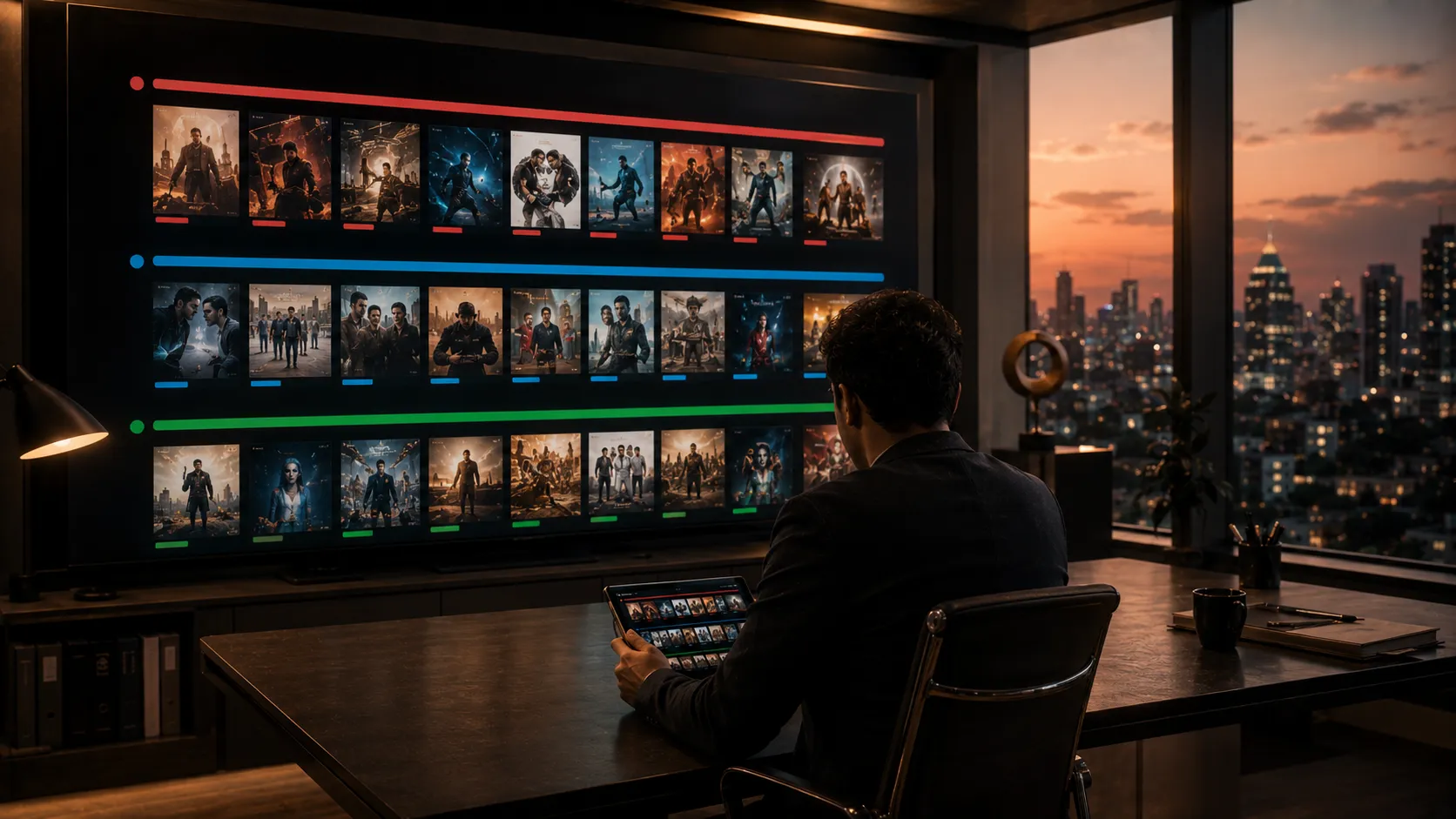
The global streaming market has also created a new category of Indian film: the streaming‑first production that is designed from inception to premiere on a platform rather than in theatres. The streaming‑first film bypasses the theatrical window entirely, and its economics are fundamentally different from the economics of the theatrical‑first film. The platform that commissions a streaming‑first film pays a fixed price for the global rights, and the producer's return is determined by that price rather than by the film's theatrical performance. The model eliminates the risk of the box office—but it also eliminates the upside. The producer who sells a streaming‑first film for ₹50 crore has a guaranteed return, but they will never participate in the windfall that comes from a theatrical blockbuster. The trade‑off is the defining tension of the streaming‑first model, and the producers who are navigating it are making decisions that will determine the shape of their businesses for years to come.
What This Signals
The streaming rights market is not merely a new revenue stream. It is a new financial architecture for the Indian film industry—a system in which the platform has replaced the bank as the primary source of production capital, the global audience has replaced the domestic audience as the primary target of creative ambition, and the pre‑sale has replaced the theatrical opening as the primary determinant of a film's financial viability.
The shift is not complete, and it will never be universal. The largest event films will continue to depend on the theatrical box office for the majority of their revenue. The single‑screen theatres that serve the mass audience will continue to screen films that the streaming platforms do not want. The star system, for all its fragility, will continue to command fees that reflect the opening‑weekend guarantees that only a theatrical release can provide. But the direction of travel is unmistakable. The streaming checkbook is now the most important financial instrument in the Indian film industry, and the platforms that control it—Netflix, Amazon, and JioHotstar—are the most powerful institutions in the business. The studio that does not have a streaming strategy does not have a strategy at all. The film that cannot attract a streaming pre‑sale is a film that may not get made. The streaming revolution is not coming. It is here, and the industry that has been reshaped by it will never return to the way it was before.


