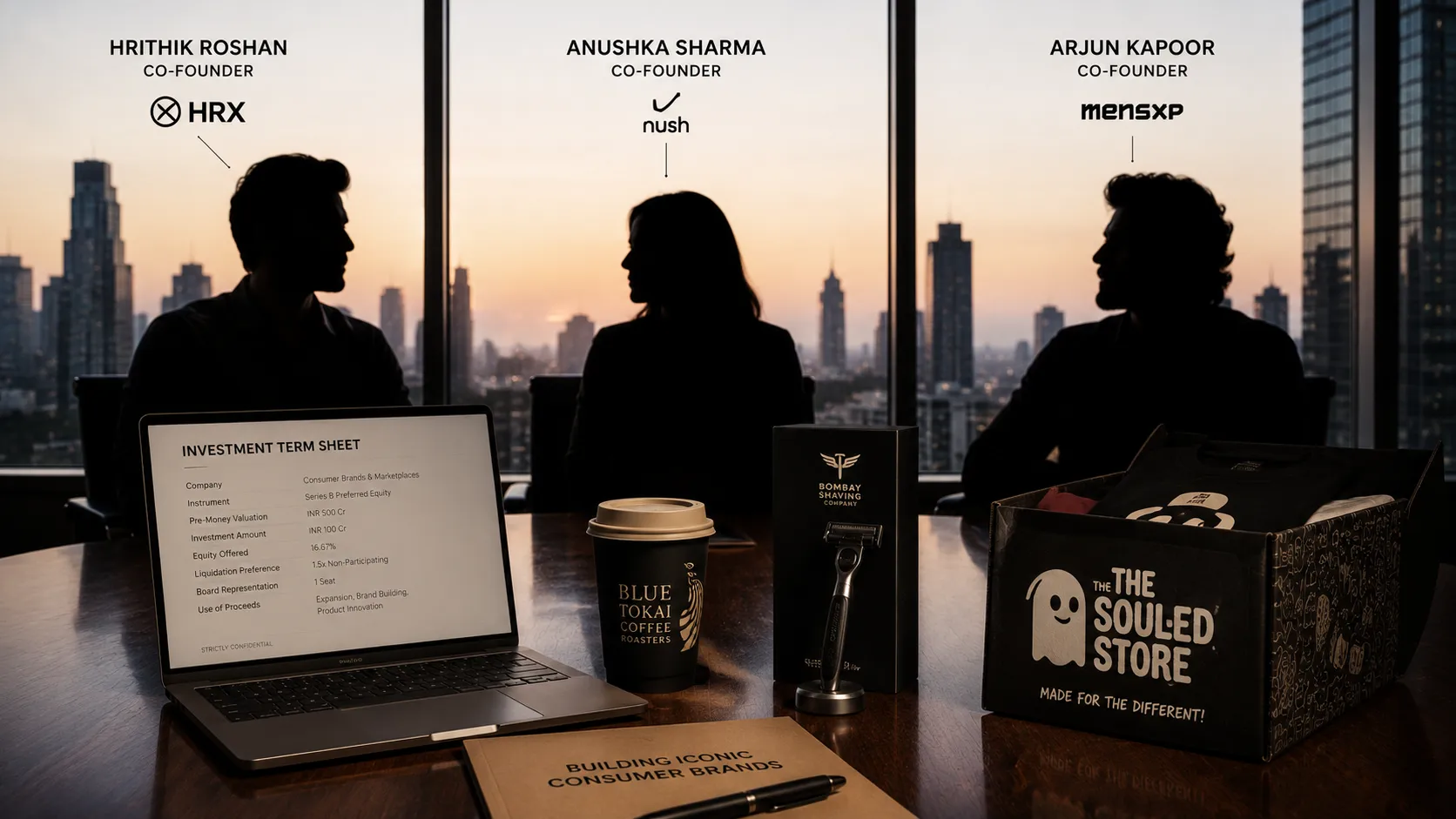
The Star Who Became a VC — How Hrithik Roshan, Anushka Sharma, and Others Are Betting on Startups
The New Breed of Bollywood VC
For decades, Bollywood stars invested in real estate and restaurants—safe, tangible assets. But the new generation is different. They are investing in startups: high-risk, high-reward, technology-driven businesses. They are taking board seats, attending pitch meetings, and even co‑leading funding rounds.
Hrithik Roshan, Anushka Sharma, Arjun Kapoor, and Kriti Sanon (covered earlier) are leading this charge. They are not just writing cheques; they are building portfolios. Some have even set up dedicated family offices with investment professionals. This article profiles four stars who have quietly become venture capitalists.
Hrithik Roshan: From HRX to a Full Portfolio
Hrithik Roshan’s most famous business is HRX, his activewear brand launched in partnership with Exceed Entertainment. HRX started as a men’s fitness apparel line and expanded into women’s wear, footwear, and accessories. The brand is now a ₹500 crore business, available in 500+ stores across India.
But HRX is just the beginning. Hrithik has invested in:
Cure.fit (health and fitness platform) – participated in Series D
WOW Skin Science (D2C personal care) – early backer
BoAt (audio accessories) – invested alongside Ranveer Singh
His investment thesis is simple: bet on brands that promote an active, healthy, and aspirational lifestyle. He avoids categories he doesn’t understand (fintech, SaaS) and focuses on consumer products where his brand can add value.
Hrithik is also an active mentor. He meets with founders quarterly, provides feedback on product design and marketing, and even appears in their ads. His Instagram feed, with 50 million followers, is a powerful marketing engine for his portfolio companies.
Anushka Sharma: The Quiet Builder
Anushka Sharma has taken a different path. Instead of investing in others, she built her own brand, Nush, a sustainable clothing line. Nush focuses on organic fabrics, ethical production, and timeless designs. The brand has a loyal following among urban, eco‑conscious women.
But Anushka has also made strategic investments. She backed Blue Tokai Coffee (specialty coffee chain) and The Whole Truth Foods (clean-label snacks). Both fit her personal brand: quality, authenticity, and wellness.
Unlike many celebrities, Anushka does not publicly promote her investments. She rarely posts about them on social media. Her approach is low‑key but strategic. She invests through a family office managed by her brother, Karnesh Sharma.
Industry estimates put her investment portfolio at ₹80–100 crore. Not the largest, but carefully curated.
Arjun Kapoor: The Gen Z Connector
Arjun Kapoor has positioned himself as the celebrity investor for Gen Z brands. His portfolio includes:
Bombay Shaving Company (grooming products)
The Souled Store (pop culture merchandise)
Hyperlink Infosystem (digital marketing agency)
StyleCracker (personal styling)
Arjun’s edge is his deep understanding of young consumers. He knows what’s trending on Instagram, what memes are viral, and what products Gen Z will buy. Founders value his insights on branding and positioning.
He also takes smaller stakes (0.5–1%) and charges lower fees, making him accessible to early-stage startups. His total investment portfolio is estimated at ₹50–70 crore, with several companies on track for exits.
The Economics of Celebrity VC
Why do startups want celebrity investors? Three reasons:
Distribution: A single Instagram post from a star can drive millions of impressions and thousands of sales.
Credibility: A celebrity’s endorsement signals trust to consumers and other investors.
Talent attraction: Startups with celebrity backers find it easier to recruit top talent.
In return, celebrities typically invest at a discount—say, ₹1 crore for equity that would cost an institutional investor ₹2 crore. The difference is the “celebrity premium.” Startups are happy to pay it because the ROI is often higher than traditional marketing spend.
However, not all celebrity investments work. Many have lost money on startups that failed to scale. The key is to treat investing as a business, not a hobby—to do due diligence, to diversify, and to stay engaged.
The Rise of the Celebrity Family Office
Several Bollywood stars have now set up dedicated family offices. These are professional teams that manage investments, taxes, legal compliance, and even philanthropic giving. The family office operates like a mini‑VC fund, with an investment thesis, a pipeline of deals, and a portfolio management process.
SRK’s family office is the largest, with over ₹4,000 crore in assets. Others, like Hrithik and Anushka, have smaller but still professional setups. The trend is clear: stars are treating their wealth as a business to be managed, not a pile of cash to be spent.
Challenges and Critiques
Critics argue that celebrity investors get an unfair advantage. They pay less for the same equity, simply because of their fame. This distorts the market and crowds out non‑celebrity angels.
There is also the risk of “brand dilution.” If a celebrity invests in too many companies, their endorsement loses meaning. Consumers may stop trusting their recommendations.
Finally, many celebrities lack the patience required for venture investing. Startups take 7–10 years to exit. If a star expects quick returns, they will be disappointed.
The Future: A Bollywood VC Fund?
Industry insiders predict that within five years, there will be a dedicated Bollywood VC fund—a pool of capital raised from multiple celebrities, managed by professional VCs. The fund would invest in consumer startups, offering not just capital but also access to a network of stars for marketing and distribution.
Hrithik Roshan has reportedly discussed this idea with his advisors. Anushka Sharma’s brother, Karnesh, is also exploring a similar concept. If launched, such a fund could become a powerful force in India’s startup ecosystem.